World's biggest refugee camp planned in Bangladesh for Rohingyas

Agencies
October 17, 2017

Paris, Oct 17: Bangladesh has announced plans to build a refugee camp that could accommodate around 800,000 Rohingya Muslims pouring over the border from Myanmar.

The camp would be the largest in the world and has raised concerns about the risks of concentrating vulnerable people, such as the spread of disease.

Around 550,000 Rohingya have fled communal bloodshed in Myanmar since the latest violence began in August 25.

While some have joined the roughly 33,000 fellow Rohingya living in the official camps of Kutupalong and Nayapara since the 1990s, most have set up alongside hundreds of thousands more already living in makeshift camps and villages outside those settlements.

The UN`s refugee agency estimates there are an unprecedented 65.5 million refugees in the world today, split between urban centres or informal settlements, and more formal camps.

Here are some of the largest of these camps, based on UN figures.This vast settlement in far northern Uganda has sprung up over the past year as people flood out of South Sudan, fleeing civil war and severe food shortages.

A village in the Yumbe district on the South Sudan border, Bidibidi became a refugee settlement in August 2016 and now hosts nearly 285,000 people, according to figures from the UN High Commissioner for Refugees.

Uganda hosts more than half of the nearly two million South Sudanese who have fled their country since war erupted in 2013.

The Adjumani district in the same border area of Uganda contains many further camps and settlements where there are together about 233,000 more South Sudanese.The sprawling Dadaab complex 100 kilometres (60 miles) from Kenya`s border with Somalia has housed Somali refugees for around 26 years.

The majority fled the outbreak of civil war in Somalia 1991 and many never returned, going on to have children and grandchildren.

Dadaab is made up of four camps, some of which have come to resemble towns, but is considered a single area.

There were about 239,500 people in Dadaab at the end of September, according to UN figures. The population peaked at around 485,000 in 2012 following a new influx after famine in Somalia.

A voluntary repatriation programme is helping some to return.

The Kenyan government decided last year to close Dadaab, about 450 kilometres northeast of the capital Nairobi, saying it was a training ground for Shabaab Islamist militants from Somalia.

The decision was overturned by Kenya`s High Court on the grounds that it violated the country`s international obligations and amounted to the persecution of refugees.This camp on the outskirts of the town of the same name in northwestern Kenya was established in 1992 following the arrival of thousands of people fleeing from southern Sudan during the 1983-2005 war.

Many were young boys who risked being forced into combat.

The camp also took in some of the hundreds of thousands of Ethiopians who fled around the fall of the military government in 1991.

About half of the refugees there today are from South Sudan and a quarter from Somalia, with those from Ethiopia down to under four percent.Just 37 kilometres from the border with Burundi, this camp was opened in November 1996 to host people fleeing conflict in the neighbouring Democratic Republic of Congo.

Tens of thousands of Burundians arrived in 2015 when their country plunged into crisis after President Pierre Nkurunziza sought a fiercely contested third term.

Burundians now account for around 47 percent of the camp`s population.

Tanzania hosts around 60 percent of the 410,00.

Comments

Add new comment

  • Coastaldigest.com reserves the right to delete or block any comments.
  • Coastaldigset.com is not responsible for its readers’ comments.
  • Comments that are abusive, incendiary or irrelevant are strictly prohibited.
  • Please use a genuine email ID and provide your name to avoid reject.
News Network
November 28,2025

ministerPM.jpg

Mangaluru, Nov 28: Karnataka Health Minister and Dakshina Kannada district in-charge minister Dinesh Gundu Rao on Friday handed over Chief Minister Siddaramaiah’s letter to Prime Minister Narendra Modi, highlighting the severe distress faced by farmers due to crashing crop prices.

PM Modi arrived at the Mangaluru International Airport en route to Udupi, where Gundu Rao welcomed him and submitted the letter. The chief minister’s message stressed that farmers are suffering heavy losses because maize and green gram are being bought far below the Minimum Support Price (MSP). The state urged the Centre to immediately begin procurement at MSP.

According to the letter, Karnataka has a bumper harvest this year—over 54.74 lakh metric tons of maize and 1.98 lakh metric tons of green gram—yet farmers are unable to secure fair prices. Against the MSP of ₹2,400/MT for maize and ₹8,768/MT for green gram, market rates have plunged to ₹1,600–₹1,800 and ₹5,400 respectively.

The chief minister has requested the Centre to:

• Direct NAFED, FCI and NCCF to start MSP procurement immediately.
• Ensure ethanol units purchase maize directly from farmers or FPOs.
• Increase Karnataka’s ethanol allocation, citing high production capacity.
• Stop maize imports, which have depressed domestic prices.
• Relax quality norms for green gram, allowing up to 10% discoloration due to rains.

The letter stresses that MSP is crucial for farmer dignity and income stability and calls for swift central intervention to prevent a deepening crisis.

Comments

Add new comment

  • Coastaldigest.com reserves the right to delete or block any comments.
  • Coastaldigset.com is not responsible for its readers’ comments.
  • Comments that are abusive, incendiary or irrelevant are strictly prohibited.
  • Please use a genuine email ID and provide your name to avoid reject.
News Network
November 22,2025

gaza.jpg

The Israeli regime’s forces have killed two Palestinian children in the Gaza Strip every day since the ceasefire began in early October, UNICEF has warned.

The UN children’s agency said on Friday that Israeli forces continue to attack Palestinians in Gaza even though the agreement was meant to stop the killing.

“Since 11 October, while the ceasefire has been in effect, at least 67 children have been killed in conflict-related incidents in the Gaza Strip. Dozens more have been injured. That is an average of almost two children killed every day since the ceasefire took effect,” UNICEF spokesperson Ricardo Pires said in Geneva, reminding that each number in the statistics represents a child whose life had ended violently.

“These are not statistics,” he said. “Each child had a story, a family, and a future that was stolen from them.”

Data from Palestinian factions, human rights groups, and government bodies recorded since the US-brokered ceasefire deal went into effect on October 10 show that Israeli forces have carried out numerous attacks, each constituting a separate ceasefire violation.

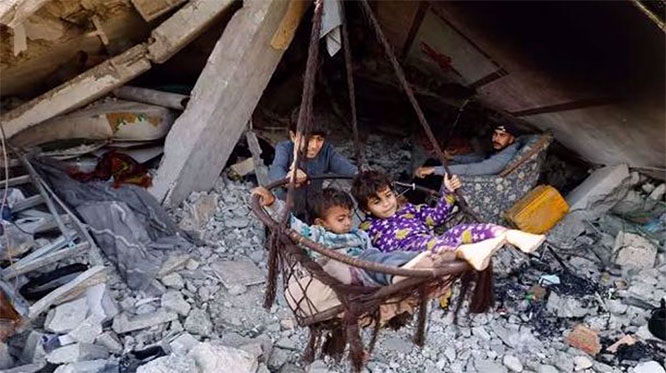
UNICEF teams say they repeatedly continue to witness heart-wrenching scenes of fearful Palestinian children sleeping outdoors with amputated limbs, while others live as orphans in flooded, makeshift shelters.

“I saw this myself in August. There is no safe place for them. The world cannot normalize their suffering,” Pires said, lamenting that the UN could “do a lot more if the aid that is really needed was entering faster.”

The UNICEF spokesperson warned that with the advent of winter, the risks for hundreds of thousands of displaced children will increase.

He warned, “The stakes are incredibly high” for children as winter acts as a threat multiplier, where children have no heating, no insulation, and few blankets. He said respiratory infections rise.

“Too many children have already paid the highest price,” Pires said. “Too many are still paying it, even under a ceasefire. The world promised them it would stop and that we would protect them.”

“Now we must act like it,” the UNICEF spokesperson added.

Since the Israeli regime launched its genocidal war against Palestinians in Gaza in October 2023, it has killed nearly 70,000 people in the territory, most of them women and children, and injured over 170,000 more, while reducing most of the structures in the enclave to rubble.

Comments

Add new comment

  • Coastaldigest.com reserves the right to delete or block any comments.
  • Coastaldigset.com is not responsible for its readers’ comments.
  • Comments that are abusive, incendiary or irrelevant are strictly prohibited.
  • Please use a genuine email ID and provide your name to avoid reject.
News Network
November 26,2025

Mangaluru, Nov 26: Mangaluru East police have registered a case following a sophisticated online fraud where a 57-year-old local resident was allegedly cheated out of ₹13.4 lakh after being targeted on Facebook.

The scam began in February when the complainant, while browsing Facebook reels, was contacted by a woman identifying herself as "Lillian Mary George" from London. After establishing a chat relationship, the woman claimed she would visit India in November and bring a significant sum of money.

The trap was sprung on November 15, when the victim received a call from a woman named "Sonali Gupta," who claimed Lillian had arrived at Mumbai International Airport but was detained by customs. The fraudsters convinced the man that Lillian was carrying £25,000 (about ₹26 lakh) in traveller’s cheques and 1 kg of gold (valued at around ₹30 lakh).

Under the pretense of clearing these items, the victim was asked to make numerous online transfers between November 15 and 18 for various bogus charges, including:

•    "Pounds exchange registration"
•    "Customs declaration issues"
•    "Discount charges"
•    "Money-laundering charges"

Believing the fictitious story, the complainant transferred the cumulative sum of ₹13.4 lakh to various bank accounts provided by the fraudsters. He realised he was cheated when the culprits later promised a refund within two days but stopped answering his calls. The Mangaluru East police are now investigating the case, which highlights the continuing threat of transnational cyber fraud using social engineering and promises of fictitious wealth.

Comments

Add new comment

  • Coastaldigest.com reserves the right to delete or block any comments.
  • Coastaldigset.com is not responsible for its readers’ comments.
  • Comments that are abusive, incendiary or irrelevant are strictly prohibited.
  • Please use a genuine email ID and provide your name to avoid reject.