PM Modi in tears makes people question motives

Mafazah Sharafuddin
May 26, 2021

modis.jpg

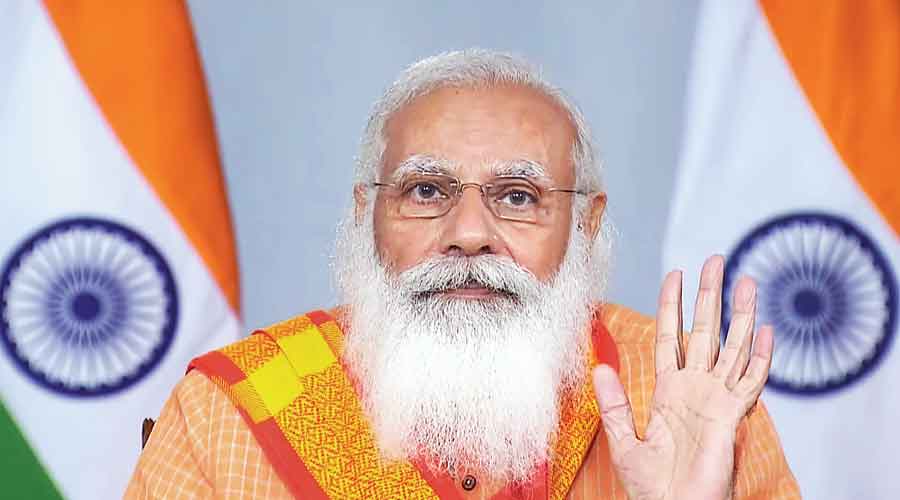
Prime Minister Narendra Modi choking up at the plight of healthcare workers in Varanasi had brewed up a storm. It has been met with both sympathy and disbelief. The Indian public is divided on what to make of the spectacle.

It is no secret that politics is most often elaborately planned and executed. The speeches are written, the leaders are told what to say, what questions to answer, what questions to evade. That is not to say that there is no truth to what they say, but simply that they choose what truth, and how much of it, to speak.

The question then arises, how much of it is an act?

The video of the Prime Minister in tears has, predictably, gone viral. By his supporters, it has been described as an outpouring of grief. He is commented for empathizing with the terrible situation the healthcare workers are in. It is perceived as him truly caring about the Indian public.

The more skeptical of the Indian public, on the other hand, have called it a spectacle of ‘crocodile tears’. It’s been referred to as drama. Rising to the occasion as always, trolls on the internet have begun to refer to it as PMCries, an allusion to the ‘relief fund’ PMCares.

Pathos has always been the preferred tool in BJP’s arsenal. Indians are sentimental folk, and swaying the public’s emotions is a good way to gain their support. Strategically speaking, it is undoubtedly a smart move. In terms of credibility, however, it leaves much to be desired.

Some other instances of PM Modi being ‘moved to tears in the history of Indian politics may help shed some more light on the current situation. A few notable moments are after he was chosen as the leader of the parliamentary party in 2014 and during the demonetization debacle in 2016. 

The two instances are great examples of the two different kinds of scenarios that brings PM Modi to tears in public. 

When he was chosen as the leader in 2014, he was made emotional saying that he was grateful for the BJP for giving a ‘poor boy’ such an opportunity. It is an act of humanizing politicians. One of removing the professional distance maintained to give the public enough of a glance into their personal lives to make them see them as individuals rather than an amorphous blob of party ideology.  Although the PM’s current lifestyle is far from one of a ‘poor boy’, it creates a relatable figure to look up to. He goes from simply being a man in power, to an underdog who fought against circumstance to get there.  

During the time of demonetization, the public was up in arms, outraged. It was a policy that hit the middle class and poorer sections of society hard. The speech that had him in tears did not speak of how the crisis would be solved, or why it was considered appropriate to plunge the country into crisis without warning. Instead, he tearfully spoke of his sacrifices to reach that position. He said he wasn’t in it for the ‘kursi’ and requested that the public endure the hardships brought about by demonetization. .

Rahul Gandhi tweeted “No Vaccines. Lowest GDP. Highest Covid deaths...GOI’s response? PMCries.”

Amidst the struggle to find beds, oxygen and medicine, along with the mismanagement of the vaccine and social distancing measures, the pressure on the government is high. There has been some questionable decision making, like conducting the Kumbh Mela amidst the pandemic that further exacerbates the public’s skepticism towards how well the government is handling the situation. 

It is important to remember that trying to earn an emotional response happens when logic and competence have both failed. 

Comments

Ramesh Mishra
 - 
Wednesday, 2 Jun 2021

PM MODI IN TEARS: INDIA
The article authored by Mafazah Sharafuddin about the Honourable Modi's tears is to hoodwink the people that he is a genuine person who cares for the people. I welcome the scholarly article and congratulate the writer. I am a UP NRI, have studied, worked and travelled the world for over 50 years. My comment is made in good faith based on my learning, experience and my personal dealings with the UP and the Central Government. Both levels of the governments are governed by irresponsible politicians, IAS, IPS, PCS, terrorists, who are mostly unskilled, uneducated, uncivilised with a Godly attitude. People of India are the victims of the religious faith at the hands of our politicians and their executive's
mafia and their culture are fundamentally barbaric, irrational, violent and horrifying. I provide a simple example that Modi, PM and Yogi CM of UP are untrustworthy and unfit to Govern and they have no moral, as an example for the progress of civilised society. I made a parental property partition application before the civil Courts. My younger brother, his wife and children, other co-shareholders consulted advocates related to my co-shareholders, the advocates advised them that since I married a Japanese Buddhist women I was not entitled to get my shares in the parental properties. I am 75 years old with three children residing in Canada since 1975. My co-shareholders are related to an IAS in Assam, who conspired with 3, IAS, 4, PCS of UP, police, politicians and bhumafia and recruited one relative of co-shareholders late Vikas Dubey of Kanpur to murder me with a motive to steal my properties which is possessed in gun violence by my brother. I prayed to Modi and Yogi for the protection of my life and property they ignored me in a similar way as they ignored the victims of Covid-19, pandemic causing a massive death all over India. The Indian politicians and their executives were willfully negligent which negligence has ruined India. It is up to the Courts of India to judge the conduct of Modi. In my opinion India is a lawless Nation governed by Gundas and no one and no one's property is safe.
Ramesh Mishra
Victoria BC CANADA

Add new comment

  • Coastaldigest.com reserves the right to delete or block any comments.
  • Coastaldigset.com is not responsible for its readers’ comments.
  • Comments that are abusive, incendiary or irrelevant are strictly prohibited.
  • Please use a genuine email ID and provide your name to avoid reject.
News Network
January 23,2026

Karnataka Governor Thaawarchand Gehlot read only three lines from the 122-paragraph address prepared by the Congress-led state government while addressing the joint session of the Legislature on Thursday, effectively bypassing large sections critical of the BJP-led Union government.

The omitted portions of the customary Governor’s address outlined what the state government described as a “suppressive situation in economic and policy matters” under India’s federal framework. The speech also sharply criticised the Centre’s move to replace the Mahatma Gandhi National Rural Employment Guarantee Act (MGNREGA) with the Viksit Bharat–Guarantee for Rozgar and Ajeevika Mission (Gramin) Act, commonly referred to as the VB-GRAM (G) Act.

Governor Gehlot had earlier conveyed his objection to several paragraphs that were explicitly critical of the Union government. On Thursday, he confined himself to the opening lines — “I extend a warm welcome to all of you to the joint session of the State legislature. I am extremely pleased to address this august House” — before jumping directly to the concluding sentence of the final paragraph.

He ended the address by reading the last line of paragraph 122: “Overall, my government is firmly committed to doubling the pace of the State’s economic, social and physical development. Jai Hind — Jai Karnataka.”

According to the prepared speech, the Karnataka government demanded the scrapping of the VB-GRAM (G) Act, describing it as “contractor-centric” and detrimental to rural livelihoods, and called for the full restoration of MGNREGA. The state government argued that the new law undermines decentralisation, weakens labour protections, and centralises decision-making in violation of constitutional norms.

Key points from the unread sections of the speech:

•    Karnataka facing a “suppressive” economic and policy environment within the federal system

•    Repeal of MGNREGA described as a blow to rural livelihoods

•    VB-GRAM (G) Act accused of protecting corporate and contractor interests

•    New law alleged to weaken decentralised governance

•    Decision-making said to be imposed by the Centre without consulting states

•    Rights of Adivasis, women, backward classes and agrarian communities curtailed

•    Labourers allegedly placed under contractor control

•    States facing mounting fiscal stress due to central policies

•    VB-GRAM (G) Act accused of enabling large-scale corruption

Comments

Add new comment

  • Coastaldigest.com reserves the right to delete or block any comments.
  • Coastaldigset.com is not responsible for its readers’ comments.
  • Comments that are abusive, incendiary or irrelevant are strictly prohibited.
  • Please use a genuine email ID and provide your name to avoid reject.
News Network
January 19,2026

New Delhi: Setting speculation to the rest, the CPI(M) has made it clear that it is open to have an electoral understanding with the Congress “to defeat” the Trinamool Congress and the BJP in West Bengal Assembly election even as it is all set to take on the grand old party in Kerala accusing it of “found wanting” in fighting the Hindutva forces.

The CPI(M) also said that it will contest the Tamil Nadu election “with DMK and its allies to defeat the BJP and its allies”, amid a section in the Congress triggering confusion about its participation in the M K Stalin-led coalition over demand over power-sharing and more seats. It is also willing to join hands with Congress and others in Assam and Puducherry to defeat the BJP.

The decisions came at a three-day meeting of the CPI(M) Central Committee in Thiruvananthapuram, which ended on Sunday after reviewing the poll preparations in the poll-bound states.

The CPI(M)'s decision came even as a section led by West Bengal Congress president Subhankar Sarkar is averse to tying up with the Left Front, claiming that their party is not benefitted by the electoral understanding. Both Congress and CPI(M)-led Left Front had electoral understanding in 2016 and 2021 Assembly elections and 2024 Lok Sabha polls.

Congress and the Left Front fought together for the first time in 2016 when Congress won 44 seats and the CPI(M) got 26. In 2021, the Left Front and the Congress drew a blank. In the 2024 Lok Sabha polls, Congress managed to win one seat while the Left did not win any. In the 2019 Lok Sabha polls, both fought against each other with Congress winning two and the Left none.

“In Bengal, the party will work for the defeat of both the TMC and the BJP, which are trying to polarise the society. We will try to rally all the forces that are ready to work against them,” the CPI(M) said in a statement without naming Congress by name. Senior leaders said there is no change in its strategy of pooling all non-BJP, non-TMC votes.

However, the party was critical of the Congress in Kerala where both will fight against each other.

The CPI(M) said it would "expose the BJP-led Union government’s denial of rightful dues to Kerala, the fiscal constraints imposed and the overall attack on federalism" as also "expose the failure of the Congress to effectively counter this attack on federalism, as the largest opposition party in the Parliament".

"The Congress, especially in Kerala, was found wanting in the fight against communal RSS-BJP, ideologically and this will also be exposed before the people," it added.

In Assam, it said, the CPI(M) will work for the mobilisation of all the anti-BJP parties and forces and defeat the rabidly communal and divisive BJP government. The Left parties are cooperating with Congress in the north-eastern state. In Puducherry, it said it will work for the defeat of the BJP alliance government.

Comments

Add new comment

  • Coastaldigest.com reserves the right to delete or block any comments.
  • Coastaldigset.com is not responsible for its readers’ comments.
  • Comments that are abusive, incendiary or irrelevant are strictly prohibited.
  • Please use a genuine email ID and provide your name to avoid reject.
News Network
January 28,2026

ajit.jpg

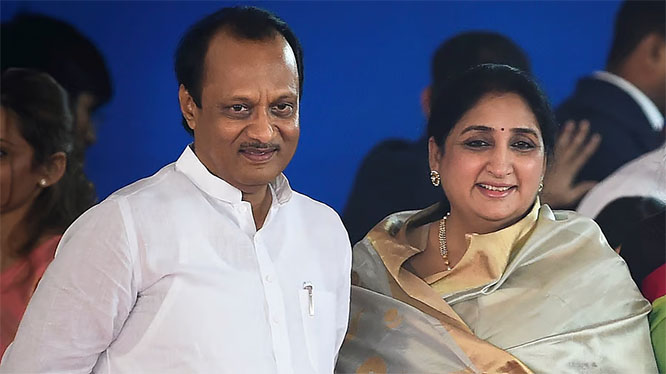
Mumbai: The sudden death of Maharashtra Deputy Chief Minister Ajit Pawar in a plane crash in his hometown of Baramati has plunged the state into political uncertainty, raising a pressing question for both the Nationalist Congress Party (NCP) and its rival faction, the Nationalist Congress Party (Sharadchandra Pawar): what next?

For the two factions that emerged after the dramatic split of June–July 2023, the moment marks their gravest challenge yet. Many believe the answer now rests with party founder Sharad Pawar.

Sharad Pawar, who founded the NCP in 1999 after parting ways with the Congress over Sonia Gandhi’s foreign origin, has already indicated his intention to step away from electoral politics once his Rajya Sabha term ends in April 2026.

Speaking at a public event in Baramati ahead of his 85th birthday on December 12, 2025, Pawar said he would not contest any further elections. “I have contested 14 elections. The younger generation needs to be given an opportunity,” he said, adding that he would decide later whether to seek another Rajya Sabha term.

Often described as the Bhishma Pitamah of Indian politics, Pawar also spoke of his gradual withdrawal from active leadership. “For the first 30 years, I handled everything. For the next 25–30 years, Ajit Dada handled responsibilities. Now, arrangements must be made for new leadership,” he said.

Ajit Pawar’s death has dramatically altered that transition, especially as he was working towards reunifying the two NCP factions.

“After the developments of June–July 2023 and the 2024 Lok Sabha and Vidhan Sabha elections, there were deep changes within the family and the party. In the last six months, serious efforts were made to reunite. Even workers from both sides wanted unity. This is a massive blow,” a Pawar family insider told DH over phone from Baramati.

Electoral outcomes over the past year reflected the split. In the 2024 Lok Sabha elections, NCP (SP) recorded the best strike rate in Maharashtra, winning eight of the 10 seats it contested. The NCP, by contrast, won just one seat out of four.

However, the trend reversed in the subsequent Vidhan Sabha elections, where the NCP emerged stronger, securing 41 of the 288 seats, while NCP (SP) managed only 10.

Within NCP (SP), Sharad Pawar’s daughter Supriya Sule serves as Working President, followed by leaders such as Rohit Pawar, state president Shashikant Shinde and former state chief Jayant Patil.

In the NCP, Praful Patel is the Working President and Raigad MP Sunil Tatkare heads the state unit. Ajit Pawar’s wife, Sunetra Pawar, is a Rajya Sabha MP, while their sons Parth and Jay are not actively involved in day-to-day politics. Parth Pawar briefly entered electoral politics in 2019 but lost the Lok Sabha election from Maval. Jay Pawar’s political debut was under consideration.

With Ajit Pawar gone, speculation has intensified that a member of the family may be asked to assume a larger role. For now, Sunetra Pawar is expected to play a key coordinating role in party affairs, alongside Patel and Tatkare.

The NCP continues to have several heavyweight leaders, including Chhagan Bhujbal, Hasan Mushrif, Dattatreya Bharne, Manikrao Kokate and Dhananjay Munde.

Ajit Pawar had already begun steps towards reconciliation between the two factions. While they contested the Pune and Pimpri-Chinchwad municipal elections separately, they later decided to fight the zilla parishad elections together under the ‘clock’ symbol—seen as the first formal step towards reunification.

Nagpur meet and party roadmap

Both NCP factions claim adherence to the ideology of ‘Shiv–Shahu–Phule–Ambedkar’. At the Rashtravadi Chintan Shivir held in Nagpur on September 19, 2025, the NCP reaffirmed its commitment to sarva dharma sambhav and discussed strengthening ties with the BJP “for the welfare and development of Maharashtra”.

In recent days, reports had suggested Ajit Pawar might return to the Maha Vikas Aghadi following the party’s poor performance in Pune municipal elections, but these claims were denied.

Big question for Maha Yuti

Ajit Pawar’s death also presents an immediate challenge for the Devendra Fadnavis-led Maha Yuti government. Pawar held crucial portfolios, including Finance, Planning and Excise. With the Budget Session approaching, appointing a new Finance Minister has become urgent.

Beyond numbers and portfolios, Maha Yuti has lost a swift decision-maker known for his administrative grip and political finesse—leaving a vacuum that will not be easy to fill.

Comments

Add new comment

  • Coastaldigest.com reserves the right to delete or block any comments.
  • Coastaldigset.com is not responsible for its readers’ comments.
  • Comments that are abusive, incendiary or irrelevant are strictly prohibited.
  • Please use a genuine email ID and provide your name to avoid reject.