



59% of terror attacks in 2017 in 5 Asian countries; Muslims are biggest victims: US report

News Network
September 20, 2018

Washington, Sept 20: Almost 59% of all terrorist attacks in 2017 took place in five Asian countries, including Pakistan and India, a US report said Thursday.
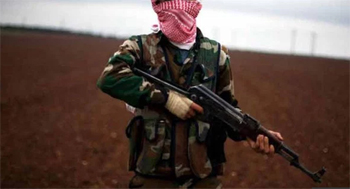
The other three countries include Afghanistan, Iraq and the Philippines. Like every year, Muslim dominant countries were the biggest victims of the terror attacks in 2017 too.

The total number of terrorist attacks worldwide last year decreased by 23 per cent. Similarly, the total deaths due to terrorist violence decreased by 27 per cent, according to the report.

The decline in terrorist violence was largely due to dramatically fewer attacks and deaths in Iraq, Nathan Sales, State Department coordinator of counterterrorism, said during a conference call with reporters Thursday.

"Although terrorist attacks took place in 100 countries in 2017, they were concentrated geographically. Fifty-nine percent of all attacks took place in five countries. Those are Afghanistan, India, Iraq, Pakistan, and the Philippines. Similarly, 70 per cent of all deaths due to terrorist attacks took place in five countries, and those are Afghanistan, Iraq, Nigeria, Somalia, and Syria," he said.

The annual State Department Country Report on Terrorism, he said, notes a number of major strides that the United States and its allies made to defeat and degrade terrorist organisations in 2017.

"We worked with allies and partners around the world to expand information sharing, improve aviation security, enhance law enforcement and rule of law capacities, and to counter terrorist radicalisation with a focus on preventing recruitment and recidivism," Sales said.

However, despite these many successes, the terrorist landscape grew more complex in 2017, he said. "ISIS, al-Qaida, and their affiliates have proven to be resilient, determined, and adaptable," Sales added.

He said foreign terrorist fighters were heading home from the war zones in Iraq and Syria or travelling to third countries to join ISIS branches there.

"We also are experiencing an increase in attacks by homegrown terrorists – that is, people who have been inspired by ISIS but have never set foot in Syria or Iraq. We've seen ISIS-directed or ISIS-inspired attacks outside the war zone on soft targets and in public spaces like hotels, tourist resorts, and cultural sites," Sales said.

"We've seen this trend in places as far as Bamako, Barcelona, Berlin, London, Marawi, New York City, Ouagadougou, and many others," added the top counter terrorism official from the State Department.

Iran, he alleged, remains the world's leading "state sponsor of terrorism" and is responsible for intensifying multiple conflicts and undermining US interests in Syria, Yemen, Iraq, Bahrain, Afghanistan and Lebanon. Sales said Tehran uses a number of proxies and other instruments such as Lebanese Hizbollah and the Islamic Revolutionary Guard Corp's Quds Force.

The threats posed by Iran's support for terrorism are not confined to the Middle East; they are truly global, he asserted.

"We have seen Iran's and its proxies' terrorist-related activities across the globe. There are active fundraising networks in places as far afield as Africa, in South America. We've seen weapons caches planted around the world," he said.

Al-Qaida, he said, was a determined and patient adversary.

It has largely remained out of the headlines in recent years as it has been content to let ISIS bear the brunt of the international response, but one shouldn't confuse that period of relative quiet with al-Qaida's abandonment of its capabilities or intentions to strike the US and its allies, Sales said.

"That is why we are continuing to keep the pressure on al-Qaida, its affiliates, and its individuals. The report details a number of efforts that we've taken to designate – and I mentioned in my opening remarks – efforts that we have taken to designate al-Qaida affiliates in Syria, in Mali, as well as individuals who are associated with the group," he said.

"So, although ISIS has gotten the headlines, we remain focused and determined to confront al-Qaida wherever we find it," Sales added.

Comments

Rashid
 - 
Thursday, 20 Sep 2018

As per reports it is stated that ISIS and Al qaeda are global terrorist org..it is also reported that their main intention is create islamic state.. we don't know actual hidden agenda of these organizations , and which power is behind them....even though Islamic faith never focused only to create Islamic state. but islam focused to spread true faith 'there is only one creator , worship Him only and do not worship any of His creation'..


  I even don't know by the actions of these outfits , what muslim community gain... they created anarchy in muslim majority states like syria, iraq.libya.. etc , even trying destabilize other countries KSA, egypt yeman etc. where muslims are minorities , whole of the community is blamed for their actions , even state views whole of the community as suspects.. even hesitate to accept poor migrated people also...


Do Islamic state is part of islamic faith ? No. it is only part of worldly affair... If Allah wills it provides.. If provided it is the duty of ruler to spread peace and distribute national resource equally to all the residents.. If not provided obey other ruler on worldly affairs , even if he is disbeliever and be obedient to creator...

Dear naresh i appricate your word TRUE MUSLIM WORK FOR PEACE, but there is one important question will araise? who create terrorist  and why they do and why does they dont hav any innocent life like us ? why.


asnwer is simple, if i drop bomb sitting inside my house using drone plane and kill your all family what you will do!!! simple you will find out whos drone it is and try to kill that Country people who made your life mesirable...thats what going on in middle east....these american bast@rd who whant to rule all world and only poor peole will become terror..."if you love me i will love you, if you kill me i wil try my best to kill you" MUSLIM are courages people they will die fighting instead of  living like maron in this world 

Naresh
 - 
Thursday, 20 Sep 2018

In contradiction, most of the killers are so called muslims. (They are truly following or not, they identify as muslims. like rss claim themselves are true hindus) 


Apart from all these, there are true muslims who works for peace

Add new comment

  • Coastaldigest.com reserves the right to delete or block any comments.
  • Coastaldigset.com is not responsible for its readers’ comments.
  • Comments that are abusive, incendiary or irrelevant are strictly prohibited.
  • Please use a genuine email ID and provide your name to avoid reject.
News Network
December 5,2025

Mangaluru: In a significant step to curb online hate and intimidation, Mangaluru City Police have registered a suo motu case against multiple Instagram accounts accused of circulating alleged provocative and threatening content.

While monitoring social media activity on Tuesday, Kankanady Town PSI Anitha Nikkam identified the Instagram handle ‘team_targetttt_900’ for posting a hate message alongside images of lethal weapons. Another account, ‘team_nagara_900’, allegedly shared a threatening post targeting activist Bharath Kumdelu, tagging additional pages such as KARAVALI-OFFICIAL.

Several other accounts — including ‘immu_bhai.fan’, ‘target_boy_900’, ‘kings_of_manglore’, ‘team_target_boys.900’, ‘arshad_mangalore’, ‘target_ka19_ullal’, ‘team_target__’, ‘troll_tigersz_900’, ‘tr_group_900’, and ‘team_target_900’ — are also under scrutiny for spreading similar inflammatory material, police said.

Authorities have urged citizens, especially young social media users, to report suspicious pages and avoid engaging with groups that glorify violence or threaten individuals. Online hate can quickly escalate into real-world harm, and police stress that sharing or promoting such content can attract legal consequences.

Comments

Add new comment

  • Coastaldigest.com reserves the right to delete or block any comments.
  • Coastaldigset.com is not responsible for its readers’ comments.
  • Comments that are abusive, incendiary or irrelevant are strictly prohibited.
  • Please use a genuine email ID and provide your name to avoid reject.
News Network
December 2,2025

A major upgrade in safety and monitoring is planned for Haj 2026, with every Indian pilgrim set to receive a Haj Suvidha smart wristband linked to the official Haj Suvidha mobile app. The initiative aims to support pilgrims—especially senior citizens—who may struggle with smartphones during the 45-day journey.

What the Smart Wristband Will Do

Officials said the device will come with:
•    Location tracking
•    Pedometer
•    SOS emergency button
•    Qibla compass
•    Prayer timings
•    Basic health monitoring

SP Tiwari, secretary of the UP State Haj Committee, said the goal is to make the pilgrimage safer and more comfortable.

“Most Hajis are elderly and not comfortable with mobile apps,” he said. “The smartwatch will help locate pilgrims who forget their way or cannot communicate their location.”

The wristbands will be monitored by the Consulate General of India in Saudi Arabia, similar to mobile tracking via the Haj Suvidha App.

Free Distribution and Training

•    Smart wristbands will be given free of cost.
•    Training for pilgrims will be conducted between January and February 2026.
•    Sample units will reach state Haj committees soon.
•    Final devices will be distributed as pilgrims begin their journey.

New Rules for Accommodation

Two major decisions have also been finalised for Haj 2026:
1.    Separate rooms for men and women – including married couples. They may stay on the same floor but must occupy different rooms, following stricter Saudi guidelines.
2.    Cooking banned – gas cylinders will not be allowed; all meals will be provided through official catering services arranged by the Haj Committee of India.

These decisions were finalised during a meeting of the Haj Committee of India and state representatives in Mumbai.

Haj Suvidha App Launched Earlier

The government launched the Haj Suvidha App in 2024, offering:

•    Training modules
•    Accommodation and flight details
•    Baggage information
•    SOS and translation tools
•    Grievance redressal

Haj 2026 Quota and Key States

•    India’s total Haj quota for 2026: 1,75,025 pilgrims
•    70% (1,25,000) allotted to the Haj Committee of India
•    30% (around 50,000) reserved for Haj Group Organisers

Uttar Pradesh has the largest allocation (around 30,000 seats), though approximately 18,000 pilgrims are expected to go this year. States with high pilgrim numbers include Kerala, Maharashtra and Gujarat.

Dates of Haj 2026

The pilgrimage is scheduled to take place from 24 May to 29 May, 2026 (tentative).
Haj is one of the five pillars of Islam and is mandatory for Muslims who meet the required conditions.

Comments

Add new comment

  • Coastaldigest.com reserves the right to delete or block any comments.
  • Coastaldigset.com is not responsible for its readers’ comments.
  • Comments that are abusive, incendiary or irrelevant are strictly prohibited.
  • Please use a genuine email ID and provide your name to avoid reject.
News Network
December 13,2025

New Delhi: School-going children are picking up drug and smoking habits and engaging in consumption of alcohol, with the average age of introduction to such harmful substances found to be around 13 years, suggesting a need for earlier interventions as early as primary school, a multi-city survey by AIIMS-Delhi said.

The findings also showed substance use increased in higher grades, with grade XI/XII students two times more likely to report use of substances when compared with grade VIII students. This emphasised the importance of continued prevention and intervention through middle and high school.

The study led by Dr Anju Dhawan of AIIMS's National Drug Dependence Treatment Centre, published in the National Medical Journal of India this month, looks at adolescent substance use across diverse regions.

The survey included 5,920 students from classes 8, 9, 11 and 12 in urban government, private and rural schools across 10 cities -- Bengaluru, Chandigarh, Delhi, Dibrugarh, Hyderabad, Imphal, Jammu, Lucknow, Mumbai, and Ranchi. The data were collected between May 2018 and June 2019.

The average age of initiation for any substance was 12.9 (2.8) years. It was lowest for inhalants (11.3 years) followed by heroin (12.3 years) and opioid pharmaceuticals (without prescription; 12.5 years).

Overall, 15.1 per cent of participants reported lifetime use, 10.3 per cent reported past year use, and 7.2 per cent reported use in the past month of any substance, the study found.

The most common substances used in the past year, after tobacco (4 per cent) and alcohol (3.8 per cent), were opioids (2.8 per cent), followed by cannabis (2 per cent) and inhalants (1.9 per cent). Use of non-prescribed pharmaceutical opioids was most common among opioid users (90.2 per cent).

On being asked, 'Do you think this substance is easily available for a person of your age' separately for each substance category, nearly half the students (46.3 per cent) endorsed that tobacco products and more than one-third of the students (36.5 per cent) agreed that a person of their age can easily procure alcohol products.

Similarly, for Bhang (21.9 per cent), ganja/charas (16.1 per cent), inhalants (15.2 per cent), sedatives (13.7 per cent), opium and heroin (10 per cent each), the students endorsed that these can be easily procured.

About 95 per cent of the children, irrespective of their grade, agreed with the statement that 'drug use is harmful'.

The rates of substance use (any) among boys were significantly higher than those of girls for substance use (ever), use in the past year and use in the past 30 days. Compared to grade VIII students, grade IX students were more likely, and grade XI/XII students were twice as likely to have used any substance (ever).

The likelihood of past-year use of any substance was also higher for grade IX students and for grade XI/XII students as compared to grade VIII students.

About 40 per cent of students mentioned that they had a family member who used tobacco or alcohol each. The use of cannabis (any product) and opioid (any product) by a family member was reported by 8.2 per cent and 3.9 per cent of students, respectively, while the use of other substances, such as inhalants/sedatives by family was 2-3 per cent, the study found.

A relatively smaller percentage of students reported use of tobacco or alcohol among peers as compared to among family members, while a higher percentage reported inhalants, sedatives, cannabis or opioid use among peers.

Children using substances (past year) compared to non-users reported significantly higher any substance use by their family members and peers.

There were 25.7 per cent students who replied 'yes' to the question 'conflicts/fights often occur in your family'. Most students also replied affirmatively to 'family members are aware of how their time is being spent' and 'damily members are aware of with whom they spend their time'.

Comments

Add new comment

  • Coastaldigest.com reserves the right to delete or block any comments.
  • Coastaldigset.com is not responsible for its readers’ comments.
  • Comments that are abusive, incendiary or irrelevant are strictly prohibited.
  • Please use a genuine email ID and provide your name to avoid reject.