Good alliance in Vajpayee's regime, suffered in Modi's time says Mehbooba

Agencies
July 30, 2018

Jammu and Kashmir, July 30: Reminiscing "golden times" under former Prime Minister Atal Behari Vajpayee, former Chief Minister of Jammu and Kashmir Mehbooba Mufti on Monday asserted that she "suffered" by joining hands with the Bharatiya Janata Party (BJP) under the current Narendra Modi-led central government.

Addressing party workers and supporters at the 19th Foundation Day celebration of the Peoples Democratic Party, Mehbooba stepped up her pitch in an attempt to regain the lost ground. She spoke about the struggles and difficulties she had to encounter as a chief minister while leading a coalition government with the BJP in the state.

Since the state prospered under the patronage of Vajpayee-led central government despite the fact that the PDP-Congress were alliance partners in the state, Mehbooba said, "Mufti Sahab (Mufti Mohammed Sayeed) agreed to join hands with BJP again (in 2015) because we had a good understanding during Vajpayee ji's reign. But this time, it was a difficult decision. Forming an alliance with the BJP was like drinking poison. I suffered during the two years and two months of the alliance."

The state went to assembly polls in 2014 end. Mufti Mohammed Sayeed became the chief minister in March 2015 by joining hands with the BJP. His party, PDP, won 28 seats and the BJP bagged 25 in a house of 87 members. Mufti did not even rule for a year, when he passed away in January 2016. For three months, Mehbooba stayed away from taking charge. Finally on April 4, 2016 she took oath as the first woman chief minister of the trouble-torn state.

Recollecting the days of Mufti Mohammed Sayeed during Vajpayee's time, Mehbooba said: "Mufti Sahab and his time in the government was the golden time for the state. The state developed and prospered during that time. The militant activities were in control and there was peace in the state. There was ceasefire on the border. We constructed roads, colleges and universities."

However, she added, "The moment the alliance ended and the government changed, all the work for peace came undone." In the 2002 assembly elections, PDP and Congress formed the government in the state and Mufti became the chief minister. However, there was an understanding between the PDP and the Congress that the chief minister would be on a rotational basis. So, in a six-year term of the state assembly, Mufti was the chief minister for the first three years from 2002-2005. After that Congress senior leader Ghulam Nabi Azad became the chief minister. Subsequently there were strains in the alliance.

Talking about the growth of her party, Mehbooba said, "There was a clear vision in the mind of the Mufti Sahab. He had no confusion about the country and state." She further talked about the work she did during her time as the chief minister of the state.

She said, "I did everything I could in the two years I had. I did not discriminate between Jammu and Kashmir. We opened same number of colleges for both the states. There was no corruption in government jobs." She tried to clarify her party's stand since there were allegations that Jammu was getting discriminated in infrastructure and developments.

She also addressed the Kathua rape case and said, "A rapist has no religion. The people who gave it a communal colour do not remember the valour of brave Dogra community." She emphasised that she did not compromise anything when it came to the development of the state.

"We went through a lot of difficulties during the two years of alliance. I never spoke about it but today, I will not hold back," said Mehbooba while talking about her time in the government.

Clearing the misgivings about her tenure, she further said, "I did not give up on anyone and stayed to work for the state. Even though the alliance ended, we are not sad about it because we did not form the alliance just to come in power. We had a bigger motive, the development of the state."

On Saturday, Mehbooba urged the Centre to seize the opportunity by extending a hand of friendship with Pakistan's Prime Minister-in-waiting Imran Khan so that issues between the two countries could be resolved.

Comments

Add new comment

  • Coastaldigest.com reserves the right to delete or block any comments.
  • Coastaldigset.com is not responsible for its readers’ comments.
  • Comments that are abusive, incendiary or irrelevant are strictly prohibited.
  • Please use a genuine email ID and provide your name to avoid reject.
News Network
December 23,2025

pakleader.jpg

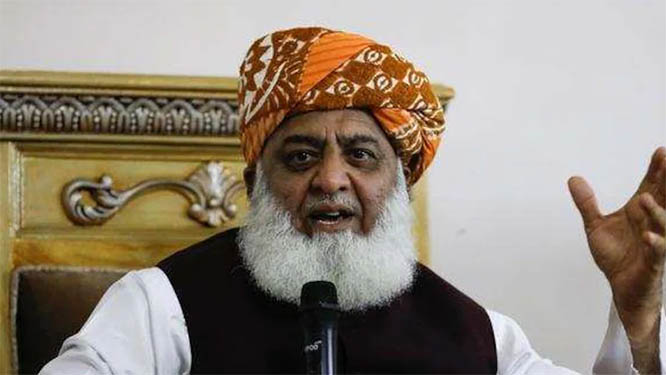
A Pakistani lawmaker has called out the hypocrisy of his country's leadership, drawing a parallel between Islamabad's military actions against Kabul and India's 'Operation Sindoor'.

Condemning the Pakistan army, led by Asim Munir, for strikes on Afghanistan - which resulted in civilian casualties - Jamiat Ulema-e-Islam-F (JUI-F) chief Maulana Fazlur Rehman questioned the consistency of Islamabad's logic. He argued that if Pakistan's cross-border attacks are considered justified, then the country has little ground to object when India enters Pakistani territory to eliminate terrorists.

Rehman was addressing the 'Majlis-e-Ittehad-e-Ummat' conference on Monday in Karachi's Lyari. The town recently gained international attention as the setting for the Ranveer Singh-starrer Dhurandhar, which depicted the intersection of informants and operatives within the Lyari underworld.

"If you say that we attacked our enemy in Afghanistan and justify this, then India can also say that it attacked Bahawalpur, Muridke, and the headquarters of groups responsible for the attack in Kashmir," Rehman said, referring to India's retaliatory strikes. "Then how can you raise objections? The same accusations are now being levelled against Pakistan by Afghanistan. How do you justify both positions?"

The JUI-F chief's remarks specifically referenced 'Operation Sindoor'.

On May 7, Indian armed forces carried out pre-dawn missile strikes on nine terror targets in Pakistan and Pakistan-occupied Kashmir, including the Jaish-e-Mohammad stronghold of Bahawalpur and Lashkar-e-Taiba's base in Muridke.

Pak-Afghanistan Tension

Fazlur Rehman has been a consistent critic of the Pakistani government's policy towards Afghanistan. In October, during a peak in bilateral tensions, he offered to mediate between the two nations. According to a Dawn report, he stated, "In the past, I have played a role in reducing tensions between Pakistan and Afghanistan, and I can still do so."

Rehman is known to wield significant influence within the region and remains the only Pakistani lawmaker to have met with the Taliban's supreme leader, Haibatullah Akhundzada.

Recently, India condemned Pakistan's fresh strikes on Afghanistan. "We have seen reports of border clashes in which several Afghan civilians have been killed," Ministry of External Affairs (MEA) spokesperson Randhir Jaiswal said at a weekly media briefing.

"We condemn such attacks on innocent Afghan people. India strongly supports the territorial integrity, sovereignty and independence of Afghanistan," he said.

A spokesperson for the Taliban regime claimed Pakistan initiated the attacks and that Kabul was "forced to respond".

The two countries have been locked in an increasingly bitter dispute since the Taliban authorities retook control in Kabul in 2021, with Islamabad accusing its neighbour of harbouring terrorists - a charge that the Afghan government denies.

Comments

Add new comment

  • Coastaldigest.com reserves the right to delete or block any comments.
  • Coastaldigset.com is not responsible for its readers’ comments.
  • Comments that are abusive, incendiary or irrelevant are strictly prohibited.
  • Please use a genuine email ID and provide your name to avoid reject.
News Network
December 22,2025

The Bharatiya Janata Party (BJP) received ₹6,654.93 crore in donations during the 2024-25 financial year — a Lok Sabha election year — registering a 68 per cent increase over the previous fiscal.

In its annual contribution report submitted to the Election Commission on December 8, two days ahead of the deadline, the BJP disclosed all donations exceeding ₹20,000. The report, now available on the Commission’s website, covers contributions received between April 1, 2024 and March 30, 2025 — a period marked by the general election and Assembly polls in Arunachal Pradesh, Sikkim, Andhra Pradesh, Odisha, Jammu and Kashmir, Haryana, Jharkhand, Maharashtra and Delhi.

The BJP, the world’s largest political party by membership, had reported donations of ₹3,967 crore in 2023-24. The latest figures represent the party’s highest donation receipts in the last five years.

Electoral trusts accounted for around 40 per cent of the BJP’s total donations. The Prudent Electoral Trust contributed ₹2,180 crore, followed by the Progressive Electoral Trust with ₹757 crore and the New Democratic Electoral Trust with ₹150 crore. Contributions from other electoral trusts together amounted to ₹3,112.5 crore. The remaining funds came from corporate donors and individuals. Electoral trusts are entities set up by companies to channel donations to political parties.

Among major corporate contributors, Serum Institute of India donated ₹100 crore, Rungta Sons Private Limited ₹95 crore, Vedanta ₹67 crore, and Macrotech Developers (formerly Lodha Developers) ₹65 crore. Three Bajaj Group companies together contributed ₹65 crore, while Derive Investments donated ₹50 crore.

Other notable donors included Malabar Gold (₹10 crore), Kalyan Jewellers (₹15.1 crore), Hero Group (₹23.65 crore), Dilip Buildcon Group (₹29 crore), ITC Limited (₹35 crore), Wave Industries (₹5.25 crore) and Zerodha’s investment firm, promoted by Nikhil Kamath, which contributed ₹1.5 crore.

Several BJP leaders also made individual donations. Assam Chief Minister Himanta Biswa Sarma donated ₹3 lakh, Assam minister Pijush Hazarika ₹2.75 lakh, Union Education Minister Dharmendra Pradhan ₹1 lakh, Odisha Chief Minister Mohan Charan Majhi ₹5 lakh, Indore Mayor Pushyamitra Bhargava ₹1 lakh, and Akash Vijayvargiya, son of senior BJP leader Kailash Vijayvargiya, also donated ₹1 lakh, among others.

In contrast, most opposition parties reported a sharp decline in donations. The Congress received ₹522.13 crore in 2024-25, a fall of about 43 per cent from ₹1,129 crore in the previous year. The Trinamool Congress saw donations drop to ₹184.08 crore from ₹618.8 crore, while the Bharat Rashtra Samithi reported just ₹15.09 crore, down from ₹580 crore.

The Aam Aadmi Party, however, recorded an increase, collecting ₹39.2 crore compared to ₹22.1 crore last year. The Telugu Desam Party received ₹85.2 crore in donations, down from ₹274 crore, but also earned ₹102 crore through fees and subscriptions. The Biju Janata Dal reported ₹60 crore in donations, compared to ₹246 crore in the previous fiscal.

The 2024-25 financial year is also the first without electoral bonds, after the Supreme Court struck down the scheme as unconstitutional in February 2024. Since its introduction in 2018, the electoral bond scheme had enabled political parties to receive over ₹16,000 crore in anonymous donations, with the BJP receiving the largest share. 

Comments

Add new comment

  • Coastaldigest.com reserves the right to delete or block any comments.
  • Coastaldigset.com is not responsible for its readers’ comments.
  • Comments that are abusive, incendiary or irrelevant are strictly prohibited.
  • Please use a genuine email ID and provide your name to avoid reject.
News Network
December 16,2025

jordan.jpg

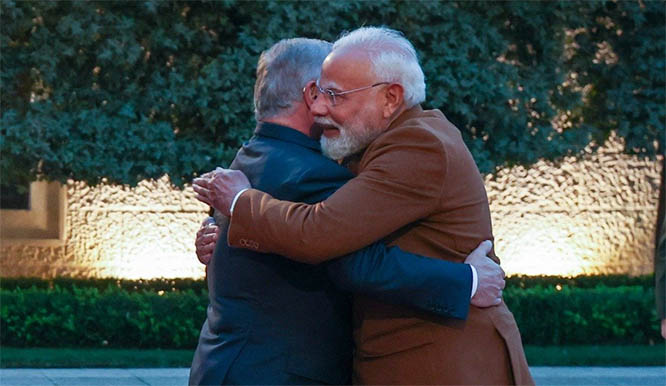
Prime Minister Narendra Modi on Monday held talks with Jordan’s King Abdullah II in Amman, during which the two leaders discussed ways to further strengthen bilateral relations, with the Prime Minister outlining an eight-point vision covering key areas of cooperation.

Describing the meeting as “productive”, PM Modi said he shared a roadmap focused on trade and economy, fertilisers and agriculture, information technology, healthcare, infrastructure, critical and strategic minerals, civil nuclear cooperation, and people-to-people ties.

In a post on social media platform X, the Prime Minister praised King Abdullah II’s personal commitment to advancing India–Jordan relations, particularly as both countries mark the 75th anniversary of the establishment of diplomatic ties this year.

“Held productive discussions with His Majesty King Abdullah II in Amman. His personal commitment towards vibrant India-Jordan relations is noteworthy. This year, we are celebrating the 75th anniversary of our bilateral diplomatic relations,” PM Modi said.

The meeting took place at the Al Husseiniya Palace, where the two leaders also exchanged views on regional and global issues of mutual interest. According to the Ministry of External Affairs (MEA), both sides agreed to further deepen cooperation in areas including trade and investment, defence and security, counter-terrorism and de-radicalisation, fertilisers and agriculture, infrastructure, renewable energy, tourism, and heritage.

The MEA said both leaders reaffirmed their united stand against terrorism.

PM Modi arrived in Amman earlier on Monday and was received by Jordanian Prime Minister Jafar Hassan, who accorded him a formal welcome. Following the talks, King Abdullah II hosted a banquet dinner in honour of the Prime Minister, reflecting the warmth of bilateral ties.

Jordan is the first leg of PM Modi’s three-nation tour. From Amman, the Prime Minister will travel to Ethiopia at the invitation of Prime Minister Abiy Ahmed Ali, marking his first official visit to the African nation. The tour will conclude with a visit to Oman.

Comments

Add new comment

  • Coastaldigest.com reserves the right to delete or block any comments.
  • Coastaldigset.com is not responsible for its readers’ comments.
  • Comments that are abusive, incendiary or irrelevant are strictly prohibited.
  • Please use a genuine email ID and provide your name to avoid reject.