



India lifted 271 mn people out of poverty in 10 yrs: UN

Agencies
July 12, 2019

United Nations, Jul 12: India lifted 271 million people out of poverty between 2006 and 2016, recording the fastest reductions in the multidimensional poverty index values during the period with strong improvements in areas such as "assets, cooking fuel, sanitation and nutrition," a report by the United Nations said.
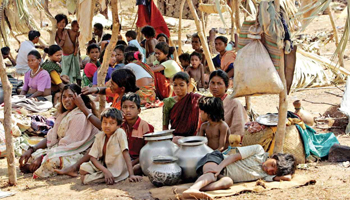
The 2019 global Multidimensional Poverty Index (MPI) from the UN Development Programme (UNDP), the Oxford Poverty and Human Development Initiative (OPHI) was released Thursday.

The report said that in the 101 countries studied – 31 low income, 68 middle income and 2 high income - 1.3 billion people are "multidimensionally poor", which means that poverty is defined not simply by income, but by a number of indicators, including poor health, poor quality of work and the threat of violence.

The report identifies 10 countries, with a combined population of around 2 billion people, to illustrate the level of poverty reduction, and all of them have shown statistically significant progress towards achieving Sustainable Development Goal 1, namely ending poverty "in all its forms, everywhere".

The 10 countries are Bangladesh, Cambodia, Democratic Republic of Congo, Ethiopia, Haiti, India, Nigeria, Pakistan, Peru and Vietnam.

The report said that within these 10 countries, data shows that 270 million people moved out of multidimensional poverty from one survey to the next.

"This progress was largely driven by South Asia. In India, there were 271 million fewer people in poverty in 2016 than in 2006, while in Bangladesh the number dropped by 19 million between 2004 and 2014," it said.

The report noted that of the 10 selected countries for which changes over time were analysed, India and Cambodia reduced their MPI values the fastest—and they did not leave the poorest groups behind.

India's MPI value reduced from 0.283 in 2005-06 to 0.123 in 2015-16.

Noting the examples of pro-poor reduction, where the poorest regions improved the fastest, the report said that Jharkhand in India reduced the incidence of multidimensional poverty from 74.9 per cent in 2005-06 to 46.5 per cent in 2015-16.

Mondol Kiri and Rattanak Kiri in Cambodia reduced it from 71.0 per cent to 55.9 per cent between 2010 and 2014.

Ethiopia, India and Peru significantly reduced deprivations in all 10 indicators, namely nutrition, sanitation, child mortality, drinking water, years of schooling, electricity, school attendance, housing, cooking fuel and assets.

In 2005-2006, the population in India living in multidimensional poverty stood at about 640 million people (55.1 per cent) and this reduced to 369 million people (27.9 per cent) living in poverty in 2015-16. India saw significant reductions in number of people who are multidimensionally poor and deprived in each of the 10 indicators over this time period.

India reduced deprivation in nutrition from 44.3 per cent in 2005-06 to 21.2 per cent in 2015-16, child mortality dropped from 4.5 per cent to 2.2 per cent, people deprived of cooking fuel reduced from 52.9 per cent to 26.2 per cent, deprivation in sanitation from 50.4 per cent to 24.6 per cent, those deprived of drinking water reduced from 16.6 per cent to 6.2 per cent.

Further more people gained access to electricity as deprivation was reduced from 29.1 per cent to 8.6 per cent, housing from 44.9 per cent to 23.6 per cent and assets deprivation from 37.6 per cent to 9.5 per cent.

The trends in these 10 countries also shine a light on where poverty reduction has been uneven, despite the good progress overall, it said.

"In all 10 countries rural areas are poorer than urban areas. In Cambodia, Haiti, India and Peru poverty reduction in rural areas outpaced that in urban areas–demonstrating pro-poor development–and in Bangladesh and Democratic Republic of the Congo poverty fell at the same speed in rural and urban areas,” it added.

The report also showed that children suffer poverty more intensely than adults and are more likely to be deprived in all 10 of the MPI indicators, lacking essentials such as clean water, sanitation, adequate nutrition or primary education.

Child poverty fell markedly faster than adult poverty in Bangladesh, Cambodia, Haiti, India and Peru. But children fell further behind in Ethiopia, and their progress—together with that of adults—stalled in Democratic Republic of the Congo and Pakistan.

Globally, of the 1.3 billion people who are multidimensionally poor, more than two-thirds of them—886 million— now live in middle-income countries. A further 440 million live in low-income countries.

Even more staggering, worldwide, one in three children is multidimensionally poor, compared to one in six adults. That means that nearly half of the people living in multidimensional poverty—663 million— are children, with the youngest children bearing the greatest burden. The vast majority of these children, around 85 per cent, live in South Asia and Sub-Saharan Africa, split roughly equally between the two regions.

The report underscored that the traditional concept of poverty is outdated, demonstrating more clearly than ever that labelling countries - or even households - as rich and poor is an oversimplification.

"To fight poverty, one needs to know where poor people live. They are not evenly spread across a country, not even within a household," UNDP Administrator Achim Steiner said.

The report also highlighted a positive trend that those furthest behind are moving up the fastest.


Comments

Add new comment

  • Coastaldigest.com reserves the right to delete or block any comments.
  • Coastaldigset.com is not responsible for its readers’ comments.
  • Comments that are abusive, incendiary or irrelevant are strictly prohibited.
  • Please use a genuine email ID and provide your name to avoid reject.
News Network
December 6,2025

indigoticket.jpg

With IndiGo flight disruptions impacting thousands of passengers, the airline on Saturday said that it will offer full waiver on all cancellations/reschedule requests for travel bookings between December 5, 2025 and December 15, 2025.

Earlier in the day, the civil aviation ministry had directed the airline to complete the ticket refund process for the cancelled flights by Sunday evening, as well as ensure baggage separated from the travellers are delivered in the next two days.

In a post on X, titled 'No questions asked', IndiGo wrote, "In response to recent events, all refunds for your cancellations will be processed automatically to your original mode of payment."

"We are deeply sorry for the hardships caused," it further added.

Several passengers, however, complained of not getting full refund as promised by the airline.

Netizens have shared screenchots of getting charged for airline cancellation fee and convenience fee.

"Please tell me why u have did this airline cancellation charges when u say full amount will be refunded (sic)," a user wrote sharing a screenshot of the refund page.

"Well, but you have still debited the convenience charges," wrote another.

Passengers have also raised concerns about the "cancel" option being disabled on the IndiGo app. "First enable the 'Cancel' button on your App & offer full refund on tickets cancelled by customers between the said dates," wrote a user.

A day after the country's largest airline, IndiGo, cancelled more than 1,000 flights and caused disruptions for the fifth day on Saturday, the ministry said that any delay or non-compliance in refund processing will invite immediate regulatory action.

The refund process for all cancelled or disrupted flights must be completed by 8 pm on Sunday, the ministry said in a statement.

"Airlines have also been instructed not to levy any rescheduling charges for passengers whose travel plans were affected by cancellations," it said.

On Saturday, more than 400 flights were cancelled at various airports.

IndiGo has also been instructed to set up dedicated passenger support and refund facilitation cells.

Comments

Add new comment

  • Coastaldigest.com reserves the right to delete or block any comments.
  • Coastaldigset.com is not responsible for its readers’ comments.
  • Comments that are abusive, incendiary or irrelevant are strictly prohibited.
  • Please use a genuine email ID and provide your name to avoid reject.
News Network
December 7,2025

Mangaluru, Dec 7: A 34-year-old fruit and vegetable trader in Mangaluru has reportedly lost ₹33.1 lakh after falling victim to an online investment scam run through a fake mobile app.

Police said the scam began in September, when the victim received a link on Facebook. Clicking it connected him to a WhatsApp number, where an unidentified person introduced a high-return investment scheme and instructed him to download an app.

To build trust, the fraudster asked him to invest ₹30,000 on September 24. The trader soon received ₹34,000 as “profit,” convincing him the scheme was genuine. Over the next two months, he transferred money in multiple instalments via Google Pay and IMPS to different scanner codes and bank accounts shared by the scammers. Between September 24 and December 3, he ended up sending a total of ₹33.1 lakh.

When he later requested a refund of his investment and promised returns, the scammers demanded additional payments, claiming he needed to pay a “service tax” first. Even after he paid a small amount, no money was returned, and the scammers continued pressuring him for more.

A case has been registered at the CEN Crime Police Station.

Comments

Add new comment

  • Coastaldigest.com reserves the right to delete or block any comments.
  • Coastaldigset.com is not responsible for its readers’ comments.
  • Comments that are abusive, incendiary or irrelevant are strictly prohibited.
  • Please use a genuine email ID and provide your name to avoid reject.
News Network
December 19,2025

Saudi Arabia has abolished fees on expatriate workers employed in licensed industrial establishments, signaling a strong push to empower national factories and enhance the Kingdom’s global industrial competitiveness. The move reflects the leadership’s commitment to building a sustainable and resilient industrial economy under Saudi Vision 2030.

The decision was approved by the Council of Ministers, chaired by Crown Prince and Prime Minister Mohammed bin Salman, following a recommendation from the Council of Economic and Development Affairs (CEDA). It forms part of a broader strategy to support, modernize, and strengthen the industrial sector.

By removing fees on foreign workers, industrial establishments gain greater operational flexibility and relief from financial pressures. This is expected to help factories expand production, improve efficiency, and compete more effectively in international markets, while reinforcing long-term sustainability.

The initiative aligns closely with Saudi Vision 2030, which identifies industry as a key pillar of economic diversification. A competitive and resilient industrial base is viewed as essential for driving innovation, attracting investment, and sustaining long-term economic growth.

Overall, the fee exemption underscores the Kingdom’s commitment to creating a supportive environment for industrial development and ensuring that Saudi factories remain globally competitive and capable of leading the nation’s economic transformation.

Comments

Add new comment

  • Coastaldigest.com reserves the right to delete or block any comments.
  • Coastaldigset.com is not responsible for its readers’ comments.
  • Comments that are abusive, incendiary or irrelevant are strictly prohibited.
  • Please use a genuine email ID and provide your name to avoid reject.