



India's retail inflation hits 8-month high of 3.18% on back of higher food prices

Agencies
July 13, 2019

New Delhi, Jul 13: India's macro-economic data presented a slightly grim picture as food prices pushed India's retail inflation higher in June, and lower manufacturing output slowed down the country's industrial production in May.

The two key economic macro-data points -- Index of Industrial Production (IIP) for May and Consumer Price Index (CPI) for June -- were released by the Ministry of Statistics and Programme Implementation on Friday.

As per the data furnished by the National Statistical Office (NSO), higher food prices accelerated India's June retail inflation to 3.18 per cent from 3.05 per cent in May.

However, on a year-on-year (YoY) basis, the CPI in June 2019 was lower than the corresponding period of last year when retail inflation stood at 4.92 per cent.

The Consumer Food Price Index (CFPI) inflated to 2.17 per cent during the month under review from an expansion of 1.83 per cent in May 2019.

Product-wise, the prices of milk-based items, egg, meat and fish increased in March YoY. In contrast, a deflation trend was witnessed in the cost of vegetables and pulses. 

Prices of milk-based products rose marginally by 0.68 per cent, while egg became dearer by 1.62 per cent and meat and fish prices recorded a rise of 9.01 per cent.

On a sub-category basis, vegetable prices increased on a YoY basis in June to 4.66 per cent. The category of "pulses and products" became expensive 5. 68 per cent and that of "sugar and confectionery" (-)0.09 per cent.

In terms of IIP, the country's factory output growth eased in May 2019 as it rose by 3.1 per cent from a revised growth of 4.32 per cent reported for April 2019. 

Even on a YoY basis, May's industrial production growth of 3.1 per cent was lower than the 3.8 per cent achieved during the corresponding month of the previous fiscal. 

"The cumulative growth for the April-May 2019 period over the corresponding period of the previous year stands at 3.7 per cent," the Ministry of Statistics & Programme Implementation said in 'Quick Estimates of IIP.

Besides, the output rate of the manufacturing sector rose 2.5 per cent in May from a year-on-year (YoY) rise of 3.6 per cent. On a YoY level, mining production grew 3.2 per cent from a rise of 5.8 per cent and the sub-index of electricity generation was higher by 7.4 per cent from 4.2 per cent.

Among the six use-based classification groups, the output of primary goods, with the highest weightage of 34.04, grew by 2.5 per cent. The output of intermediate goods, which has the second highest weightage, inched up by 0.6 per cent. 

Similarly, output of consumer non-durables rose 7.7 per cent, however, consumer durables slipped (-)0.1 per cent. 

In addition, output of infrastructure or construction goods increased by 5 .5 per cent, but that of capital goods inched-up by 0.8 per cent. In terms of industries, 12 out of the 23 industry groups in the manufacturing sector have showed positive growth during the month under review as compared to the corresponding month of the previous year.

"The industry group 'Manufacture of wood and products of wood and cork, ex cept furniture; manufacture of articles of straw and plaiting materials' has shown the highest positive growth of 24.8 per cent followed by 15.9 per cen t in 'Manufacture of food products' and 9.4 per cent in 'Manufacture of computer, electronic and optical products." 

"On the other hand, the industry group 'Manufacture of paper and paper pro ducts' has shown the highest negative growth of (-) 12.2 per cent followed b y (-) 9.9 per cent in 'Manufacture of furniture' and (-) 8.7 per cent in 'manufacture of fabricated metal products, except machinery and equipment'." 

On IIP, Aditi Nayar, Principal Economist, ICRA said: "The sequential dip in industrial growth in May 2019 reflects the trend in core sector expansion, which offset the shallower drag from the contraction in auto production, as well as an improvement in growth of non oil merchandise exports." 

According to Madhavi Arora, Economist, Edelweiss Securities said: "The CPI inflation ticks up to 3.18 per cent but remains overall benign... The uptick in June was largely led by sequential uptick in food components, while sequential increase in core components moderated." 

"The food inflation seasonal uptrend will likely continue in the near term , albeit stay benign overall, partly reflecting structural change in food in flation dynamics." 

Devendra Pant, Chief Economist, India Ratings and Research, said: "CPI inflation is likely to follow its gradual increasing trend in the first half of this fiscal and likely to touch 4 per cent mark in third quarter (mainly due to base effect). 

"The August 2019 Monetary Policy growth inflation dynamics of Indian economy are evenly balanced," he said.

Comments

Add new comment

  • Coastaldigest.com reserves the right to delete or block any comments.
  • Coastaldigset.com is not responsible for its readers’ comments.
  • Comments that are abusive, incendiary or irrelevant are strictly prohibited.
  • Please use a genuine email ID and provide your name to avoid reject.
News Network
December 16,2025

IPL.jpg

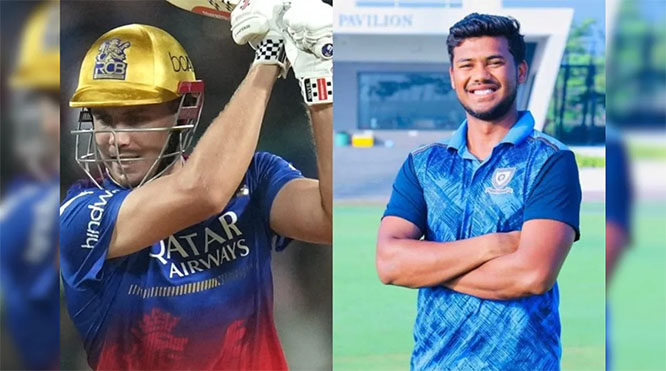
The IPL 2026 auction has seen uncapped Indian stars laugh their way to the bank. While Cameron Green set a world record as he was roped in by Kolkata Knight Riders for Rs 25.20 crore, making him the costliest overseas player ever in any franchise competition across the world, CSK roped in Prashant Veer and Kartik Sharma for a record bid of Rs 14.20 crore each. Sri Lanka's Matheesha Pathirana was picked up for Rs 18 crore by KKR. 

However, top names like Liam Livingstone, Prithvi Shaw, and Sarfaraz Khan have gone unsold. The mini-auction for IPL 2026 is being held in Abu Dhabi, with three-time winners Kolkata Knight Riders coming in with the biggest purse (Rs 64.30 crore). Chennai Super Kings entered the auction with the second-biggest purse (Rs 43.40 crore). The upcoming edition of the Indian Premier League will be held between March 26 and May 31.

Here is the full list of sold and unsold players:

Jake Fraser-McGurk - Base Price Rs 2 crore - Unsold
David Miller - Base Price Rs 2 crore - Delhi Capitals - Rs 2 crore
Prithvi Shaw - Base Price Rs 75 lakh - Unsold
Devon Conway - Base Price Rs 2 crore - Unsold
Cameron Green - Base Price Rs 2 crore - Kolkata Knight Riders - Rs 25.20 crore
Sarfaraz Khan - Base Price Rs 75 lakh - Unsold
Gus Atkinson - Base Price Rs 2 crore - Unsold
Rachin Ravindra - Base Price Rs 2 crore - Unsold
Liam Livingtone - Base Price Rs 2 crore - Unsold
Wiaan Mulder - Base Price Rs 1 crore - Unsold
Wanindu Hasaranga - Base Price Rs 2 crore - LSG - Rs 2 crore
Venkatesh Iyer - Base Price Rs 2 crore - RCB - Rs 7 crore
Deepak Hooda - Base Price Rs 75 lakh - Unsold
KS Bharat - Base Price Rs 75 lakh - Unsold
Quinton De Kock - Base Price Rs 1 crore - Mumbai Indians - Rs 1 crore
Rahmanullah Gurbaz - Base Price Rs 1.50 crore - Unsold
Jonny Bairstow - Base Price Rs 1 crore - Unsold
Jamie Smith - Base Price Rs 2 crore - Unsold
Ben Duckett - Base Price Rs 2 crore - Delhi Capitals - Rs 2 crore
Finn Allen - Base Price Rs 2 crore - KKR - Rs 2 crore
Matt Henry - Base Price Rs 2 crore - Unsold
Akash Deep - Base Price Rs 1 crore - Unsold
Jacob Duffy - Base Price Rs 2 crore - RCB - Rs 2 crore
Shivam Mavi - Base Price Rs 75 lakh - Unsold
Gerald Coetze - Base Price Rs 2 crore - Unsold
Matheesha Pathirana - Base Price Rs 2 crore - KKR - Rs 18 crore
Spencer Johnson - Base Price Rs 1.50 crore - Unsold
Anrich Nortje - Base Price Rs 2.00 crore - LSG Rs 2 crore
Fazalhaq Farooqui - Base Price Rs 1.00 crore - Unsold
Rahul Chahar - Base Price Rs 1.00 crore - Unsold
Ravi Bishnoi - Base Price Rs 2.00 crore - RR - Rs 7.20 crore
Maheesh Theekshana - Base Price Rs 2.00 crore - Unsold
Mujeeb Ur Rahman - Base Price Rs 2.00 crore - Unsold
Akeal Hosein - Base Price Rs 2.00 crore - CSK - Rs 2 crore
Atharva Taide - Base Price Rs 30 lakh - Unsold
Anmolprteet SIngh - Base Price Rs 30 lakh - Unsold
Abhinav Tejrana - Base Price Rs 30 lakh - Unsold
Abhinav Manohar - Base Price Rs 30 lakh - Unsold
Yash Dhull - Base Price Rs 30 lakh - Unsold
Aarya Desai - Base Price Rs 30 lakh - Unsold
Auqib Dar - Base Price Rs 30 lakh - DC - Rs 8.40 crore
Vijay Shankar - Base Price Rs 30 lakh - Unsold
Rajvardhan Hangargekar - Base Price Rs 40 lakh - Unsold
Mahipal Lomror - Base Price Rs 50 lakh - Unsold
Eden Apple Tom - Base Price Rs 30 lakh - Unsold
Prashant Veer - Base Price Rs 30 lakh - CSK Rs 14.20 crore
Shivang Kumar - Base Price Rs 30 lakh - SRH - Rs 30 lakh
Tanush Kotian - Base Price Rs 30 lakh - Unsold
Kamlesh Nagarkoti - Base Price Rs 30 lakh - Unsold
Sanvir Singh - Base Price Rs 30 lakh - Unsold
Rouchit Ahir - Base Price Rs 30 lakh - Unsold
Kartik Sharma - Base Price Rs 30 lakh - CSK Rs 14.20 crore
Mukul Choudhary - Base Price Rs 30 lakh - LSG Rs 2.60 crore
Tejasvi Singh - Base Price Rs 30 lakh - KKR - Rs 3 crore
Vansh Bedi - Base Price Rs 30 lakh - Unsold
Tushar Raheja - Base Price Rs 30 lakh - Unsold
Ashok Sharma - Base Price Rs 30 lakh - GT - Rs 90 lakh
Raj Limbani - Base Price Rs 30 lakh - Unsold
Kartik Tyagi - Base Price Rs 30 lakh - KKR - Rs 30 Lakh
Simarjeet Singh - Base Price Rs 30 lakh - Unsold
Aarya Desai - Base Price Rs 30 lakh - Unsold
Naman Tiwari - Base Price Rs 30 lakh - LSG - Rs 1 crore
Aakash Madhwal - Base Price Rs 30 lakh - Unsold
Sushant Mishra - Base Price Rs 30 lakh - RR - Rs 90 lakh
Wahidullah Zadran - Base Price Rs 30 lakh - Unsold
Shivam Shukla - Base Price Rs 30 lakh - Unsold
Yash Raj Punja - Base Price Rs 30 lakh - RR - Rs 30 Lakh
Prashant Solanki - Base Price Rs 30 lakh - KKR - Rs 30 Lakh
Vignesh Puthur - Base Price Rs 30 lakh - RR - Rs 30 lakh
Karn Sharma - Base Price Rs 50 lakh - Unsold
Kumar Kartikeya Singh - Base Price Rs 30 lakh - Unsold
Sediqullah Atal - Base Price Rs 75 lakh - Unsold
Pathum NIssanka - Base Price Rs 75 lakh - DC - Rs 4 Crore
Rahul Tripathi - Base Price Rs 75 lakh - KKR - Rs 75 lakh
Sean Abbott - Base Price Rs 2 crore - Unsold
Michael Bracewell - Base Price Rs 2 crore - Unsold
Ben Dwarshuis - Base Price Rs 1 crore - Unsold
Jason Holder - Base Price Rs 2 crore - GT Rs 7 crore
Dashun Shanaka - Base Price Rs 75 lakh - Unsold
Daryll Mitchell - Base Price Rs 2 crore - Unsold
Matthew Short - Base Price Rs 1.50 crore - CSK - Rs 1.50 crore
Tom Banton - Base Price Rs 2 crore - Unsold
Jordan Cox - Base Price Rs 75 lakh - Unsold
Josh Inglis - Base Price Rs 2 crore - Unsold
Tim Seifert - Base Price Rs 1.50 crore - KKR - Rs 1.50 Crore
Kyle Jamieson - Base Price Rs 2 crore - Unsold
Adam Milne - Base Price Rs 2 crore - Unsold
Lungi Ngidi - Base Price Rs 2 crore - Unsold
Mustafizur Rahman - Base Price Rs 2 crore - KKR - Rs 9.2 crore
Chetan Sakariya - Base Price Rs 75 lakh - Unsold
Kuldeep Sen - Base Price Rs 75 lakh - Unsold
Waqar Salamkheil - Base Price Rs 1 crore - Unsold
Danish Malewar - Base Price Rs 30 lakh - MI - Rs 30 lakh
Salman Nizar - Base Price Rs 30 lakh - Unsold
Akshat Raghuwanshi - Base Price Rs 30 lakh - LSG - Rs 2.2 crore 
Satvik Deswak - Base Price Rs 30 lakh - RCB - Rs 30 lakh
Aman Khan - Base Price Rs 30 lakh - CSK - Rs 40 lakh
Vicky Ostwal - Base Price Rs 30 lakh - Unsold
Mayank Rawat - Base Price Rs 30 lakh - Unsold
Mangesh Yadav - Base Price Rs 30 lakh - RCB - Rs 5.20 crore
Salil Arora - Base Price Rs 30 lakh - SRH - Rs 1.40 crore
Ravi Singh - Base Price Rs 30 lakh - RR - Rs 95 lakh
KM Asif - Base Price Rs 40 lakh - Unsold
Sakib Hussain - Base Price Rs 30 lakh - SRH - Rs 30 lakh 
Mohammad Izhar - Base Price Rs 30 lakh - MI - Rs 30 lakh 
Onkar Tarmale - Base Price Rs 30 lakh - SRH - Rs 30 Lakh
Murugan Ashwin - Base Price Rs 30 lakh - Unsold
Tejas Baroke - Base Price Rs 30 lakh - Unsold
KC Cariappa - Base Price Rs 30 lakh - Unsold
Mohit Rathee - Base Price Rs 30 lakh - Unsold
Cooper Connolly - Base Price Rs 2 Crore - PBKS - Rs 3 crore
Dan Lawrence - Base Price Rs 2 crore - Unsold
Taskin Ahmed - Base Price Rs 75 lakh - Unsold
Richard Gleeson - Base Price Rs 75 lakh - Unsold
Alzarri Joseph - Base Price Rs 2 crore - Unsold
Riley Meredith - Base Price Rs 1.50 crore - Unsold
Jhye Richardson - Base Price Rs 1.50 crore - Unsold
Dheeraj Kumar - Base Price Rs 30 lakh - Unsold
Tanay Thyagarajan - Base Price Rs 30 lakh - Unsold
Connor E. - Base Price Rs 30 lakh - Unsold
Irfan Umair - Base Price Rs 30 lakh - Unsold
Chintal Gandhi - Base Price Rs 30 lakh - Unsold
Amit Kumar - Base Price Rs 30 lakh - SRH - Rs 30 lakh 
Vishal Nishad - Base Price Rs 30 lakh - Unsold 
Nathan Smith - Base Price Rs 75 lakh - Unsold 
Daniel Lategan - Base Price Rs 30 lakh - Unsold 
Atharva Ankolekar - Base Price Rs 30 lakh - MI - Rs 30 Lakh
Karan Lal - Base Price Rs 30 lakh - Unsold 
Utkarsh Singh - Base Price Rs 30 lakh - Unsold 
Ayush Vartak - Base Price Rs 30 lakh - Unsold
Ayush Hinge - Base Price Rs 30 lakh - SRH - Rs 30 Lakh
Jikku Bright - Base Price Rs 30 lakh - Unsold
Izaz Sawariya - Base Price Rs 30 lakh - Unsold
Krains Fuletra - Base Price Rs 30 lakh - SRH - Rs 30 lakh
Sarthak Ranjan - Base Price Rs 30 lakh - KKR - Rs 30 lakh
Daksh Kamra - Base Price Rs 30 lakh - KKR - Rs 30 lakh
Manishankar Murasingh - Base Price Rs 30 lakh - Unsold

Comments

Add new comment

  • Coastaldigest.com reserves the right to delete or block any comments.
  • Coastaldigset.com is not responsible for its readers’ comments.
  • Comments that are abusive, incendiary or irrelevant are strictly prohibited.
  • Please use a genuine email ID and provide your name to avoid reject.
News Network
December 6,2025

pilot.jpg

New Delhi: IndiGo, India’s largest airline, faced major operational turbulence this week after failing to prepare for new pilot-fatigue regulations issued by the Directorate General of Civil Aviation (DGCA). The stricter rules—designed to improve flight safety—took effect in phases through 2024, with the latest implementation on November 1. IndiGo has acknowledged that inadequate roster planning led to widespread cancellations and delays.

Below are the key DGCA rules that affected IndiGo’s operations:

1. Longer Mandatory Weekly Rest

Weekly rest for pilots has been increased from 36 hours to 48 hours.

The government says the extended break is essential to curb cumulative fatigue. This rule remains in force despite the current crisis.

2. Cap on Night Landings

Pilots can now perform only two night landings per week—a steep reduction from the earlier limit of six.

Night hours, defined as midnight to early morning, are considered the least alert period for pilots.

Given the disruptions, this rule has been temporarily relaxed for IndiGo until February 10.

3. Reduced Maximum Night Flight Duty

Flight duty that stretches into the night is now capped at 10 hours.

This measure has also been kept on hold for IndiGo until February 10 to stabilize operations.

4. Weekly Rest Cannot Be Replaced With Personal Leave

Airlines can no longer count a pilot’s personal leave as part of the mandatory 48-hour rest.

Pilots say this closes a loophole that previously reduced actual rest time.

Currently, all airlines are exempt from this rule to normalise travel.

5. Mandatory Fatigue Monitoring

Airlines must submit quarterly fatigue reports along with corrective actions to DGCA.

This system aims to create a transparent fatigue-tracking framework across the industry.

The DGCA has stressed that these rules were crafted to strengthen flight safety and align India with global fatigue-management standards. The temporary relaxations are expected to remain until February 2025, giving IndiGo time to stabilise its schedules and restore normal air travel.

Comments

Add new comment

  • Coastaldigest.com reserves the right to delete or block any comments.
  • Coastaldigset.com is not responsible for its readers’ comments.
  • Comments that are abusive, incendiary or irrelevant are strictly prohibited.
  • Please use a genuine email ID and provide your name to avoid reject.
News Network
December 13,2025

New Delhi: School-going children are picking up drug and smoking habits and engaging in consumption of alcohol, with the average age of introduction to such harmful substances found to be around 13 years, suggesting a need for earlier interventions as early as primary school, a multi-city survey by AIIMS-Delhi said.

The findings also showed substance use increased in higher grades, with grade XI/XII students two times more likely to report use of substances when compared with grade VIII students. This emphasised the importance of continued prevention and intervention through middle and high school.

The study led by Dr Anju Dhawan of AIIMS's National Drug Dependence Treatment Centre, published in the National Medical Journal of India this month, looks at adolescent substance use across diverse regions.

The survey included 5,920 students from classes 8, 9, 11 and 12 in urban government, private and rural schools across 10 cities -- Bengaluru, Chandigarh, Delhi, Dibrugarh, Hyderabad, Imphal, Jammu, Lucknow, Mumbai, and Ranchi. The data were collected between May 2018 and June 2019.

The average age of initiation for any substance was 12.9 (2.8) years. It was lowest for inhalants (11.3 years) followed by heroin (12.3 years) and opioid pharmaceuticals (without prescription; 12.5 years).

Overall, 15.1 per cent of participants reported lifetime use, 10.3 per cent reported past year use, and 7.2 per cent reported use in the past month of any substance, the study found.

The most common substances used in the past year, after tobacco (4 per cent) and alcohol (3.8 per cent), were opioids (2.8 per cent), followed by cannabis (2 per cent) and inhalants (1.9 per cent). Use of non-prescribed pharmaceutical opioids was most common among opioid users (90.2 per cent).

On being asked, 'Do you think this substance is easily available for a person of your age' separately for each substance category, nearly half the students (46.3 per cent) endorsed that tobacco products and more than one-third of the students (36.5 per cent) agreed that a person of their age can easily procure alcohol products.

Similarly, for Bhang (21.9 per cent), ganja/charas (16.1 per cent), inhalants (15.2 per cent), sedatives (13.7 per cent), opium and heroin (10 per cent each), the students endorsed that these can be easily procured.

About 95 per cent of the children, irrespective of their grade, agreed with the statement that 'drug use is harmful'.

The rates of substance use (any) among boys were significantly higher than those of girls for substance use (ever), use in the past year and use in the past 30 days. Compared to grade VIII students, grade IX students were more likely, and grade XI/XII students were twice as likely to have used any substance (ever).

The likelihood of past-year use of any substance was also higher for grade IX students and for grade XI/XII students as compared to grade VIII students.

About 40 per cent of students mentioned that they had a family member who used tobacco or alcohol each. The use of cannabis (any product) and opioid (any product) by a family member was reported by 8.2 per cent and 3.9 per cent of students, respectively, while the use of other substances, such as inhalants/sedatives by family was 2-3 per cent, the study found.

A relatively smaller percentage of students reported use of tobacco or alcohol among peers as compared to among family members, while a higher percentage reported inhalants, sedatives, cannabis or opioid use among peers.

Children using substances (past year) compared to non-users reported significantly higher any substance use by their family members and peers.

There were 25.7 per cent students who replied 'yes' to the question 'conflicts/fights often occur in your family'. Most students also replied affirmatively to 'family members are aware of how their time is being spent' and 'damily members are aware of with whom they spend their time'.

Comments

Add new comment

  • Coastaldigest.com reserves the right to delete or block any comments.
  • Coastaldigset.com is not responsible for its readers’ comments.
  • Comments that are abusive, incendiary or irrelevant are strictly prohibited.
  • Please use a genuine email ID and provide your name to avoid reject.
