Amidst growing India-UAE ties, Sangh Parivar seeks to promote Hindu culture in Arab land

News Network
February 13, 2024

hinduabudhabi.jpg

Prime Minister Narendra Modi, who last month opened the doors to a controversial Ayodhya temple in India where a centuries-old mosque once stood, is all set to inaugurate another Hindu religious site this week— in the Arab land. 

The pink sandstone temple in the United Arab Emirates has been built on a 27-acre plot granted on lease by President Sheikh Mohammed bin Zayed Al Nahyan for as long as “the sun shines.” In an election year, the imposing edifice offers Modi a headline-grabbing opportunity to portray himself as a global leader with the ability to draw big foreign investments.

Interestingly, Indian expatriate Hindus are the third largest Religious group in the UAE and constitute around 6.6%-15% of the population in the nation. 

Most of the Hindu diaspora in UAE are Indian, especially from Tamil Nadu, Kerala, Maharashtra, and Punjab. The other Hindus are from Nepal, Pakistan, Bangladesh, Sri Lanka, and Bhutan.

Meanwhile, the Sangh Parivar (the Rashtriya Swayamsevak Sangh and its affiliates), which has been trying to promote Hindu culture in Arab land for decades through Indian expats, has seized the opportunity of growing friendship between the rulers of two countries to achieve its goals.

Investment pledges or memorandums of understanding between the two countries are expected to be announced during Modi’s visit. The prime minister will also address more than 40,000 people from the South Asian nation in a stadium in Abu Dhabi on February 13.

It’s a unique mix of religion, politics and money. Throngs of people waving flags gathered to greet the UAE president, known as MBZ, as he was welcomed by Modi at the airport of his home state Gujarat last month.

While Islam is the UAE’s state religion, Bharatiya Janata Party (BJP) has long had a strained relationship with India’s Muslim population. Still, Emirati officials said there is a growing appreciation in Abu Dhabi of India’s rising geopolitical importance as well as its position as the world’s fastest growing major economy. That would make it strategically important for the UAE to navigate around any differences in opinion with New Delhi, they said.

Modi has said that MBZ is like a brother to him, Brahmaviharidas Swami, the Hindu priest heading the temple said on a zoom call, standing in front of the site clad in saffron robes. “The relationship between India and the region has never been stronger.”

There are big business considerations. India is one of the largest customers of Middle Eastern oil. The country is also buying more liquefied natural gas from the region.

Meanwhile, sovereign wealth funds in the UAE and other parts of the Gulf have emerged as prominent investors in the South Asian nation. Royal Group — the private investment firm of UAE national security adviser Sheikh Tahnoon bin Zayed Al Nahyan — has long had an affinity for India, with executives there calling it the potential growth engine of the coming decade. In recent days, his artificial intelligence firm set up a new entity called G42 India Enterprises Holding RSC Ltd. within Abu Dhabi Global Market, filings show.

The UAE is weighing provisional pledges to invest as much as $50 billion in India, its second-largest trading partner, people familiar with the matter told Bloomberg News last year. While it’s unclear if all those investments will ultimately come through and when any agreements might be announced, they would offer Modi another opportunity showcase the international ties.

“These funds are coming into India not as an assistance but on a bet that India will do really well over the next few decades,” said Rajeev Misra, an Indian-born financier, who has over the years been entrusted with billions of dollars from Middle Eastern funds. “To tap this golden opportunity a system has to be put into place in India, which can guide the money to the right opportunities.”

Close Connections

Politically, the countries have grown closer in recent years. Modi’s latest visit will mark his seventh trip to the Gulf nation since he took over as prime minister in 2014. The last Indian premier to visit the UAE before him was Indira Gandhi in 1981.

In 2021, the Gulf nation helped broker a peace deal between India and Pakistan. More recently, the UAE was one of the countries invited to join the BRICS bloc, of which India is a part. Modi is increasingly being courted by global leaders, including US President Joe Biden.

“Both UAE and India stand to gain economically and geopolitically from the close relationship built over the recent years,” said Thomas Mathew, a New Delhi-based retired bureaucrat and international relations analyst. “The US and western bloc is also pushing to strengthen the bond as it helps in containing China which has ambitions in the region.”

Other Middle Eastern countries have also looked to strengthen ties with India. Saudi Arabia announced its intention to invest $100 billion in the country in 2019 and during a September visit Crown Prince Mohammed bin Salman discussed ways to quicken the implementation of those plans.

The UAE and India have historically enjoyed close ties. A third of the Gulf country’s population hails from India and Dubai counts Indians as among the top buyers of real estate in the city. The UAE was expected to be the top destination for migrating high net worth Indians in 2023, according to immigration firm Henley & Partners.

Billionaires Gautam Adani and Mukesh Ambani are among India’s wealthy to have made big investments in the Middle Eastern country. In turn, they’ve also managed to draw funding from state-backed entities in the region.

Against this backdrop, the treatment of Muslims in the country is an issue that “Abu Dhabi should voice behind closed doors,” said Abdulkhaleq Abdulla, an Emirati academic. “It’s not enough to encroach on the broader economic ties, security partnerships and overall national interest.”

To be sure, many of the pledges or MOUs from Middle Eastern countries remain promises and limited amounts have actually reached Indian shores so far.

Other big plans for deepening ties have also been slow to take off on the ground. The India-Middle East-Europe Economic Corridor — a project that envisages building new rail links across the Arabian peninsula — was intended to further strengthen the relationship between the countries.

Comments

Add new comment

  • Coastaldigest.com reserves the right to delete or block any comments.
  • Coastaldigset.com is not responsible for its readers’ comments.
  • Comments that are abusive, incendiary or irrelevant are strictly prohibited.
  • Please use a genuine email ID and provide your name to avoid reject.
News Network
December 3,2025

indigo.jpg

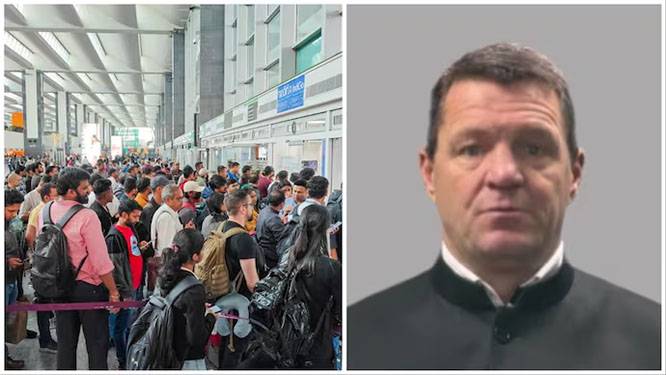
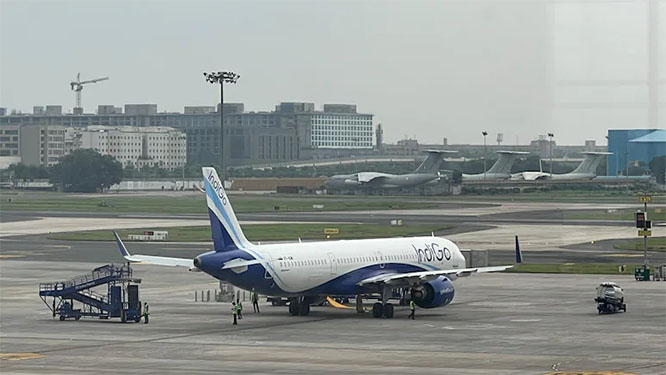
IndiGo, India’s largest airline, is battling one of its worst operational disruptions in recent years, with hundreds of delays and cancellations throwing domestic travel into chaos.

Government data on Tuesday showed its on-time performance plunging to 35%, an unusual dip for a carrier long associated with punctuality.

By Wednesday afternoon, airports in Delhi, Mumbai, Bengaluru and Hyderabad had collectively reported close to 200 cancellations, stranding travellers across the country.

Crew Shortage After New Duty Norms

A major trigger behind the meltdown is a severe crew shortage, especially among pilots, following the rollout of revised Flight Duty Time Limitation (FDTL) norms last month.

The rules mandate longer rest hours and more humane rosters — a shift IndiGo has struggled to incorporate across its vast network.

Sources said several flights were grounded due to lack of cabin crew, while some delays stretched upwards of eight hours.

With IndiGo controlling over 60% of India’s domestic aviation market, the ripple effect has impacted airports nationwide.

IndiGo Issues Apology, Lists “Compounding Factors”

In a statement, IndiGo acknowledged the large-scale disruption:

“We sincerely apologise to customers. A series of unforeseen operational challenges — technology glitches, winter schedule changes, adverse weather, system congestion and updated FDTL norms — created a compounding impact that could not have been anticipated.”

To stabilise operations, the airline has begun calibrated schedule adjustments for the next 48 hours, aiming to restore punctuality. Affected passengers are being offered refunds or alternate travel arrangements, IndiGo said.

What the FDTL Rules Require

The FDTL norms, designed to reduce pilot fatigue, cap duty and flying hours as follows:
•    Maximum 8 hours of flying per day
•    35 hours per week
•    125 hours per month
•    1,000 hours per year

Crew must also receive rest equalling twice the flight duration, with a minimum 10-hour rest period in any 24-hour window.

The DGCA introduced these limits to enhance flight safety.

Hyderabad: 33 Flights Cancelled, Long Queues Reported

Hyderabad’s Rajiv Gandhi International Airport saw heavy early-morning crowds as 33 IndiGo flights (arrivals and departures) were cancelled.

The airport clarified on X that operations were normal, advising passengers to contact IndiGo directly for latest flight status.

Cancellations included flights to and from Visakhapatnam, Goa, Ahmedabad, Delhi, Bengaluru, Chennai, Madurai, Hubli, Bhopal and Bhubaneswar.

Bengaluru: 42 Flights Disrupted

Bengaluru’s Kempegowda International Airport recorded 42 cancellations — 22 arrivals and 20 departures — affecting routes to Delhi, Mumbai, Chennai, Hyderabad, Goa, Kolkata and Lucknow.

Passengers Vent on Social Media

Irate travellers took to X to share their experiences. One passenger stranded in Hyderabad wrote: “I have been here since 3 a.m. and missed an important meeting.”

Another said: “My flight was pushed from 1:55 PM to 2:55 PM and now 4:35 PM. I was informed only three minutes before entering the airport.”

Delhi Airport Hit by Tech Glitch

At Delhi Airport, the disruption deepened due to a slowdown in the Amadeus system — used for reservations, check-ins and departure control.

The technical issue led to longer queues and sluggish processing, adding to delays already worsened by staff shortages.

Comments

Add new comment

  • Coastaldigest.com reserves the right to delete or block any comments.
  • Coastaldigset.com is not responsible for its readers’ comments.
  • Comments that are abusive, incendiary or irrelevant are strictly prohibited.
  • Please use a genuine email ID and provide your name to avoid reject.
News Network
December 5,2025

indigoCEO.jpg

New Delhi, Dec 5: IndiGo CEO Pieter Elbers issued a public apology this evening after more than a thousand flights were cancelled today, making it the "most severely impacted day" in terms of cancellations. The biggest airline of the country cancelled "more than half" of its daily number of flights on Friday, said Elbers. He also said that even though the crisis will persist on Saturday, the airline anticipates fewer than 1,000 flight cancellations.

"Full normalisation is expected between December 10 and 15, though IndiGo cautions that recovery will take time due to the scale of operations," the IndiGo CEO said. 

IndiGo operates around 2,300 domestic and international flights daily.

Pieter Elbers, while apologising for the major inconvenience due to delays and cancellations, said the situation is a result of various causes.

The crisis at IndiGo stems from new regulations that boost pilots' weekly rest requirements by 12 hours to 48 and allow only two night-time landings per week, down from six. IndiGo has attributed the mass cancellations to "misjudgment and planning gaps".

Elbers also listed three lines of action that the airline will adopt to address the issue.

"Firstly, customer communication and addressing your needs, for this, messages have been sent on social media. And just now, a more detailed communication with information, refunds, cancellations and other customer support measures was sent," he said.

The airline has also stepped up its call centre capacity.

"Secondly, due to yesterday's situation, we had customers stranded mostly at the nation's largest airports. Our focus was for all of them to be able to travel today itself, which will be achieved. For this, we also ask customers whose flights are cancelled not to come to the airports as notifications are sent," the CEO said.

"Thirdly, cancellations were made for today to align our crew and planes to be where they need to start tomorrow morning afresh. Earlier measures of the last few days, regrettable, have proven not to be enough, but we have decided today to reboot all our systems and schedules, resulting in the highest numbers of cancellations so far, but imperative for progressive improvements starting from tomorrow," he added.

As airports witnessed chaotic scenes, the Directorate General of Civil Aviation (DGCA) stepped in to grant IndiGo a temporary exemption from stricter night duty rules for pilots. It also allowed substitution of leaves with a weekly rest period. 

Civil Aviation Minister Ram Mohan Naidu has said a high-level inquiry will be ordered and accountability will be fixed.

Comments

Add new comment

  • Coastaldigest.com reserves the right to delete or block any comments.
  • Coastaldigset.com is not responsible for its readers’ comments.
  • Comments that are abusive, incendiary or irrelevant are strictly prohibited.
  • Please use a genuine email ID and provide your name to avoid reject.
News Network
December 7,2025

envoy.jpg

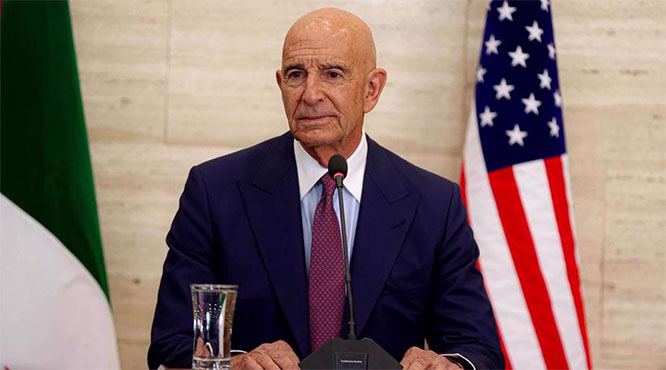
Since 1946, the United States has attempted 93 coups or “regime change” operations across the world — including two in Iran, US Special Envoy for Syria Tom Barrack has admitted.

Speaking to the UAE-based IMI Media Group, in remarks published by The National, Barrack said Washington tried twice to overthrow the Iranian government but failed both times. 

“For (Trump) then to be imputed with regime change — we had two regime changes in Iran already. Neither one worked. So I think wisely leave it to the region to solve,” said Barrack, who also serves as the US ambassador to Turkey.

His comments come six months after the US joined Israel in airstrikes against Iran during ongoing indirect nuclear negotiations between Tehran and Washington.

On June 13, Israel launched an attack on Iran that killed at least 1,064 people and hit civilian infrastructure. Days later, the United States targeted three nuclear facilities — Fordow, Natanz and Isfahan — in what Iran called a clear violation of international law. Iranian retaliation eventually forced a halt to the assault on June 24.

Barrack further claimed that US President Donald Trump and Foreign Secretary Marco Rubio are “not into regime change” and prefer a regional approach driven by Middle Eastern countries themselves. According to him, regional dialogue and non-interference by outside powers offer a more durable path forward.

He added that Washington is still open to an agreement with Tehran if Iranian authorities show “seriousness” and willingness to engage constructively.

However, Iran maintains the US has not shown readiness for meaningful talks. In an interview with Japan’s Kyodo News, Iranian Foreign Minister Abbas Araghchi said negotiations could advance only if Washington acknowledges Iran’s right to peaceful nuclear energy and lifts unilateral sanctions.

Comments

Add new comment

  • Coastaldigest.com reserves the right to delete or block any comments.
  • Coastaldigset.com is not responsible for its readers’ comments.
  • Comments that are abusive, incendiary or irrelevant are strictly prohibited.
  • Please use a genuine email ID and provide your name to avoid reject.