Modi healthcare scheme won hearts and votes

Agencies
May 29, 2019

Sitapur, May 29: While Prime Minister Narendra Modi's nationalist tub-thumping has been widely credited with his recent election win, another factor was one he kept relatively quiet about Modicare.
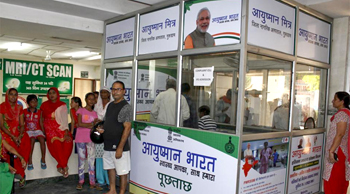
Despite some teething problems and a dire need for further reforms and more spending, this huge initiative launched last year one of the world's largest publicly funded healthcare programmes has made a difference.

"This scheme has infused a sense of belief in the poor that if they fall sick they will get treatment without spending a rupee," said Anil Agarwal, chief medical superintendent at a hospital in Sitapur, a city with some of India's worst health indicators.

Indeed, voting data from the mammoth election that ended last week with a landslide for Modi showed particularly strong support for his right-wing party in poorer areas where people would have benefited most.

"It has certainly been welcomed as a welfare measure by the poor and probably contributed to (Modi's) electoral victory," said K. Srinath Reddy, president of the non-profit Public Health Foundation of India.

The flagship programme, dubbed Modicare, covers hospital costs up to $7,200 for the poorest 40 per cent of Indians, or some 500 million people, in a country where the average annual income is about $1,670.

Even before Modicare, or the National Health Protection Scheme (NHPS), was introduced in September, treatment was largely free at government hospitals.

But patients still had to shell out for diagnostics and medicines, which make up a big chunk of the costs of hospital care, as well as for implants like stents.

Private clinics were out of reach for many, with a consultation alone costing some 1,000 rupees ($15) -- a large amount for millions living on less than $2 a day. But now poorer Indians can visit these clinics, providing they sign up to the scheme.

Sabir Ali, an impoverished weaver who got a Modicare card for himself and his family to use at any of the 15,000-odd participating hospitals, had a cyst removed from his forehead.

"It was unbelievable to hold the card in my hands," Ali told AFP, his head bandaged at the Sitapur district hospital in northern India.

"I used the card and I didn't have to spend a single rupee on my treatment."

Until recently only a quarter of India's population had any health insurance, forcing hundreds of millions to pay out of their own pockets, go to quack doctors or just skip treatment.

An estimated 60 million Indians are pushed below the poverty threshold every year paying for medical care, while a report last year by The Lancet medical journal found substandard healthcare was responsible for some 1.6 million deaths a year.

Almost two million people have benefited from the scheme so far, with the government allocating some $1.2 billion since the launch. The costs are shared between federal and state governments 60:40.

"Schemes such as Modicare played a larger role (in the election outcome) than anyone had anticipated," said political analyst Parsa Venkateshwar Rao.

"The overall message that has gone out is that Modi is willing to help the poor."

In his second term, however, Modi will have to iron out some of the scheme's teething problems, with some hospitals complaining they cannot recoup what they spend.

"We can't cope with (receiving) 9,000 rupees ($128) for a caesarean section which would include a stay of the patient, fees of the anaesthetist, paediatrician, medicines and so on," said Doctor V.K. Monga from the Indian Medical Association.

"But corrective steps are being taken... The health sector is overall satisfied now with the scheme," he told news agency.

Reddy of the Public Health Foundation of India also said the scheme needed more financial resources.

"If the state governments too can be stimulated to increase their health budgets, the scheme will become sustainable."

More broadly, Modi needs to build more facilities, train more staff and implement more reforms in what remains a dysfunctional healthcare system, experts say.

The newly re-elected prime minister has promised to hike health spending to 2.5 per cent of GDP by 2025, from 1.15 per cent now -- one of the lowest in the world -- but it is unclear if this will suffice.

Critics also say that Modicare helps unscrupulous private providers -- already accused of over-diagnosing and carrying out unnecessary surgeries -- boost profits.

Ali too has his complaints.

"I live nearby the hospital so I can come, but if someone lives outside the city, they will struggle with the number of times they are expected to visit the hospital," he said.

"They make us run around a lot."

But the family of Vindeshwari Devi, who has had her uterus removed at the same Sitapur hospital, is satisfied.

"I think this scheme is good and it will only get better," said Sunil Kumar, a daily-wage labourer and Devi's son-in-law.

"For those who have nothing, it means a lot."

Comments

Add new comment

  • Coastaldigest.com reserves the right to delete or block any comments.
  • Coastaldigset.com is not responsible for its readers’ comments.
  • Comments that are abusive, incendiary or irrelevant are strictly prohibited.
  • Please use a genuine email ID and provide your name to avoid reject.
News Network
December 7,2025

envoy.jpg

Since 1946, the United States has attempted 93 coups or “regime change” operations across the world — including two in Iran, US Special Envoy for Syria Tom Barrack has admitted.

Speaking to the UAE-based IMI Media Group, in remarks published by The National, Barrack said Washington tried twice to overthrow the Iranian government but failed both times. 

“For (Trump) then to be imputed with regime change — we had two regime changes in Iran already. Neither one worked. So I think wisely leave it to the region to solve,” said Barrack, who also serves as the US ambassador to Turkey.

His comments come six months after the US joined Israel in airstrikes against Iran during ongoing indirect nuclear negotiations between Tehran and Washington.

On June 13, Israel launched an attack on Iran that killed at least 1,064 people and hit civilian infrastructure. Days later, the United States targeted three nuclear facilities — Fordow, Natanz and Isfahan — in what Iran called a clear violation of international law. Iranian retaliation eventually forced a halt to the assault on June 24.

Barrack further claimed that US President Donald Trump and Foreign Secretary Marco Rubio are “not into regime change” and prefer a regional approach driven by Middle Eastern countries themselves. According to him, regional dialogue and non-interference by outside powers offer a more durable path forward.

He added that Washington is still open to an agreement with Tehran if Iranian authorities show “seriousness” and willingness to engage constructively.

However, Iran maintains the US has not shown readiness for meaningful talks. In an interview with Japan’s Kyodo News, Iranian Foreign Minister Abbas Araghchi said negotiations could advance only if Washington acknowledges Iran’s right to peaceful nuclear energy and lifts unilateral sanctions.

Comments

Add new comment

  • Coastaldigest.com reserves the right to delete or block any comments.
  • Coastaldigset.com is not responsible for its readers’ comments.
  • Comments that are abusive, incendiary or irrelevant are strictly prohibited.
  • Please use a genuine email ID and provide your name to avoid reject.
News Network
December 16,2025

Mangaluru, Dec 16: The Mangaluru City police have significantly escalated their campaign against drug trafficking, arresting 25 individuals and booking 12 cases under the Narcotic Drugs and Psychotropic Substances (NDPS) Act between November 30 and December 13. The crackdown resulted in the seizure of a substantial quantity of illicit substances, including 685.6 grams of MDMA and 1.5 kg of ganja.

The success of this recent drive has been significantly boosted by the city’s innovative, QR code-based anonymous reporting system.

"The anonymous reporting system has received an encouraging response. Several recent arrests were made based on inputs received through this system, helping police tighten the noose around drug peddlers," said the City Police Commissioner.

The latest arrests contribute to a robust year-to-date record, underscoring the police's relentless commitment to combating the drug menace.

Up to December 14 this year, the police have registered a total of 107 cases of drug peddling, leading to the arrest of 219 peddlers. Furthermore, they have booked 562 cases of drug consumption, resulting in the arrest of 671 individuals.

The scale of the seizure for the year reflects the magnitude of the problem being tackled: police have seized 320.6 kg of ganja worth ₹88.7 lakh and 1.4 kg of MDMA valued at ₹1.2 crore. Other significant seizures include hydro-weed ganja worth ₹94.7 lakh and cocaine worth ₹1.9 lakh, among others.

The Commissioner emphasized a policy of rigorous enforcement: "We ensure that peddlers are caught red-handed so that they cannot later dispute the case or claim innocence."

To counter the rising trend of substance abuse among youth, the Mangaluru City police have rolled out uniform guidelines for random drug testing across educational institutions.

As part of the drive, tests were conducted in approximately 100 institutions, screening an estimated 5,500 to 6,000 students in the first phase. 20 students tested positive for drug consumption during the initial screening.

Students who tested positive have been provided counselling and are scheduled for re-testing in the second quarter. The testing will also be expanded to students not covered in the first phase. In a move to ensure strict implementation, police personnel were deployed in mufti in some institutions. Reiterating a zero-tolerance stance, the Commissioner confirmed that random testing will continue, and colleges have also been instructed to conduct drug tests at the time of admission to deter substance abuse from an early stage.

Comments

Add new comment

  • Coastaldigest.com reserves the right to delete or block any comments.
  • Coastaldigset.com is not responsible for its readers’ comments.
  • Comments that are abusive, incendiary or irrelevant are strictly prohibited.
  • Please use a genuine email ID and provide your name to avoid reject.
News Network
December 5,2025

indigoCEO.jpg

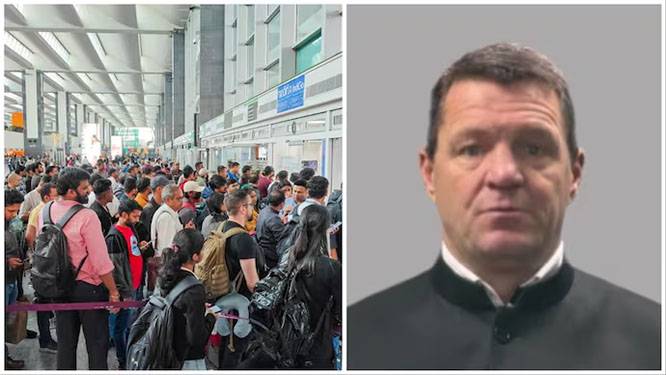
New Delhi, Dec 5: IndiGo CEO Pieter Elbers issued a public apology this evening after more than a thousand flights were cancelled today, making it the "most severely impacted day" in terms of cancellations. The biggest airline of the country cancelled "more than half" of its daily number of flights on Friday, said Elbers. He also said that even though the crisis will persist on Saturday, the airline anticipates fewer than 1,000 flight cancellations.

"Full normalisation is expected between December 10 and 15, though IndiGo cautions that recovery will take time due to the scale of operations," the IndiGo CEO said. 

IndiGo operates around 2,300 domestic and international flights daily.

Pieter Elbers, while apologising for the major inconvenience due to delays and cancellations, said the situation is a result of various causes.

The crisis at IndiGo stems from new regulations that boost pilots' weekly rest requirements by 12 hours to 48 and allow only two night-time landings per week, down from six. IndiGo has attributed the mass cancellations to "misjudgment and planning gaps".

Elbers also listed three lines of action that the airline will adopt to address the issue.

"Firstly, customer communication and addressing your needs, for this, messages have been sent on social media. And just now, a more detailed communication with information, refunds, cancellations and other customer support measures was sent," he said.

The airline has also stepped up its call centre capacity.

"Secondly, due to yesterday's situation, we had customers stranded mostly at the nation's largest airports. Our focus was for all of them to be able to travel today itself, which will be achieved. For this, we also ask customers whose flights are cancelled not to come to the airports as notifications are sent," the CEO said.

"Thirdly, cancellations were made for today to align our crew and planes to be where they need to start tomorrow morning afresh. Earlier measures of the last few days, regrettable, have proven not to be enough, but we have decided today to reboot all our systems and schedules, resulting in the highest numbers of cancellations so far, but imperative for progressive improvements starting from tomorrow," he added.

As airports witnessed chaotic scenes, the Directorate General of Civil Aviation (DGCA) stepped in to grant IndiGo a temporary exemption from stricter night duty rules for pilots. It also allowed substitution of leaves with a weekly rest period. 

Civil Aviation Minister Ram Mohan Naidu has said a high-level inquiry will be ordered and accountability will be fixed.

Comments

Add new comment

  • Coastaldigest.com reserves the right to delete or block any comments.
  • Coastaldigset.com is not responsible for its readers’ comments.
  • Comments that are abusive, incendiary or irrelevant are strictly prohibited.
  • Please use a genuine email ID and provide your name to avoid reject.