Records show Narendra Modi got at least five income tax refunds, Rahul Gandhi six

Agencies
April 29, 2019

New Delhi, Apr 29: Prime Minister Narendra Modihas got income tax refunds at least five times in the last 18 years, while Congress chief Rahul Gandhi has received six refunds during the same period. Besides, the refunds for assessment years 2015-16 and 2012-13 got "adjusted against outstanding demand" in case of Modi, while it was the case for Gandhi in assessment year 2011-12.
This is based on the online 'refund status' service provided by the Tax Information Network of the Income Tax Department, managed by NSDL e-Governance Infrastructure Limited.

The refund status since the assessment year 2001-02 can be checked online on this platform with an individual's PAN (Permanent Account Number), which has been sourced from the election affidavits filed by the political leaders for the Lok Sabha polls 2019.

Rahul Gandhi's mother and senior Congress leader Sonia Gandhi has also got at least five refunds since the assessment year 2001-02, but there is no adjustment against any outstanding demand for her in this time period.

On the other hand, BJP chief Amit Shah's income tax refund got "adjusted against outstanding demand" for the assessment year 2015-16. The TIN-NSDL records do not show any other refund for him in the last 18 years.

While the portal does not disclose the amount of the refund, it mentions the date of the refund or adjustment, the challan sequence number and the mode of payment (cheque or direct credit), among other details.

As per the 'refund status' records, Modi got his refund for the assessment year 2018-19 through 'direct credit' to his account on September 26, 2018. The refund for the same year took place on October 6, 2018 for Sonia Gandhi and on March 26, 2019 for Rahul Gandhi.

Modi got the refund for assessment year 2016-17 on August 16, 2016 through direct credit and through 'refund cheque' for 2013-14 on January 7, 2015, for 2010-11 on January 9, 2015 and for 2006-07 on October 11, 2007.

For assessment years 2015-16 and 2012-13, his refund got "adjusted against outstanding demand". Modi became Prime Minister in May 2014.

In case of Rahul Gandhi, his refund for assessment year 2011-12 got "adjusted against outstanding demand" on February 1, 2012, while he also got a refund cheque for the same year a few days later on February 13, 2012.

His other refunds relate to assessment years 2017-18, 2016-17, 2012-13 and 2007-08.

Sonia Gandhi's refunds relate to assessment years 2016-17, 2012-13, 2008-09 and 2007-08, besides 2018-19.

Interestingly, both Rahul and Sonia Gandhi have disclosed in their election affidavits filed for the Lok Sabha 2019 elections that the Income Tax Department has initiated reassessment proceedings against them for the assessment year 2011-12 and has passed reassessment order, dated December 31, 2018, raising demand.

The two leaders, however, added in their affidavits that the said proceedings are under challenge before the Supreme Court.

In his affidavit, Rahul Gandhi has declared total income (as shown in income tax returns) of over Rs 1.11 crore for financial year 2017-18 (up from Rs 1.03 crore in 2013-14), while it is Rs 9.6 lakh for Sonia Gandhi (down from Rs 17.6 lakh in 2013-14).

In his affidavit, Modi had declared total income of Rs 19.92 lakh for the financial year 2017-18, up from Rs 9.69 lakh in 2013-14. There are no "income tax dues" pending against him, as per Modi's election affidavit filed for Varanasi Lok Sabha constituency.

Listing his assets in the affidavit, Modi under the sub-head 'value of claims/interest' mentioned Rs 85,145 as tax deducted at source (TDS) for financial year 2018-19.

Comments

Add new comment

  • Coastaldigest.com reserves the right to delete or block any comments.
  • Coastaldigset.com is not responsible for its readers’ comments.
  • Comments that are abusive, incendiary or irrelevant are strictly prohibited.
  • Please use a genuine email ID and provide your name to avoid reject.
News Network
December 17,2025

melkar1.jpg

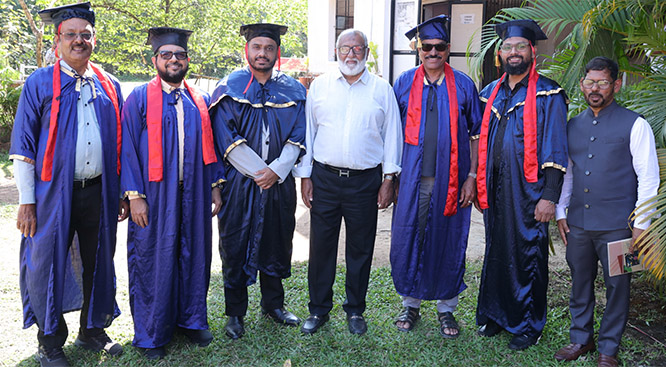
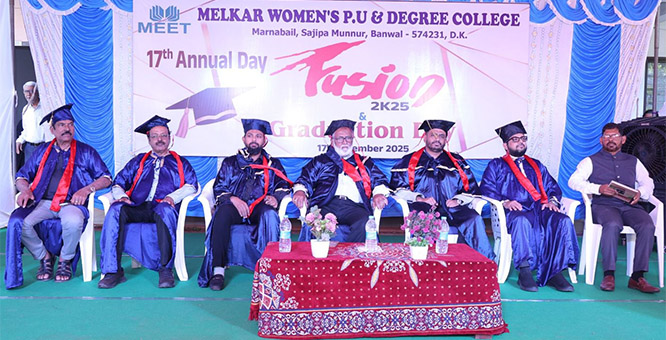
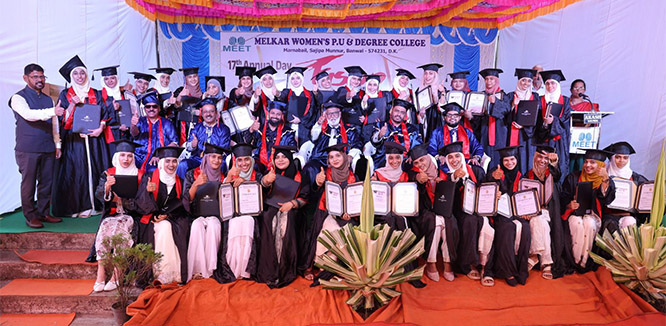
Melkar, Dec 17: The 17th Annual Day and Graduation Ceremony of Melkar Women’s PU and Degree College, themed “Fusion-2K25,” was celebrated with dignity and enthusiasm, marking a significant milestone in the institution’s academic journey. The programme reflected the college’s steadfast commitment to academic excellence, character building, and the holistic development of students.

The event was inaugurated by Mr. Asif Mohammed, whose presence greatly enriched the occasion. The celebration was further graced by the chief guests Mr. P. B. Ahmed Mudassir and Mr. Nissar Fakeer Mohammed, along with the distinguished guests of honour Mr. B. A. Nazeer and Mr. Ibrahim Gadiyar. In their inspiring addresses, the guests encouraged the graduating students and appreciated the dedicated efforts of the management, faculty, and students.

The annual report was presented by the Principal, Mr. Abdul Majeed S, highlighting the institution’s academic progress, notable achievements, and extracurricular accomplishments during the academic year.

The presidential address was delivered by the esteemed Chairman of Melkar Women’s PU and Degree College, Dr. Haji S. M. Rasheed, who emphasized the vital role of education in empowering women and shaping responsible citizens. He also stressed the importance of discipline, dedication, and perseverance in achieving success.

Cultural programmes and academic recognitions formed an integral part of the celebration, showcasing the talents and achievements of the students. The graduation ceremony was a proud moment for the outgoing students as they were formally conferred degrees and wished success in their future endeavours.

Ms. Mashmooma Fathima served as the Master of Ceremonies. The welcome address was delivered by Ms. Fathima Nida, and the programme concluded with a vote of thanks proposed by Ms. Ayisha Suhana.

The event successfully achieved its objectives and was highly appreciated by the guests and attendees.

melkar3.jpg

melkar2.jpg

Comments

Add new comment

  • Coastaldigest.com reserves the right to delete or block any comments.
  • Coastaldigset.com is not responsible for its readers’ comments.
  • Comments that are abusive, incendiary or irrelevant are strictly prohibited.
  • Please use a genuine email ID and provide your name to avoid reject.
News Network
December 20,2025

Mangaluru, Dec 20: The Mangaluru City Police have issued a detailed traffic advisory ahead of the inaugural ceremony of Karavali Utsava, which will be held at the Karavali Utsava Ground on Saturday.

The festival will be inaugurated at 6:00 pm by Dakshina Kannada District Minister Dinesh Gundu Rao. Cultural and public programmes will be held at the venue every evening and will continue until January 2.

According to City Police Commissioner Sudheer Kumar Reddy, parking of vehicles is strictly prohibited on both sides of the road from Lalbagh to Karavali Utsava Ground. Visitors are requested to park their vehicles only at designated parking areas.

To help the public, traffic signboards and parking guidance flex boards have been installed along the routes leading to the venue. The police have urged commuters and visitors to follow these instructions to ensure smooth traffic movement.

Designated Parking Locations

•    Urwa Market Ground – Cars
•    Gandhinagar Government School (near Press Club) – Two-wheelers and cars
•    Ladyhill Church parking area – Two-wheelers and cars
•    Canara School Ground, Mannagudda – Two-wheelers and cars
•    Thimmappa Hotel premises – Two-wheelers and cars
•    Scout and Guide Bhavana premises (behind Karavali Utsava Grounds) – Two-wheelers
•    Urwa Market Road – Two-wheelers
•    Hat Hill Road – Two-wheelers

The police have appealed to the public to cooperate by following traffic rules and parking guidelines to avoid inconvenience during the festival.

Comments

Add new comment

  • Coastaldigest.com reserves the right to delete or block any comments.
  • Coastaldigset.com is not responsible for its readers’ comments.
  • Comments that are abusive, incendiary or irrelevant are strictly prohibited.
  • Please use a genuine email ID and provide your name to avoid reject.
News Network
December 13,2025

New Delhi: School-going children are picking up drug and smoking habits and engaging in consumption of alcohol, with the average age of introduction to such harmful substances found to be around 13 years, suggesting a need for earlier interventions as early as primary school, a multi-city survey by AIIMS-Delhi said.

The findings also showed substance use increased in higher grades, with grade XI/XII students two times more likely to report use of substances when compared with grade VIII students. This emphasised the importance of continued prevention and intervention through middle and high school.

The study led by Dr Anju Dhawan of AIIMS's National Drug Dependence Treatment Centre, published in the National Medical Journal of India this month, looks at adolescent substance use across diverse regions.

The survey included 5,920 students from classes 8, 9, 11 and 12 in urban government, private and rural schools across 10 cities -- Bengaluru, Chandigarh, Delhi, Dibrugarh, Hyderabad, Imphal, Jammu, Lucknow, Mumbai, and Ranchi. The data were collected between May 2018 and June 2019.

The average age of initiation for any substance was 12.9 (2.8) years. It was lowest for inhalants (11.3 years) followed by heroin (12.3 years) and opioid pharmaceuticals (without prescription; 12.5 years).

Overall, 15.1 per cent of participants reported lifetime use, 10.3 per cent reported past year use, and 7.2 per cent reported use in the past month of any substance, the study found.

The most common substances used in the past year, after tobacco (4 per cent) and alcohol (3.8 per cent), were opioids (2.8 per cent), followed by cannabis (2 per cent) and inhalants (1.9 per cent). Use of non-prescribed pharmaceutical opioids was most common among opioid users (90.2 per cent).

On being asked, 'Do you think this substance is easily available for a person of your age' separately for each substance category, nearly half the students (46.3 per cent) endorsed that tobacco products and more than one-third of the students (36.5 per cent) agreed that a person of their age can easily procure alcohol products.

Similarly, for Bhang (21.9 per cent), ganja/charas (16.1 per cent), inhalants (15.2 per cent), sedatives (13.7 per cent), opium and heroin (10 per cent each), the students endorsed that these can be easily procured.

About 95 per cent of the children, irrespective of their grade, agreed with the statement that 'drug use is harmful'.

The rates of substance use (any) among boys were significantly higher than those of girls for substance use (ever), use in the past year and use in the past 30 days. Compared to grade VIII students, grade IX students were more likely, and grade XI/XII students were twice as likely to have used any substance (ever).

The likelihood of past-year use of any substance was also higher for grade IX students and for grade XI/XII students as compared to grade VIII students.

About 40 per cent of students mentioned that they had a family member who used tobacco or alcohol each. The use of cannabis (any product) and opioid (any product) by a family member was reported by 8.2 per cent and 3.9 per cent of students, respectively, while the use of other substances, such as inhalants/sedatives by family was 2-3 per cent, the study found.

A relatively smaller percentage of students reported use of tobacco or alcohol among peers as compared to among family members, while a higher percentage reported inhalants, sedatives, cannabis or opioid use among peers.

Children using substances (past year) compared to non-users reported significantly higher any substance use by their family members and peers.

There were 25.7 per cent students who replied 'yes' to the question 'conflicts/fights often occur in your family'. Most students also replied affirmatively to 'family members are aware of how their time is being spent' and 'damily members are aware of with whom they spend their time'.

Comments

Add new comment

  • Coastaldigest.com reserves the right to delete or block any comments.
  • Coastaldigset.com is not responsible for its readers’ comments.
  • Comments that are abusive, incendiary or irrelevant are strictly prohibited.
  • Please use a genuine email ID and provide your name to avoid reject.