



Sabarimala temple opens today; tension as women stopped from going to the shrine

Agencies
October 17, 2018

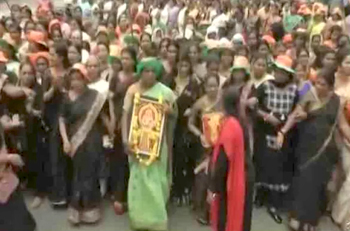
Thiruvananthapuram, Oct 17: Hundreds of women devotees of Lord Ayyappa on October 16 checked vehicles for girls and women of menstrual age at Nilackal, the main gateway to Sabarimala in Kerala, and stopped them from proceeding to the hill shrine, as tension mounted in the area ahead of the opening of the temple gates on October 17.
With the gates set to be opened for the first time since the Supreme Court last month lifted the centuries-old ban on women in the 10-50 age group and allowed women of all age groups to enter the shrine, 20 kilometres (km) from Nilackal and about 225 km from Thiruvananthapuram, Kerala waited with bated breath amid ominous warnings of "mass suicides" and threats of disruption.

There were also reports that members of the local tribal community were keeping a tight vigil to ensure that women between the ages of 10 to 50 (the typical duration of time when a woman menstruates) were not allowed to enter the Lord Ayyappa temple which is specifically dedicated to the celibate form of the deity.

A last ditch effort by the Travancore Devaswom Board (TDB), which manages the temple, to defuse the tense situation failed to yield a solution with the Pandalam royal family and other stakeholders walking out of a meeting called by it over its reluctance to discuss the issue of filing a review petition against the apex court order.

Chief Minister Pinarayi Vijayan, facing a tough time tackling the highly emotive religious issue which has also acquired political overtones, issued a stern warning to those who dared block devotees from entering the temple.

Lustily chanting "Swamiya Saranam Ayyappa" hailing the Lord, women devotees picketed the road at Nilackal and checked buses and private vehicles for girls and women of the "banned" age group and forced them to abandon their pilgrimage to the shrine which also involved a 6-km arduous hill trek.

A woman journalist Ritu was one of those who was stopped by the protesting women devotees. Ritu claimed she was heading for the temple on assignment and had no intention of entering the shrine, something that could have offended the religious sensibilities of Ayyappa devotees.

"No woman belonging to the banned age group of 10-50 will be allowed to travel further from Nilackal and offer prayers at the shrine when it opens for the monthly pooja tomorrow evening," asserted a woman protester as tempers ran high at Nilackal.

A small police contingent looked the other way.

Television channels showed some college students, including young girls wearing black dresses, being ordered to get down a bus.

"We will ensure security to all. Nobody will be allowed to take law into their hands. My government will not allow any violence in the name of Sabarimala," Vijayan told reporters in Thiruvananthapuram as Ayyappa devotees virtually besieged Nilackal.

"Stern action will be taken against anyone who prevents devotees from going to Sabarimala," he warned, and ruled out any rethink of his government's decision against seeking a review of the Supreme Court order.

"We will go by what the Supreme Court says," he asserted.

The TDB went into a huddle with stakeholders, including the Pandalam royal family representatives and priests, to soothe frayed tempers amid escalating protests by the Hindu right and common Ayyappa devotees.

The meeting also attended by Ayyappa Seva Samajam and Yoga Kshema Sabha ended in a deadlock as the TDB stuck to its stand of not filing a review petition.

"It is very painful and we cannot agree. We wanted a decision on filing the review petition to be taken today itself, but the board said it can be discussed only at the next meeting of TDB on October 19," Shashikumar Varma, a member of the Pandalam royal family said.

"We all wish that Sabarimala should not be made a war zone," Varma, the president of Pandalam Royal Palace Trust, told journalists after walking out of the meeting in a huff.

TDB president A Padmakumar, however, dismissed suggestions that the meeting was a "failure".

"What they (stakeholders) wanted was to file the review petition now itself. But the Supreme Court is closed till October 22. They also wanted to maintain the status quo on the customs and traditions.

"As the Supreme Court has passed a verdict, what can the board do? But the board will continue to talk with them to resolve the issue," Padmakumar said. He said the October 19 meeting will take up the issue of the review petition.

Kerala has witnessed a series of protests and prayer marches over the last few days over the government's decision to enforce the Supreme Court order.

The Shiv Sena recently warned of "mass suicides" if women of menstrual age were allowed into the temple. Some other organisations have said women and girls aged between 10 and 50 years will have to tread on them before entering the temple.

However, some intrepid women like Reshma Nishanth, a 32-year-old Kannur native, has decided to offer prayers there despite being "slut-shamed".

The TDB, meanwhile, covered a signboard at the base camp in Pamba, which said the entry of women of menstrual age into the temple was prohibited. Pamba is the base from where the trek to the shrine begins.

The multi-lingual board reading "Women between 10-50 are not allowed to visit Sannidhanam (Sabarimala temple)" was covered in the evening with a plastic banner that said: "Use of plastic is prohibited here".

Comments

Add new comment

  • Coastaldigest.com reserves the right to delete or block any comments.
  • Coastaldigset.com is not responsible for its readers’ comments.
  • Comments that are abusive, incendiary or irrelevant are strictly prohibited.
  • Please use a genuine email ID and provide your name to avoid reject.
News Network
December 16,2025

bengal.jpg

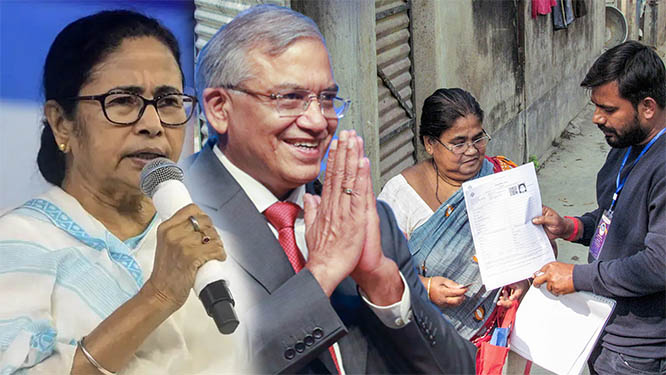
The deletion of over 58 lakh names from West Bengal’s draft electoral rolls following a Special Intensive Revision (SIR) has sparked widespread concern and is likely to deepen political tensions in the poll-bound state.

According to the Election Commission, the revision exercise has identified 24 lakh voters as deceased, 19 lakh as relocated, 12 lakh as missing, and 1.3 lakh as duplicate entries. The draft list, published after the completion of the first phase of SIR, aims to remove errors and duplication from the electoral rolls.

However, the scale of deletions has raised fears that a large number of eligible voters may have been wrongly excluded. The Election Commission has said that individuals whose names are missing can file objections and seek corrections. The final voter list is scheduled to be published in February next year, after which the Assembly election announcement is expected. Notably, the last Special Intensive Revision in Bengal was conducted in 2002.

The development has intensified the political row over the SIR process. Chief Minister Mamata Banerjee and her Trinamool Congress have strongly opposed the exercise, accusing the Centre and the Election Commission of attempting to disenfranchise lakhs of voters ahead of the elections.

Addressing a rally in Krishnanagar earlier this month, Banerjee urged people to protest if their names were removed from the voter list, alleging intimidation during elections and warning of serious consequences if voting rights were taken away.

The BJP, meanwhile, has defended the revision and accused the Trinamool Congress of politicising the issue to protect what it claims is an illegal voter base. Leader of the Opposition Suvendu Adhikari alleged that the ruling party fears losing power due to the removal of deceased, fake, and illegal voters.

The controversy comes amid earlier allegations by the Trinamool Congress that excessive work pressure during the SIR led to the deaths by suicide of some Booth Level Officers (BLOs), for which the party blamed the Election Commission. With the draft list now out, another round of political confrontation appears imminent.

As objections begin to be filed, the focus will be on whether the correction mechanism is accessible, transparent, and timely—critical factors in ensuring that no eligible voter is denied their democratic right ahead of a crucial election.

Comments

Add new comment

  • Coastaldigest.com reserves the right to delete or block any comments.
  • Coastaldigset.com is not responsible for its readers’ comments.
  • Comments that are abusive, incendiary or irrelevant are strictly prohibited.
  • Please use a genuine email ID and provide your name to avoid reject.
News Network
December 13,2025

New Delhi: School-going children are picking up drug and smoking habits and engaging in consumption of alcohol, with the average age of introduction to such harmful substances found to be around 13 years, suggesting a need for earlier interventions as early as primary school, a multi-city survey by AIIMS-Delhi said.

The findings also showed substance use increased in higher grades, with grade XI/XII students two times more likely to report use of substances when compared with grade VIII students. This emphasised the importance of continued prevention and intervention through middle and high school.

The study led by Dr Anju Dhawan of AIIMS's National Drug Dependence Treatment Centre, published in the National Medical Journal of India this month, looks at adolescent substance use across diverse regions.

The survey included 5,920 students from classes 8, 9, 11 and 12 in urban government, private and rural schools across 10 cities -- Bengaluru, Chandigarh, Delhi, Dibrugarh, Hyderabad, Imphal, Jammu, Lucknow, Mumbai, and Ranchi. The data were collected between May 2018 and June 2019.

The average age of initiation for any substance was 12.9 (2.8) years. It was lowest for inhalants (11.3 years) followed by heroin (12.3 years) and opioid pharmaceuticals (without prescription; 12.5 years).

Overall, 15.1 per cent of participants reported lifetime use, 10.3 per cent reported past year use, and 7.2 per cent reported use in the past month of any substance, the study found.

The most common substances used in the past year, after tobacco (4 per cent) and alcohol (3.8 per cent), were opioids (2.8 per cent), followed by cannabis (2 per cent) and inhalants (1.9 per cent). Use of non-prescribed pharmaceutical opioids was most common among opioid users (90.2 per cent).

On being asked, 'Do you think this substance is easily available for a person of your age' separately for each substance category, nearly half the students (46.3 per cent) endorsed that tobacco products and more than one-third of the students (36.5 per cent) agreed that a person of their age can easily procure alcohol products.

Similarly, for Bhang (21.9 per cent), ganja/charas (16.1 per cent), inhalants (15.2 per cent), sedatives (13.7 per cent), opium and heroin (10 per cent each), the students endorsed that these can be easily procured.

About 95 per cent of the children, irrespective of their grade, agreed with the statement that 'drug use is harmful'.

The rates of substance use (any) among boys were significantly higher than those of girls for substance use (ever), use in the past year and use in the past 30 days. Compared to grade VIII students, grade IX students were more likely, and grade XI/XII students were twice as likely to have used any substance (ever).

The likelihood of past-year use of any substance was also higher for grade IX students and for grade XI/XII students as compared to grade VIII students.

About 40 per cent of students mentioned that they had a family member who used tobacco or alcohol each. The use of cannabis (any product) and opioid (any product) by a family member was reported by 8.2 per cent and 3.9 per cent of students, respectively, while the use of other substances, such as inhalants/sedatives by family was 2-3 per cent, the study found.

A relatively smaller percentage of students reported use of tobacco or alcohol among peers as compared to among family members, while a higher percentage reported inhalants, sedatives, cannabis or opioid use among peers.

Children using substances (past year) compared to non-users reported significantly higher any substance use by their family members and peers.

There were 25.7 per cent students who replied 'yes' to the question 'conflicts/fights often occur in your family'. Most students also replied affirmatively to 'family members are aware of how their time is being spent' and 'damily members are aware of with whom they spend their time'.

Comments

Add new comment

  • Coastaldigest.com reserves the right to delete or block any comments.
  • Coastaldigset.com is not responsible for its readers’ comments.
  • Comments that are abusive, incendiary or irrelevant are strictly prohibited.
  • Please use a genuine email ID and provide your name to avoid reject.
News Network
December 22,2025

The Bharatiya Janata Party (BJP) received ₹6,654.93 crore in donations during the 2024-25 financial year — a Lok Sabha election year — registering a 68 per cent increase over the previous fiscal.

In its annual contribution report submitted to the Election Commission on December 8, two days ahead of the deadline, the BJP disclosed all donations exceeding ₹20,000. The report, now available on the Commission’s website, covers contributions received between April 1, 2024 and March 30, 2025 — a period marked by the general election and Assembly polls in Arunachal Pradesh, Sikkim, Andhra Pradesh, Odisha, Jammu and Kashmir, Haryana, Jharkhand, Maharashtra and Delhi.

The BJP, the world’s largest political party by membership, had reported donations of ₹3,967 crore in 2023-24. The latest figures represent the party’s highest donation receipts in the last five years.

Electoral trusts accounted for around 40 per cent of the BJP’s total donations. The Prudent Electoral Trust contributed ₹2,180 crore, followed by the Progressive Electoral Trust with ₹757 crore and the New Democratic Electoral Trust with ₹150 crore. Contributions from other electoral trusts together amounted to ₹3,112.5 crore. The remaining funds came from corporate donors and individuals. Electoral trusts are entities set up by companies to channel donations to political parties.

Among major corporate contributors, Serum Institute of India donated ₹100 crore, Rungta Sons Private Limited ₹95 crore, Vedanta ₹67 crore, and Macrotech Developers (formerly Lodha Developers) ₹65 crore. Three Bajaj Group companies together contributed ₹65 crore, while Derive Investments donated ₹50 crore.

Other notable donors included Malabar Gold (₹10 crore), Kalyan Jewellers (₹15.1 crore), Hero Group (₹23.65 crore), Dilip Buildcon Group (₹29 crore), ITC Limited (₹35 crore), Wave Industries (₹5.25 crore) and Zerodha’s investment firm, promoted by Nikhil Kamath, which contributed ₹1.5 crore.

Several BJP leaders also made individual donations. Assam Chief Minister Himanta Biswa Sarma donated ₹3 lakh, Assam minister Pijush Hazarika ₹2.75 lakh, Union Education Minister Dharmendra Pradhan ₹1 lakh, Odisha Chief Minister Mohan Charan Majhi ₹5 lakh, Indore Mayor Pushyamitra Bhargava ₹1 lakh, and Akash Vijayvargiya, son of senior BJP leader Kailash Vijayvargiya, also donated ₹1 lakh, among others.

In contrast, most opposition parties reported a sharp decline in donations. The Congress received ₹522.13 crore in 2024-25, a fall of about 43 per cent from ₹1,129 crore in the previous year. The Trinamool Congress saw donations drop to ₹184.08 crore from ₹618.8 crore, while the Bharat Rashtra Samithi reported just ₹15.09 crore, down from ₹580 crore.

The Aam Aadmi Party, however, recorded an increase, collecting ₹39.2 crore compared to ₹22.1 crore last year. The Telugu Desam Party received ₹85.2 crore in donations, down from ₹274 crore, but also earned ₹102 crore through fees and subscriptions. The Biju Janata Dal reported ₹60 crore in donations, compared to ₹246 crore in the previous fiscal.

The 2024-25 financial year is also the first without electoral bonds, after the Supreme Court struck down the scheme as unconstitutional in February 2024. Since its introduction in 2018, the electoral bond scheme had enabled political parties to receive over ₹16,000 crore in anonymous donations, with the BJP receiving the largest share. 

Comments

Add new comment

  • Coastaldigest.com reserves the right to delete or block any comments.
  • Coastaldigset.com is not responsible for its readers’ comments.
  • Comments that are abusive, incendiary or irrelevant are strictly prohibited.
  • Please use a genuine email ID and provide your name to avoid reject.