Whither Secularism: Democratic Society and Minority Rights

Ram Puniyani
June 9, 2019

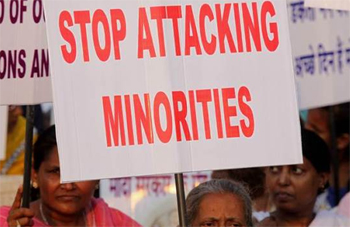
We are living in times where the social norms, the values of Constitution have been violated times and over again. The increasing atrocities on dalits, the lynchings of minorities in the name of Cow-Beef have changed the social equations in a drastic way during last few years. This in a way is part of the ascendance of a politics of communalism which believes in narrow, sectarian religious identity as its defining point. This may get further worsened with the big mandate for Modi in 2019 elections. In the aftermath of elections leading to his return to power, Modi in his victory speech made certain observations which are very disturbing on one hand and also give an idea of shape of things to come.

He stated that this election campaign has unmasked the deceitful claims of secularists and that said that now they can’t mislead the country. As per him secularism as a mask has been destroyed in these elections and that secularism was a cover for minority appeasement. He states that minorities have been deceived and cheated by the parties claiming to be secular.

This statement is not just in the euphoria of victory. For communalism it has been a deeper agenda to do away with the practice of secularism. It is true that there had been aberrations and weaknesses in the practice of this concept, with fallacies like the reversal of Shah Bano judgment or opening the gates of Babri mosque for Shilanyas. The assertion that minorities have been appeased is a total lie. The reports of Gopal Singh Commission, Rangnath Mishra Commission and Sachar Committee tell us about the worsening plight of the Muslim minorities. Some fundamentalist elements within Muslim community have been promoted but the Muslim community as a whole has on one hand been economically marginalized and on the other been subjected to social insecurity. Going beyond the obvious one need to understand as to why the shortfalls in the practice of secularism have dogged our nation?

Secularism has been defined and interpreted a various ways. In Indian context ‘Sarva Dharma Sambhave’ has been the major interpretation. Also that state will not interfere in the maters of religion and religion (clergy) will not dictate and state policy has been the major understanding of this concept, secularism, which is core and integral part of the concept of democracy. Some examples of this are in order. In the wake of demand for renovation of Somnath Temple, Gandhi said that Hindu community is capable of building its own temple. While his disciple Nehru did follow Gandhi’s path in times to come. Same Nehru later called the dams, industries and universities as temples of Modern India.

Gandhi in his own way puts it up brilliantly when he says, “Religion and state will be separate. I swear by my religion, I will die for it. But it is my personal affair. The state has nothing to with it. The state will look after your secular welfare…”

Social scientist Rajiv Bhargava points out that secularism “…combats not just discrimination and other worse forms of inter-religious domination such as exclusion, oppression and humiliation. It is equally opposed to intra-religious domination, i.e. the domination (of women, Dalits, dissenters) within every religious community”

Secularism did not have smooth march in India. It came up with the rising classes during colonial period. The classes which came up with the changes like industrialization, communication and modern education. They called the process of comprehensive change as ‘India as a nation in the making’. The streams like those represented by Bhagat Singh, Ambedkar and Gandhi made it the foundation of their political ideology and struggle for better society. They stood for Indian nationalism. While the declining classes of Landlords and kings shaken by the changes in social fabric and loss of their earlier hegemony came up with communal politics. This communal politics in turn had a bifurcation, Muslim communalism and Hindu communalism. They dreamt of Muslim Nation and Hindu nation respectively. As Professor Bipan Chandra points out Communalism regards a community of one religion as a nation. In India it went through different phases of mild, moderate and extreme communalism. Its understanding is that people of one religion have similar interests, which in turn are different from those of other religion, and so the religious communities are made to pitch against each other. This politics regards the ‘other’ community as a threat to its’ own self. At the same time the intra societal hierarchies are put under the carpet, as the deeper agenda of these groups is to maintain those hierarchies of caste and gender.

One of the weaknesses of practice of secularism in India has been the tremendous opposition from communalism which has been on a rise. While in Pakistan, Muslim communalism was strong right from the beginning; in India it has become stronger during last four decades or so. Its strength has been founded on the polarization, which is an outcome of communal violence. Its issues are those of identity issues like Ram Temple, Love Jihad, Ghar wapsi and Holy cow-beef. It is this communalism which has stood as a counter to the secular ethos of the country; it is this which is the major obstacle for secularism being properly implemented. There are many factors which have been conducive to and helping in the promotion of divisive politics of communalism, one of them being the non completion of secularization process, the process whereby the power of landlord-clergy duo is abolished in a society marching towards democracy.

In India, due to colonial rule, the national movement had to direct its energy primarily against the colonial rulers, while the landlords-kings, to be later joined by some elite-middle classes, continued on the margins, giving the life breath to communalism, leading to partition of the country among other negative phenomenon in the society. Surely India’s plurality and diversity, though currently under cloud, will not let the secular values being eclipsed by the sectarian politics, which is currently on the prowl.

Comments

Add new comment

  • Coastaldigest.com reserves the right to delete or block any comments.
  • Coastaldigset.com is not responsible for its readers’ comments.
  • Comments that are abusive, incendiary or irrelevant are strictly prohibited.
  • Please use a genuine email ID and provide your name to avoid reject.
coastaldigest.com news network
January 19,2026

badriya.jpg

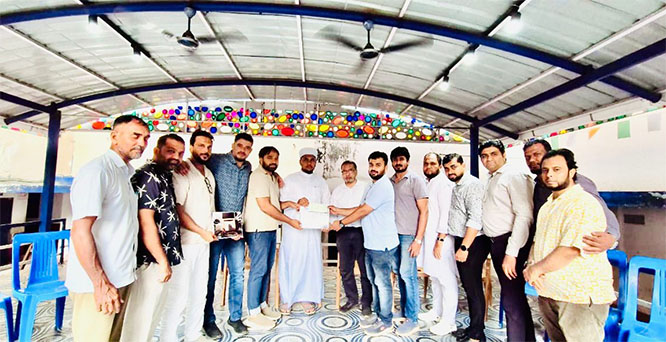
Mangaluru: The Phase I project of Badria Vision 2028 was formally launched at a ceremony held at the Badria Campus on January 17, marking an important step in the institution’s long-term development roadmap.

The programme was attended by P.B. Abdul Hameed, Secretary of the MEA, and P.C. Hasir, Correspondent of the MEA, who presided over the event and underscored the institution’s commitment to growth and academic excellence.

Office-bearers of the Badria Alumni Association were present in large numbers, including A.K. Sajid (President), Shamsuddin and S.M. Farooq (Vice-Presidents), Shaheed (General Secretary), and Khaleel (Treasurer), reflecting strong alumni engagement in the initiative.

The gathering was blessed by Sayyid Shamsuddeen Basith Thangal Kukkaje, Qateeb of Zeenat Yatheem Bakshi, who led a special dua seeking divine guidance and success for the project.

The ceremony also witnessed the participation of prominent alumnus and local corporate professional Abdul Latheef, along with alumni members Naushad, Kalandar, Safwan, members of the core committee, and several other former students.

A key moment of the event was the formal handover of a cheque to Ameen Woodland Architect, signalling the immediate commencement of construction work under Phase I of the project.

Organisers said the launch of Phase I reflects a shared vision, institutional unity, and collective resolve to realise the objectives of Badria Vision 2028.

Comments

Add new comment

  • Coastaldigest.com reserves the right to delete or block any comments.
  • Coastaldigset.com is not responsible for its readers’ comments.
  • Comments that are abusive, incendiary or irrelevant are strictly prohibited.
  • Please use a genuine email ID and provide your name to avoid reject.
News Network
January 20,2026

Mangaluru: In a major step towards strengthening rural innovation, the Office of the Principal Scientific Adviser (PSA) to the Government of India is supporting the establishment of RuTAGe Smart Village Centres (RSVCs) across the country through collaborations with academic institutions, civil society organisations and philanthropic partners.

As part of this national initiative, Nitte (Deemed to be University) will set up the first RSVCs in the region at Nitte GP in Udupi district and at the Nitte Health Centre, Sevanjali Trust, Farangipete, in Dakshina Kannada district. The centres will be inaugurated on January 21. In South India, the programme is being implemented by the Section Infin-8 Foundation (SI-8).

Speaking to reporters on Monday, SI-8 founder-director Vishwas US said experts from Nitte University and SI-8 would work closely with farmers, students, youth and local entrepreneurs to adapt and deploy technologies tailored to local needs.

Project head Prof Iddya Karunasagar, representing Nitte DU, said the RSVCs at Nitte and Farangipete would serve as demonstration hubs for a wide range of agriculture, energy, skill-development and assistive technologies. These include solar dryers for fruits, vegetables and crops; soil-testing solutions; power weeders and women-friendly farm tools; wind-powered devices for rural artisans; grain storage systems; grass-cutting and tree-climbing equipment; and liquid fertiliser production using cowshed waste.

SI-8 CEO Aravind C Kumar said the centres would also provide access to digital and knowledge-based platforms such as ISRO applications, government scheme portals, market linkage tools and gamified learning resources, along with assistive technologies for persons with visual impairments.

Highlighting the broader impact of the initiative, Principal Scientific Adviser Prof Ajay Kumar Sood said it demonstrated how applied research could bridge the rural–urban divide and help create self-reliant, technology-enabled villages.

The initiative has been made possible through philanthropic support from Dr NC Murthy of ACM Business Solutions, LLC, USA. Dr Sapna Poti, Director (Strategic Alliances) at the Office of the Principal Scientific Adviser, said the long-term objective is to build self-sufficient, technology-driven communities capable of generating sustainable livelihoods on their own.

Comments

Add new comment

  • Coastaldigest.com reserves the right to delete or block any comments.
  • Coastaldigset.com is not responsible for its readers’ comments.
  • Comments that are abusive, incendiary or irrelevant are strictly prohibited.
  • Please use a genuine email ID and provide your name to avoid reject.
News Network
January 20,2026

DGP.jpg

Karnataka DGP (Civil Rights Enforcement) K Ramachandra Rao was suspended with immediate effect, as per a state government order issued on Monday, 19 January. The order cited conduct unbecoming of a government servant and causing embarrassment to the state administration.

The Karnataka government suspended Rao after a purported video showed him in a compromising position with a woman inside his official chamber. The video went viral on social media. Rao rejected the videos outright, terming them "fabricated and false".

Who is K Ramachandra Rao?

Rao is a DGP-rank officer who was heading the Directorate of Civil Rights Enforcement until his suspension. He was promoted to DGP in September 2023 and assumed office in October 2023, the Sunday Guardian reported.

He also served as the Chairman and Managing Director of the Karnataka State Police Housing and Infrastructure Development Corporation Limited.

His stint as the Inspector General of Police (IGP) for the Southern Range was also marred by controversy. In 2014, during a cash seizure near Mysuru’s Yelwal, officials claimed the seized amount was ₹20 lakh, while the accused (Kerala-based merchants) claimed it was around ₹2.27 crore.

Rao, who was present during the seizure, denied all allegations. However, he was transferred soon after.

Allegations of collusion with a businessman surfaced, and a senior police officer was quoted by The Sunday Guardian as saying, “In Rao’s case, the CID has clearly mentioned that there was a great degree of lapse on the part of Rao and a deputy superintendent of police after it was brought to their notice that a few policemen, including a gunman attached to the IGP, were involved in the robbery.”

Rao had denied all wrongdoing in that incident. Despite past controversies, he rose to the state’s top police position, the Sunday Guardian reported.

Ranya Rao’s stepfather

Rao is the stepfather of Kannada actress Harshavardhini Ranya alias Ranya Rao, accused of orchestrating the illegal import of gold worth over ₹12.56 crore from Dubai to India along with two others — businessman Tarun Raju, and jewellery dealer Sahil Jain.

‘Obscene video’ controversy

A viral video showed Rao behaving inappropriately with a woman inside his office while in uniform.

The Karnataka government said in its Monday order that “vide videos and news reports widely broadcast on public news channels and media platforms, it is observed that Dr K Ramachandra Rao has acted in an obscene manner which is unbecoming of a Government Servant and also causing embarrassment to the Government.”

The order said the matter was examined by the state government, which found that the officer's conduct amounted to a violation of Rule 3 of the All India Services (Conduct) Rules, 1968.

The government said it is prima facie satisfied that "it is necessary to place Rao under suspension with immediate effect, pending inquiry".

During the suspension period, Rao will be entitled to subsistence allowance as per Rule 4 of the All India Services (Discipline and Appeal) Rules, 1969.

The order also places restrictions on his movement, stating that during the period of suspension, the officer must not leave headquarters under any circumstances without the written permission of the state government.

Comments

Add new comment

  • Coastaldigest.com reserves the right to delete or block any comments.
  • Coastaldigset.com is not responsible for its readers’ comments.
  • Comments that are abusive, incendiary or irrelevant are strictly prohibited.
  • Please use a genuine email ID and provide your name to avoid reject.