World should not distinguish between terrorists, says President

Agencies
June 19, 2018

New Delhi, Jun 19: India and the EU must persuade the world that there is no difference between the "good" and "bad" terrorists, President Ram Nath Kovind said today as he called for sanctions on state sponsors of terrorism, in an apparent reference to Pakistan that has been long blamed for providing safe havens to terrorists.

He also said that India was committed to an international order marked by robust, rules-based multilateral institutions, by multi-polarity in international governance, and by connectivity projects that are viable, sustainable, respect the sovereignty and territory of the nation.

"Pockets of instability and extremism can be found in the region to Europe's east and India's west. They are a worry for both Europe and India," Kovind said in a major speech on India's relations with Europe at an event organised by the Hellenic Foundation for European and Foreign Policy - a leading foreign policy think-tank.

Identifying radicalisation and terrorism as pressing global concerns, Kovind said that promotion of terrorism by state and non-state actors, extremism rooted in senseless hate, the proliferation of sensitive weapons, the use of regular communication and financial channels by terror groups pose a challenge to not one nation or the other but to all humanity.

He also sought the strengthening of multilateral platforms such as the Financial Action Task Force (FATF) and the Global Counter-Terrorism Forum to combat the menace and squeeze terrorists' financing.

India, Afghanistan and the US accused Pakistan of providing safe havens to terrorists, elements of the Afghan Taliban and Haqqani Network. Pakistan, however, denies the charge.

In February, the 37-nation FATF placed Pakistan on a watch list of the countries where terrorist outfits are still allowed to raise funds. At a meeting in Paris, Jamat-ud-Dawa chief and 2008 Mumbai terror attack mastermind Hafiz Saeed and his "charities" were top on the list of the groups that the FATF wanted Pakistan to act against.

"India and the EU must persuade the world to not distinguish between so-called 'good' and 'bad' terrorists, to shame and sanction state sponsors of terrorism, and to strengthen multilateral platforms," Kovind told the gathering of diplomats, policymakers and academics.

He expressed India's willingness to share its domestic experiences and success stories in a manner that may be useful to EU.

"India is committed to world peace," Kovind said, adding that India is a steadfast friend and a stakeholder in the continued security and integrity of Europe.

He said that India "sees peace not just as the absence of conflict but as a reflection of sustainable development and indeed of any effort that anticipates and prevents strife and suffering".

"When we work for combating climate change, we contribute to world peace. When we assist other developing countries, as per their priorities, and strive for a less unequal world we contribute to world peace. When we rescue and evacuate not just our own citizens from troubled regions, but those of 40 other countries – as we did during the Yemen crisis of 2015 – we contribute to world peace," he said.

Kovind said that India was committed to an international order marked by robust, rules-based multilateral institutions, and by connectivity projects that are viable, sustainable, respect the sovereignty and territory of nations.

China is engaged in hotly contested territorial disputes in the South and East China Seas. Beijing has also made substantial progress in militarising its manmade islands in the past few years, which it says it has the right to defend.

Beijing claims sovereignty over all of the South China Sea. But Vietnam, Malaysia, the Philippines, Brunei and Taiwan have counter claims. In the East China Sea, Beijing has territorial disputes with Japan.

China is also engaged in an ambitious connectivity project - the Belt and Road Initiative - with an aim to link Southeast Asia, Central Asia, the Gulf, Africa and Europe with a network of land and sea routes.

India has not endorsed the BRI as a USD 50 billion China-Pakistan Economic Corridor, which is part of the BRI, passes through Pakistan-occupied Kashmir (PoK).

On clean energy and climate change, Kovind said that India and the EU are united in their commitment to the 2015 Paris Agreement. "India is scaling up the share of non-fossil fuels in its energy mix. This will go up from the current 31 per cent to 53 per cent by 2027," he said.

The President invited Greece to join the International Solar Alliance (ISA). He also expressed happiness at the European Investment Bank's willingness to mobilise finance for affordable solar energy projects in ISA member countries.

"The EU is among India's largest trading partners," the President said, adding that EU is a critical source of investment and technology, especially for sustainability programmes.

He also said that India was committed to an India-EU Broad-based Trade and Investment Agreement (BTIA), to be achieved in a generous spirit of mutual accommodation and of pragmatism.

"India and Europe must work together to ensure that the multilateral mechanism remains resilient and serves future generations – as well as accommodates new actors with a merit-based claim for a seat at the table," he said.

"Our cooperation – whether diplomatic and political or business and security – rests on a firm people-to-people understanding. There is no substitute for that. The people of India and of Europe have carefully built and tended our relationship, over centuries," he added.

Comments

Add new comment

  • Coastaldigest.com reserves the right to delete or block any comments.
  • Coastaldigset.com is not responsible for its readers’ comments.
  • Comments that are abusive, incendiary or irrelevant are strictly prohibited.
  • Please use a genuine email ID and provide your name to avoid reject.
News Network
December 22,2025

bhagavat.jpg

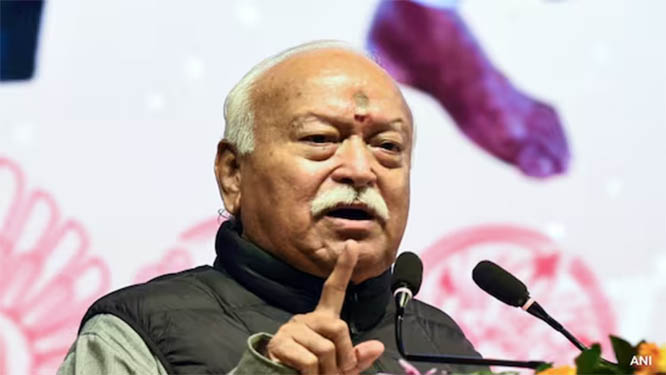
Kolkata: Stressing that India is a "Hindu nation," Rashtriya Swayamsevak Sangh (RSS) Chief Mohan Bhagwat on Sunday said that no constitutional approval is needed as it is the "truth".

Addressing an event marking 100 years of the RSS, Bhagwat said that India is, and will remain, a Hindu nation until Indian culture is appreciated in the country.

"The Sun rises in the east; we don't know since when this has been happening. So, do we need constitutional approval for that, too? Hindustan is a Hindu nation. Whoever considers India their motherland appreciates Indian culture, as long as there is even one person alive on the land of Hindustan who believes in and cherishes the glory of Indian ancestors, India is a Hindu nation. This is the ideology of the Sangh," he said at the '100 Vyakhyan Mala' program of RSS in Kolkata.

"If Parliament ever decides to amend the Constitution and add that word, whether they do it or not, it's fine. We don't care about that word because we are Hindus, and our nation is a Hindu nation. That is the truth. The caste system based on birth is not the hallmark of Hindutva," he added.

RSS has always argued that India is a "Hindu Nation," given the culture and majority's affiliations to Hinduism. However, 'secular' was not originally part of the Preamble of the Constitution, but it was added along with the word 'socialist' by the Constitution (42nd Amendment) Act, 1976, during the Emergency imposed by then Prime Minister Indira Gandhi.

Bhagwat also urged people to visit the organisation's offices and 'shakhas' to understand its work, so that what he dubbed as the “false perception” of the organisation as anti-Muslim can be dispelled!

Bhagwat said that people have understood that the organisation advocates for the protection of Hindus, and are "staunch nationalists," but not anti-muslim.

"If there is a perception that we are anti-Muslim, then, as I said, the RSS work is transparent. You can come anytime and see for yourself, and if you see anything like that happening, then you keep your views, and if you don't see it, then you change your views. There is a lot to understand (about RSS), but if you don't want to understand, then no one can change your mind," Bhagwat said.

He said, but anyone unwilling to learn cannot be helped.

"After seeing, people have said that you are staunch nationalists. You organise Hindus, and you advocate for the protection of Hindus. But you are not anti-Muslim. Many people have accepted this, and those who want to know more should come and see the RSS for themselves," he said.

Comments

Add new comment

  • Coastaldigest.com reserves the right to delete or block any comments.
  • Coastaldigset.com is not responsible for its readers’ comments.
  • Comments that are abusive, incendiary or irrelevant are strictly prohibited.
  • Please use a genuine email ID and provide your name to avoid reject.
News Network
December 21,2025

hadith.jpg

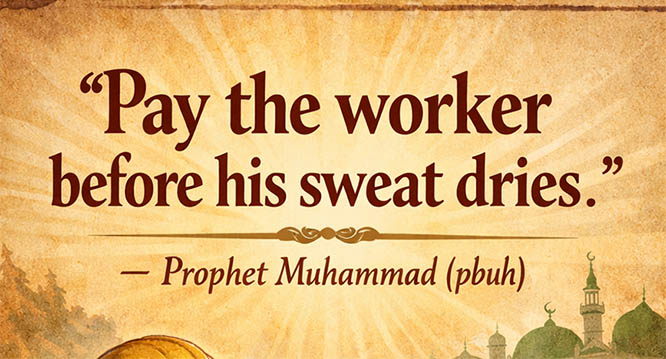
Invoking the teachings of Prophet Muhammad—“pay the worker before his sweat dries”—the Madras High Court has directed a municipal corporation to settle long-pending legal dues owed to a former counsel. The court observed that this principle reflects basic fairness and applies equally to labour and service-related disputes.

Justice G. R. Swaminathan made the observation while hearing a petition filed by advocate P. Thirumalai, who claimed that the Madurai City Municipal Corporation failed to pay him legal fees amounting to ₹13.05 lakh. Earlier, the High Court had asked the corporation to consider his representation. However, a later order rejected a major portion of his claim, prompting the present petition.

The court allowed Thirumalai to approach the District Legal Services Authority (DLSA) and submit a list of cases in which he had appeared. It also directed the corporation to settle the verified fee bills within two months, without interest. The court noted that the petitioner had waited nearly 18 years before challenging the non-payment and that the corporation could not be fully blamed, as the fee bills were not submitted properly.

‘A Matter of Embarrassment’

Justice Swaminathan described it as a “matter of embarrassment” that the State has nearly a dozen Additional Advocate Generals. He observed that appointing too many law officers often leads to unnecessary allocation of work and frequent adjournments, as government counsel claim that senior officers are engaged elsewhere.

He expressed hope that such practices would end at least in the Madurai Bench of the High Court and added that Additional Advocate Generals should “turn a new leaf” from 2026 onwards.

‘Scandalously High Amounts’

While stating that the court cannot examine the exact fees paid to senior counsel or law officers, Justice Swaminathan stressed that good governance requires public funds to be used prudently. He expressed concern over the “scandalously high amounts” paid by government and quasi-government bodies to a few favoured law officers.

In contrast, the court noted that Thirumalai’s total claim was “a pittance” considering the large number of cases he had handled.

Background

Thirumalai served as the standing counsel for the Madurai City Municipal Corporation for more than 14 years, from 1992 to 2006. During this period, he represented the corporation in about 818 cases before the Madurai District Courts.

As the former counsel was unable to hire a clerk to obtain certified copies of judgments in all 818 cases, the court directed the District Legal Services Authority to collect the certified copies within two months. The court further ordered the corporation to bear the cost incurred by the DLSA and deduct that amount from the final settlement payable to the petitioner.

Comments

Add new comment

  • Coastaldigest.com reserves the right to delete or block any comments.
  • Coastaldigset.com is not responsible for its readers’ comments.
  • Comments that are abusive, incendiary or irrelevant are strictly prohibited.
  • Please use a genuine email ID and provide your name to avoid reject.
News Network
December 19,2025

Saudi Arabia has abolished fees on expatriate workers employed in licensed industrial establishments, signaling a strong push to empower national factories and enhance the Kingdom’s global industrial competitiveness. The move reflects the leadership’s commitment to building a sustainable and resilient industrial economy under Saudi Vision 2030.

The decision was approved by the Council of Ministers, chaired by Crown Prince and Prime Minister Mohammed bin Salman, following a recommendation from the Council of Economic and Development Affairs (CEDA). It forms part of a broader strategy to support, modernize, and strengthen the industrial sector.

By removing fees on foreign workers, industrial establishments gain greater operational flexibility and relief from financial pressures. This is expected to help factories expand production, improve efficiency, and compete more effectively in international markets, while reinforcing long-term sustainability.

The initiative aligns closely with Saudi Vision 2030, which identifies industry as a key pillar of economic diversification. A competitive and resilient industrial base is viewed as essential for driving innovation, attracting investment, and sustaining long-term economic growth.

Overall, the fee exemption underscores the Kingdom’s commitment to creating a supportive environment for industrial development and ensuring that Saudi factories remain globally competitive and capable of leading the nation’s economic transformation.

Comments

Add new comment

  • Coastaldigest.com reserves the right to delete or block any comments.
  • Coastaldigset.com is not responsible for its readers’ comments.
  • Comments that are abusive, incendiary or irrelevant are strictly prohibited.
  • Please use a genuine email ID and provide your name to avoid reject.