



85% of rural landowners are Hindus; Muslims account for 11%: Report

September 23, 2015

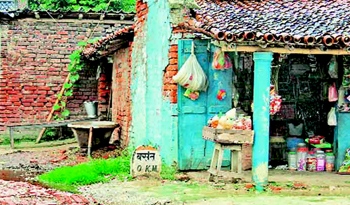
New Delhi, Sep 23: An overwhelming majority of rural, landowning households in the country are Hindus — with their number growing between 2004-05 and 2011-12 — while Muslims constitute only a small minority, a new government-endorsed study has found.
rural
According to the ‘India Rural Development Report 2013-14’ by IDFC, whose foreward has been written by Rural Development Minister Chaudhary Birender Singh, nearly 85 per cent of rural, landowning households in 2011-12 were Hindus, and this percentage increased from 2004-05, while Muslim households constituted just over 11 per cent with the figure having declined in the same period.

In 2006, the Rural Development Ministry under then minister Jairam Ramesh had inked an agreement for the publication of an annual India Rural Development Report by the IDFC Rural Development Network. This is the second edition of the report.

In 2011-12, while Hindus accounted for 84.2 per cent of rural landowners, Muslims and other minorities constituted 11.2 per cent and 4.6 per cent respectively.

The figure rose for Hindus in the period between 2004-05 and 2011-12, with a corresponding decline in the share of the other religious communities. In 2004-05, 81.8 per cent rural landowners were Hindu households. While Muslims and other minorities accounted for 12.7 and 5.4 per cent, respectively.

Among social groups, data showed that over 40 per cent of rural, landowning households belonged to the Other Backward Classes (OBCs), with the percentage having increased between 2004-05 and 2011-12. In 2004-05, 41.2 per cent of rural landowners were OBCs, 30.7 per cent were ‘others’, 19.7 per cent were SCs and 8.4 per cent were from the Scheduled Tribes. The share of both SCs, STs grew in 2011-12, but at a pace slower than than that of the OBCs. In 2011-12, OBCs held 44.2 per cent land in rural areas, and the figure for ‘Others’, SCs and STs was 23.7 per cent, 20.9 per cent and 11.2 per cent respectively.

In terms of employment status in the farm sector in rural India (above 15 years of age), 61.5 per cent of Muslims were self-employed in 2011-12, as against 65 per cent of Hindus and 72.1 per cent of other minorities. The corresponding figures in 2004-05 were 62.7 per cent, 63.8 per cent and 68.5 per cent, respectively.

The gender break-up for self employed rural people in the farm sector, however, showed a slightly different picture. In 2011-12, 65 per cent of Muslim women were self-employed, as against 63.6 per cent of Hindu women and 74.7 of those from other minorities. Among men, 60.3 per cent of Muslims belonged to this category, as against 65.8 per cent Hindus and 70.5 per cent from other minorities.

In the non-farm sector, 50.8 per cent Muslims were self-employed in 2011-12 — 71.1 per cent women as against 45.8 per cent men. However, among Hindus, 37.6 per cent were self-employed, with a less stark gender variation at 37 per cent for men and 39.6 per cent for women. The high numbers for Muslim women in this category was attributed partly to their “restricted mobility” by this report. It also showed that rural poverty remained “high” among STs and SCs.


Comments

Add new comment

  • Coastaldigest.com reserves the right to delete or block any comments.
  • Coastaldigset.com is not responsible for its readers’ comments.
  • Comments that are abusive, incendiary or irrelevant are strictly prohibited.
  • Please use a genuine email ID and provide your name to avoid reject.
News Network
December 19,2025

Mangaluru: Public transport in Mangaluru is set for a state-led transformation as the government moves to deploy 100 new electric govt buses to replace unreliable private services. The initiative aims to provide a dependable alternative to private operators who have been frequently "cutting trips," leaving thousands of commuters stranded.

The announcement was made by Deputy Commissioner and MCC Administrator Darshan HV during a public phone-in session. The move specifically targets routes where private bus service has become erratic, ensuring that citizens no longer have to rely on a fluctuating private sector for their daily commute.

Restoring the Govt Presence

The transport crisis was brought to the forefront by Ramayya, a resident of Bajal, who highlighted a growing trend of private buses skipping morning and night trips. With the previous KSRTC (govt) services discontinued, residents have been left without a fallback option.

To fix this, the DC confirmed that the PM-eBus Sewa Scheme will bring 100 government-owned electric buses to the city:

•    Phased Deployment: The first 50 of the new 100 government buses are scheduled to arrive by March 2026.

•    State Infrastructure: Two new government depots, including one at Mudipu, are being prepared for operations.

•    Recruitment: The state has already begun training a new batch of government bus drivers to ensure the fleet is operational the moment it arrives.

Comments

Add new comment

  • Coastaldigest.com reserves the right to delete or block any comments.
  • Coastaldigset.com is not responsible for its readers’ comments.
  • Comments that are abusive, incendiary or irrelevant are strictly prohibited.
  • Please use a genuine email ID and provide your name to avoid reject.
News Network
December 7,2025

SHRIMP.jpg

Mangaluru, Dec 7: A rare bamboo shrimp has been rediscovered on mainland India more than 70 years after it was last reported, confirming for the first time the presence of Atyopsis spinipes in the country. The find was made by researchers from the Centre for Climate Change Studies at Sathyabama Institute of Science and Technology, Chennai, during surveys in Karnataka and Odisha.

The team — shrimp expert Dr S Prakash, PhD scholar K Kunjulakshmi, and Mangaluru-based researcher Maclean Antony Santos — combined field surveys, ecological assessments and DNA analysis to identify the elusive species. Their findings, published in Zootaxa, resolve decades of taxonomic confusion stemming from a 1951 report that misidentified the species as Atyopsis moluccensis without strong evidence.

The shrimp has now been confirmed at two locations: the Mulki–Pavanje estuary near Mangaluru and the Kuakhai River in Bhubaneswar. Historical specimens from the Andaman Islands, previously labelled as A. moluccensis, were also found to be misidentified and actually belong to A. spinipes.

The rediscovery began after an aquarium hobbyist in Odisha spotted a shrimp in 2022, prompting systematic surveys across Udupi, Karwar and Mangaluru. Four female specimens were collected in Mulki and one in Odisha, all genetically matching.

Researchers warn the species may exist in very small, vulnerable populations as freshwater habitats face increasing pressure from pollution, sand mining and infrastructure development. All verified specimens have been deposited with the Zoological Survey of India for future reference.

Comments

Add new comment

  • Coastaldigest.com reserves the right to delete or block any comments.
  • Coastaldigset.com is not responsible for its readers’ comments.
  • Comments that are abusive, incendiary or irrelevant are strictly prohibited.
  • Please use a genuine email ID and provide your name to avoid reject.
News Network
December 15,2025

Mangaluru, Dec 15: Educational institutions in Mangaluru that rely on the popular Mangala Stadium for their annual sports events are bracing for an inconvenience as the city's key sporting venue is set to close its gates for a significant upgrade. The stadium is expected to be unavailable for approximately two months starting from January 15, 2026.

The closure is necessitated by a proposed overhaul of the stadium's facilities, with a special focus on upgrading the synthetic track. Pradeep Dsouza, Assistant Director of the District of Youth Empowerment and Sports (DYES), Dakshina Kannada, confirmed the development.

"Experts have visited the stadium, conducted a thorough inspection, and have given the go-ahead for a complete makeover," Dsouza stated. "Funds have been allocated for the project, and we are currently awaiting the final green signal from state officials to commence the work. We anticipate that the work will likely begin in the second week of January. Consequently, we have stopped renting out the stadium to colleges and other organizations in preparation for the upgrade."

The timing presents a logistical challenge for colleges, as many schools have already concluded their sports meets.

"Colleges will now be organizing their events and will need to find alternative locations to host their sports meets," Dsouza added. He suggested a few potential venues, including the Dakshina Kannada police ground, University College grounds, Panambur grounds, Swaraj Maidan in Moodbidri, and the Mangalore University sports grounds in Konaje.

However, many institutions note that finding a comparable venue will be difficult. While the DK police ground and University College grounds are closer to the city center, they do not possess the extensive facilities and infrastructure offered by Mangala Stadium.

Dr. P Dayananda Pai - P Satisha Govt First Grade College, Carstreet, is one such institution dependent on the stadium. Principal Jayakar Bhandary expressed hope for a swift completion of the work. "We expect the work to be completed at the earliest. If not, we will be forced to look for other venues to host the sports day for our students," Bhandary said, highlighting the pressing need for the city's main sporting facility.

Comments

Add new comment

  • Coastaldigest.com reserves the right to delete or block any comments.
  • Coastaldigset.com is not responsible for its readers’ comments.
  • Comments that are abusive, incendiary or irrelevant are strictly prohibited.
  • Please use a genuine email ID and provide your name to avoid reject.