Aadhaar helped Indian govt save USD 9 bn by ‘eliminating fraud’: Nilekani

Agencies
October 13, 2017

Washington, Oct 13: The Indian government's Aadhaar card scheme, which has enrolled more than 1 billion people, has helped the exchequer save about USD 9 billion by eliminating fraud in beneficiary lists, its architect Nandan Nilekani has said here.
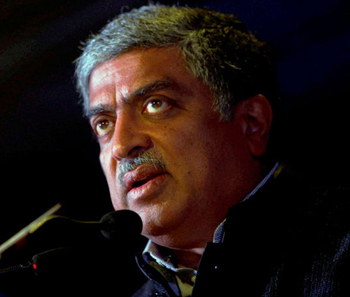
The system, launched by the previous UPA government, has been "enthusiastically" supported by the current government led by Prime Minister Narendra Modi, and Finance Minister Arun Jaitley, said the 62-year-old non-executive chairman of Infosys -- India's second largest software services firm.

It has really been a bipartisan thing, Nilekani said while participating in a World Bank panel discussion on Digital Economy for Development yesterday.

He said that it is easier for the developing countries to leapfrog by building a right digital infrastructure.

Aadhaar now has more than a billion people registered on its system, he said. "It has also saved the government about USD 9 billion in fraud and wastage because by having that unique number you eliminate fakes and duplicates from your beneficiary and employee list," Nilekani said at the event on the sidelines of the annual meeting of the International Monetary Fund (IMF) and the World Bank.

"We have about half a billion people who have connected their ID directly to a bank account. The government has transferred about USD 12 billion into bank accounts electronically in real time to the world's largest cash transfer system. There are many many things like that.

"I'm a big believer that if you build the right digital infrastructure then you can leapfrog," Nilekani, the former chairman of Unique Identity Development Authority of India (UIDAI), said.

In the new world of data economy, identity authentication, frictionless payments, paperless transactions these are all very important layers of the new digital economy. That is what India has done, he said.

India is the only country in the world where a billion people can do completely paperless, cashless transactions on their mobile phones using this infrastructure which dramatically reduces costs.

"Once you bring cost down, automatically inclusion happens," Nilekani said, adding that there is a fundamental strategic way of looking at it.

Now it is very clear that date is where the action is, he said. The infrastructure that India has created enables every individual to use his or her data for their advancement, which is fundamental. Herein an individual used data for their personal advancement, Nilekani said.

"There is a fundamental inversion happening of the way we think of data, which is unique," he said, adding that this has a lot of implications for the bank and people in public policy who have to look at what's the new rules of the game in the economy.

Responding to a question, Nilekani said the World Bank has really done a great job in internalising the concept of digital ID.

A high-level panel having representation from about 15-20 countries met at the bank yesterday to have discussions on it.

When one has this digital ID, one can authenticate oneself through a system and get the own data out, he said.

Noting that in India the Supreme Court has declared privacy as a fundamental right, he said the apex court has also laid down a framework that even when the government need to achieve a state objective then they can circumscribe some of those privacies.

"It says for national security, for prevention of crime, protection of revenue, or for social welfare," Nilekani said.

But the court said, every time the government circumscribes the privacy, it has to be a law, it has to be reasonable and it must be proportional.

Nilekani said that the question of how data use can address inequality has not been discussed enough. "When the internet happened in the West in the last 15 years... the West was economically rich before they became data rich," he said.

But in developing countries people have become data rich before they become economically rich, Nilekani said. "So in a society where per capita income is USD 1500 and you are data rich, the business model is how do we create an architecture where individuals and businesses are able to trade in their data to improve their lives. That is the heart of the question.

"If I as a consumer can use my data to get better loans, better education, better jobs and better skills, and if we can get a billion people to get access to that they will use data as the ladder to improve their lives," he added.

Comments

Add new comment

  • Coastaldigest.com reserves the right to delete or block any comments.
  • Coastaldigset.com is not responsible for its readers’ comments.
  • Comments that are abusive, incendiary or irrelevant are strictly prohibited.
  • Please use a genuine email ID and provide your name to avoid reject.
News Network
December 7,2025

Mangaluru, Dec 7: A 34-year-old fruit and vegetable trader in Mangaluru has reportedly lost ₹33.1 lakh after falling victim to an online investment scam run through a fake mobile app.

Police said the scam began in September, when the victim received a link on Facebook. Clicking it connected him to a WhatsApp number, where an unidentified person introduced a high-return investment scheme and instructed him to download an app.

To build trust, the fraudster asked him to invest ₹30,000 on September 24. The trader soon received ₹34,000 as “profit,” convincing him the scheme was genuine. Over the next two months, he transferred money in multiple instalments via Google Pay and IMPS to different scanner codes and bank accounts shared by the scammers. Between September 24 and December 3, he ended up sending a total of ₹33.1 lakh.

When he later requested a refund of his investment and promised returns, the scammers demanded additional payments, claiming he needed to pay a “service tax” first. Even after he paid a small amount, no money was returned, and the scammers continued pressuring him for more.

A case has been registered at the CEN Crime Police Station.

Comments

Add new comment

  • Coastaldigest.com reserves the right to delete or block any comments.
  • Coastaldigset.com is not responsible for its readers’ comments.
  • Comments that are abusive, incendiary or irrelevant are strictly prohibited.
  • Please use a genuine email ID and provide your name to avoid reject.
News Network
December 4,2025

Udupi: A 40-year-old NRI from Udupi has reportedly lost more than Rs 12.25 lakh in an online investment scam operated through Telegram.

According to a complaint filed at the CEN police station, Leo Jerome Mendonsa, who has been working in Dubai for the past 15 years in computer accessories sales, maintains NRI accounts in Karkala and Nitte.

On November 12, 2025, Mendonsa was added to a Telegram group called Instaflow Earnings by unknown individuals. Users identified as Priya and Dipannita persuaded him to invest in “Revenue Tasks.” Initially, Mendonsa transferred Rs 1,100 multiple times and received the promised returns, encouraging him to continue.

On November 14, another user, Nishmitha Shetty, directed him to register on a website, digitvisionuoce.cc, and invest Rs 4 lakh in various shares. Over the next few days, he made multiple transfers totaling Rs 12,25,000, including Rs 50,000 via Google Pay, believing the scheme was legitimate.

After receiving the money, the alleged handlers stopped responding, and neither the invested amount nor the promised profits were returned.

The CEN police have registered a case under Sections 66(C) and 66(D) of the IT Act and Section 318(4) of the Bharatiya Nyaya Sanhita (BNS), and investigations are ongoing.

Comments

Add new comment

  • Coastaldigest.com reserves the right to delete or block any comments.
  • Coastaldigset.com is not responsible for its readers’ comments.
  • Comments that are abusive, incendiary or irrelevant are strictly prohibited.
  • Please use a genuine email ID and provide your name to avoid reject.
News Network
December 16,2025

SMR1.jpg

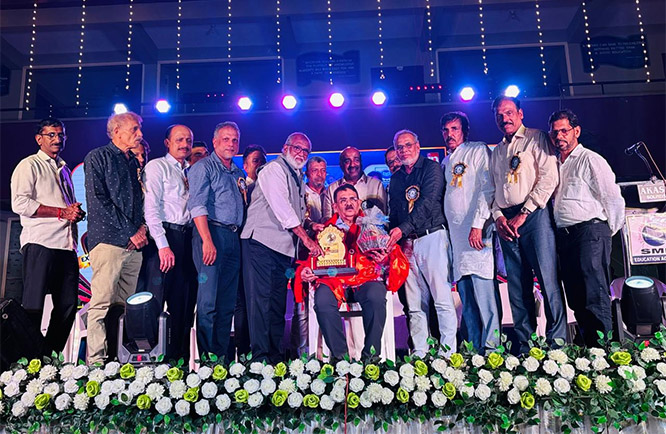
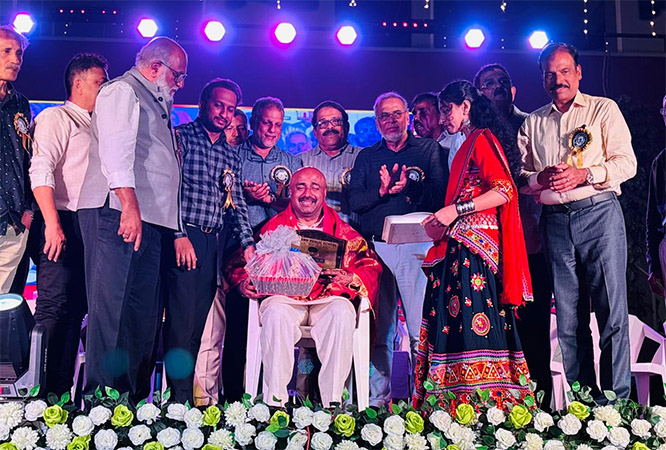
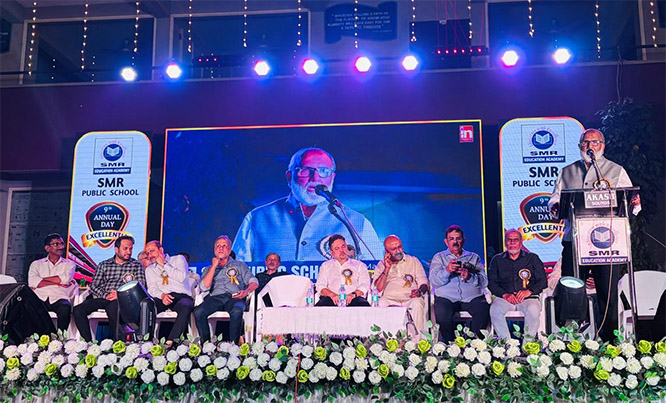
Melkar (Bantwal): The 9th Annual Day celebration of SMR Public School, titled “EXCELLENTIA”, was held on December 15 with great enthusiasm and dignity, marking a significant milestone in the institution’s journey towards academic excellence and holistic development.

The programme was inaugurated by Dr. U. T. Iftikar Ali. The chief guests were Dr. Akhtar Hussain, Mr. P. Moosabba Beary, Mr. Zakaria Jokattre, and Dr. T. M. Abdul Rahuf—whose inspiring addresses motivated the students and appreciated the school’s contributions to education.

Mr. Abdul Nasir, Mr. Ibrahim Gadiyar, Mr. Razak Golthamajal, Mr. Sali Koya, Mr. Arshad Hussain, Mr. Ismail Balanoor, Mr. Feroz Bawa, Mr. Sahul Hameed, Mr. Abubakkar, Mr. Hameed K. Mani, Mr. Abdul Majeed (Principal, Melkar Women’s College), and Mr. Abdul Lathief (Former Principal, Melkar Women’s College) were the guests of honour.

The Annual Report was presented by the Headmistress, Ms. Fathimathul Zaheera, highlighting the school’s achievements and progress during the academic year. The Presidential Address was delivered by the Chairman of SMR Public School, Dr. Haji S. M. Rasheed, who emphasised the vital role of education in shaping students’ futures and stressed the importance of discipline, dedication, and consistent effort in achieving 100 per cent academic results.

Secretary of SMR Public School, Mr. Rifath Ahmed, and PTA President, Mr. Sandeep Kumar, were also present on the occasion.

The Annual Day celebration showcased the collective efforts of students and teachers and reaffirmed the school’s commitment to quality education and all-round development. The programme concluded with a vote of thanks, expressing gratitude to all dignitaries, parents, and well-wishers for their support. The 9th Annual Day—EXCELLENTIA—was a memorable and successful event, leaving a lasting impression on everyone present. 

SMR3.jpg

SMR2.jpg

Comments

Add new comment

  • Coastaldigest.com reserves the right to delete or block any comments.
  • Coastaldigset.com is not responsible for its readers’ comments.
  • Comments that are abusive, incendiary or irrelevant are strictly prohibited.
  • Please use a genuine email ID and provide your name to avoid reject.