Adarsh scam: Bombay High Court sets aside Governor’s sanction to prosecute Ashok Chavan

Agencies
December 22, 2017

Mumbai, Dec 22: The Bombay High Court on December 22 set aside the sanction granted to the Central Bureau of Investigation by Maharashtra Governor Ch. Vidyasagar Rao to prosecute senior Congress leader Ashok Chavan in the Adarsh housing society scam.

A division bench of Justices Ranjit More and Sadhana Jadhav ruled that though the CBI had claimed to be in possession of fresh evidence against Mr. Chavan at the time of seeking the sanction, it “failed to present any fresh evidence”.

The bench said the material presented by the CBI before Mr. Rao could not be converted into credible fresh evidence against Mr. Chavan. “The sanctioning authority is an independent body that can’t allow itself to be influenced by anyone’s opinion,” the court said.

The bench was hearing a petition filed by Mr. Chavan, challenging the sanction granted by the Governor in February 2016 to prosecute the former Chief Minister of Maharashtra under various sections of the IPC related to criminal conspiracy and cheating, besides provisions of the Prevention of Corruption Act. Mr. Chavan had challenged Mr. Rao’s order in the High Court, calling it “arbitrary, illegal and unjust” and passed with “malafide intentions“.

Mr. Chavan, currently the president of the Maharashtra unit of the Congress, had served as the Chief Minister between December 2008 and November 2010 before he was asked to step down on charges of corruption in the Adarsh scam.

The CBI has accused Mr. Chavan of approving additional floor space index (FSI) for the Adarsh society in posh South Mumbai, and accepting two flats for his relatives in return when he was the Chief Minister.

He is also accused of illegally approving, as Revenue Minister earlier, allotment of 40% of flats to civilians even though the society was originally meant for defence personnel. The CBI had earlier told the HC that if Mr. Chavan’s petition is allowed, it would amount to his acquittal, which would render the entire probe exercise futile.

Comments

Add new comment

  • Coastaldigest.com reserves the right to delete or block any comments.
  • Coastaldigset.com is not responsible for its readers’ comments.
  • Comments that are abusive, incendiary or irrelevant are strictly prohibited.
  • Please use a genuine email ID and provide your name to avoid reject.
News Network
November 22,2025

gaza.jpg

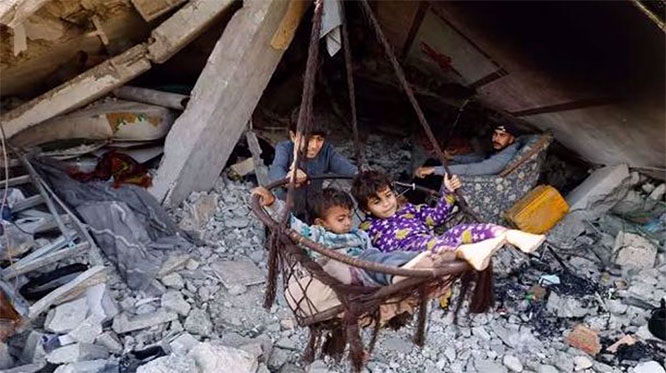
The Israeli regime’s forces have killed two Palestinian children in the Gaza Strip every day since the ceasefire began in early October, UNICEF has warned.

The UN children’s agency said on Friday that Israeli forces continue to attack Palestinians in Gaza even though the agreement was meant to stop the killing.

“Since 11 October, while the ceasefire has been in effect, at least 67 children have been killed in conflict-related incidents in the Gaza Strip. Dozens more have been injured. That is an average of almost two children killed every day since the ceasefire took effect,” UNICEF spokesperson Ricardo Pires said in Geneva, reminding that each number in the statistics represents a child whose life had ended violently.

“These are not statistics,” he said. “Each child had a story, a family, and a future that was stolen from them.”

Data from Palestinian factions, human rights groups, and government bodies recorded since the US-brokered ceasefire deal went into effect on October 10 show that Israeli forces have carried out numerous attacks, each constituting a separate ceasefire violation.

UNICEF teams say they repeatedly continue to witness heart-wrenching scenes of fearful Palestinian children sleeping outdoors with amputated limbs, while others live as orphans in flooded, makeshift shelters.

“I saw this myself in August. There is no safe place for them. The world cannot normalize their suffering,” Pires said, lamenting that the UN could “do a lot more if the aid that is really needed was entering faster.”

The UNICEF spokesperson warned that with the advent of winter, the risks for hundreds of thousands of displaced children will increase.

He warned, “The stakes are incredibly high” for children as winter acts as a threat multiplier, where children have no heating, no insulation, and few blankets. He said respiratory infections rise.

“Too many children have already paid the highest price,” Pires said. “Too many are still paying it, even under a ceasefire. The world promised them it would stop and that we would protect them.”

“Now we must act like it,” the UNICEF spokesperson added.

Since the Israeli regime launched its genocidal war against Palestinians in Gaza in October 2023, it has killed nearly 70,000 people in the territory, most of them women and children, and injured over 170,000 more, while reducing most of the structures in the enclave to rubble.

Comments

Add new comment

  • Coastaldigest.com reserves the right to delete or block any comments.
  • Coastaldigset.com is not responsible for its readers’ comments.
  • Comments that are abusive, incendiary or irrelevant are strictly prohibited.
  • Please use a genuine email ID and provide your name to avoid reject.
News Network
November 28,2025

ministerPM.jpg

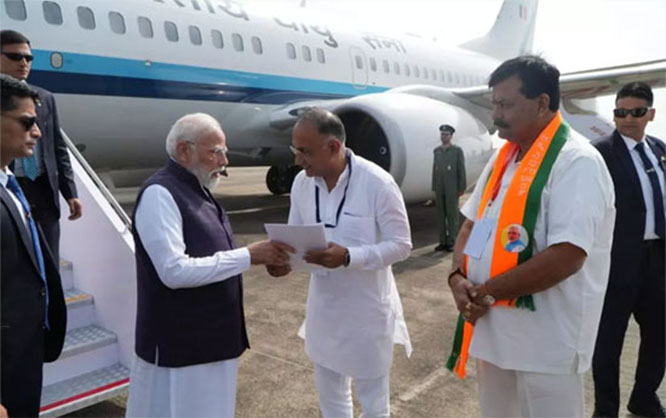
Mangaluru, Nov 28: Karnataka Health Minister and Dakshina Kannada district in-charge minister Dinesh Gundu Rao on Friday handed over Chief Minister Siddaramaiah’s letter to Prime Minister Narendra Modi, highlighting the severe distress faced by farmers due to crashing crop prices.

PM Modi arrived at the Mangaluru International Airport en route to Udupi, where Gundu Rao welcomed him and submitted the letter. The chief minister’s message stressed that farmers are suffering heavy losses because maize and green gram are being bought far below the Minimum Support Price (MSP). The state urged the Centre to immediately begin procurement at MSP.

According to the letter, Karnataka has a bumper harvest this year—over 54.74 lakh metric tons of maize and 1.98 lakh metric tons of green gram—yet farmers are unable to secure fair prices. Against the MSP of ₹2,400/MT for maize and ₹8,768/MT for green gram, market rates have plunged to ₹1,600–₹1,800 and ₹5,400 respectively.

The chief minister has requested the Centre to:

• Direct NAFED, FCI and NCCF to start MSP procurement immediately.
• Ensure ethanol units purchase maize directly from farmers or FPOs.
• Increase Karnataka’s ethanol allocation, citing high production capacity.
• Stop maize imports, which have depressed domestic prices.
• Relax quality norms for green gram, allowing up to 10% discoloration due to rains.

The letter stresses that MSP is crucial for farmer dignity and income stability and calls for swift central intervention to prevent a deepening crisis.

Comments

Add new comment

  • Coastaldigest.com reserves the right to delete or block any comments.
  • Coastaldigset.com is not responsible for its readers’ comments.
  • Comments that are abusive, incendiary or irrelevant are strictly prohibited.
  • Please use a genuine email ID and provide your name to avoid reject.
News Network
November 26,2025

students.jpg

Bengaluru, Nov 26: Karnataka is taking its first concrete steps towards lifting a three-decade-old ban on student elections in colleges and universities. Deputy Chief Minister D.K. Shivakumar announced Wednesday that the state government will form a small committee to study the reintroduction of campus polls, a practice halted in 1989 following incidents of violence.

Speaking at a 'Constitution Day' event organised by the Karnataka Congress, Mr. Shivakumar underscored the move's aim: nurturing new political leadership from the grassroots.

"Recently, (Leader of the Opposition in Lok Sabha) Rahul Gandhi wrote a letter to me and Chief Minister (Siddaramaiah) asking us to think about restarting student elections," Shivakumar stated. "I'm announcing today that we'll form a small committee and seek a report on this."

Student elections were banned in Karnataka in 1989, largely due to concerns over violence and the infiltration of political party affiliates into campus life. The ban effectively extinguished vibrant student bodies and the pipeline of young leaders they often produced.

Mr. Shivakumar, who also serves as the Karnataka Congress president, said that former student leaders will be consulted to "study the pros and cons" of the re-introduction.

Acknowledging the history of the ban, he added, "There were many criminal activities taking place back then. We’ll see how we can conduct (student) elections by regulating such criminal activities."

The Deputy CM reminisced about his own journey, which began on campus. He recalled his political activism at Sri Jagadguru Renukacharya College leading to his first Assembly ticket in 1985 at the age of 23. "That's how student leadership was at the time. Such leadership has gone today. College elections have stopped," he lamented, adding that for many, college elections were "like a big movement" where leaders were forged.

The move, driven by the Congress high command's push to cultivate young talent, will face scrutiny from academics and university authorities who have, in the past, expressed concern that the return of polls could disrupt the peaceful academic environment and turn campuses into political battlegrounds.

Comments

Add new comment

  • Coastaldigest.com reserves the right to delete or block any comments.
  • Coastaldigset.com is not responsible for its readers’ comments.
  • Comments that are abusive, incendiary or irrelevant are strictly prohibited.
  • Please use a genuine email ID and provide your name to avoid reject.