



After 18 years of bloodshed, US signs peace deal with Taliban to end a bloody war

Agencies
February 29, 2020

Doha, Feb 29: The United States signed a landmark deal with the Taliban on Saturday, laying out a timetable for a full troop withdrawal from Afghanistan within 14 months as it seeks an exit from its longest-ever war.

President Donald Trump urged the Afghan people to embrace the chance for a new future, saying the deal held out the possibility of ending the 18-year conflict.

"If the Taliban and the government of Afghanistan live up to these commitments, we will have a powerful path forward to end the war in Afghanistan and bring our troops home," he said on the eve of the event in Doha.

Secretary of State Mike Pompeo arrived in the Qatari capital to witness the signing of the accord, while Defence Secretary Mark Esper was in Kabul for a separate joint declaration with the Afghan government.

The agreement is expected to lead to a dialogue between the Kabul government and the Taliban that, if successful, could ultimately see the Afghan war wind down.

But the position of the Afghan government, which has been excluded from direct US-Taliban talks, remains unclear and the country is gripped by a fresh political crisis amid contested election results.

The United States and its allies will withdraw all their forces from Afghanistan within 14 months if the Taliban abide by the Doha agreement, Washington and Kabul said in a joint statement.

After an initial reduction of troops to 8,600 within 135 days of Saturday's signing, the US and its partners "will complete the withdrawal of their remaining forces from Afghanistan within 14 months... and will withdraw all their forces from remaining bases", the declaration stated.

The Doha accord was drafted over a tempestuous year of dialogue marked by the abrupt cancellation of the effort by Trump in September.

The signing comes after a week-long, partial truce that has mostly held across Afghanistan, aimed at building confidence between the warring parties and showing the Taliban can control their forces.

NATO Secretary General Jens Stoltenberg heralded the agreement as a "first step to lasting peace".

"The way to peace is long and hard. We have to be prepared for setbacks, spoilers, there is no easy way to peace but this is an important first step," the Norwegian former prime minister told reporters in Kabul.

Since the US-led invasion that ousted the Taliban after the September 11, 2001 attacks, America has spent more than $1 trillion in fighting and rebuilding in Afghanistan.

About 2,400 US soldiers have been killed, along with unknown tens of thousands of Afghan troops, Taliban fighters and Afghan civilians.

The insurgents said they had halted all hostilities Saturday in honour of the agreement.

"Since the deal is being signed today, and our people are happy and celebrating it, we have halted all our military operations across the country," Taliban spokesman Zabihullah Mujahid told AFP.

Close to 30 nations were represented at Saturday's signing in the Qatari capital.

While Kabul will not be represented at the Doha ceremony, set for 1245 GMT, it will send a six-person taskforce to the Qatari capital to make initial contact with the Taliban political office, established in 2013.

Any insurgent pledge to guarantee Afghanistan is never again used by jihadist movements such as Al-Qaeda and the Islamic State group to plot attacks abroad will be key to the deal's viability.

The Taliban's sheltering of Al-Qaeda was the main reason for the US invasion following the 9/11 attacks.

The group, which had risen to power in the 1990s in the chaos of civil war, suffered a swift defeat at the hands of the US and its allies. They retreated before re-emerging to lead a deadly insurgency against the new government in Kabul.

After the NATO combat mission ended in December 2014, the bulk of Western forces withdrew from the country, leaving it in an increasingly precarious position.

While Afghans are eager to see an end to the violence, experts say any prospective peace will depend on the outcome of talks between the Taliban and the Kabul government.

But with President Ashraf Ghani and rival Abdullah Abdullah at loggerheads over contested election results, few expect the pair to present a united front, unlike the Taliban, who would then be in a position to take the upper hand in negotiations.

Comments

Add new comment

  • Coastaldigest.com reserves the right to delete or block any comments.
  • Coastaldigset.com is not responsible for its readers’ comments.
  • Comments that are abusive, incendiary or irrelevant are strictly prohibited.
  • Please use a genuine email ID and provide your name to avoid reject.
News Network
February 1,2026

Bengaluru, Feb 1: For travelers landing at Kempegowda International Airport (KIA), the sleek, wood-paneled curves of Terminal 2 promise a world-class welcome. But the famed “Garden City” charm quickly withers at the curb. As India’s aviation sector swells to record numbers—handling over 43 million passengers in Bengaluru alone this past year—the “last mile” has turned into a marathon of frustration.

The Bengaluru Logjam: Rules vs Reality

While the city awaits the 2027 completion of the Namma Metro Blue Line, the interim has been chaotic. Recent “decongestion” rules at Terminal 1 have pushed app-based cab pickups to distant parking zones, forcing weary passengers into a 20-minute walk with luggage.

“I landed after ten months away and felt like a stranger in my own city,” says Ruchitha Jain, a Koramangala resident. “My driver couldn’t find me, staff couldn’t guide me, and the so-called ‘Premium’ lane is just a fancy tax on convenience.”

•    The Cost of Distance: A 40-km cab ride can now easily cross ₹1,500, driven by demand pricing and airport surcharges.

•    The Bus Gap: While Vayu Vajra remains a lifeline, its ₹300–₹400 fare is often cited as the most expensive airport bus service in the country.

A National Pattern of Disconnect

The struggle is not unique to Karnataka. From Chennai’s coast to Hyderabad’s plateau, India’s airports tell a familiar story: brilliant runways, broken exits.

City:    Primary Issue   |    Recent Development

Bengaluru:    Cab pickup restrictions & distance  |    App-based taxis shifted to far parking zones; long walks and fare spikes reported

Chennai:    Multi-Level Parking (MLCP) hike  |    Passengers report 40-minute walks to reach cab pickup points

Hyderabad:    “Taxi mafia” & touting  |    Over 440 touting cases reported; security presence intensified

Mumbai:    Fare scams  |     Tourists charged ₹18,000 for just 400 metres, triggering police action

In Hyderabad, travelers continue to battle entrenched local groups that intimidate Uber and Ola drivers, pushing passengers toward overpriced private taxis. Chennai flyers, meanwhile, complain that reaching the designated pickup zones now takes longer than short-haul flights from cities like Coimbatore.

The ‘Budget Day’ Hope

As Finance Minister Nirmala Sitharaman presents the Union Budget 2026 today, the aviation sector is watching closely. With the government’s renewed emphasis on multimodal integration, there is cautious hope for funding toward seamless airport-metro-bus hubs.

The vision is clear: a future where planes, trains, and metros speak the same language. Until then, passengers at KIA—and airports across India—will continue to discover that the hardest part of flying isn’t the thousands of kilometres in the air, but the last few on the ground.

Comments

Add new comment

  • Coastaldigest.com reserves the right to delete or block any comments.
  • Coastaldigset.com is not responsible for its readers’ comments.
  • Comments that are abusive, incendiary or irrelevant are strictly prohibited.
  • Please use a genuine email ID and provide your name to avoid reject.
News Network
January 19,2026

trump.jpg

Donald Trump has linked his repeated threats to seize Greenland to his failure to win the Nobel Peace Prize, in a letter to Norwegian Prime Minister Jonas Gahr Støre.

The authenticity of the letter, in which Trump says he no longer feels obligated to “think purely of peace,” was confirmed by Støre to the Norwegian newspaper VG.

“Considering your country decided not to give me the Nobel Peace Prize for having stopped eight wars plus, I no longer feel an obligation to think purely of peace,” Trump wrote, adding he can now “think about what is good and proper for the United States.”

Støre said Trump’s letter was in response to a short message he had sent earlier, on behalf of himself and Finland’s President Alexander Stubb.

Trump has escalated rhetoric toward Greenland, a self-governing Danish territory, insisting the US will take control “one way or the other.” Over the weekend, he tweeted: “Now it is time, and it will be done!!!”

On Saturday, Trump threatened a 10% tariff on imports from Denmark, Norway, Sweden, France, Germany, the UK, the Netherlands, and Finland from 1 February until the US is allowed to purchase the island. EU diplomats met for emergency talks on possible retaliatory tariffs and sanctions.

In his letter, Trump argued Denmark “cannot protect” Greenland from Russia or China, questioning Danish ownership: “There are no written documents; it’s only that a boat landed there hundreds of years ago.” He added that NATO should support the US, claiming the world is “not secure unless we have complete and total control of Greenland.”

Trump’s stance has unsettled the EU and NATO, as he refused to rule out military action to take control of the mineral-rich island.

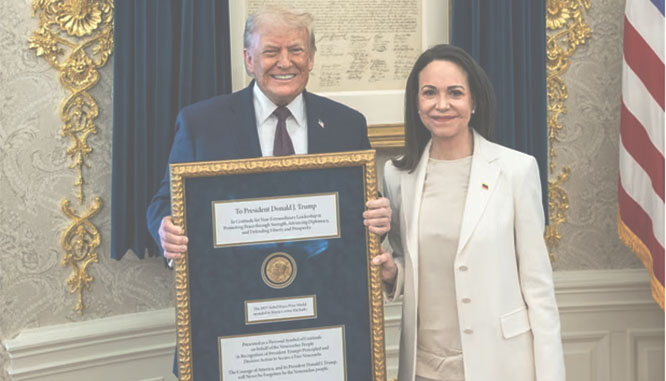
The Nobel Peace Prize is awarded by the independent Norwegian Nobel Committee, not the government. Trump had campaigned for last year’s prize, which went to Venezuelan opposition leader María Corina Machado, who dedicated her award to him.

Støre reiterated that the Nobel Prize decision rests solely with the committee.

Comments

Add new comment

  • Coastaldigest.com reserves the right to delete or block any comments.
  • Coastaldigset.com is not responsible for its readers’ comments.
  • Comments that are abusive, incendiary or irrelevant are strictly prohibited.
  • Please use a genuine email ID and provide your name to avoid reject.
News Network
February 1,2026

Bengaluru: The Karnataka High Court has refused to quash an investigation against a WhatsApp group administrator accused of allowing the circulation of obscene and offensive images depicting Hindutva politicians and idols in 2021.

Justice M Nagaprasanna observed that, prima facie, the ingredients of the offence under Section 295A of the Indian Penal Code were made out. “The offence under Section 295A of the IPC is met to every word of its ingredient, albeit prima facie,” the judge said.

The petitioner, Sirajuddin, a resident of Belthangady taluk in Dakshina Kannada district, had challenged the FIR registered against him at the CEN (Cyber, Economics and Narcotics) police station, Mangaluru, for offences under Section 295A of the IPC and Section 67 of the Information Technology Act. Section 295A relates to punishment for deliberate and malicious acts intended to outrage the religious feelings of any class of citizens.

According to the complaint filed by K Jayaraj Salian, also a resident of Belthangady taluk, he received a WhatsApp group link from an unknown source and was added to the group after accessing it. The group reportedly had six administrators and around 250 participants, where obscene and offensive images depicting Hindu deities and certain political figures were allegedly circulated repeatedly.

Sirajuddin was arrested in connection with the case and later released on bail on February 16, 2021. He argued before the court that he was being selectively targeted, while other administrators—including the creator of the group—were neither arrested nor investigated. He also contended that the Magistrate could not have taken cognisance of the offence under Section 295A without prior sanction under Section 196(1) of the CrPC.

Rejecting the argument, Justice Nagaprasanna held that prior sanction is required only at the stage of taking cognisance, and not at the stage of registration of the crime or during investigation.

The judge noted that the State had produced the entire investigation material before the court. “A perusal of the material reveals depictions of Hindu deities in an extraordinarily obscene, demeaning and profane manner. The content is such that its reproduction in a judicial order would itself be inappropriate,” the court said, adding that the material, on its face, had the tendency to outrage religious feelings and disturb communal harmony.

Observing that the case was still at the investigation stage, the court said it could not interdict the probe at this juncture. However, it expressed concern that the investigating officer appeared to have not proceeded uniformly against all administrators. The court clarified that if the investigation revealed the active involvement of any member in permitting the circulation of such content, they must also be proceeded against.

“At this investigative stage, any further observation by this Court would be unnecessary,” the order concluded.

Comments

Add new comment

  • Coastaldigest.com reserves the right to delete or block any comments.
  • Coastaldigset.com is not responsible for its readers’ comments.
  • Comments that are abusive, incendiary or irrelevant are strictly prohibited.
  • Please use a genuine email ID and provide your name to avoid reject.