



After SC denies relief, Yakub Memon appeals to Maharashtra Governor to prevent execution

July 22, 2015

Nagpur, Jul 22: Hours after the Supreme Court dismissed a curative petition by Yakub Abdul Razak Memon, the 1993 Mumbai serial bomb blasts convict on Tuesday filed mercy plea before Maharashtra Governor Ch Vidyasagar Rao.
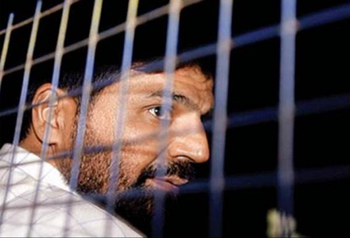
yakub-memon
This is his last-ditch bid to prevent execution of his death sentence on July 30.

Memon, the only convict on death row in the case, handed over his mercy petition to the authorities of the Nagpur Central Jail here, where he is currently lodged, his lawyer Anil Gedam said.

The petition was handed over to the authorities after Gedam met Memon in the jail. Gedam, accompanied by Memon's cousin Usman, had met him last afternoon too. Shubal Farooque, Memon's Delhi-based lawyer, also met him today.

When asked about the validity of second mercy petition, advocate Gedam said the first had been filed by his brother Suleman Memon, while this was the first mercy petition filed by Yakub himself.

Jail superintendent Yogesh Desai did not respond when approached for his comment.

Earlier in the day, rejecting Memon's curative petition, a bench of Chief Justice HL Dattu, Justice TS Thakur and Justice Anil R Dave said that "none of the grounds stated in the curative petition would fall within the parameters" involving the violation of the principle of natural justice and apprehension of bias.

Memon, 53, had challenged the earlier verdict of the apex court to uphold his death sentence.

The curative petition was taken up in the chambers.

He is likely to be be hanged in the Nagpur Central Jail, where he is currently lodged, following the rejection of his mercy plea in April this year by the President.

He was sentenced to death by a special TADA Court in Mumbai on July 27, 2007, for his role in the blasts, including arranging finances for carrying out the 13 serial explosions which left 257 dead and over 700 injured across the city on March 12, 1993.

Subsequently, Memon - brother of one of the main absconding accused, Ibrahim alias Tiger Memon - appealed against the sentence in the Bombay High Court, the Supreme Court and later filed a mercy petition with the President, followed by a review petition, and then a second review petition.

The apex court had on April 09 had dismissed Memon's review petition seeking the recall of its March 21, 2013 verdict upholding his death sentence.

Dismissing his review petition on April 9, the court had said: "We find that all the arguments advanced by the review petitioner have been considered in detail in the judgment (of March 21, 2013) which is sought to be reviewed. Hence, we do not find any error apparent on the face of record or any other ground so as to warrant interference in exercise of our review jurisdiction."

The apex court by its March 21, 2013 verdict, while upholding the death sentence, had said that his "deeds can't be viewed distinct from the act of Tiger Memon, hence, both owe an equivalent responsibility for the blasts" that led to 13 serial bomb blasts in Mumbai.

"They were the architects of the blasts, without whom the plan would have never seen the daylight. From this conduct, it is not hyperbole to state that, he (Memon) was one of the 'driving sprit' behind the plan of the 1993 blasts, whereas the other appellants played a far lesser role and thus a lesser contribution to the crimes resulting from this plan", the court had said.

The court had then held that the dominant position that Yakub Memon held in the execution of serial blasts was an "aggravating factor by itself, as it gives the status of direct responsibility". "Since Yakub Memon as well as other absconders were the real conspirators who hatched the scheme for such a tragic act, the other 10 appellants awere mere subservient subordinates whose knowledge and acquaintance might have been restricted to their counterparts."

"It is difficult to rule out with certainty that if the absconding accused (Dawood Ibrahim, Tiger Memon and Ayub Memon) were to be brought to trial, they might have thrown further light at the role played by Yakub Memon," the court had observed in 2013.

The apex court on April 9 had dismissed Yakub Memon's plea for the review of death sentence verdict for the second time as it had earlier dismissed his similar plea seeking the recall of March 21, 2013 verdict.

Memon's plea for the recall of his death sentence verdict was rejected earlier too, but it was taken up once again as the constitution bench, by its September 2, 2014 judgment, had said that review pleas in death sentence cases would be heard in the open court by a bench of three judges.

It also ruled that this "will also apply where a review petition is already dismissed but the death sentence is not executed so far. In such cases, the petitioners can apply for the reopening of their review petition within one month from the date of this judgment".


Comments

Add new comment

  • Coastaldigest.com reserves the right to delete or block any comments.
  • Coastaldigset.com is not responsible for its readers’ comments.
  • Comments that are abusive, incendiary or irrelevant are strictly prohibited.
  • Please use a genuine email ID and provide your name to avoid reject.
News Network
December 13,2025

New Delhi: School-going children are picking up drug and smoking habits and engaging in consumption of alcohol, with the average age of introduction to such harmful substances found to be around 13 years, suggesting a need for earlier interventions as early as primary school, a multi-city survey by AIIMS-Delhi said.

The findings also showed substance use increased in higher grades, with grade XI/XII students two times more likely to report use of substances when compared with grade VIII students. This emphasised the importance of continued prevention and intervention through middle and high school.

The study led by Dr Anju Dhawan of AIIMS's National Drug Dependence Treatment Centre, published in the National Medical Journal of India this month, looks at adolescent substance use across diverse regions.

The survey included 5,920 students from classes 8, 9, 11 and 12 in urban government, private and rural schools across 10 cities -- Bengaluru, Chandigarh, Delhi, Dibrugarh, Hyderabad, Imphal, Jammu, Lucknow, Mumbai, and Ranchi. The data were collected between May 2018 and June 2019.

The average age of initiation for any substance was 12.9 (2.8) years. It was lowest for inhalants (11.3 years) followed by heroin (12.3 years) and opioid pharmaceuticals (without prescription; 12.5 years).

Overall, 15.1 per cent of participants reported lifetime use, 10.3 per cent reported past year use, and 7.2 per cent reported use in the past month of any substance, the study found.

The most common substances used in the past year, after tobacco (4 per cent) and alcohol (3.8 per cent), were opioids (2.8 per cent), followed by cannabis (2 per cent) and inhalants (1.9 per cent). Use of non-prescribed pharmaceutical opioids was most common among opioid users (90.2 per cent).

On being asked, 'Do you think this substance is easily available for a person of your age' separately for each substance category, nearly half the students (46.3 per cent) endorsed that tobacco products and more than one-third of the students (36.5 per cent) agreed that a person of their age can easily procure alcohol products.

Similarly, for Bhang (21.9 per cent), ganja/charas (16.1 per cent), inhalants (15.2 per cent), sedatives (13.7 per cent), opium and heroin (10 per cent each), the students endorsed that these can be easily procured.

About 95 per cent of the children, irrespective of their grade, agreed with the statement that 'drug use is harmful'.

The rates of substance use (any) among boys were significantly higher than those of girls for substance use (ever), use in the past year and use in the past 30 days. Compared to grade VIII students, grade IX students were more likely, and grade XI/XII students were twice as likely to have used any substance (ever).

The likelihood of past-year use of any substance was also higher for grade IX students and for grade XI/XII students as compared to grade VIII students.

About 40 per cent of students mentioned that they had a family member who used tobacco or alcohol each. The use of cannabis (any product) and opioid (any product) by a family member was reported by 8.2 per cent and 3.9 per cent of students, respectively, while the use of other substances, such as inhalants/sedatives by family was 2-3 per cent, the study found.

A relatively smaller percentage of students reported use of tobacco or alcohol among peers as compared to among family members, while a higher percentage reported inhalants, sedatives, cannabis or opioid use among peers.

Children using substances (past year) compared to non-users reported significantly higher any substance use by their family members and peers.

There were 25.7 per cent students who replied 'yes' to the question 'conflicts/fights often occur in your family'. Most students also replied affirmatively to 'family members are aware of how their time is being spent' and 'damily members are aware of with whom they spend their time'.

Comments

Add new comment

  • Coastaldigest.com reserves the right to delete or block any comments.
  • Coastaldigset.com is not responsible for its readers’ comments.
  • Comments that are abusive, incendiary or irrelevant are strictly prohibited.
  • Please use a genuine email ID and provide your name to avoid reject.
News Network
December 6,2025

pilot.jpg

New Delhi: IndiGo, India’s largest airline, faced major operational turbulence this week after failing to prepare for new pilot-fatigue regulations issued by the Directorate General of Civil Aviation (DGCA). The stricter rules—designed to improve flight safety—took effect in phases through 2024, with the latest implementation on November 1. IndiGo has acknowledged that inadequate roster planning led to widespread cancellations and delays.

Below are the key DGCA rules that affected IndiGo’s operations:

1. Longer Mandatory Weekly Rest

Weekly rest for pilots has been increased from 36 hours to 48 hours.

The government says the extended break is essential to curb cumulative fatigue. This rule remains in force despite the current crisis.

2. Cap on Night Landings

Pilots can now perform only two night landings per week—a steep reduction from the earlier limit of six.

Night hours, defined as midnight to early morning, are considered the least alert period for pilots.

Given the disruptions, this rule has been temporarily relaxed for IndiGo until February 10.

3. Reduced Maximum Night Flight Duty

Flight duty that stretches into the night is now capped at 10 hours.

This measure has also been kept on hold for IndiGo until February 10 to stabilize operations.

4. Weekly Rest Cannot Be Replaced With Personal Leave

Airlines can no longer count a pilot’s personal leave as part of the mandatory 48-hour rest.

Pilots say this closes a loophole that previously reduced actual rest time.

Currently, all airlines are exempt from this rule to normalise travel.

5. Mandatory Fatigue Monitoring

Airlines must submit quarterly fatigue reports along with corrective actions to DGCA.

This system aims to create a transparent fatigue-tracking framework across the industry.

The DGCA has stressed that these rules were crafted to strengthen flight safety and align India with global fatigue-management standards. The temporary relaxations are expected to remain until February 2025, giving IndiGo time to stabilise its schedules and restore normal air travel.

Comments

Add new comment

  • Coastaldigest.com reserves the right to delete or block any comments.
  • Coastaldigset.com is not responsible for its readers’ comments.
  • Comments that are abusive, incendiary or irrelevant are strictly prohibited.
  • Please use a genuine email ID and provide your name to avoid reject.