Ahead of Diwali, SC rules out blanket ban on manufacture, sale of firecrackers

Agencies
October 23, 2018

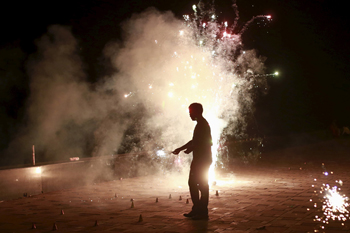
New Delhi, Oct 23: The Supreme Court on Tuesday refused a blanket ban on the manufacture and sale of firecrackers but imposed some restrictions on the public about bursting them during festivals, especially Diwali, which comes after two weeks from now.
A group of activists had petitioned the top court for a complete ban on fireworks as it increases the pollution levels. A Bench of Justices A.K. Sikri and Ashok Bhushan ruled against the manufacture and use of high decibel crackers and suggested community bursting of firecrackers.

The restrictions have been put in to balance the popular interest of people to celebrate festivals with the public need for clean and noise-free environment.

The court said that bursting of crackers should be restricted between 8 p.m. and 10 p.m. for festivals like Diwali. For Christmas and New Year, the window would be for an hour starting a quarter of an hour before midnight.

The local Station House Officer would be personally liable for any violation of the restrictions within their respective jurisdictions.

The court further suggested the production of “green crackers”, community cracker bursting in major cities and a freeze on the production of series crackers or laris as alternative measures to curb pollution during Diwali.

The court agreed with the Central government's suggestion that crackers should be burst in areas pre-designated by the State governments.

During the hearing, Tamil Nadu government — the State's Sivakasi district is a major hub of production of firecrackers — had also supported a restrained use of firecrackers but not a blanket ban.

The judgment seemed to largely agree with the Ministry of Environment's five-page affidavit, which had suggested ways to deal with the pollution problem and chalking out short-term measures to combat pollution during Diwali.

The Union government had suggested working together with institutions like the Council for Scientific and Industrial Research, the National Environment Engineering Research Institute, the Petroleum and Explosives Safety Organisation (PESO), the Central Pollution Control Board (CPCB) to deal with Diwali pollution.

It had suggested the setting up of Raw Material Characterisation Facilities to check the presence of high contents of unburned material, partially combusted material or poor quality of raw material in gun powder in firecrackers.

The Centre had proposed the use of “reduced emission firecrackers or improved firecrackers”. These are “low emission sound and light emitting functional crackers with PM reduction by 30-35% and signifcant reduction in nitrogen oxide and sulpher dioxide due to in-situ water generation as dust suppressant and low cost due usage of low cost oxidants”.

The government said the PESO could be approached to ensure that fireworks with permitted chemicals and decibel levels are used. The PESO could run tests for banned ones like lithium, arsenic, antimony, lead, mercury.

“CPCB and respective state pollution control boards shall carry out short-term monitoring in their cities for 14 days commencing from seven days prior to Diwali and ending seven days after Diwali for parameters namely Aluminium, Barium, Iron apart from regulatory parameters against short term ambient air quality proposed by CPCB with regard to bursting of firecrackers,” the affidavit said.

The court judgment came on a bunch of applications seeking a complete nationwide ban on the use, manufacture, licensing, sale, resale or distribution of firecrackers and sparklers of any kind in a bid to combat pollution on an emergency basis.

Cracker manufacturers had urged the court to set in motion the suggestions filed by the Centre in August, before the commencement of the Diwali season this year.


Comments

Add new comment

  • Coastaldigest.com reserves the right to delete or block any comments.
  • Coastaldigset.com is not responsible for its readers’ comments.
  • Comments that are abusive, incendiary or irrelevant are strictly prohibited.
  • Please use a genuine email ID and provide your name to avoid reject.
News Network
December 7,2025

SHRIMP.jpg

Mangaluru, Dec 7: A rare bamboo shrimp has been rediscovered on mainland India more than 70 years after it was last reported, confirming for the first time the presence of Atyopsis spinipes in the country. The find was made by researchers from the Centre for Climate Change Studies at Sathyabama Institute of Science and Technology, Chennai, during surveys in Karnataka and Odisha.

The team — shrimp expert Dr S Prakash, PhD scholar K Kunjulakshmi, and Mangaluru-based researcher Maclean Antony Santos — combined field surveys, ecological assessments and DNA analysis to identify the elusive species. Their findings, published in Zootaxa, resolve decades of taxonomic confusion stemming from a 1951 report that misidentified the species as Atyopsis moluccensis without strong evidence.

The shrimp has now been confirmed at two locations: the Mulki–Pavanje estuary near Mangaluru and the Kuakhai River in Bhubaneswar. Historical specimens from the Andaman Islands, previously labelled as A. moluccensis, were also found to be misidentified and actually belong to A. spinipes.

The rediscovery began after an aquarium hobbyist in Odisha spotted a shrimp in 2022, prompting systematic surveys across Udupi, Karwar and Mangaluru. Four female specimens were collected in Mulki and one in Odisha, all genetically matching.

Researchers warn the species may exist in very small, vulnerable populations as freshwater habitats face increasing pressure from pollution, sand mining and infrastructure development. All verified specimens have been deposited with the Zoological Survey of India for future reference.

Comments

Add new comment

  • Coastaldigest.com reserves the right to delete or block any comments.
  • Coastaldigset.com is not responsible for its readers’ comments.
  • Comments that are abusive, incendiary or irrelevant are strictly prohibited.
  • Please use a genuine email ID and provide your name to avoid reject.
News Network
December 16,2025

SMR1.jpg

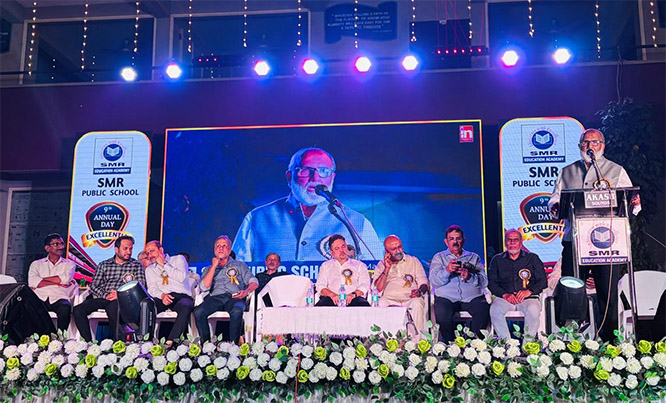
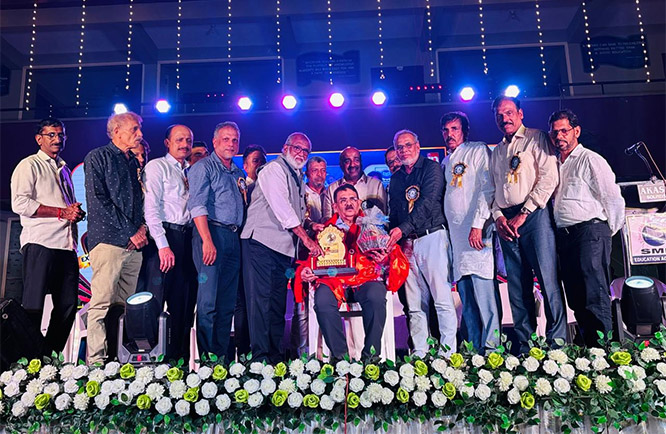
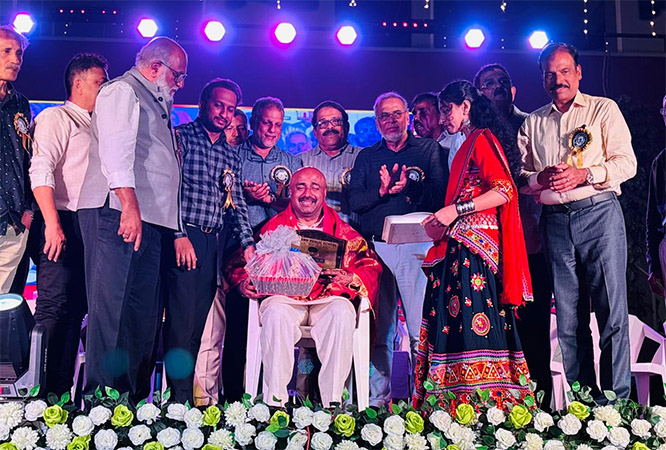
Melkar (Bantwal): The 9th Annual Day celebration of SMR Public School, titled “EXCELLENTIA”, was held on December 15 with great enthusiasm and dignity, marking a significant milestone in the institution’s journey towards academic excellence and holistic development.

The programme was inaugurated by Dr. U. T. Iftikar Ali. The chief guests were Dr. Akhtar Hussain, Mr. P. Moosabba Beary, Mr. Zakaria Jokattre, and Dr. T. M. Abdul Rahuf—whose inspiring addresses motivated the students and appreciated the school’s contributions to education.

Mr. Abdul Nasir, Mr. Ibrahim Gadiyar, Mr. Razak Golthamajal, Mr. Sali Koya, Mr. Arshad Hussain, Mr. Ismail Balanoor, Mr. Feroz Bawa, Mr. Sahul Hameed, Mr. Abubakkar, Mr. Hameed K. Mani, Mr. Abdul Majeed (Principal, Melkar Women’s College), and Mr. Abdul Lathief (Former Principal, Melkar Women’s College) were the guests of honour.

The Annual Report was presented by the Headmistress, Ms. Fathimathul Zaheera, highlighting the school’s achievements and progress during the academic year. The Presidential Address was delivered by the Chairman of SMR Public School, Dr. Haji S. M. Rasheed, who emphasised the vital role of education in shaping students’ futures and stressed the importance of discipline, dedication, and consistent effort in achieving 100 per cent academic results.

Secretary of SMR Public School, Mr. Rifath Ahmed, and PTA President, Mr. Sandeep Kumar, were also present on the occasion.

The Annual Day celebration showcased the collective efforts of students and teachers and reaffirmed the school’s commitment to quality education and all-round development. The programme concluded with a vote of thanks, expressing gratitude to all dignitaries, parents, and well-wishers for their support. The 9th Annual Day—EXCELLENTIA—was a memorable and successful event, leaving a lasting impression on everyone present. 

SMR3.jpg

SMR2.jpg

Comments

Add new comment

  • Coastaldigest.com reserves the right to delete or block any comments.
  • Coastaldigset.com is not responsible for its readers’ comments.
  • Comments that are abusive, incendiary or irrelevant are strictly prohibited.
  • Please use a genuine email ID and provide your name to avoid reject.
News Network
December 16,2025

Mangaluru, Dec 16: The Mangaluru City police have significantly escalated their campaign against drug trafficking, arresting 25 individuals and booking 12 cases under the Narcotic Drugs and Psychotropic Substances (NDPS) Act between November 30 and December 13. The crackdown resulted in the seizure of a substantial quantity of illicit substances, including 685.6 grams of MDMA and 1.5 kg of ganja.

The success of this recent drive has been significantly boosted by the city’s innovative, QR code-based anonymous reporting system.

"The anonymous reporting system has received an encouraging response. Several recent arrests were made based on inputs received through this system, helping police tighten the noose around drug peddlers," said the City Police Commissioner.

The latest arrests contribute to a robust year-to-date record, underscoring the police's relentless commitment to combating the drug menace.

Up to December 14 this year, the police have registered a total of 107 cases of drug peddling, leading to the arrest of 219 peddlers. Furthermore, they have booked 562 cases of drug consumption, resulting in the arrest of 671 individuals.

The scale of the seizure for the year reflects the magnitude of the problem being tackled: police have seized 320.6 kg of ganja worth ₹88.7 lakh and 1.4 kg of MDMA valued at ₹1.2 crore. Other significant seizures include hydro-weed ganja worth ₹94.7 lakh and cocaine worth ₹1.9 lakh, among others.

The Commissioner emphasized a policy of rigorous enforcement: "We ensure that peddlers are caught red-handed so that they cannot later dispute the case or claim innocence."

To counter the rising trend of substance abuse among youth, the Mangaluru City police have rolled out uniform guidelines for random drug testing across educational institutions.

As part of the drive, tests were conducted in approximately 100 institutions, screening an estimated 5,500 to 6,000 students in the first phase. 20 students tested positive for drug consumption during the initial screening.

Students who tested positive have been provided counselling and are scheduled for re-testing in the second quarter. The testing will also be expanded to students not covered in the first phase. In a move to ensure strict implementation, police personnel were deployed in mufti in some institutions. Reiterating a zero-tolerance stance, the Commissioner confirmed that random testing will continue, and colleges have also been instructed to conduct drug tests at the time of admission to deter substance abuse from an early stage.

Comments

Add new comment

  • Coastaldigest.com reserves the right to delete or block any comments.
  • Coastaldigset.com is not responsible for its readers’ comments.
  • Comments that are abusive, incendiary or irrelevant are strictly prohibited.
  • Please use a genuine email ID and provide your name to avoid reject.