Alappad: A tale of lost land to mineral sand mining

Agencies
January 11, 2019

Alappad, Jan 11: Abandoned homes, deserted school, heaps of sand, a lone temple and dried up mangroves.

These are the remnants of a once green Ponmana village under the coastal Alappad panchayat in Kollam district in southern Kerala where locals are up in arms against beach sand mining, blaming it for sea erosion eating up their lands.

They claim hamlet after hamlet was 'disappearing' from the map due to mining activities by the Indian Rare Earth (IRE), a central Public Sector Undertaking, and state government-owned Kerala Minerals and Metals Limited (KMML).

Seeking to save their remaining villages, the people of Alappad and nearby hamlets under the banner of Anti-mining People's Protest Council have been on a relay-hunger strike at Vellanathuruthu near here for the past over two months demanding a complete halt to the mining activities.

However, an official of the IRE, when contacted, said the company was following all mining norms.

The two firms together have been engaged in mineral sand mining along the beach off the Kollam coast since the 1960s.

This PTI correspondent saw deserted houses, roads and dried up mangroves in Ponmana village with the protesters claiming this was the scene in several other hamlets too.

In Ponmana, only two families remain, a resident said.

According to the protesters, a lithographic map decades ago had shown the area of Alappad panchayat as 89.5 square kilometre and it has now shrunk to a measly 7.6 square km due to sea erosion caused by the mining.

Alappad is a narrow stretch between Trivandrum-Shoranur (TS) Canal and the Arabian Sea that was commissioned between the 18th and 19th century.

Agitators allege that if this strip of land erodes any further, the backwaters would irreversibly merge with the sea and turn the river waters saline.

This in turn would damage paddy fields of upper Kuttanad, which is below the sea level and known as the rice bowl of Kerala.

"Since ours being a public sector company with strategic importance, there are several monitoring agencies and both the state and the central governments are aware about processes followed by us," the IRE official, who did not want to be named, said.

Around 60 industries of strategic importance, including the Travancore Titanium Products and the KMML, were making use of their services, he added.

Kollam District collector Dr S Karthikeyan said the government was fully aware of the situation. "We will study whether the apprehensions are correct. Then we will take a look at sustainable mining limit."

The district administration had conducted multiple hearings and the government had already given certain suggestions like concentrating on inland mining and reducing sea mining, he said.

"In case of sea mining, they should make groynes. The company is also changing their plans accordingly. They are going to do deep mining," he added.

A groyne is a rigid hydraulic structure built from an ocean shore or from a bank that interrupts water flow and limits the movement of sediment.

K S Sreekumar, a member of the protest council, said nearby villages including Onattukara, Upper Kuttanad and Arattupuzha in Alappuzha district were next in line.

"The agitation is not only for ourselves," he said.

Prasanth (38) left his job in the UAE and returned to his village years ago after the company assured him a job in exchange for land that it could mine.

"The job we got was under a contract that expired after two years. Most villagers have left the area with whatever they got as compensation from the company," he said.

Rohini, an interior designer who is an active member of the protest council, said the residents don't want to leave the place where they grew up.

"The government has assured us a compensation Rs 10 lakh if we give our land for mining. But we cannot leave as this the place we grew up. This is where our culture is, where our job is. We want our children to grow up here.... We want the mining to stop completely," she said.

Sreekumar said if the mining continued, salt water will enter the Pallickal and Achankovil rivers towards the east and ultimately the paddy fields of central Travancore.

"We are trying our level best to project our issue above all other brouhaha, including the one over Sabarimala... We have a larger issue here. We are facing eviction from the land where we spent have spent our lives", he said.

People from various walks of life were participating in the agitation, he said adding no political party had so far pledged support to their cause.

Besides the protest, a social media campaign was also on against mining in the area.

However, a local resident, speaking on condition of anonymity, alleged the campaign was being promoted by private players who wanted to end the government monopoly over mining in the area and take over the task themselves.

Freshwater ecology expert Dr Jayalekshmy V told PTI that the 'uncontrolled' sand mining in Cheriyazheekkal-Alappad area was affecting the ecological stability of Ashtamudi Lake and other associated freshwater fluvial ecosystems.

"Non-sustainable extraction of beach sand has led to the destruction of sand banks and widening of the Pallickal river mouth and during summer when the water content is low, it will lead to the influx of marine water into the river," she said.

This "unusual intrusion" of marine water would alter the natural niches of aquatic organisms, leading to ecological stress related with biological activities like exchange of respiratory gases, fertility and survival of young ones.


Comments

Add new comment

  • Coastaldigest.com reserves the right to delete or block any comments.
  • Coastaldigset.com is not responsible for its readers’ comments.
  • Comments that are abusive, incendiary or irrelevant are strictly prohibited.
  • Please use a genuine email ID and provide your name to avoid reject.
News Network
December 19,2025

Mangaluru: Public transport in Mangaluru is set for a state-led transformation as the government moves to deploy 100 new electric govt buses to replace unreliable private services. The initiative aims to provide a dependable alternative to private operators who have been frequently "cutting trips," leaving thousands of commuters stranded.

The announcement was made by Deputy Commissioner and MCC Administrator Darshan HV during a public phone-in session. The move specifically targets routes where private bus service has become erratic, ensuring that citizens no longer have to rely on a fluctuating private sector for their daily commute.

Restoring the Govt Presence

The transport crisis was brought to the forefront by Ramayya, a resident of Bajal, who highlighted a growing trend of private buses skipping morning and night trips. With the previous KSRTC (govt) services discontinued, residents have been left without a fallback option.

To fix this, the DC confirmed that the PM-eBus Sewa Scheme will bring 100 government-owned electric buses to the city:

•    Phased Deployment: The first 50 of the new 100 government buses are scheduled to arrive by March 2026.

•    State Infrastructure: Two new government depots, including one at Mudipu, are being prepared for operations.

•    Recruitment: The state has already begun training a new batch of government bus drivers to ensure the fleet is operational the moment it arrives.

Comments

Add new comment

  • Coastaldigest.com reserves the right to delete or block any comments.
  • Coastaldigset.com is not responsible for its readers’ comments.
  • Comments that are abusive, incendiary or irrelevant are strictly prohibited.
  • Please use a genuine email ID and provide your name to avoid reject.
News Network
December 7,2025

envoy.jpg

Since 1946, the United States has attempted 93 coups or “regime change” operations across the world — including two in Iran, US Special Envoy for Syria Tom Barrack has admitted.

Speaking to the UAE-based IMI Media Group, in remarks published by The National, Barrack said Washington tried twice to overthrow the Iranian government but failed both times. 

“For (Trump) then to be imputed with regime change — we had two regime changes in Iran already. Neither one worked. So I think wisely leave it to the region to solve,” said Barrack, who also serves as the US ambassador to Turkey.

His comments come six months after the US joined Israel in airstrikes against Iran during ongoing indirect nuclear negotiations between Tehran and Washington.

On June 13, Israel launched an attack on Iran that killed at least 1,064 people and hit civilian infrastructure. Days later, the United States targeted three nuclear facilities — Fordow, Natanz and Isfahan — in what Iran called a clear violation of international law. Iranian retaliation eventually forced a halt to the assault on June 24.

Barrack further claimed that US President Donald Trump and Foreign Secretary Marco Rubio are “not into regime change” and prefer a regional approach driven by Middle Eastern countries themselves. According to him, regional dialogue and non-interference by outside powers offer a more durable path forward.

He added that Washington is still open to an agreement with Tehran if Iranian authorities show “seriousness” and willingness to engage constructively.

However, Iran maintains the US has not shown readiness for meaningful talks. In an interview with Japan’s Kyodo News, Iranian Foreign Minister Abbas Araghchi said negotiations could advance only if Washington acknowledges Iran’s right to peaceful nuclear energy and lifts unilateral sanctions.

Comments

Add new comment

  • Coastaldigest.com reserves the right to delete or block any comments.
  • Coastaldigset.com is not responsible for its readers’ comments.
  • Comments that are abusive, incendiary or irrelevant are strictly prohibited.
  • Please use a genuine email ID and provide your name to avoid reject.
News Network
December 7,2025

SHRIMP.jpg

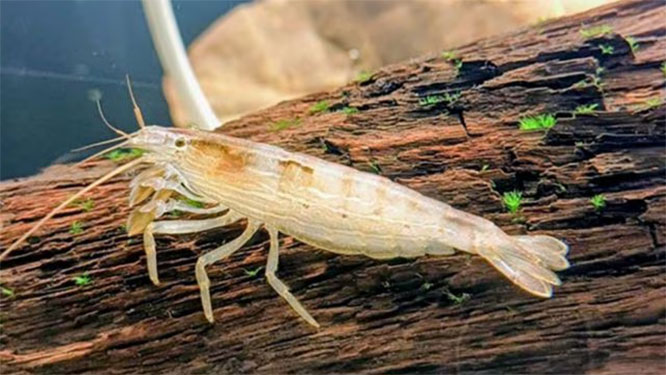
Mangaluru, Dec 7: A rare bamboo shrimp has been rediscovered on mainland India more than 70 years after it was last reported, confirming for the first time the presence of Atyopsis spinipes in the country. The find was made by researchers from the Centre for Climate Change Studies at Sathyabama Institute of Science and Technology, Chennai, during surveys in Karnataka and Odisha.

The team — shrimp expert Dr S Prakash, PhD scholar K Kunjulakshmi, and Mangaluru-based researcher Maclean Antony Santos — combined field surveys, ecological assessments and DNA analysis to identify the elusive species. Their findings, published in Zootaxa, resolve decades of taxonomic confusion stemming from a 1951 report that misidentified the species as Atyopsis moluccensis without strong evidence.

The shrimp has now been confirmed at two locations: the Mulki–Pavanje estuary near Mangaluru and the Kuakhai River in Bhubaneswar. Historical specimens from the Andaman Islands, previously labelled as A. moluccensis, were also found to be misidentified and actually belong to A. spinipes.

The rediscovery began after an aquarium hobbyist in Odisha spotted a shrimp in 2022, prompting systematic surveys across Udupi, Karwar and Mangaluru. Four female specimens were collected in Mulki and one in Odisha, all genetically matching.

Researchers warn the species may exist in very small, vulnerable populations as freshwater habitats face increasing pressure from pollution, sand mining and infrastructure development. All verified specimens have been deposited with the Zoological Survey of India for future reference.

Comments

Add new comment

  • Coastaldigest.com reserves the right to delete or block any comments.
  • Coastaldigset.com is not responsible for its readers’ comments.
  • Comments that are abusive, incendiary or irrelevant are strictly prohibited.
  • Please use a genuine email ID and provide your name to avoid reject.