



Amid high drama, Jammu and Kashmir government releases separatists 2 hours after detention

August 21, 2015

Srinagar, Aug 21: Chaos and confusion reigned supreme after Mufti Mohammad Sayeed led PDP-BJP government did an about turn and released the separatists just two hours after detaining and placing them under house arrest in an apparent bid to prevent them from meeting Pakistan's national security advisor (NSA) Sartaj Aziz in New Delhi on Sunday.
Jammu
A posse of J&K police on Thursday morning barricaded the gates of the residence of moderate Hurriyat Conference chief Mirwaiz Umar Farooq at Nigeen and informed him that he was being placed under house arrest.

Just two hours later the police lifted the barricades and informed him that he was a free bird, without explaining the reasons either for keeping him under house arrest or his sudden release. Mirwaiz is scheduled to meet Aziz during his reception at Pakistan high commission office in New Delhi on Sunday.

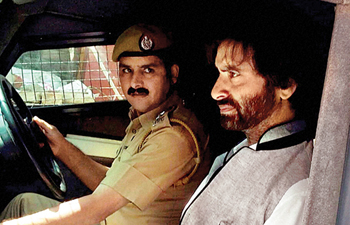
Simultaneously, a high drama unfolded at the residence of Jammu and Kashmir Liberation Front (JKLF) chief Mohammad Yasin Malik when a posse of police came and took him into custody. He was also taken to Kothi Bagh police station but was released one hour without citing any reason.

Malik, who was scheduled to visit New Delhi to meet Aziz, later chaired an extraordinary meeting and decided to send two-member delegation comprising vice-chairman Showkat Ahmad Bakhshi and secretary general Ghulam Rasool Dar Eidi to meet Aziz on Sunday.

Hurriyat hawk Syed Ali Shah Geelani, who is scheduled to meet Aziz on Monday morning, was already under house arrest. Unlike Mirwaiz and Malik, he continues to be under house arrest at his Hyder Pora residence.

The arrest and subsequent release of the separatist leaders sparked a political storm with separatists and main opposition party National Conference launching a frontal attack on Mufti-led government.

“Shame on Mufti Sayed for arresting on demand. He had no business following his masters’ orders & detaining the Hurriyat leaders like this… Serious question - just who is running J&K these days?” tweeted Omar Abdullah, former J&K chief minister and NC working president.

Facing flak, the J&K government sought to put the onus on the police, terming it an 'administrative action'. “Police sometimes take suo-moto precautionary measure given the law and order situation. There is nothing political about it. Had it been the intention to arrest them then we should have done it a day before. Why should we do it now”, Waheed-ur-Rehman Parra, political analyst to J&K chief minister Mufti Mohommad Sayeed, told dna.

Sources, however, said the order to arrest Hurriyat leaders had come straight from the desk of a top officer in Delhi. Senior police officers carried out the orders without consulting the state leaders. Sources said the Centre wanted to send a message to separatists that they are not invincible and can be detained when needed.

Former chief minister Omar Abdullah later said that PDP President Mehbooba Mufti was positioning herself to take credit for the release. "Now watch Mufti find a scapegoat to blame for the arrest of the Hurriyat,” tweeted Omar

Separatists, however, seem wary about their fate given the drama that unfolded on Thursday. “Our fingers are crossed (about allowing us to fly to Delhi to meet Aziz). We want India and Pakistan to move forward. We feel the dialogue is better than deadlock,” Mirwaiz told dna.

Controversies and bitterness notwithstanding, chief minister Mufti Mohommad Sayeed favoured a joint working mechanism between India and Pakistan to counter the scourge of terrorism.

“There is no good or a bad terrorists as they are all enemies of humanity. I am a born optimist. I see light in darkness which seems to be around. I hope that New Delhi and Islamabad will break ice in the upcoming NSA-level talks,” Mufti said.


Comments

Add new comment

  • Coastaldigest.com reserves the right to delete or block any comments.
  • Coastaldigset.com is not responsible for its readers’ comments.
  • Comments that are abusive, incendiary or irrelevant are strictly prohibited.
  • Please use a genuine email ID and provide your name to avoid reject.
News Network
December 13,2025

New Delhi: School-going children are picking up drug and smoking habits and engaging in consumption of alcohol, with the average age of introduction to such harmful substances found to be around 13 years, suggesting a need for earlier interventions as early as primary school, a multi-city survey by AIIMS-Delhi said.

The findings also showed substance use increased in higher grades, with grade XI/XII students two times more likely to report use of substances when compared with grade VIII students. This emphasised the importance of continued prevention and intervention through middle and high school.

The study led by Dr Anju Dhawan of AIIMS's National Drug Dependence Treatment Centre, published in the National Medical Journal of India this month, looks at adolescent substance use across diverse regions.

The survey included 5,920 students from classes 8, 9, 11 and 12 in urban government, private and rural schools across 10 cities -- Bengaluru, Chandigarh, Delhi, Dibrugarh, Hyderabad, Imphal, Jammu, Lucknow, Mumbai, and Ranchi. The data were collected between May 2018 and June 2019.

The average age of initiation for any substance was 12.9 (2.8) years. It was lowest for inhalants (11.3 years) followed by heroin (12.3 years) and opioid pharmaceuticals (without prescription; 12.5 years).

Overall, 15.1 per cent of participants reported lifetime use, 10.3 per cent reported past year use, and 7.2 per cent reported use in the past month of any substance, the study found.

The most common substances used in the past year, after tobacco (4 per cent) and alcohol (3.8 per cent), were opioids (2.8 per cent), followed by cannabis (2 per cent) and inhalants (1.9 per cent). Use of non-prescribed pharmaceutical opioids was most common among opioid users (90.2 per cent).

On being asked, 'Do you think this substance is easily available for a person of your age' separately for each substance category, nearly half the students (46.3 per cent) endorsed that tobacco products and more than one-third of the students (36.5 per cent) agreed that a person of their age can easily procure alcohol products.

Similarly, for Bhang (21.9 per cent), ganja/charas (16.1 per cent), inhalants (15.2 per cent), sedatives (13.7 per cent), opium and heroin (10 per cent each), the students endorsed that these can be easily procured.

About 95 per cent of the children, irrespective of their grade, agreed with the statement that 'drug use is harmful'.

The rates of substance use (any) among boys were significantly higher than those of girls for substance use (ever), use in the past year and use in the past 30 days. Compared to grade VIII students, grade IX students were more likely, and grade XI/XII students were twice as likely to have used any substance (ever).

The likelihood of past-year use of any substance was also higher for grade IX students and for grade XI/XII students as compared to grade VIII students.

About 40 per cent of students mentioned that they had a family member who used tobacco or alcohol each. The use of cannabis (any product) and opioid (any product) by a family member was reported by 8.2 per cent and 3.9 per cent of students, respectively, while the use of other substances, such as inhalants/sedatives by family was 2-3 per cent, the study found.

A relatively smaller percentage of students reported use of tobacco or alcohol among peers as compared to among family members, while a higher percentage reported inhalants, sedatives, cannabis or opioid use among peers.

Children using substances (past year) compared to non-users reported significantly higher any substance use by their family members and peers.

There were 25.7 per cent students who replied 'yes' to the question 'conflicts/fights often occur in your family'. Most students also replied affirmatively to 'family members are aware of how their time is being spent' and 'damily members are aware of with whom they spend their time'.

Comments

Add new comment

  • Coastaldigest.com reserves the right to delete or block any comments.
  • Coastaldigset.com is not responsible for its readers’ comments.
  • Comments that are abusive, incendiary or irrelevant are strictly prohibited.
  • Please use a genuine email ID and provide your name to avoid reject.
News Network
December 6,2025

pilot.jpg

New Delhi: IndiGo, India’s largest airline, faced major operational turbulence this week after failing to prepare for new pilot-fatigue regulations issued by the Directorate General of Civil Aviation (DGCA). The stricter rules—designed to improve flight safety—took effect in phases through 2024, with the latest implementation on November 1. IndiGo has acknowledged that inadequate roster planning led to widespread cancellations and delays.

Below are the key DGCA rules that affected IndiGo’s operations:

1. Longer Mandatory Weekly Rest

Weekly rest for pilots has been increased from 36 hours to 48 hours.

The government says the extended break is essential to curb cumulative fatigue. This rule remains in force despite the current crisis.

2. Cap on Night Landings

Pilots can now perform only two night landings per week—a steep reduction from the earlier limit of six.

Night hours, defined as midnight to early morning, are considered the least alert period for pilots.

Given the disruptions, this rule has been temporarily relaxed for IndiGo until February 10.

3. Reduced Maximum Night Flight Duty

Flight duty that stretches into the night is now capped at 10 hours.

This measure has also been kept on hold for IndiGo until February 10 to stabilize operations.

4. Weekly Rest Cannot Be Replaced With Personal Leave

Airlines can no longer count a pilot’s personal leave as part of the mandatory 48-hour rest.

Pilots say this closes a loophole that previously reduced actual rest time.

Currently, all airlines are exempt from this rule to normalise travel.

5. Mandatory Fatigue Monitoring

Airlines must submit quarterly fatigue reports along with corrective actions to DGCA.

This system aims to create a transparent fatigue-tracking framework across the industry.

The DGCA has stressed that these rules were crafted to strengthen flight safety and align India with global fatigue-management standards. The temporary relaxations are expected to remain until February 2025, giving IndiGo time to stabilise its schedules and restore normal air travel.

Comments

Add new comment

  • Coastaldigest.com reserves the right to delete or block any comments.
  • Coastaldigset.com is not responsible for its readers’ comments.
  • Comments that are abusive, incendiary or irrelevant are strictly prohibited.
  • Please use a genuine email ID and provide your name to avoid reject.