



Anti-terror operation ends in Lucknow, train blast suspect killed

March 8, 2017

Lucknow, Mar 8:A suspected militant’s body was recovered after an anti-terror operation that lasted nearly 12 hours on the outskirts of Lucknow in Uttar Pradesh, police said early on Wednesday.
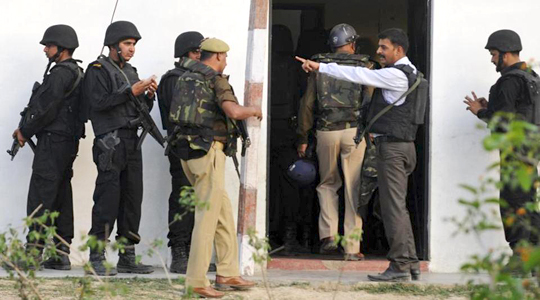
ATS

ADG Daljit Chaudhary said earlier reports of two militants -- who were allegedly linked to a blast in a Bhopal-Ujjain passenger train on Tuesday -- holed up in the house were false.

“The suspect was found dead with weapons inside the house. During the operation, it was felt at one point of time that there was more than one person, but it is confirmed that there was only one man. The operation stands closed and now the rest of the legal formalities will take place,” Chaudhary said, adding that the encounter ended around 3am on?Wednesday.

Uttar Pradesh anti terror squad (ATS) inspector general Aseem Arun said the militant was a member of the Indian module of the Islamic State (IS) terrorist group called Khorasan.

“We got the intelligence from a sister agency that a person named Saifullah affiliated to IS is hiding in a residential area in Lucknow,” Arun said.

Ammunition, including eight automatic pistols, live cartridges and some explosives, and an IS flag were recovered from the site of the encounter.

The ATS reached the cleric’s house in a thickly-populated locality on the outskirts of Lucknow around 2pm after specific inputs about militants linked to the Madhya Pradesh train blast.

The commandos came under a volley of fire when they moved in, forcing the officers to use stakeout and stealth to get close to the militants. They were not sure how many men were in the house adjoining a mosque.

The commandos thought a lone gunman was involved, but a micro-camera drilled through the roof revealed the presence of another man.

The explosion near Kalapipal, around 80km west of Bhopal, in the train’s last coach left at least 10 passengers wounded. Among them were two teenage girls and two women.

Initially thought to be a tube-light burst, investigators found later that it was a low-intensity pipe bomb, an improvised explosive device (IED) that went off when it was being shipped possibly to a location in UP, where the final round of assembly polls are due on Wednesday.

Madhya Pradesh inspector general (law and order) Makrand Deouskar said ammonia nitrate was used in the bomb that exploded around 8.50am.

MP police zeroed in on four men from CCTV footage at Bhopal railway station. They were picked up from Pipariya in Hoshangabad district earlier.

These men are from Aligarh and Kanpur in UP. They apparently named their comrades — Saiful of Lucknow, and 18-year-old Faizan, Imran and Azhar of Kanpur. Police arrested Faizan and Imran, and confiscated a laptop that allegedly revealed they were members of the state’s IS cell.

The computer contained an elaborate plan to carry out blasts at Deva Shareef, the shrine of Sufi saint Waris Ali Shah, on March 27, police said.

Third suspect Azhar escaped. He owns a mobile shop in Kanpur’s Rahmani Market, an officer said.

Apart from the shrine’s layout, jihadi videos of attacks on religious places in Pakistan were allegedly found in the laptop. The IS is said to be involved in a suicide attack on the packed shrine of Shahbaz Lal Qalandar in Pakistan in February, which killed 80 people.

The Centre sounded an alert across the country in the wake of the MP train blast and shootout with militants in Lucknow.

Union home minister Rajnath Singh rang up UP director general of police Javeed Ahmed to take stock the operation.

“We are alert. We have sounded an alert across the country,” junior home minister Hansraj Ahir said on Tuesday.

About 300 police personnel, including ATS commandos, were engaging the militant in Lucknow’s Kakori area. Another posse has formed a picket to stop people from getting near the site.

A Satish Ganesh, IG, Lucknow Range, said the militant was asked to surrender, but he responded saying he would rather attain “martyrdom”.

“He has at least two small automatic weapons,” he said.

Police lit flashlights to keep the area well-illuminated to stop the militants from escaping. The power distribution agency was asked to ensure continuous electricity supply.

Comments

Add new comment

  • Coastaldigest.com reserves the right to delete or block any comments.
  • Coastaldigset.com is not responsible for its readers’ comments.
  • Comments that are abusive, incendiary or irrelevant are strictly prohibited.
  • Please use a genuine email ID and provide your name to avoid reject.
News Network
December 5,2025

indigoCEO.jpg

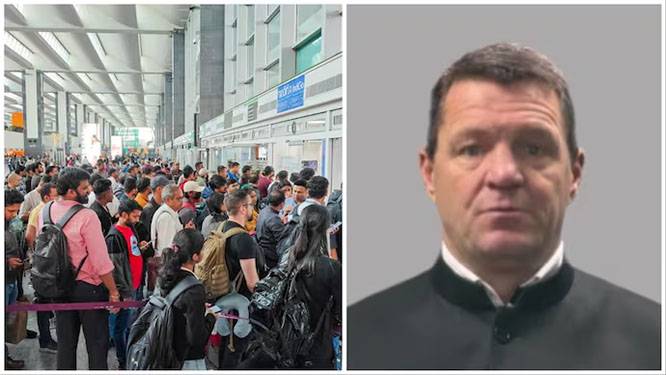
New Delhi, Dec 5: IndiGo CEO Pieter Elbers issued a public apology this evening after more than a thousand flights were cancelled today, making it the "most severely impacted day" in terms of cancellations. The biggest airline of the country cancelled "more than half" of its daily number of flights on Friday, said Elbers. He also said that even though the crisis will persist on Saturday, the airline anticipates fewer than 1,000 flight cancellations.

"Full normalisation is expected between December 10 and 15, though IndiGo cautions that recovery will take time due to the scale of operations," the IndiGo CEO said. 

IndiGo operates around 2,300 domestic and international flights daily.

Pieter Elbers, while apologising for the major inconvenience due to delays and cancellations, said the situation is a result of various causes.

The crisis at IndiGo stems from new regulations that boost pilots' weekly rest requirements by 12 hours to 48 and allow only two night-time landings per week, down from six. IndiGo has attributed the mass cancellations to "misjudgment and planning gaps".

Elbers also listed three lines of action that the airline will adopt to address the issue.

"Firstly, customer communication and addressing your needs, for this, messages have been sent on social media. And just now, a more detailed communication with information, refunds, cancellations and other customer support measures was sent," he said.

The airline has also stepped up its call centre capacity.

"Secondly, due to yesterday's situation, we had customers stranded mostly at the nation's largest airports. Our focus was for all of them to be able to travel today itself, which will be achieved. For this, we also ask customers whose flights are cancelled not to come to the airports as notifications are sent," the CEO said.

"Thirdly, cancellations were made for today to align our crew and planes to be where they need to start tomorrow morning afresh. Earlier measures of the last few days, regrettable, have proven not to be enough, but we have decided today to reboot all our systems and schedules, resulting in the highest numbers of cancellations so far, but imperative for progressive improvements starting from tomorrow," he added.

As airports witnessed chaotic scenes, the Directorate General of Civil Aviation (DGCA) stepped in to grant IndiGo a temporary exemption from stricter night duty rules for pilots. It also allowed substitution of leaves with a weekly rest period. 

Civil Aviation Minister Ram Mohan Naidu has said a high-level inquiry will be ordered and accountability will be fixed.

Comments

Add new comment

  • Coastaldigest.com reserves the right to delete or block any comments.
  • Coastaldigset.com is not responsible for its readers’ comments.
  • Comments that are abusive, incendiary or irrelevant are strictly prohibited.
  • Please use a genuine email ID and provide your name to avoid reject.
News Network
December 13,2025

New Delhi: School-going children are picking up drug and smoking habits and engaging in consumption of alcohol, with the average age of introduction to such harmful substances found to be around 13 years, suggesting a need for earlier interventions as early as primary school, a multi-city survey by AIIMS-Delhi said.

The findings also showed substance use increased in higher grades, with grade XI/XII students two times more likely to report use of substances when compared with grade VIII students. This emphasised the importance of continued prevention and intervention through middle and high school.

The study led by Dr Anju Dhawan of AIIMS's National Drug Dependence Treatment Centre, published in the National Medical Journal of India this month, looks at adolescent substance use across diverse regions.

The survey included 5,920 students from classes 8, 9, 11 and 12 in urban government, private and rural schools across 10 cities -- Bengaluru, Chandigarh, Delhi, Dibrugarh, Hyderabad, Imphal, Jammu, Lucknow, Mumbai, and Ranchi. The data were collected between May 2018 and June 2019.

The average age of initiation for any substance was 12.9 (2.8) years. It was lowest for inhalants (11.3 years) followed by heroin (12.3 years) and opioid pharmaceuticals (without prescription; 12.5 years).

Overall, 15.1 per cent of participants reported lifetime use, 10.3 per cent reported past year use, and 7.2 per cent reported use in the past month of any substance, the study found.

The most common substances used in the past year, after tobacco (4 per cent) and alcohol (3.8 per cent), were opioids (2.8 per cent), followed by cannabis (2 per cent) and inhalants (1.9 per cent). Use of non-prescribed pharmaceutical opioids was most common among opioid users (90.2 per cent).

On being asked, 'Do you think this substance is easily available for a person of your age' separately for each substance category, nearly half the students (46.3 per cent) endorsed that tobacco products and more than one-third of the students (36.5 per cent) agreed that a person of their age can easily procure alcohol products.

Similarly, for Bhang (21.9 per cent), ganja/charas (16.1 per cent), inhalants (15.2 per cent), sedatives (13.7 per cent), opium and heroin (10 per cent each), the students endorsed that these can be easily procured.

About 95 per cent of the children, irrespective of their grade, agreed with the statement that 'drug use is harmful'.

The rates of substance use (any) among boys were significantly higher than those of girls for substance use (ever), use in the past year and use in the past 30 days. Compared to grade VIII students, grade IX students were more likely, and grade XI/XII students were twice as likely to have used any substance (ever).

The likelihood of past-year use of any substance was also higher for grade IX students and for grade XI/XII students as compared to grade VIII students.

About 40 per cent of students mentioned that they had a family member who used tobacco or alcohol each. The use of cannabis (any product) and opioid (any product) by a family member was reported by 8.2 per cent and 3.9 per cent of students, respectively, while the use of other substances, such as inhalants/sedatives by family was 2-3 per cent, the study found.

A relatively smaller percentage of students reported use of tobacco or alcohol among peers as compared to among family members, while a higher percentage reported inhalants, sedatives, cannabis or opioid use among peers.

Children using substances (past year) compared to non-users reported significantly higher any substance use by their family members and peers.

There were 25.7 per cent students who replied 'yes' to the question 'conflicts/fights often occur in your family'. Most students also replied affirmatively to 'family members are aware of how their time is being spent' and 'damily members are aware of with whom they spend their time'.

Comments

Add new comment

  • Coastaldigest.com reserves the right to delete or block any comments.
  • Coastaldigset.com is not responsible for its readers’ comments.
  • Comments that are abusive, incendiary or irrelevant are strictly prohibited.
  • Please use a genuine email ID and provide your name to avoid reject.