Budget: Voluntary vehicle scrapping policy announced to phase out old vehicles

Agencies
February 1, 2021

720-1024x576-1.jpg

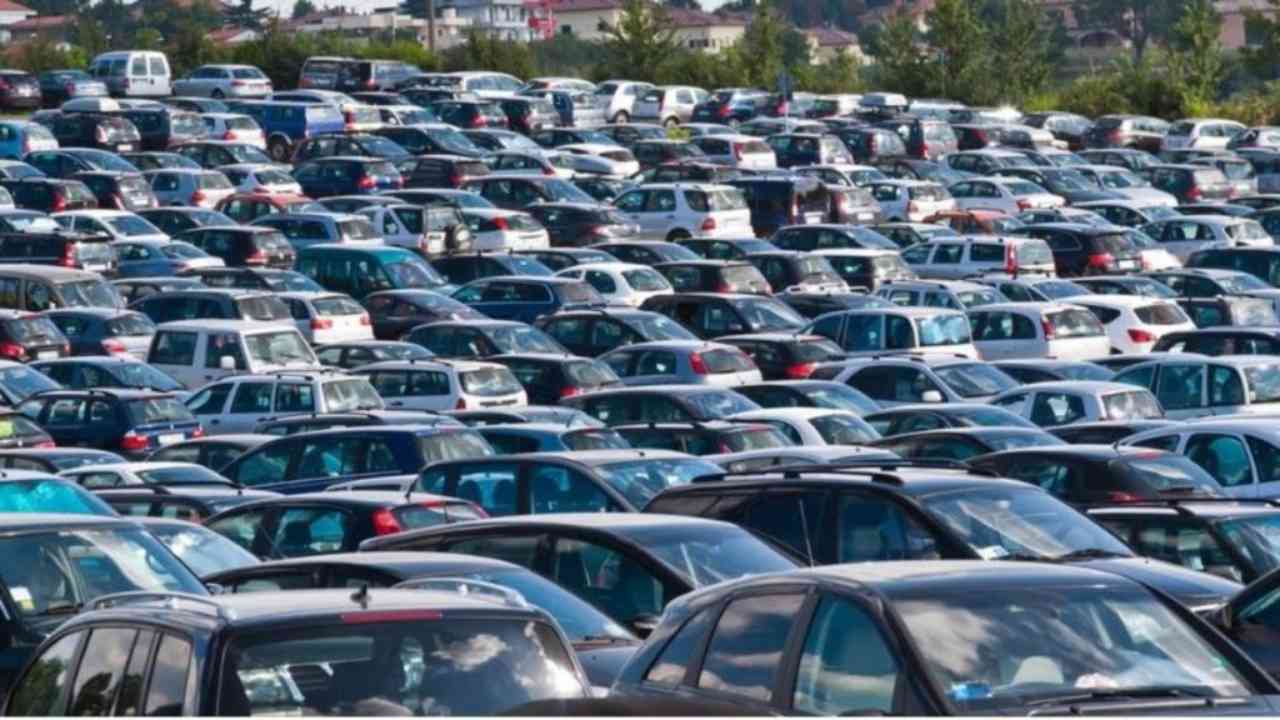
New Delhi, Feb 1: Union Finance Minister Nirmala Sitharaman on Monday announced a voluntary vehicle scrapping policy to phase out old and unfit vehicles under which the personal vehicles will undergo a fitness test in automated centres after 20 years while the commercial vehicles will undergo the test after 15 years.

"We are separately announcing a voluntary vehicle scrapping policy to phase out old and unfit vehicles. This will help in encouraging fuel-efficient, environment-friendly vehicles. Thereby, reducing vehicular pollution and oil import bill," said Sitharaman in the Parliament while presenting the Union Budget 2021-22.

"Vehicle should undergo a fitness test in automated fitness centres after 20 years in case of personal vehicles and after 15 years in case of commercial vehicles," she added.

In Part A of Budget 2021, the Union Finance Minister laid out a vision for Atmanirbhar Bharat to strengthen the vision of Nation First, doubling farmers' income, strong infra, women's empowerment, healthy India, good governance, education for all, inclusive development.

The Union Budget 2021-22 proposals rest on six pillars: Health and well-being, physical and financial capital and infrastructure, inclusive development for aspirational India reinvigorating human capital innovation and R&D minimum government, maximum governance.

Comments

Add new comment

  • Coastaldigest.com reserves the right to delete or block any comments.
  • Coastaldigset.com is not responsible for its readers’ comments.
  • Comments that are abusive, incendiary or irrelevant are strictly prohibited.
  • Please use a genuine email ID and provide your name to avoid reject.
News Network
December 4,2025

indigoflight.jpg

Domestic carrier IndiGo has cancelled over 180 flights from three major airports — Mumbai, Delhi and Bengaluru — on Thursday, December 4, as the airline struggles to secure the required crew to operate its flights in the wake of new flight-duty and rest-period norms for pilots.

While the number of cancellations at Mumbai airport stands at 86 (41 arrivals and 45 departures) for the day, at Bengaluru, 73 flights have been cancelled, including 41 arrivals, according to a PTI report that quoted sources.

"IndiGo cancelled over 180 flights on Thursday at three airports-Mumbai, Delhi and Bengaluru," the source told the news agency.

Besides, it had cancelled as many as 33 flights at Delhi airport for Thursday, the source said, adding, "The number of cancellations is expected to be higher by the end of the day."

The Gurugram-based airline's On-Time Performance (OTP) nosedived to 19.7 per cent at six key airports — Delhi, Mumbai, Chennai, Kolkata, Bengaluru and Hyderabad — on December 3, as it struggled to get the required crew to operate its services, down from almost half of December 2, when it was 35 per cent.

"IndiGo has been facing acute crew shortage since the implementation of the second phase of the FDTL (Flight Duty Time Limitations) norms, leading to cancellations and huge delays in its operations across the airports," a source had told PTI on Wednesday.

Chaos continued at several major airports for the third day on Thursday because of the cancellations.

A spokesperson for the Kempegowda International Airport (KIA) in Bengaluru said that 73 IndiGo flights had been cancelled on Thursday.

At least 150 flights were cancelled and dozens of others delayed on Wednesday, airport sources said, leaving thousands of travellers stranded, according to news agency Reuters.

The Directorate General of Civil Aviation (DGCA) has said it is investigating IndiGo flight disruptions and has asked the airline to submit the reasons for the current situation, as well as its plans to reduce flight cancellations and delays.

It may be mentioned here that the pilots' body, Federation of Indian Pilots (FIP), has alleged that IndiGo, despite getting a two-year preparatory window before the full implementation of new flight duty and rest period norms for cockpit crew, "inexplicably" adopted a "hiring freeze".

The FIP said it has urged the safety regulator, the DGCA, not to approve airlines' seasonal flight schedules unless they have adequate staff to operate their services "safely and reliably" in accordance with the New Flight Duty Time Limitations (FDTL) norms.

In a letter to the DGCA late on Wednesday, the FIP urged the DGCA to consider re-evaluating and reallocating slots to other airlines, which have the capacity to operate them without disruption during the peak holiday and fog season if IndiGo continues to "fail in delivering on its commitments to passengers due to its own avoidable staffing shortages."


Comments

Add new comment

  • Coastaldigest.com reserves the right to delete or block any comments.
  • Coastaldigset.com is not responsible for its readers’ comments.
  • Comments that are abusive, incendiary or irrelevant are strictly prohibited.
  • Please use a genuine email ID and provide your name to avoid reject.
Business Desk
November 21,2025

warehouse.jpg

Warehouses handle a wide range of goods every day. Each product type needs the right handling and the right system. This is why racking and storage decisions shape warehouse design and performance. The nature of the load determines how goods are received, checked, moved, and stored. It also influences order picking and dispatch. When the team understands the load type, they can plan efficient operations. Better planning helps reduce waste and improve safety. Modern systems utilise automation and engineered layouts to facilitate faster and more efficient movement of goods.

What is a Unit Load?

A unit load is a group of products placed on a stable support. The support can be a pallet, box or container. The aim is to reduce handling time. It allows goods to move as a single group. This keeps storage simple and protects the products.

Types of Load by Recording Method:

General Load

These goods need individual packaging. Some units can be moved one at a time. Others are grouped on pallets or in containers. Their quantity is recorded as units.

Bulk Load

Bulk loads do not use small packaging. They move directly inside tanks, silos or special containers. Liquids and gases fall into this group. They are measured by mass and volume.

Types of Load by Volume:

Small Loads

These goods are light and easy to hold. Items like food packs or small cartons belong here.

Medium Loads

These weigh up to 10 kg. They are still easy to handle by hand. Both small and medium loads fit well in picking systems. Long-span shelving and carton flow racks are suitable for these loads. These systems offer easy access and steady movement.

Large or Pallet Loads

These goods need pallets for support. Forklifts or stackers handle them. They are suitable for selective pallet racks, double-deep racks, shuttle racks, and other high-density storage systems. The choice depends on access needs and available warehouse space.

Bulky Loads

These goods are large and hard to stack. Appliances and steel beams fall into this group. Cantilever racking is ideal for such items.

Special Size Loads

These loads are extremely large and heavy. They need special transport and support vehicles.

Types of Load by Weight:

●    Light loads under 5 kg
●    Medium loads between 5 and 25 kg
●    Heavy loads between 25 kg and one tonne
●    Very heavy loads above one tonne

Each weight category needs a suitable handling plan. Safety becomes more important as weight increases.

Types of Load by Useful Life:

Perishable Loads

These products have expiry dates. They need fast movement. Stock rotation is important. Cold storage and controlled environments protect these goods.

Non-Perishable Loads

These items do not depend on expiry dates. They allow flexible storage and handling.

Types of Load by Resistance:

Resistant Loads

These goods can support weight on top. They allow stacking.

Light Loads

These can be stacked with limits. They need clear rules to avoid damage.

Fragile Loads

These loads need gentle handling. They cannot be stacked. They must be stored on shelves that offer individual support.

Types of Load by Dangerous Property:

Dangerous goods need special rules. They include gases, explosives, flammable liquids and corrosive substances. Each class requires a safe storage plan. Racks must allow ventilation, stability and easy access for trained staff.

Types of Load by Batch

Some products move as single units. Others move in packs with many units. Batch size depends on the product type.

Choosing the Right Storage Method

Load type controls the layout and equipment used. A well-designed warehouse creates a smooth workflow. This reduces time and cost.

Storage for Small and Medium Loads

Shelving systems give direct access. Carton flow racks work well for fast-moving goods. They reduce walking time and save effort.

Storage for Pallet Loads

Selective pallet racking offers direct access. It suits operations with many item types. Drive-in and shuttle racks are ideal for bulk storage. They save space and increase density. Very narrow aisle racks maximise height with guided trucks.

Storage for Bulky and Special Loads

Cantilever racking is designed to hold long and heavy items. It keeps aisles clear. Large loads need cranes or special lifting tools.

Storage for Mixed Loads

A flexible system helps when goods vary in size. Many warehouses utilise a mix of pallet racking, shelving and automated zones.

Using Multi-Level Solutions

Large warehouses often use a mezzanine floor to increase space. This converts unused height into new storage areas. It supports light loads, picking zones and packing stations.

Role of Smart Systems and Automation

Automation improves speed and safety. It also reduces damage. Some systems use sensors to monitor movement. Others manage inventory with high accuracy. A crane-based Automated Storage and Retrieval System (ASRS) support smooth pallet handling. It reduces manual work and improves order accuracy. Automated systems protect fragile loads and reduce forklift traffic.

Why Load Identification Matters

Knowing the load type helps avoid damage. It also helps in planning safe movement. With correct information, the team can plan for forklifts, conveyors and racks. This reduces risks and improves output.

Conclusion

Every warehouse handles a unique mix of loads. Each type requires the right plan, the right support, and the right movement method. Reliable racking and storage systems protect goods and increase efficiency. They also help teams manage work safely. When storage aligns with product needs, operations run smoothly. Leading companies like the Godrej Enterprises Group offer solutions for a variety of loads. From crane-based pallet ASRS to cantilever racks, these solutions help businesses stay ready for the future. A smart warehouse grows with the business and creates more usable space through simple, well-planned design.

Comments

Add new comment

  • Coastaldigest.com reserves the right to delete or block any comments.
  • Coastaldigset.com is not responsible for its readers’ comments.
  • Comments that are abusive, incendiary or irrelevant are strictly prohibited.
  • Please use a genuine email ID and provide your name to avoid reject.
News Network
December 3,2025

indigo.jpg

IndiGo, India’s largest airline, is battling one of its worst operational disruptions in recent years, with hundreds of delays and cancellations throwing domestic travel into chaos.

Government data on Tuesday showed its on-time performance plunging to 35%, an unusual dip for a carrier long associated with punctuality.

By Wednesday afternoon, airports in Delhi, Mumbai, Bengaluru and Hyderabad had collectively reported close to 200 cancellations, stranding travellers across the country.

Crew Shortage After New Duty Norms

A major trigger behind the meltdown is a severe crew shortage, especially among pilots, following the rollout of revised Flight Duty Time Limitation (FDTL) norms last month.

The rules mandate longer rest hours and more humane rosters — a shift IndiGo has struggled to incorporate across its vast network.

Sources said several flights were grounded due to lack of cabin crew, while some delays stretched upwards of eight hours.

With IndiGo controlling over 60% of India’s domestic aviation market, the ripple effect has impacted airports nationwide.

IndiGo Issues Apology, Lists “Compounding Factors”

In a statement, IndiGo acknowledged the large-scale disruption:

“We sincerely apologise to customers. A series of unforeseen operational challenges — technology glitches, winter schedule changes, adverse weather, system congestion and updated FDTL norms — created a compounding impact that could not have been anticipated.”

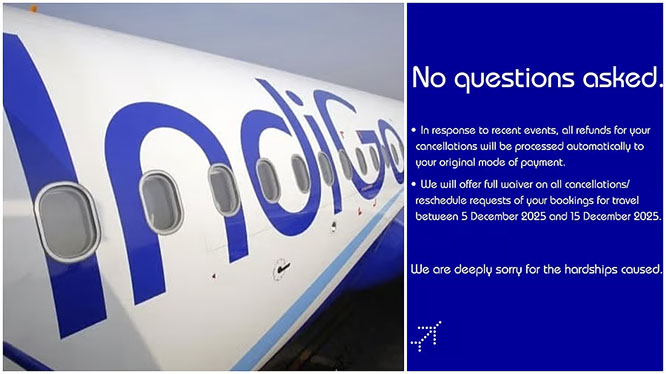
To stabilise operations, the airline has begun calibrated schedule adjustments for the next 48 hours, aiming to restore punctuality. Affected passengers are being offered refunds or alternate travel arrangements, IndiGo said.

What the FDTL Rules Require

The FDTL norms, designed to reduce pilot fatigue, cap duty and flying hours as follows:
•    Maximum 8 hours of flying per day
•    35 hours per week
•    125 hours per month
•    1,000 hours per year

Crew must also receive rest equalling twice the flight duration, with a minimum 10-hour rest period in any 24-hour window.

The DGCA introduced these limits to enhance flight safety.

Hyderabad: 33 Flights Cancelled, Long Queues Reported

Hyderabad’s Rajiv Gandhi International Airport saw heavy early-morning crowds as 33 IndiGo flights (arrivals and departures) were cancelled.

The airport clarified on X that operations were normal, advising passengers to contact IndiGo directly for latest flight status.

Cancellations included flights to and from Visakhapatnam, Goa, Ahmedabad, Delhi, Bengaluru, Chennai, Madurai, Hubli, Bhopal and Bhubaneswar.

Bengaluru: 42 Flights Disrupted

Bengaluru’s Kempegowda International Airport recorded 42 cancellations — 22 arrivals and 20 departures — affecting routes to Delhi, Mumbai, Chennai, Hyderabad, Goa, Kolkata and Lucknow.

Passengers Vent on Social Media

Irate travellers took to X to share their experiences. One passenger stranded in Hyderabad wrote: “I have been here since 3 a.m. and missed an important meeting.”

Another said: “My flight was pushed from 1:55 PM to 2:55 PM and now 4:35 PM. I was informed only three minutes before entering the airport.”

Delhi Airport Hit by Tech Glitch

At Delhi Airport, the disruption deepened due to a slowdown in the Amadeus system — used for reservations, check-ins and departure control.

The technical issue led to longer queues and sluggish processing, adding to delays already worsened by staff shortages.

Comments

Add new comment

  • Coastaldigest.com reserves the right to delete or block any comments.
  • Coastaldigset.com is not responsible for its readers’ comments.
  • Comments that are abusive, incendiary or irrelevant are strictly prohibited.
  • Please use a genuine email ID and provide your name to avoid reject.