Lee Kun-hee, Korean icon who transformed Samsung, passes away at 78

News Network
October 25, 2020

samsung.JPG

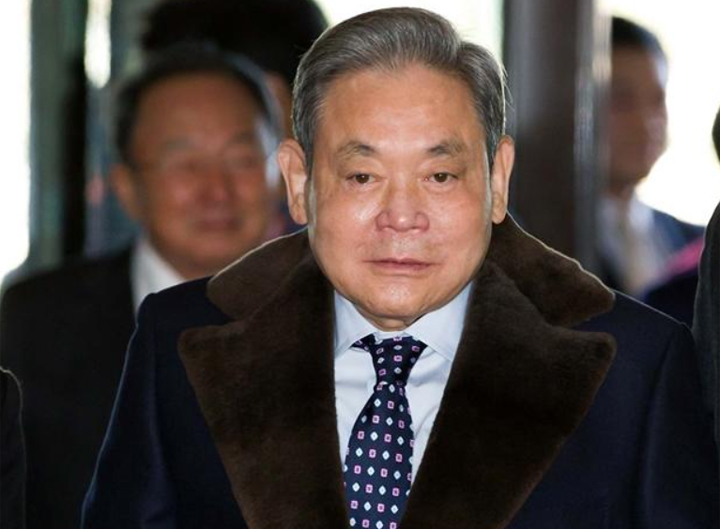
Lee Kun-hee, who transformed Samsung Electronics Co. from a copycat South Korean appliance maker into the world’s biggest producer of smartphones, televisions and memory chips, has died. He was 78.

Lee passed away on Sunday with his family by his side, the company said in a statement, without mentioning the cause of death. His family will hold a private funeral. He had surgery in 2014 after a heart attack and was treated for lung cancer in the late 1990s.

Lee, who told employees to “change everything except your wife and children” during his drive to foster innovation and challenge rivals such as Sony Corp., was South Korea’s richest person. He had an estimated net worth of $20.7 billion, according to the Bloomberg Billionaires Index. Samsung, the biggest of South Korea’s family-run industrial groups, known as chaebol, has been led by his only son since the heart attack.

“Chairman Lee was a true visionary who transformed Samsung into the world-leading innovator and industrial powerhouse from a local business,” the company said. “His legacy will be everlasting.”

The reins are now set to pass to his only son Jay Y. Lee, who’s been the conglomerate’s de facto leader since his father’s hospitalization in 2014. Lee is expected to eventually inherit a $300 billion company that’s riding a Covid-era boom in online activity. Samsung, the maker of the Galaxy line of smartphones, also supplies semiconductors for Google’s data centers and Apple Inc.’s iPhone. It’s the world’s most advanced maker of displays for TVs, computers and mobile devices.

The younger Lee is currently grappling with two simultaneous legal disputes with South Korean prosecutors over allegations of bribery and corruption, which he’s repeatedly denied.

Lee Kun-hee’s heirs now face an estate tax of roughly $10 billion, and paying it may complicate the family’s control of the Samsung conglomerate -- his beneficiaries would likely have to sell some assets to cover the tax — diluting their stake in Samsung. South Korea’s levy of 50% on estates of more than 3 billion won ($2.6 million) is the second-highest among countries in the Organization for Economic Cooperation and Development, after Japan.

The Samsung empire includes 62 companies. Although the late Lee owned large chunks of some of the businesses — including 4.2% of Samsung Electronics — they’re not big enough to afford control of the conglomerate. The family depends on informal ties to executives who run related companies, and a lot of that soft power may dissipate with Lee’s death.

Global Powerhouse

It was Lee Kun-Hee who built the company into the electronics powerhouse of today, becoming synonymous with the rise of South Korea on a global economic stage.

Named one of the world’s 100 most influential people by Time magazine in 2005, Lee began overhauling Samsung Electronics after he saw the company’s products gathering dust in a Los Angeles electronics store, according to “The Lee Kun Hee Story,” a 2010 biography by Lee Kyung-sik. The Suwon, South Korea-based company had become known for cheap, low-quality electronics gear and was in the “second phase of cancer,” sending out 6,000 people to fix products made by 30,000 employees, Lee said in 1993, according to the biography.

Why Samsung’s Billionaire Scion Faces Two More Trials: QuickTake

The company’s makeover started in 1993 when Lee gathered top executives in Germany and laid out a plan, known as the Frankfurt Declaration, to transform Samsung from a second-tier television maker into an industry leader. The company’s new mission: create high-quality products, even if it meant lower sales.

Samsung Electronics became the world’s top maker of computer memory chips in 1992, the same year it became the first to develop 64-megabyte DRAM chips, according to the company.

Samsung’s Origins

Lee was born on Jan. 9, 1942, in Daegu about 240 kilometers (150 miles) south of Seoul, and was raised in the nearby rural district of Uiryeong, according to the company.

In 1938, his father Lee Byung-chull opened a four-story grocery store in Daegu that would later become Samsung Group.

As a teenager, Lee Kun-Hee liked movies and cars and kept to himself. He took up wrestling and played rugby in high school to fight loneliness. He graduated with a degree in economics from Waseda University in Tokyo and also studied business administration in the U.S. at George Washington University in Washington.

In 1971, Lee Byung-chull chose his youngest son to be his successor, and in 1974, the company moved into semiconductors when it acquired a 50% stake in unprofitable Hankook Semiconductor. The business turned profitable in 1988, helped by dynamic random-access memory chips it produced.

After the Frankfurt Declaration, Lee required employees to arrive at work at 7 a.m. instead of their usual 8:30 a.m. start, so they could “soak up reform in their slumber,” according to the biography.

In 1995, he assembled 2,000 workers to watch him make a bonfire out of 150,000 mobile phones, fax machines and other company products that didn’t meet his quality standards.

Lee’s cultural change eventually produced results. Samsung Electronics surpassed Tokyo-based Sony to become the top seller of flat-screen TVs in 2006, the same year its market value exceeded $100 billion.

In 2010, Samsung introduced the Galaxy-branded smartphone running Alphabet Inc.’s Android software, which helped it pass Apple as the world’s biggest smartphone maker in 2011 in terms of units sold. By introducing the Galaxy Note in 2011, Samsung created a new product niche known as the phablet, a smartphone-tablet hybrid.

Political Controversy

Samsung became the biggest seller of all mobile phones in 2012, unseating Nokia Oyj, which had been the industry leader for more than a decade. Its success in smartphones then boosted profits at its component businesses, including memory chips, display and processors.

Lee’s career was also notable for its setbacks and controversies. An expansion into the car business was unsuccessful. Samsung Motor Inc. rolled out its first automobiles in 1998 and failed to attract buyers. The unit was placed into receivership and Renault SA purchased a majority stake in 2000.

Lee was mired in political scandals in the late 1990s after being convicted of paying bribes to former president Roh Tae-woo in 1996. He was pardoned by President Kim Young-sam a year later.

In 2009, Lee was found guilty of tax evasion and breach of duty for causing losses at Samsung SDS Co., an information technology services provider, because he knew the company illegally sold bonds with warrants to his son at artificially low prices. He was fined 110 billion won and received a suspended three-year jail sentence.

Presidential Pardon

Four months after the 2009 ruling, South Korea’s then-President Lee Myung-bak pardoned Lee, a member of the International Olympic Committee, so he could help the country’s successful bid to host the 2018 Winter Olympics in Pyeongchang.

Lee, who resigned from the board of Samsung Electronics in 2008 amid the controversies, returned as chairman in March 2010, telling employees the business was “facing a real crisis.”

“In 10 years, the majority of products that represent Samsung may no longer exist,” he said in a statement announcing his return. “We must have a new start. There is no time to hesitate.”

Two months later, Samsung Group said it would invest 23 trillion won to expand in areas such as health care and solar batteries by 2020.

Lee’s son, Jay Y. Lee, became vice chairman of Samsung Electronics in December 2012 and his daughter, Lee Boo-jin, is president of Hotel Shilla Co., a Samsung affiliate, raising concerns that the founding family would maintain its grip on the conglomerate at the expense of minority shareholders. That issue lies at the heart of the two legal disputes the younger Lee is now embroiled in.

In August 2019, the Supreme Court ordered the retrial of Jay Y. Lee over bribery charges that voided an earlier decision to suspend Lee’s 2.5-year prison sentence. A special prosecutor had indicted the Samsung heir on charges of bribing a friend of former President Park Geun-hye in return for government backing for a merger that helped cement his control over Samsung while his father was hospitalized.

In 1967, Lee Kun-hee married Hong Ra-hee. In addition to children Jay Y. and Boo-jin, he had a daughter, Lee Seo-hyun. Another daughter, Lee Yoon-hyung, died in 2005 at age 26.

Comments

Add new comment

  • Coastaldigest.com reserves the right to delete or block any comments.
  • Coastaldigset.com is not responsible for its readers’ comments.
  • Comments that are abusive, incendiary or irrelevant are strictly prohibited.
  • Please use a genuine email ID and provide your name to avoid reject.
coastaldigest.com news network
November 29,2025

health1.jpg

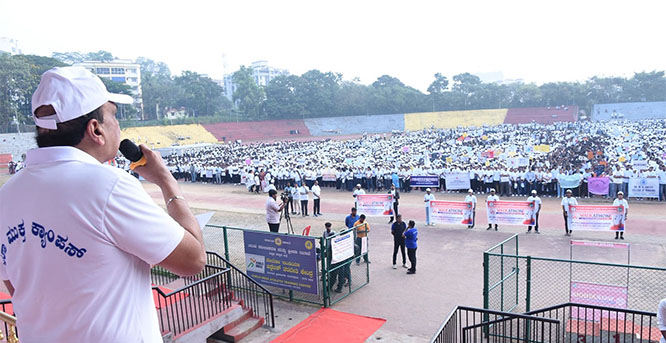
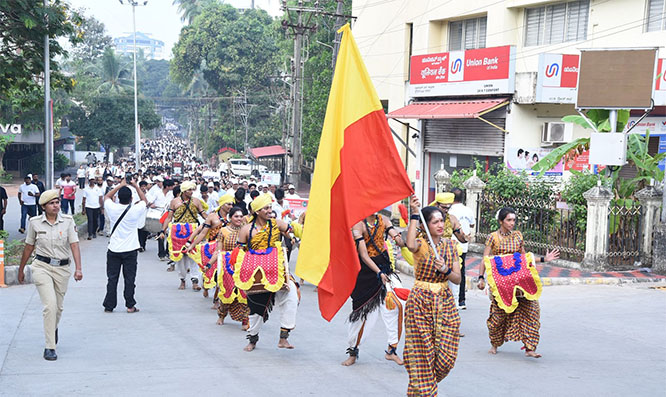
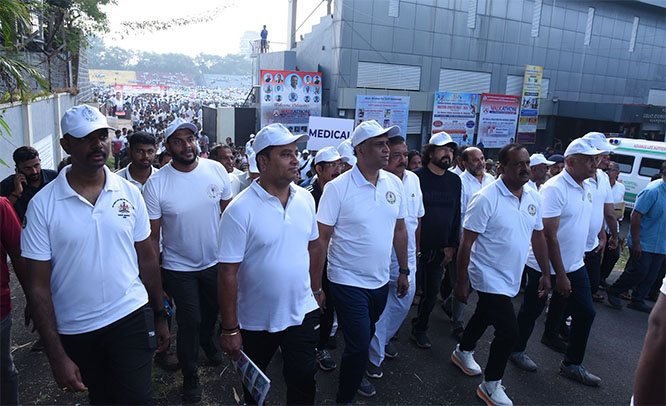
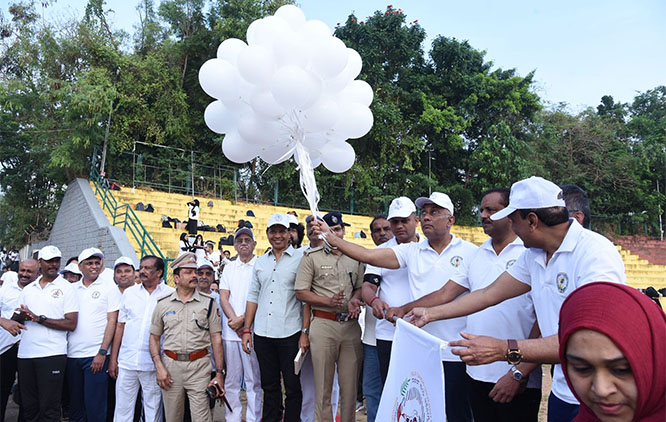
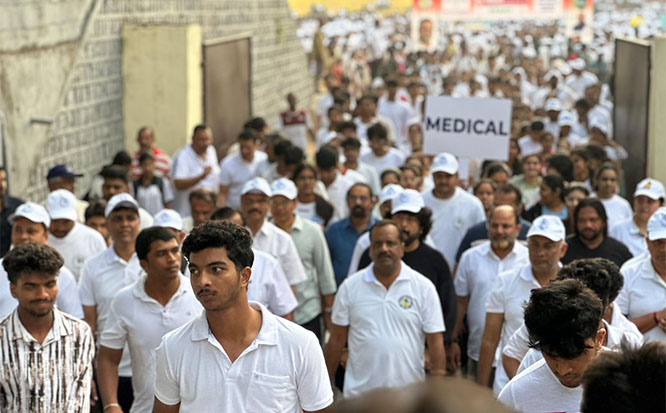
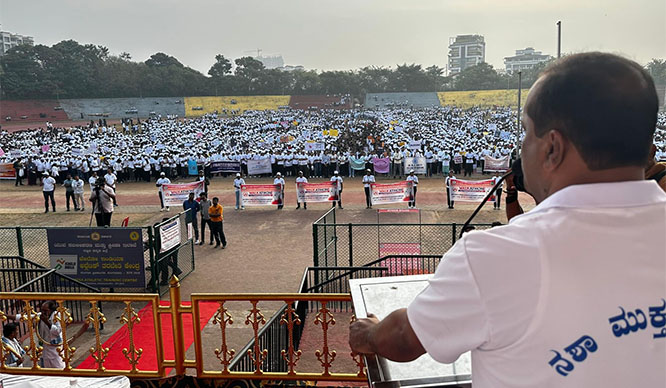
Mangaluru, Nov 29: Around 12,500 healthcare students from Medical, Dental, AYUSH, Pharmacy, Nursing, Physiotherapy and Allied Health Sciences colleges of Dakshina Kannada, affiliated to Rajiv Gandhi University of Health Sciences (RGUHS), took part in a massive walkathon to promote awareness on Organ Donation and Nasha Mukth Bharat.

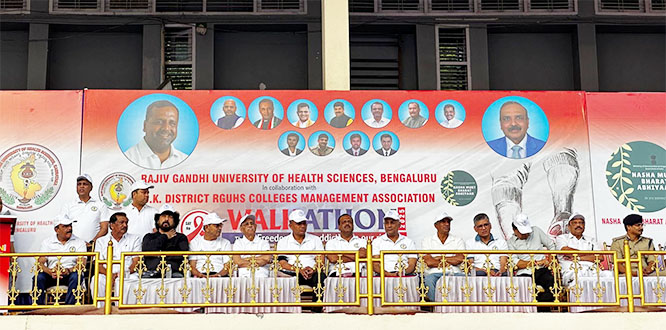
The inaugural ceremony was held at Mangala Stadium. Dr Bhagavan B C, Hon’ble Vice-Chancellor of RGUHS, delivered the welcome address. The walkathon was flagged off by Shri U T Khader, Hon’ble Speaker of the Karnataka Legislative Assembly, and presided over by Shri Dinesh Gundu Rao, Hon’ble Minister for Health, Family Welfare and Dakshina Kannada District In-charge. Dakshina Kannada MP Shri Brijesh Chowta also addressed the students.

Music director Guru Kiran, MLA Dr Bharat Shetty (Mangalore North), Police Commissioner Shri Sudheer Kumar Reddy, Shri Manjunath Bhandary and Shri Harish Kumar were among those present.

Institution heads including Dr Haji U K Monu (Kanachur Colleges), Dr Shantharam Shetty (Tejaswini College), Dr Bhaskar Shetty (City Group of Colleges), Mr Abdul Rahiman (Kanachur Institute of Medical Sciences), and the District Health Officer, Mangalore, also participated.

The vote of thanks was delivered by Prof U T Ifthikar Fareed, Syndicate Member, RGUHS.

The event was organised by Dr U T Ifthikar Ali and Dr Shiva Sharan (Syndicate Members), Prof Vaishali (Senate Member), Prof Mohammad Suhail (Chairman, BOS Physiotherapy), Dr Sharan Shetty (Former Senate Member), along with principals and faculty of various colleges.

Students marched from Mangala Stadium to Karavali Grounds via MCC and Lalbagh signal. The event set a record as one of the largest gatherings of healthcare students for a social cause in the RGUHS Dakshina Kannada Zone.

health7.jpg

health6.jpg

health5.jpg

health4.jpg

health3.jpg

health2.jpg

Comments

Add new comment

  • Coastaldigest.com reserves the right to delete or block any comments.
  • Coastaldigset.com is not responsible for its readers’ comments.
  • Comments that are abusive, incendiary or irrelevant are strictly prohibited.
  • Please use a genuine email ID and provide your name to avoid reject.
News Network
December 3,2025

indigo.jpg

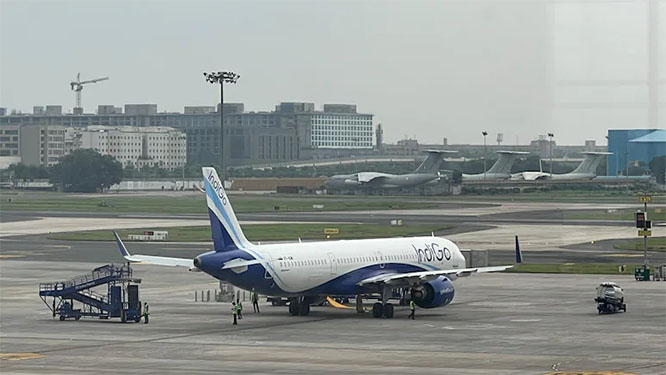
IndiGo, India’s largest airline, is battling one of its worst operational disruptions in recent years, with hundreds of delays and cancellations throwing domestic travel into chaos.

Government data on Tuesday showed its on-time performance plunging to 35%, an unusual dip for a carrier long associated with punctuality.

By Wednesday afternoon, airports in Delhi, Mumbai, Bengaluru and Hyderabad had collectively reported close to 200 cancellations, stranding travellers across the country.

Crew Shortage After New Duty Norms

A major trigger behind the meltdown is a severe crew shortage, especially among pilots, following the rollout of revised Flight Duty Time Limitation (FDTL) norms last month.

The rules mandate longer rest hours and more humane rosters — a shift IndiGo has struggled to incorporate across its vast network.

Sources said several flights were grounded due to lack of cabin crew, while some delays stretched upwards of eight hours.

With IndiGo controlling over 60% of India’s domestic aviation market, the ripple effect has impacted airports nationwide.

IndiGo Issues Apology, Lists “Compounding Factors”

In a statement, IndiGo acknowledged the large-scale disruption:

“We sincerely apologise to customers. A series of unforeseen operational challenges — technology glitches, winter schedule changes, adverse weather, system congestion and updated FDTL norms — created a compounding impact that could not have been anticipated.”

To stabilise operations, the airline has begun calibrated schedule adjustments for the next 48 hours, aiming to restore punctuality. Affected passengers are being offered refunds or alternate travel arrangements, IndiGo said.

What the FDTL Rules Require

The FDTL norms, designed to reduce pilot fatigue, cap duty and flying hours as follows:
•    Maximum 8 hours of flying per day
•    35 hours per week
•    125 hours per month
•    1,000 hours per year

Crew must also receive rest equalling twice the flight duration, with a minimum 10-hour rest period in any 24-hour window.

The DGCA introduced these limits to enhance flight safety.

Hyderabad: 33 Flights Cancelled, Long Queues Reported

Hyderabad’s Rajiv Gandhi International Airport saw heavy early-morning crowds as 33 IndiGo flights (arrivals and departures) were cancelled.

The airport clarified on X that operations were normal, advising passengers to contact IndiGo directly for latest flight status.

Cancellations included flights to and from Visakhapatnam, Goa, Ahmedabad, Delhi, Bengaluru, Chennai, Madurai, Hubli, Bhopal and Bhubaneswar.

Bengaluru: 42 Flights Disrupted

Bengaluru’s Kempegowda International Airport recorded 42 cancellations — 22 arrivals and 20 departures — affecting routes to Delhi, Mumbai, Chennai, Hyderabad, Goa, Kolkata and Lucknow.

Passengers Vent on Social Media

Irate travellers took to X to share their experiences. One passenger stranded in Hyderabad wrote: “I have been here since 3 a.m. and missed an important meeting.”

Another said: “My flight was pushed from 1:55 PM to 2:55 PM and now 4:35 PM. I was informed only three minutes before entering the airport.”

Delhi Airport Hit by Tech Glitch

At Delhi Airport, the disruption deepened due to a slowdown in the Amadeus system — used for reservations, check-ins and departure control.

The technical issue led to longer queues and sluggish processing, adding to delays already worsened by staff shortages.

Comments

Add new comment

  • Coastaldigest.com reserves the right to delete or block any comments.
  • Coastaldigset.com is not responsible for its readers’ comments.
  • Comments that are abusive, incendiary or irrelevant are strictly prohibited.
  • Please use a genuine email ID and provide your name to avoid reject.
News Network
November 26,2025

students.jpg

Bengaluru, Nov 26: Karnataka is taking its first concrete steps towards lifting a three-decade-old ban on student elections in colleges and universities. Deputy Chief Minister D.K. Shivakumar announced Wednesday that the state government will form a small committee to study the reintroduction of campus polls, a practice halted in 1989 following incidents of violence.

Speaking at a 'Constitution Day' event organised by the Karnataka Congress, Mr. Shivakumar underscored the move's aim: nurturing new political leadership from the grassroots.

"Recently, (Leader of the Opposition in Lok Sabha) Rahul Gandhi wrote a letter to me and Chief Minister (Siddaramaiah) asking us to think about restarting student elections," Shivakumar stated. "I'm announcing today that we'll form a small committee and seek a report on this."

Student elections were banned in Karnataka in 1989, largely due to concerns over violence and the infiltration of political party affiliates into campus life. The ban effectively extinguished vibrant student bodies and the pipeline of young leaders they often produced.

Mr. Shivakumar, who also serves as the Karnataka Congress president, said that former student leaders will be consulted to "study the pros and cons" of the re-introduction.

Acknowledging the history of the ban, he added, "There were many criminal activities taking place back then. We’ll see how we can conduct (student) elections by regulating such criminal activities."

The Deputy CM reminisced about his own journey, which began on campus. He recalled his political activism at Sri Jagadguru Renukacharya College leading to his first Assembly ticket in 1985 at the age of 23. "That's how student leadership was at the time. Such leadership has gone today. College elections have stopped," he lamented, adding that for many, college elections were "like a big movement" where leaders were forged.

The move, driven by the Congress high command's push to cultivate young talent, will face scrutiny from academics and university authorities who have, in the past, expressed concern that the return of polls could disrupt the peaceful academic environment and turn campuses into political battlegrounds.

Comments

Add new comment

  • Coastaldigest.com reserves the right to delete or block any comments.
  • Coastaldigset.com is not responsible for its readers’ comments.
  • Comments that are abusive, incendiary or irrelevant are strictly prohibited.
  • Please use a genuine email ID and provide your name to avoid reject.