
OneScore: The Smarter Way to Secure a Personal Loan

Business Desk
June 18, 2025

onescore.jpg

When in urgent need of funds, securing a personal loan quickly and smoothly can be a lifesaver. If you have a good CIBIL score, then you can secure a better offer and faster approval. Once approved, you can use the loan amount to cover everything from medical bills to education or home repair costs.

Digital lending has made waiting weeks for approval a thing of the past. Applying for personal loan on the OneScore App is one such option that gets you personalized loan offers with minimal paperwork and simple eligibility checks. 

Why Your CIBIL Score Matters for Personal Loans

A CIBIL score, issued by TransUnion CIBIL, is India’s most widely used credit score model. It reflects your credit health based on your borrowing and repayment history. Lenders use it to assess your eligibility for personal loans.

A score above 750 signals strong creditworthiness and boosts your chances of quick approval. It also helps you secure lower interest rates. Lenders see high scores as a mark of a low-risk borrower and may offer better terms.

Moreover, a good score increases your loan amount eligibility and opportunity to get a longer repayment tenure. This way, you could borrow more and repay over a longer period. On the other hand, a low score may lead to rejections or stricter terms like higher rates and smaller loan amounts.

Build a Strong Credit Profile with OneScore

Before applying for a personal loan, having a healthy CIBIL score is essential. OneScore helps you monitor and manage your credit all in one place, so you can confidently approach lenders and unlock better loan offers. 
●    You can check your CIBIL score anytime for free and stay updated on your credit health. Regular monitoring helps you spot changes early and avoid surprises when applying.
●    It also helps detect and report any fraudulent or incorrect loan accounts. Fixing these errors enables you to maintain a strong credit profile.
●    Based on your credit behaviour, you can receive tips on how to improve your CIBIL score over time. These suggestions help you build a healthy credit profile. 

How OneScore Simplifies Personal Loan Applications 

On one hand, OneScore helps you build and maintain a strong CIBIL score. On the other hand, you can use it to unlock personalised and instant loan offers. Here’s how OneScore’s Personal Loan facility simplifies the process:

●    Tailored Loan Offers
Get loan options curated specifically for you, based on your CIBIL score and other details. This helps you avoid any unnecessary delays and improves your chances of approval.

●    Fast Eligibility Check
Quickly check your CIBIL score and assess your loan eligibility in seconds. It doesn’t impact your score, require a formal application or change hefty fees. 

●    Minimal Paperwork
Complete your loan application with basic documentation. The process is 100% digital, saving you time and eliminating hassles.

●    Instant Loan Access
Once you are approved for financing, you can enjoy instant loan disbursal to meet urgent financial needs.

●    Track Applications in Real Time
Keep tabs on your loan status directly through the app. From application to approval and disbursal, there is no need for follow-ups on phone calls.

●    Safety Without Spam
Your data stays safe and secure and there are no ads, which means you can focus on what is truly important - your creditworthiness and finances. 

●    Competitive Interest Rates
When your CIBIL score is strong, you can unlock better deals. Get loans with interest rates starting at just 12.5% on the app. 

Easy Steps to Apply for a Loan Using OneScore

Just follow these simple steps to check your CIBIL score and explore personalised offers through OneScore’s Personal Loan. 

1.    Get the OneScore App
Get the OneScore app from the Play Store or App Store. Sign up using your mobile number, then enter basic details like your name, email, and date of birth. You will also need to share your PAN details. Your personal details are secure and only used to help fetch your CIBIL score.

2.    See and Boost Your CIBIL Score
Once your account is ready, OneScore shows your CIBIL score. This score impacts your loan eligibility and interest rates. If it needs improvement, OneScore offers helpful tips to boost it.

3.    Check Personal Loan Offers
Go to the Personal Loan section in the app to see personalised loan offers based on your CIBIL score. You will be eligible for them once your score reaches 730. Review the approved loan amount and click ‘Accept and Continue’ to proceed.

4.    Choose The Terms
Pick from EMI options based on loan amount, tenure, and interest rate. When you find terms you like, tap ‘Proceed’ and review your selection.

5.    Finish the KYC Process
Verify your identity by linking your DigiLocker account to confirm your Aadhaar details. Don’t have DigiLocker? The app guides you to create one easily.

6.    Confirm Account Information
Confirm your bank details with a small ₹1 deposit, which will be refunded to you. This step completes your KYC and ensures your loan is linked to the correct account.

7.    Create a Mandate for Repayment
Enable auto-debit from the same bank account. This keeps your EMIs on track without any hassle.

8.    Receive Your Loan Amount
Review all terms and conditions carefully on the final screen. Once confirmed, your loan amount is disbursed directly to your bank account. This usually takes around 24 hours.

Using OneScore, you can check your CIBIL score for free anytime. Once you have a good score, the app allows you to secure loans up to ₹5 lakhs at competitive rates. 

OneScore also helps you detect and report fraudulent loan accounts that could hurt your credit. Clearing these errors is key to maintaining a strong credit profile. Moreover, you can manage your loans, calculate EMIs, and set reminders all in one app.

Comments

Add new comment

  • Coastaldigest.com reserves the right to delete or block any comments.
  • Coastaldigset.com is not responsible for its readers’ comments.
  • Comments that are abusive, incendiary or irrelevant are strictly prohibited.
  • Please use a genuine email ID and provide your name to avoid reject.
Business Desk
November 21,2025

warehouse.jpg

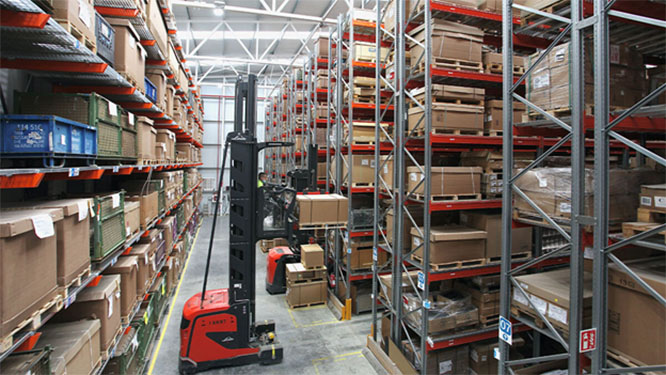
Warehouses handle a wide range of goods every day. Each product type needs the right handling and the right system. This is why racking and storage decisions shape warehouse design and performance. The nature of the load determines how goods are received, checked, moved, and stored. It also influences order picking and dispatch. When the team understands the load type, they can plan efficient operations. Better planning helps reduce waste and improve safety. Modern systems utilise automation and engineered layouts to facilitate faster and more efficient movement of goods.

What is a Unit Load?

A unit load is a group of products placed on a stable support. The support can be a pallet, box or container. The aim is to reduce handling time. It allows goods to move as a single group. This keeps storage simple and protects the products.

Types of Load by Recording Method:

General Load

These goods need individual packaging. Some units can be moved one at a time. Others are grouped on pallets or in containers. Their quantity is recorded as units.

Bulk Load

Bulk loads do not use small packaging. They move directly inside tanks, silos or special containers. Liquids and gases fall into this group. They are measured by mass and volume.

Types of Load by Volume:

Small Loads

These goods are light and easy to hold. Items like food packs or small cartons belong here.

Medium Loads

These weigh up to 10 kg. They are still easy to handle by hand. Both small and medium loads fit well in picking systems. Long-span shelving and carton flow racks are suitable for these loads. These systems offer easy access and steady movement.

Large or Pallet Loads

These goods need pallets for support. Forklifts or stackers handle them. They are suitable for selective pallet racks, double-deep racks, shuttle racks, and other high-density storage systems. The choice depends on access needs and available warehouse space.

Bulky Loads

These goods are large and hard to stack. Appliances and steel beams fall into this group. Cantilever racking is ideal for such items.

Special Size Loads

These loads are extremely large and heavy. They need special transport and support vehicles.

Types of Load by Weight:

●    Light loads under 5 kg
●    Medium loads between 5 and 25 kg
●    Heavy loads between 25 kg and one tonne
●    Very heavy loads above one tonne

Each weight category needs a suitable handling plan. Safety becomes more important as weight increases.

Types of Load by Useful Life:

Perishable Loads

These products have expiry dates. They need fast movement. Stock rotation is important. Cold storage and controlled environments protect these goods.

Non-Perishable Loads

These items do not depend on expiry dates. They allow flexible storage and handling.

Types of Load by Resistance:

Resistant Loads

These goods can support weight on top. They allow stacking.

Light Loads

These can be stacked with limits. They need clear rules to avoid damage.

Fragile Loads

These loads need gentle handling. They cannot be stacked. They must be stored on shelves that offer individual support.

Types of Load by Dangerous Property:

Dangerous goods need special rules. They include gases, explosives, flammable liquids and corrosive substances. Each class requires a safe storage plan. Racks must allow ventilation, stability and easy access for trained staff.

Types of Load by Batch

Some products move as single units. Others move in packs with many units. Batch size depends on the product type.

Choosing the Right Storage Method

Load type controls the layout and equipment used. A well-designed warehouse creates a smooth workflow. This reduces time and cost.

Storage for Small and Medium Loads

Shelving systems give direct access. Carton flow racks work well for fast-moving goods. They reduce walking time and save effort.

Storage for Pallet Loads

Selective pallet racking offers direct access. It suits operations with many item types. Drive-in and shuttle racks are ideal for bulk storage. They save space and increase density. Very narrow aisle racks maximise height with guided trucks.

Storage for Bulky and Special Loads

Cantilever racking is designed to hold long and heavy items. It keeps aisles clear. Large loads need cranes or special lifting tools.

Storage for Mixed Loads

A flexible system helps when goods vary in size. Many warehouses utilise a mix of pallet racking, shelving and automated zones.

Using Multi-Level Solutions

Large warehouses often use a mezzanine floor to increase space. This converts unused height into new storage areas. It supports light loads, picking zones and packing stations.

Role of Smart Systems and Automation

Automation improves speed and safety. It also reduces damage. Some systems use sensors to monitor movement. Others manage inventory with high accuracy. A crane-based Automated Storage and Retrieval System (ASRS) support smooth pallet handling. It reduces manual work and improves order accuracy. Automated systems protect fragile loads and reduce forklift traffic.

Why Load Identification Matters

Knowing the load type helps avoid damage. It also helps in planning safe movement. With correct information, the team can plan for forklifts, conveyors and racks. This reduces risks and improves output.

Conclusion

Every warehouse handles a unique mix of loads. Each type requires the right plan, the right support, and the right movement method. Reliable racking and storage systems protect goods and increase efficiency. They also help teams manage work safely. When storage aligns with product needs, operations run smoothly. Leading companies like the Godrej Enterprises Group offer solutions for a variety of loads. From crane-based pallet ASRS to cantilever racks, these solutions help businesses stay ready for the future. A smart warehouse grows with the business and creates more usable space through simple, well-planned design.

Comments

Add new comment

  • Coastaldigest.com reserves the right to delete or block any comments.
  • Coastaldigset.com is not responsible for its readers’ comments.
  • Comments that are abusive, incendiary or irrelevant are strictly prohibited.
  • Please use a genuine email ID and provide your name to avoid reject.
News Network
November 28,2025

ministerPM.jpg

Mangaluru, Nov 28: Karnataka Health Minister and Dakshina Kannada district in-charge minister Dinesh Gundu Rao on Friday handed over Chief Minister Siddaramaiah’s letter to Prime Minister Narendra Modi, highlighting the severe distress faced by farmers due to crashing crop prices.

PM Modi arrived at the Mangaluru International Airport en route to Udupi, where Gundu Rao welcomed him and submitted the letter. The chief minister’s message stressed that farmers are suffering heavy losses because maize and green gram are being bought far below the Minimum Support Price (MSP). The state urged the Centre to immediately begin procurement at MSP.

According to the letter, Karnataka has a bumper harvest this year—over 54.74 lakh metric tons of maize and 1.98 lakh metric tons of green gram—yet farmers are unable to secure fair prices. Against the MSP of ₹2,400/MT for maize and ₹8,768/MT for green gram, market rates have plunged to ₹1,600–₹1,800 and ₹5,400 respectively.

The chief minister has requested the Centre to:

• Direct NAFED, FCI and NCCF to start MSP procurement immediately.
• Ensure ethanol units purchase maize directly from farmers or FPOs.
• Increase Karnataka’s ethanol allocation, citing high production capacity.
• Stop maize imports, which have depressed domestic prices.
• Relax quality norms for green gram, allowing up to 10% discoloration due to rains.

The letter stresses that MSP is crucial for farmer dignity and income stability and calls for swift central intervention to prevent a deepening crisis.

Comments

Add new comment

  • Coastaldigest.com reserves the right to delete or block any comments.
  • Coastaldigset.com is not responsible for its readers’ comments.
  • Comments that are abusive, incendiary or irrelevant are strictly prohibited.
  • Please use a genuine email ID and provide your name to avoid reject.
News Network
December 1,2025

hindutvaboy.jpg

Udupi, Dec 1: A horrific case of alleged rape has unfolded in Udupi, where a worker from a Hindutva organisation, previously arrested and released on bail for harassing a young woman, is now accused of waylaying and sexually assaulting her.

The arrested individual has been identified as Pradeep Poojary (26), a member of the Hindu Jagarana Vedike's Nairkode unit in Perdur.

Poojary had allegedly been relentlessly harassing the young woman, pressuring her to marry him. When she bravely stood up to him and refused his demands, she filed a formal complaint at the Hiriyadka police station. He was subsequently arrested in that initial harassment case but was later granted bail.

According to police reports, driven by the same malicious grudge, Poojary allegedly intercepted the woman again on November 29. While she was walking through a deserted area, the accused is claimed to have threatened her by grabbing her neck. When she again refused to marry him, he allegedly proceeded to rape her.

The survivor immediately informed her family about the traumatic assault. Following this, her parents lodged a complaint at the Udupi women’s police station.

Police arrested Poojary again and produced him before the court. He has since been remanded to judicial custody.

Comments

Add new comment

  • Coastaldigest.com reserves the right to delete or block any comments.
  • Coastaldigset.com is not responsible for its readers’ comments.
  • Comments that are abusive, incendiary or irrelevant are strictly prohibited.
  • Please use a genuine email ID and provide your name to avoid reject.