




Toyota stops expansion plans in India, blames high tax regime

Agencies
September 15, 2020

toyota.jpg

Mumbai, Sept 15: Toyota Motor Corp. won’t expand further in India due to the country’s high tax regime, a blow for Prime Minister Narendra Modi, who’s trying to lure global companies to offset the deep economic malaise brought on by the coronavirus pandemic.

The government keeps taxes on cars and motorbikes so high that companies find it hard to build scale, said Shekar Viswanathan, vice chairman of Toyota’s local unit, Toyota Kirloskar Motor. The high levies also put owning a car out of reach of many consumers, meaning factories are idled and jobs aren’t created, he said.

“The message we are getting, after we have come here and invested money, is that we don’t want you,” Viswanathan said in an interview. In the absence of any reforms, “we won’t exit India, but we won’t scale up.”

Toyota, one of the world’s biggest carmakers, began operating in India in 1997. Its local unit is owned 89% by the Japanese company and has a small market share -- just 2.6% in August versus almost 5% a year earlier, Federation of Automobile Dealers Associations data show.

In India, motor vehicles including cars, two-wheelers and sports utility vehicles (although not electric vehicles), attract taxes as high as 28%. On top of that there can be additional levies, ranging from 1% to as much as 22%, based on a car’s type, length or engine size. The tax on a four-meter long SUV with an engine capacity of more than 1500 cc works out to be as high as 50%.

Ford, GM Out

The additional levies are typically imposed on what are considered to be “luxury” goods. As well as cars, in India that can include cigarettes and sparkling water.

India is planning to offer incentives worth $23 billion to attract firms to set up manufacturing, people familiar with the matter said last week, including production-linked breaks for automakers. International automakers have struggled to expand in the world’s fourth-biggest car market.

General Motors Co. quit the country in 2017 while Ford Motor Co. agreed last year to move most of its assets in India into a joint venture with Mahindra & Mahindra Ltd. after struggling for more than two decades to win over buyers. That effectively ended independent operations in a country Ford had once said it wanted to be one of its top three markets by 2020.

Such punitive taxes discourage foreign investment, erode automakers’ margins and make the cost of launching new products “prohibitive,” Viswanathan said.

“You’d think the auto sector is making drugs or liquor,” he said. Toyota, which also has an alliance with Suzuki Motor Corp. to sell some of Suzuki’s compact cars under its own brand, is currently utilizing just about 20% of its capacity in a second plant in India.

Automobile sales in India were weathering a slump before the coronavirus pandemic, with at least half a million jobs lost.

Taxes on electric vehicles, currently 5%, will probably also go up once sales increase, Viswanathan said, referring to what he says has become a pattern with successive governments in India.

While discussions are ongoing between ministries for a reduction in taxes, there may not any immediate agreement on an actual cut, India’s Heavy Industries Minister Prakash Javadekar said earlier this month.

A finance ministry spokesman didn’t immediately respond to messages seeking comment.

EV Challenge

Automobile sales in India were weathering a slump before the coronavirus pandemic, with at least half a million jobs lost. A lobby group has predicted it may take as many as four years for sales to return to levels seen before the slowdown.

The biggest players are the local units of Suzuki and Hyundai Motor Co., which have cornered the market for compact, affordable cars. Maruti Suzuki India Ltd. and Hyundai Motor India Ltd. have a combined share of almost 70%.

Toyota in India has largely pivoted toward hybrid vehicles, which attract taxes of as much as 43% because they aren’t purely electric.

But in a nation where few can even afford a car, let alone a more environmentally friendly one, EVs or their hybrid cousins have yet to gain much acceptance. Elon Musk, the billionaire founder of Tesla Inc., has said import duties would make his vehicles unaffordable in India.


“Market India always has to precede Factory India, and this is something the politicians and bureaucrats don’t understand,” Viswanathan said. Modi’s much-touted Make in India is another program aimed at attracting foreign companies.


India needs to have demand for a product before asking firms to set up shop, yet “at the slightest sign of a product doing well, they slap it with a higher and higher tax rate,” he said.

Comments

Add new comment

  • Coastaldigest.com reserves the right to delete or block any comments.
  • Coastaldigset.com is not responsible for its readers’ comments.
  • Comments that are abusive, incendiary or irrelevant are strictly prohibited.
  • Please use a genuine email ID and provide your name to avoid reject.
News Network
November 26,2025

Mangaluru, Nov 26: Mangaluru East police have registered a case following a sophisticated online fraud where a 57-year-old local resident was allegedly cheated out of ₹13.4 lakh after being targeted on Facebook.

The scam began in February when the complainant, while browsing Facebook reels, was contacted by a woman identifying herself as "Lillian Mary George" from London. After establishing a chat relationship, the woman claimed she would visit India in November and bring a significant sum of money.

The trap was sprung on November 15, when the victim received a call from a woman named "Sonali Gupta," who claimed Lillian had arrived at Mumbai International Airport but was detained by customs. The fraudsters convinced the man that Lillian was carrying £25,000 (about ₹26 lakh) in traveller’s cheques and 1 kg of gold (valued at around ₹30 lakh).

Under the pretense of clearing these items, the victim was asked to make numerous online transfers between November 15 and 18 for various bogus charges, including:

•    "Pounds exchange registration"
•    "Customs declaration issues"
•    "Discount charges"
•    "Money-laundering charges"

Believing the fictitious story, the complainant transferred the cumulative sum of ₹13.4 lakh to various bank accounts provided by the fraudsters. He realised he was cheated when the culprits later promised a refund within two days but stopped answering his calls. The Mangaluru East police are now investigating the case, which highlights the continuing threat of transnational cyber fraud using social engineering and promises of fictitious wealth.

Comments

Add new comment

  • Coastaldigest.com reserves the right to delete or block any comments.
  • Coastaldigset.com is not responsible for its readers’ comments.
  • Comments that are abusive, incendiary or irrelevant are strictly prohibited.
  • Please use a genuine email ID and provide your name to avoid reject.
News Network
December 4,2025

Udupi: A 40-year-old NRI from Udupi has reportedly lost more than Rs 12.25 lakh in an online investment scam operated through Telegram.

According to a complaint filed at the CEN police station, Leo Jerome Mendonsa, who has been working in Dubai for the past 15 years in computer accessories sales, maintains NRI accounts in Karkala and Nitte.

On November 12, 2025, Mendonsa was added to a Telegram group called Instaflow Earnings by unknown individuals. Users identified as Priya and Dipannita persuaded him to invest in “Revenue Tasks.” Initially, Mendonsa transferred Rs 1,100 multiple times and received the promised returns, encouraging him to continue.

On November 14, another user, Nishmitha Shetty, directed him to register on a website, digitvisionuoce.cc, and invest Rs 4 lakh in various shares. Over the next few days, he made multiple transfers totaling Rs 12,25,000, including Rs 50,000 via Google Pay, believing the scheme was legitimate.

After receiving the money, the alleged handlers stopped responding, and neither the invested amount nor the promised profits were returned.

The CEN police have registered a case under Sections 66(C) and 66(D) of the IT Act and Section 318(4) of the Bharatiya Nyaya Sanhita (BNS), and investigations are ongoing.

Comments

Add new comment

  • Coastaldigest.com reserves the right to delete or block any comments.
  • Coastaldigset.com is not responsible for its readers’ comments.
  • Comments that are abusive, incendiary or irrelevant are strictly prohibited.
  • Please use a genuine email ID and provide your name to avoid reject.
News Network
November 21,2025

Tejas.jpg

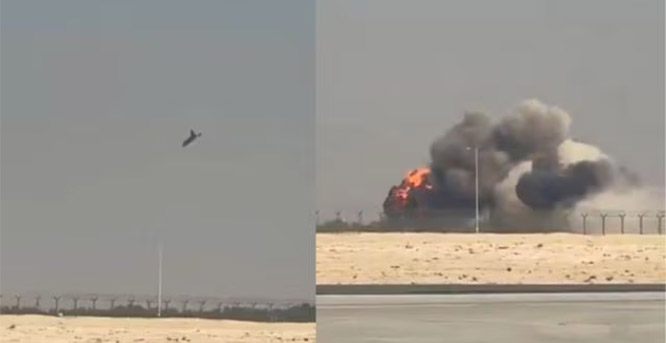
An Indian Air Force (IAF) Tejas fighter jet crashed on Friday, November 21, afternoon during its aerial demonstration at the Dubai Air Show, plunging to the ground at around 2:10 pm local time while performing a manoeuvre before thousands of spectators.

The IAF confirmed the incident, stating that a Tejas aircraft participating in the show had crashed and that further details were being gathered. An Air Force spokesperson said more information would be shared after initial assessments.

The crash sent thick black smoke billowing into the sky near the airport, causing panic among visitors, including families and children who had gathered to watch the display. Authorities have not yet confirmed whether the pilot managed to eject before the aircraft went down. Emergency response teams rushed to the scene, and officials have not released information on casualties or damage so far.

The Tejas is a 4.5-generation, multi-role fighter aircraft developed indigenously by Hindustan Aeronautics Limited (HAL). Designed for versatility, it is capable of offensive air support, close combat, ground attack missions and maritime operations. The aircraft family includes single-seat fighters and twin-seat trainers for both the Air Force and Navy.

HAL describes the latest version, the LCA Mk1A, as the most advanced in the series, featuring an AESA radar, an upgraded electronic warfare suite with radar-warning and self-protection jamming, smart multifunction displays, a digital map generator, a combined interrogator–transponder system and a modern radio altimeter. These enhancements significantly improve the aircraft’s combat capability and survivability.

Further updates from IAF and UAE authorities are awaited.

Comments

Add new comment

  • Coastaldigest.com reserves the right to delete or block any comments.
  • Coastaldigset.com is not responsible for its readers’ comments.
  • Comments that are abusive, incendiary or irrelevant are strictly prohibited.
  • Please use a genuine email ID and provide your name to avoid reject.