To build trust, Modi, Xi agree to issue 'strategic guidance' to their militaries

Agencies
April 28, 2018

Wuhan, Apr 28: Prime Minister Narendra Modi and Chinese President Xi Jinping have decided to issue "strategic guidance" to their militaries to strengthen communications and to build trust and understanding, a move aimed at avoiding a Dokalam-like situation in the future.

Modi said his talks with President Xi focussed on diverse areas of India-China cooperation. "We discussed ways to give impetus to our economic ties as well as people-to-people relations. Other areas we spoke about include agriculture, technology, energy and tourism," he said.

Briefing reporters at the end of the two-day informal summit between the two leaders in Wuhan on Saturday, Foreign Secretary Vijay Gokhale said the two leaders underscored the importance of maintaining peace and tranquillity in all areas of the India-China border region.

"To this end, they issued strategic guidance to their respective militaries to strengthen communication in order to build trust and mutual understanding and enhance predictability and effectiveness in the management of border affairs," Gokhale said.

The foreign secretary said the two leaders further directed their militaries to earnestly implement various Confidence Building Measures (CBMs) agreed upon between the two sides, including the principle of mutual and equal security, and strengthen existing institutional arrangements and information sharing mechanisms to prevent incidents in border regions.

They also endorsed the work of the special representatives to find a fair, reasonable and mutually acceptable settlement on the boundary issue.

The two countries have so far held 20 rounds of talks to resolve the boundary dispute and worked out different mechanisms to maintain peace along the 3,488-km long Line of Actual Control.

The remarks assume significance as the "heart-to-heart" summit between Modi and Xi is being seen as an effort by India and China to rebuild trust and improve ties that were hit by the 73-day-long Dokalam standoff last year.

"The two leaders were of the view that the two countries have the maturity and wisdom to handle all our differences through peaceful discussions within the context of the overall relationships and bearing in mind, we would respect each other's sensitivities, concerns and aspirations," Gokhale said.

Modi and Xi underlined that as two major countries, India and China have wider and overlapping regional and global interests. They agreed on the need to strengthen strategic communication through greater consultation on all matters of common interest.
 
"They believe that such strategic communication will have a positive influence on enhancing mutual understanding and will contribute to regional and global stability," Gokhale said.

The two leaders recognised the common threat posed by terrorism and committed to cooperate further on counter-terrorism, he said.

When asked whether the issue of Jaish-e-Mohammad chief Masood Azhar was raised, Gokhale said the two leaders "did not go into specifics". China has repeatedly blocked India's bid to designate Azhar as a global terrorist by the United Nations.

The two leaders agreed that India and China are major powers, with strategic and decisional autonomy, and they will pursue peaceful, stable and balanced relations. Such a relationship will be a positive factor for stability amid the current global uncertainties, Gokhale said amid increasing protectionist moves by countries like the US.

"The developments were reviewed from the strategic and long-term perspective. A number of areas where we have conversions were identified, and it was decided that through the established mechanisms, we have about 20 such mechanisms at various levels, through such established mechanisms we would try and build this conversation," Gokhale said.

The two leaders underlined that trade should be balanced, it should be sustainable, and that the two sides should take advantage of the complementarities between the two economies.
Modi also mentioned the importance of balancing trade and the scope of the possibilities of agricultural exports and pharmaceutical exports to China.

The two sides also discussed climate change, sustainable development and food security. Xi shared his experience in terms of the preservation of the Yangtze - China's longest river - and Modi shared his own experience on the question of the cleaning of the Ganga - India's longest river.

They also discussed how to promote sports between the two countries and how to strengthen tourism on the Buddhist circuit.

"They reiterated the importance of building an open, multi-polar, pluralist and participatory global economic order which will enable all countries to pursue their development and contribute to the elimination of poverty and inequality in all regions of the world. They spoke of their respective efforts to contribute to the regional and global economic development," Gokhale said.

"The forward-looking dialogue helped them in forging a common understanding of the future direction of India-China relations built upon mutual respect for each other's developmental aspirations and prudent management of differences with mutual sensitivity," Gokhale added.


Comments

Add new comment

  • Coastaldigest.com reserves the right to delete or block any comments.
  • Coastaldigset.com is not responsible for its readers’ comments.
  • Comments that are abusive, incendiary or irrelevant are strictly prohibited.
  • Please use a genuine email ID and provide your name to avoid reject.
News Network
December 16,2025

bengal.jpg

The deletion of over 58 lakh names from West Bengal’s draft electoral rolls following a Special Intensive Revision (SIR) has sparked widespread concern and is likely to deepen political tensions in the poll-bound state.

According to the Election Commission, the revision exercise has identified 24 lakh voters as deceased, 19 lakh as relocated, 12 lakh as missing, and 1.3 lakh as duplicate entries. The draft list, published after the completion of the first phase of SIR, aims to remove errors and duplication from the electoral rolls.

However, the scale of deletions has raised fears that a large number of eligible voters may have been wrongly excluded. The Election Commission has said that individuals whose names are missing can file objections and seek corrections. The final voter list is scheduled to be published in February next year, after which the Assembly election announcement is expected. Notably, the last Special Intensive Revision in Bengal was conducted in 2002.

The development has intensified the political row over the SIR process. Chief Minister Mamata Banerjee and her Trinamool Congress have strongly opposed the exercise, accusing the Centre and the Election Commission of attempting to disenfranchise lakhs of voters ahead of the elections.

Addressing a rally in Krishnanagar earlier this month, Banerjee urged people to protest if their names were removed from the voter list, alleging intimidation during elections and warning of serious consequences if voting rights were taken away.

The BJP, meanwhile, has defended the revision and accused the Trinamool Congress of politicising the issue to protect what it claims is an illegal voter base. Leader of the Opposition Suvendu Adhikari alleged that the ruling party fears losing power due to the removal of deceased, fake, and illegal voters.

The controversy comes amid earlier allegations by the Trinamool Congress that excessive work pressure during the SIR led to the deaths by suicide of some Booth Level Officers (BLOs), for which the party blamed the Election Commission. With the draft list now out, another round of political confrontation appears imminent.

As objections begin to be filed, the focus will be on whether the correction mechanism is accessible, transparent, and timely—critical factors in ensuring that no eligible voter is denied their democratic right ahead of a crucial election.

Comments

Add new comment

  • Coastaldigest.com reserves the right to delete or block any comments.
  • Coastaldigset.com is not responsible for its readers’ comments.
  • Comments that are abusive, incendiary or irrelevant are strictly prohibited.
  • Please use a genuine email ID and provide your name to avoid reject.
News Network
December 7,2025

SHRIMP.jpg

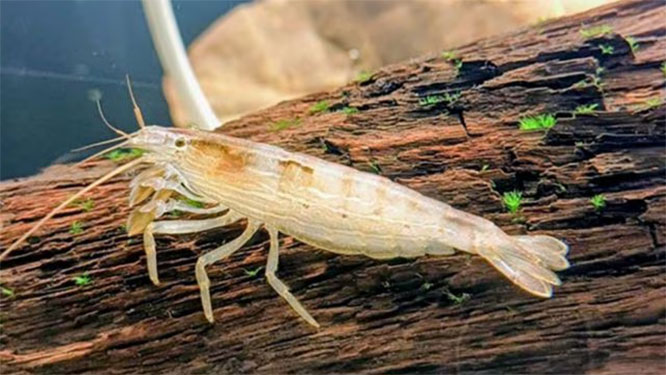
Mangaluru, Dec 7: A rare bamboo shrimp has been rediscovered on mainland India more than 70 years after it was last reported, confirming for the first time the presence of Atyopsis spinipes in the country. The find was made by researchers from the Centre for Climate Change Studies at Sathyabama Institute of Science and Technology, Chennai, during surveys in Karnataka and Odisha.

The team — shrimp expert Dr S Prakash, PhD scholar K Kunjulakshmi, and Mangaluru-based researcher Maclean Antony Santos — combined field surveys, ecological assessments and DNA analysis to identify the elusive species. Their findings, published in Zootaxa, resolve decades of taxonomic confusion stemming from a 1951 report that misidentified the species as Atyopsis moluccensis without strong evidence.

The shrimp has now been confirmed at two locations: the Mulki–Pavanje estuary near Mangaluru and the Kuakhai River in Bhubaneswar. Historical specimens from the Andaman Islands, previously labelled as A. moluccensis, were also found to be misidentified and actually belong to A. spinipes.

The rediscovery began after an aquarium hobbyist in Odisha spotted a shrimp in 2022, prompting systematic surveys across Udupi, Karwar and Mangaluru. Four female specimens were collected in Mulki and one in Odisha, all genetically matching.

Researchers warn the species may exist in very small, vulnerable populations as freshwater habitats face increasing pressure from pollution, sand mining and infrastructure development. All verified specimens have been deposited with the Zoological Survey of India for future reference.

Comments

Add new comment

  • Coastaldigest.com reserves the right to delete or block any comments.
  • Coastaldigset.com is not responsible for its readers’ comments.
  • Comments that are abusive, incendiary or irrelevant are strictly prohibited.
  • Please use a genuine email ID and provide your name to avoid reject.
News Network
December 2,2025

Mangaluru, Dec 2: Mangaluru International Airport responded to a medical emergency late on Monday night. Air India Express flight IX 522, travelling from Riyadh to Thiruvananthapuram, was diverted to Mangaluru Airport after a passenger in his late 30s experienced a medical emergency on board.

The Airport’s Operations Control Centre received an alert regarding the passenger’s health condition. The airport activated its emergency response protocol, mobilising the airport medical team and coordinating with stakeholders including CISF, immigration, and customs. 

Upon landing, airport medical personnel attended to the passenger, assessed his condition, and arranged to shift him to a local tertiary-care hospital for further treatment. The passenger’s relatives accompanied the passenger, who incidentally received necessary medical care on board, which helped stabilise the situation.

Following the handling of the emergency, the flight departed for Thiruvananthapuram at 2:05 am on Tuesday.

"We appreciate the cooperation of all parties involved, and this incident reaffirms our ongoing commitment to prioritising passenger safety and readiness to respond to unforeseen emergencies with professionalism and care," the Airport spokesperson said. 

Comments

Add new comment

  • Coastaldigest.com reserves the right to delete or block any comments.
  • Coastaldigset.com is not responsible for its readers’ comments.
  • Comments that are abusive, incendiary or irrelevant are strictly prohibited.
  • Please use a genuine email ID and provide your name to avoid reject.