Fraud applications: Indian students face ban / restrictions from 5 Australian universities

News Network
April 18, 2023

aus.jpg

At least five Australian universities have placed bans or restrictions on students from some Indian states, amidst a surge in fraudulent applications from South Asia seeking to work – not study – in this country, according to a media report.

Australia is on track for its biggest-ever annual intake of Indian students, topping 2019’s high watermark of 75,000.

But the current surge has prompted concerns from lawmakers and the education sector about the integrity of Australia’s immigration system and the long-term impact on the nation’s lucrative international education market, The Sydney Morning Herald newspaper reported on Tuesday.

“The volume of students arriving has come back a lot stronger than anyone was expecting,” said Jon Chew from global education firm Navitas.

 “We knew there would be a lot of pent-up demand, but there has also been a surge in non-genuine students,” Chew was quoted as saying.

With many applications deemed by universities not to meet Australian visa requirements that they are a “genuine temporary entrant” coming solely for education, universities are putting restrictions in place to pre-empt their “risk rating” being downgraded, the report said.

An investigation by The Age and The Sydney Morning Herald newspapers has obtained emails from within Victoria University, Edith Cowan University, the University of Wollongong, Torrens University, and agents working for Southern Cross University that show the crackdown on applications from Indian students.

Those universities that have restricted access to some Indian states are concerned Home Affairs will reduce their ability to fast-track student visas because of the number of applicants who are actually seeking to work – not study – in Australia.

Perth’s Edith Cowan University in February placed an outright ban on applicants from the Indian states of Punjab and Haryana, then in March, Victoria University increased restrictions on student applications from eight Indian states, including Uttar Pradesh, Rajasthan and Gujarat.

These restrictions came just days after Prime Minister Anthony Albanese visited India, in part to celebrate Australia’s education links and announce a new agreement with Australia’s universities and colleges that would, he said, herald “the most comprehensive and ambitious arrangement agreed to by India with any country”.

Crucially, the agreement included a “mutual recognition of qualifications between Australia and India”, which will make travelling to either country for university study easier.

The University of Wollongong in March also ratcheted up conditions on its “genuine temporary entrant” test on students from India, Nepal, Bangladesh, Pakistan, Lebanon, Mongolia, Nigeria and “other countries deemed a risk (of students not being a genuine temporary entrant) by the Department of Home Affairs”.

A spokeswoman for Adelaide’s Torrens University said it too was “now looking carefully at each area where our applications come from” after the university told The Times Higher Education in March that it was considering only “very strong” applications from Gujarat, Haryana and Punjab, the report added. 

Comments

Add new comment

  • Coastaldigest.com reserves the right to delete or block any comments.
  • Coastaldigset.com is not responsible for its readers’ comments.
  • Comments that are abusive, incendiary or irrelevant are strictly prohibited.
  • Please use a genuine email ID and provide your name to avoid reject.
News Network
January 20,2026

KCFabudhabi.jpg

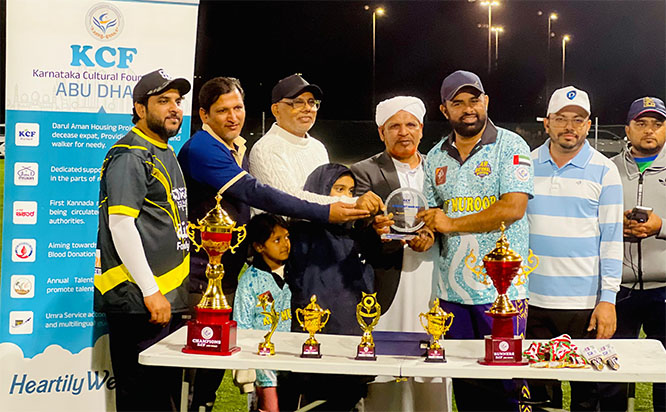
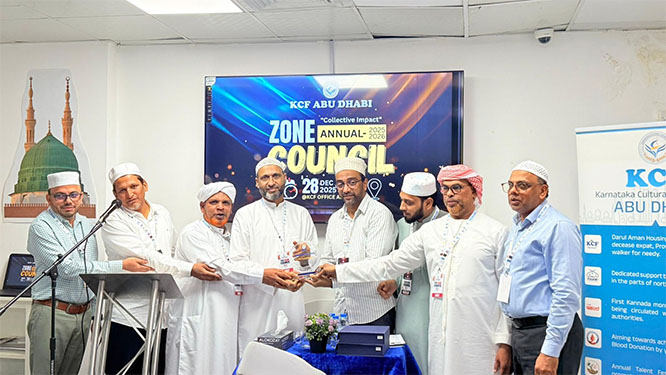
KCF, a global socio-cultural organisation of Karnataka expatriates, is actively involved in education, humanitarian initiatives and community well-being across several countries. The awardees were selected following a structured evaluation of nominations by the Annual Council Program Committee, based on the depth, consistency and long-term impact of their social service.

One of the award recipients, Abdul Razak Haji, a prominent UAE-based entrepreneur from the Qamcon Group of Companies, was honoured for his significant contributions to society. Through both his professional journey and personal initiatives, he has supported numerous employees and families, while also extending assistance in education, housing for the underprivileged and various charitable causes, largely carried out quietly over the years. His award was presented earlier during the Annual Council Program held at the KCF Abu Dhabi office.

The second award was conferred on Latheef Kakkinje, a young social worker based in Abu Dhabi, in recognition of his active involvement in community engagement programmes, sports initiatives, talent festivals and family-oriented social activities. His consistent volunteering efforts and commitment to humanitarian causes were highly appreciated by the selection committee.

The award presentation ceremony for Latheef Kakkinje was held at the Zayed Cricket Stadium (Astro Turf Ground) in the presence of Kedumbady Ibrahim Saqafi, President of KCF UAE; Ibrahim, General Secretary; Kabeer Bayambady, President of KCF Abu Dhabi; Ummer Ishwaramangila, General Secretary; along with other members of the KCF Abu Dhabi cabinet.

Congratulating both awardees, KCF leaders reiterated the organisation’s commitment to recognising individuals who selflessly work for social upliftment and community service.

KCFabudhabi1.jpg

Comments

Add new comment

  • Coastaldigest.com reserves the right to delete or block any comments.
  • Coastaldigset.com is not responsible for its readers’ comments.
  • Comments that are abusive, incendiary or irrelevant are strictly prohibited.
  • Please use a genuine email ID and provide your name to avoid reject.
News Network
January 23,2026

Mangaluru: The Karnataka Government Polytechnic (KPT), Mangaluru, has achieved autonomous status from the All India Council for Technical Education (AICTE), becoming the first government polytechnic in the country to receive such recognition in its 78-year history. The status was granted by AICTE, New Delhi, and subsequently approved by the Karnataka Board of Technical Education in October last year.

Officials said the autonomy was conferred a few months ago. Until recently, AICTE extended autonomous status only to engineering colleges, excluding diploma institutions. However, with a renewed national focus on skill development, several government polytechnics across India have now been granted autonomy.

KPT, the second-largest polytechnic in Karnataka, was established in 1946 with four branches and has since expanded to offer eight diploma programmes, including computer science and polymer technology. The institution is spread across a 19-acre campus.

Ravindra M Keni, the first dean of the institution, told The Times of India that AICTE had proposed autonomous status for polytechnic institutions that are over 25 years old. “Many colleges applied. In the first round, 100 institutions were shortlisted, which was further narrowed down to 15 in the second round. We have already completed one semester after becoming an autonomous institution,” he said. He added that nearly 500 students are admitted annually across eight three-year diploma courses.

Explaining the factors that helped KPT secure autonomy, Keni said the institution has consistently recorded 100 per cent admissions and placements for its graduates. He also noted its strong performance in sports, with the college emerging champions for 12 consecutive years, along with active student participation in NCC and NSS activities.

Autonomous status allows KPT to design industry-oriented curricula, conduct examinations, prepare question papers, and manage academic documentation independently. The institution can also directly collaborate with industries and receive priority funding from AICTE or the Ministry of Education. While academic autonomy has been granted, financial control will continue to rest with the state government.

“There will be separate committees for examinations, question paper setting, boards of studies, and boards of examiners. The institution will now have the freedom to conduct admissions without government notifications and issue its own marks cards,” Keni said, adding that new academic initiatives would be planned after a year of functioning under the autonomous framework.

Comments

Add new comment

  • Coastaldigest.com reserves the right to delete or block any comments.
  • Coastaldigset.com is not responsible for its readers’ comments.
  • Comments that are abusive, incendiary or irrelevant are strictly prohibited.
  • Please use a genuine email ID and provide your name to avoid reject.
News Network
January 31,2026

Roy.jpg

Bengaluru: The shooting incident involving CJ Roy, founder of the Confident Group, has once again put the spotlight on a businessman whose life has swung between flamboyant global success and persistent controversy at home.

Though Roy’s business interests extended across continents, his roots lay firmly in Karnataka. An alumnus of Christ School in Bengaluru, he later moved to Tumakuru to pursue an engineering degree. Those familiar with his early years describe him as intensely ambitious, beginning his career as a salesman at a small electronics firm dealing in computers.

Roy’s entry into large-scale real estate came through the Crystal Group, where he worked closely with Latha Namboothiri and rose from manager to director. However, the launch of the Confident Group in 2005 was clouded by industry speculation. Insiders speak of a fallout involving alleged “benami” properties and claims of deception that ultimately led to his independent venture—an episode Roy spent years trying to distance himself from, according to associates.

A tale of two cities

Roy’s professional trajectory diverged sharply across geographies.

In Dubai, he built a reputation as a bold and efficient developer, completing massive luxury residential projects in record time—some reportedly within 11 months. His rapid project delivery and lavish lifestyle in the Emirates earned him admiration and visibility in the real estate sector.

In Bengaluru, however, his image remained far more fractured. Sources say Roy stayed away from the city for several years amid disputes over unpaid dues to vendors and suppliers. Several projects were allegedly stalled, with accusations of unfulfilled commitments to cement and steel suppliers continuing to follow him.

Roy’s return to Bengaluru’s business and social circles began around 2018, marked by a conscious attempt at rebranding. His appointment as Honorary Consul of the Slovak Republic added diplomatic legitimacy, which he complemented with visible CSR initiatives, including ambulance donations and high-profile charity events.

Heavy police presence in Langford Town

Following the incident, police personnel from the Central division were deployed outside the Confident Group building in Langford Town, which also houses the Slovak Honorary Consulate in Bengaluru.

The otherwise busy premises near Hosur Road wore a deserted look on Friday, reflecting the shock and uncertainty that followed the tragedy.

Comments

Add new comment

  • Coastaldigest.com reserves the right to delete or block any comments.
  • Coastaldigset.com is not responsible for its readers’ comments.
  • Comments that are abusive, incendiary or irrelevant are strictly prohibited.
  • Please use a genuine email ID and provide your name to avoid reject.