



Celebrate I-Day and show us video proof: Yogi’s directive to madarsas

Agencies
August 11, 2017

Lucknow, Aug 11: Uttar Pradesh government's directive to the 'madrasas' (Islamic Schools) to celebrate Independence Day by unfurling the tricolour and recital of National Anthem and National Song has triggered a huge controversy with a section of the Muslim clergy taking umbrage to the directives saying that it was tantamount to calling their patriotism in question.
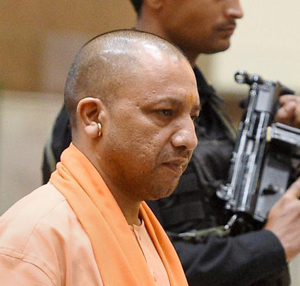
The state government, in a circular issued to all the 'madrasas', directed them to celebrate Independence Day as per the guidelines contained in it.

The 'madrasas' were directed to unfurl the tricolour at 8 in the morning to be followed by the recital of the national anthem and national song. It further directed them to explain to the students the significance of Independence Day followed by a recital of patriotic songs by the students.

The teachers were also directed to tell the students about the contribution of the freedom fighters.

What irked the Muslim clerics most was the directive to conduct videography of the entire program and submit the video, pictures to the concerned government official.

''The directive appears to question the patriotism of the madrasas.....the madrasas had also made a significant contribution to the freedom struggle....it is not proper to cast doubt on their patriotism,'' said the manager of a madrasa in the state capital.

Some school managers also voiced opposition to the singing of 'Vande Mataram'. ''No one should be compelled to sing Vande Mataram....besides we always celebrate Independence Day,'' the manager added.

''Why was such a circular not sent to all the schools?......why only to the madrasas?'' asked a senior Muslim cleric here on Friday.

According to the sources in the government, it was for the first time such a circular had been issued to the 'madrasas'.

UP minister Mohsin Raza, however, defended the circular and said that no one should have any objection to holding programs on the occasion of Independence Day.


Comments

abdulla
 - 
Monday, 14 Aug 2017

Muslims worship allah and don't want to say vandemataram.


Christians worship Jesus only still they do not have problem in singing vandemataram.


Bhudhist worship bhudha only still they do not have problem in singing vandemataram.


Jains worship mahavir only still they do not have problem in singing vandemataram.


why it is only problem for muslim to sing vandemataram.-

Sharief S
 - 
Saturday, 12 Aug 2017


Please everyone try to know, that Islam has codes to follow. Islam  strongly and strictly has to follow the  God’s rule. No human interference is allowed to complement to God’s rules. Islam has 2books. Quran and Hadees  the sayings of the prophet Muhammad (peace upon him PBU)

Muslims are not allowed to introduce new things which are contradictory to Islam.

Because Islam is flexible enough to allow allowable things. These things will suffice the needs. No need to invent the wheels. Islam is purely based on 1God and Message came thru prophet Muhammad PBU.

This is called 1ness of God.  Nothing should be worshipped other than 1 the true God. We worship only the God and we seek all our requirements with this 1God. This is the important message. Anyone contradicting and violating it by worshiping others or  praying others for our requirements is a unforgivable offense which leads to hell fire. it is command to us to be careful of this error.

30% of the teaching of Islam is repeatedly discouraging to worship or attribute others with the God. What a serious teaching we have to be careful of. This is repeated in Quran and hadees. Nothing is allowed even in a minute level to equate into the Quality of the God. This is oneness of God. Things against is called as doing shirk(associating to the God). May the God save us from this error.


1.VANDE MATARAM : We can not sing this song because its meaning contradicts the above oneness of the God.


2. Celebrating other festival      

Muslims are allowed to observe 2eids  (Eid ul Fitr.  This is after end of Ramadan fasting,  2nd is Eid us Adha)

Even we don’t celebrate the birth day of anyone including our prophet.


Patriotism

We are not against national interest. We have to fight for the right of our nation as long as we are not offending others. If required we are commanded  to fight and sacrifice our lives. What a great teaching. Is it in taught in any other books.


So we don’t celebrate even National independence day. No need for celebration but we are ready to sacrifice to defend the nation.


abdul
 - 
Saturday, 12 Aug 2017

Mr bogi , from last year rss nagpur headquartes started hoisting indian flag , from 1947 our madrasas hoisting clelebrating indipendence day , you sangis were with british when indians were fighting for freedom , now its time for indians  to fight against sangh parivar .

Right Ruler
 - 
Friday, 11 Aug 2017

To Yogi and his chela Mohsin: - Do you want the video that I'm Celebrating Ind. Pen Day and Fl-ag hosting in bathroom..........

Mohidin
 - 
Friday, 11 Aug 2017

Mr Yogi's statement is a proof for his trust in minorities, for video recording... Its better to send those Usthads who all attended the MRM meet yesterday in Bantwal constituency.  

Yogi ji could  you please request your headquarters in Nagpur to hoist national flag above RSS's Saffron flag,


Add new comment

  • Coastaldigest.com reserves the right to delete or block any comments.
  • Coastaldigset.com is not responsible for its readers’ comments.
  • Comments that are abusive, incendiary or irrelevant are strictly prohibited.
  • Please use a genuine email ID and provide your name to avoid reject.
News Network
January 23,2026

Karnataka Governor Thaawarchand Gehlot read only three lines from the 122-paragraph address prepared by the Congress-led state government while addressing the joint session of the Legislature on Thursday, effectively bypassing large sections critical of the BJP-led Union government.

The omitted portions of the customary Governor’s address outlined what the state government described as a “suppressive situation in economic and policy matters” under India’s federal framework. The speech also sharply criticised the Centre’s move to replace the Mahatma Gandhi National Rural Employment Guarantee Act (MGNREGA) with the Viksit Bharat–Guarantee for Rozgar and Ajeevika Mission (Gramin) Act, commonly referred to as the VB-GRAM (G) Act.

Governor Gehlot had earlier conveyed his objection to several paragraphs that were explicitly critical of the Union government. On Thursday, he confined himself to the opening lines — “I extend a warm welcome to all of you to the joint session of the State legislature. I am extremely pleased to address this august House” — before jumping directly to the concluding sentence of the final paragraph.

He ended the address by reading the last line of paragraph 122: “Overall, my government is firmly committed to doubling the pace of the State’s economic, social and physical development. Jai Hind — Jai Karnataka.”

According to the prepared speech, the Karnataka government demanded the scrapping of the VB-GRAM (G) Act, describing it as “contractor-centric” and detrimental to rural livelihoods, and called for the full restoration of MGNREGA. The state government argued that the new law undermines decentralisation, weakens labour protections, and centralises decision-making in violation of constitutional norms.

Key points from the unread sections of the speech:

•    Karnataka facing a “suppressive” economic and policy environment within the federal system

•    Repeal of MGNREGA described as a blow to rural livelihoods

•    VB-GRAM (G) Act accused of protecting corporate and contractor interests

•    New law alleged to weaken decentralised governance

•    Decision-making said to be imposed by the Centre without consulting states

•    Rights of Adivasis, women, backward classes and agrarian communities curtailed

•    Labourers allegedly placed under contractor control

•    States facing mounting fiscal stress due to central policies

•    VB-GRAM (G) Act accused of enabling large-scale corruption

Comments

Add new comment

  • Coastaldigest.com reserves the right to delete or block any comments.
  • Coastaldigset.com is not responsible for its readers’ comments.
  • Comments that are abusive, incendiary or irrelevant are strictly prohibited.
  • Please use a genuine email ID and provide your name to avoid reject.
News Network
January 23,2026

oscar.jpg

The Voice of Hind Rajab, inspired by the tragic final moments of a young Palestinian girl killed by Israeli fire in Gaza, has been nominated for an Academy Award in the Best International Feature Film category.

Directed by Tunisian filmmaker Kaouther Ben Hania, the film recounts the true story of five-year-old Hind Rajab, who lost her life in January 2024 while fleeing Israeli bombardment with her family.

The film features the real audio of Hind’s desperate call to the Palestinian Red Crescent Society, where she pleaded for help moments before the vehicle she was in was struck by 355 bullets.

The haunting narrative begins with a brief call made from the besieged Tel al-Hawa neighborhood of Gaza, where gunfire and armored vehicles drowned out every sound.

After witnessing the brutal killing of her family, she made a trembling call, her voice reduced to a whisper as she spoke of the massacre and her unbearable loneliness as the sole survivor.

Premiering at the Venice International Film Festival in September 2025, The Voice of Hind Rajab garnered widespread acclaim, receiving a record-setting 23-minute standing ovation and the Silver Lion Grand Jury Prize, the festival’s second-highest honor.

In her acceptance speech, Ben Hania dedicated the film to humanitarian workers and first responders in Gaza, emphasizing that Hind's voice symbolizes countless civilians affected by war.

She aims to give voice to victims often reduced to mere statistics, highlighting the broader suffering of civilians in war zones.

The film’s Oscar nomination underscores its powerful storytelling and ethical approach to depicting real-life tragedy, making it a crucial piece of contemporary cinema.

It serves not only as a narration of individual tragedy but also as an artistic and documentary response to the silence and censorship that often overshadow West Asian struggles and wars.

Using an innovative method she calls docufiction, Ben Hania bridges unvarnished reality and narrative structure, creating a work that is both artistically valuable and socially impactful.

Born in 1977 in Sidi Bouzid—later the epicenter of the Arab revolution—her background profoundly influenced her worldview and artistic approach.

She is a graduate of the Higher School of Audiovisual Arts of Tunis, Pantheon-Sorbonne University, and La Fémis in Paris, where her studies equipped her with the technical and theoretical tools needed to address complex subjects. 

Comments

Add new comment

  • Coastaldigest.com reserves the right to delete or block any comments.
  • Coastaldigset.com is not responsible for its readers’ comments.
  • Comments that are abusive, incendiary or irrelevant are strictly prohibited.
  • Please use a genuine email ID and provide your name to avoid reject.
News Network
January 23,2026

Mangaluru: The Karnataka Government Polytechnic (KPT), Mangaluru, has achieved autonomous status from the All India Council for Technical Education (AICTE), becoming the first government polytechnic in the country to receive such recognition in its 78-year history. The status was granted by AICTE, New Delhi, and subsequently approved by the Karnataka Board of Technical Education in October last year.

Officials said the autonomy was conferred a few months ago. Until recently, AICTE extended autonomous status only to engineering colleges, excluding diploma institutions. However, with a renewed national focus on skill development, several government polytechnics across India have now been granted autonomy.

KPT, the second-largest polytechnic in Karnataka, was established in 1946 with four branches and has since expanded to offer eight diploma programmes, including computer science and polymer technology. The institution is spread across a 19-acre campus.

Ravindra M Keni, the first dean of the institution, told The Times of India that AICTE had proposed autonomous status for polytechnic institutions that are over 25 years old. “Many colleges applied. In the first round, 100 institutions were shortlisted, which was further narrowed down to 15 in the second round. We have already completed one semester after becoming an autonomous institution,” he said. He added that nearly 500 students are admitted annually across eight three-year diploma courses.

Explaining the factors that helped KPT secure autonomy, Keni said the institution has consistently recorded 100 per cent admissions and placements for its graduates. He also noted its strong performance in sports, with the college emerging champions for 12 consecutive years, along with active student participation in NCC and NSS activities.

Autonomous status allows KPT to design industry-oriented curricula, conduct examinations, prepare question papers, and manage academic documentation independently. The institution can also directly collaborate with industries and receive priority funding from AICTE or the Ministry of Education. While academic autonomy has been granted, financial control will continue to rest with the state government.

“There will be separate committees for examinations, question paper setting, boards of studies, and boards of examiners. The institution will now have the freedom to conduct admissions without government notifications and issue its own marks cards,” Keni said, adding that new academic initiatives would be planned after a year of functioning under the autonomous framework.

Comments

Add new comment

  • Coastaldigest.com reserves the right to delete or block any comments.
  • Coastaldigset.com is not responsible for its readers’ comments.
  • Comments that are abusive, incendiary or irrelevant are strictly prohibited.
  • Please use a genuine email ID and provide your name to avoid reject.