



Centre must bear 90 pc cost of Swachch Bharat, says CM

June 25, 2015

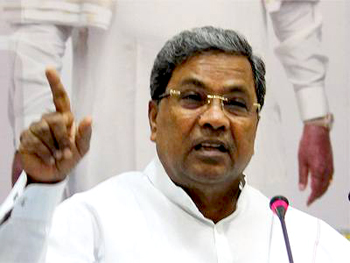
Bengaluru, Jun 25: Chief Minister Siddaramaiah on Wednesday said the Centre should bear 90 per cent of the cost for the Swachh Bharat mission.
sidda
Siddaramaiah’s suggestion was unanimously agreed upon by other members in a sub-group of chief ministers for the Swachh Bharat mission at a meeting of the panel in Bengaluru. Sub-group chairman Andhra Pradesh Chief Minister N?Chandra Babu Naidu said he would convey the opinion of the panel to the Centre soon.

At present, the Centre chips in 75 per cent of the cost of the project, while the states have to bear the balance 25 per cent. For Karnataka, the cost of implementing the mission for the year 2015-16 is Rs 955.76 crore (Central share of Rs 716.82 crore and state share of Rs 238.94 crore).

However, Siddaramaiah said the state’s own revenues would not be enough to meet the challenges under Swachh Bharat. At the same time, levying additional taxes to generate funds may not serve the purpose. “Karnataka is already considered a highly taxed state and it would not be possible to increase tax.... To fulfil the objectives of Swachh Bharat, the project should be declared a Centrally sponsored scheme with funding rates of 90:10 between the Centre and the states,” he said.

Chief Minister Siddaramaiah announced that Bengaluru would soon become the first city in the country where the garbage processing capacity will exceed the waste generated. Siddaramaiah said Bengaluru generated 4,000 tonnes of waste per day (TPD) but would soon have waste processing plants with a capacity of 6,500 tonnes.

Four composting plants of 1,500-TPD capacity on public private partnership (PPP) framework have been functioning in Bengaluru. In addition, six new municipal solid waste processing plants are being set up at a cost of Rs 350 crore to process 2,300 tonnes per day of municipal solid waste.

Two municipal solid waste processing plants have been sanctioned on PPP framework for waste to energy of a capacity of 1,600 tonnes per day. Bio-mechanisation facility of 600 tonnes per day will be taken up under PPP framework, the chief minister said.

Other suggestions

States should be given a free hand in framing rules for regulating the environment

Water and sanitation aspects should be included under Swachh Bharat

Bring changes in National Water Policy incorporating domestic cattle or animal water requirement in rural areas

Comments

Add new comment

  • Coastaldigest.com reserves the right to delete or block any comments.
  • Coastaldigset.com is not responsible for its readers’ comments.
  • Comments that are abusive, incendiary or irrelevant are strictly prohibited.
  • Please use a genuine email ID and provide your name to avoid reject.
News Network
December 7,2025

SHRIMP.jpg

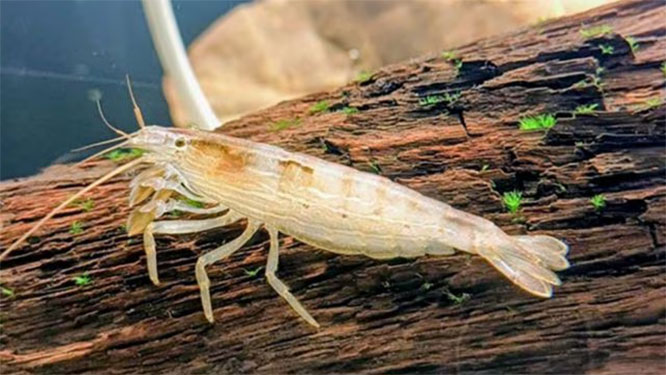
Mangaluru, Dec 7: A rare bamboo shrimp has been rediscovered on mainland India more than 70 years after it was last reported, confirming for the first time the presence of Atyopsis spinipes in the country. The find was made by researchers from the Centre for Climate Change Studies at Sathyabama Institute of Science and Technology, Chennai, during surveys in Karnataka and Odisha.

The team — shrimp expert Dr S Prakash, PhD scholar K Kunjulakshmi, and Mangaluru-based researcher Maclean Antony Santos — combined field surveys, ecological assessments and DNA analysis to identify the elusive species. Their findings, published in Zootaxa, resolve decades of taxonomic confusion stemming from a 1951 report that misidentified the species as Atyopsis moluccensis without strong evidence.

The shrimp has now been confirmed at two locations: the Mulki–Pavanje estuary near Mangaluru and the Kuakhai River in Bhubaneswar. Historical specimens from the Andaman Islands, previously labelled as A. moluccensis, were also found to be misidentified and actually belong to A. spinipes.

The rediscovery began after an aquarium hobbyist in Odisha spotted a shrimp in 2022, prompting systematic surveys across Udupi, Karwar and Mangaluru. Four female specimens were collected in Mulki and one in Odisha, all genetically matching.

Researchers warn the species may exist in very small, vulnerable populations as freshwater habitats face increasing pressure from pollution, sand mining and infrastructure development. All verified specimens have been deposited with the Zoological Survey of India for future reference.

Comments

Add new comment

  • Coastaldigest.com reserves the right to delete or block any comments.
  • Coastaldigset.com is not responsible for its readers’ comments.
  • Comments that are abusive, incendiary or irrelevant are strictly prohibited.
  • Please use a genuine email ID and provide your name to avoid reject.