



China pushes India to the wall on Brahmaputra

August 8, 2015

New Delhi, Aug 8: On July 30, the usually combative Uma Bharti, the union minister for water resources, exhibited a diffident demeanor in the Lok Sabha when she gave out that China may construct three more hydropower projects on the Brahmaputra in Tibet (called Yarlung Tsangpo there) under its recently announced 12th Five Year Plan.
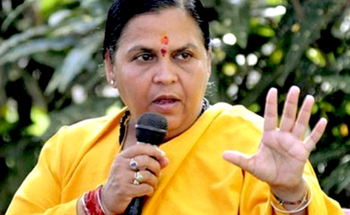
UmaBharti
The minister added two other important facts. First, she indicated that an earlier such power project at Zangmu, other than the proposed three, is a run-of-the-river type. Secondly their effects and significance cannot be judged at the moment due to non-availability of data.

The minister's statement, instead of clearing the air of confusion and apprehension, is however likely to cause more doubts. There is an existing agreement between India and China which covers exchange of hydrological data between the two countries on the Brahmaputra. Has this agreement fallen into disuse? Secondly, the said projects being run-of-the-river type does not hold out any assurance because even these types of projects entail creation of storage dams.

The aforementioned hydro power projects will be located at Dagu, Jiexu and Jiacha, all in the middle reaches of the Brahmaputra. Another one at a place called Zangmu, whose existence was long denied by China but ultimately conceded in 2010 after repeated Indian protestations, has already been partly commissioned. In spite of Uma Bharti's apparent calm and nonchalance in the Lok Sabha, doubt persists in New Delhi's corridors of power. During the time of the previous UPA government it was decided that the ministries of defence, external affairs and the department of space would take up the matter jointly with China. Was it really done? An answer is necessary.

Ominous warnings are close at hand. On March 1, 2012, the river Siang (the local name of the Brahmaputra in Arunachal Pradesh) had run completely dry at a place called Pasighat where it normally used to be very wide. Although the river picked up momentum later on, it has not yet attained its former virility.

Moreover, all the four hydro projects will be situated very close to each other and this complicates the matter further as large amounts of water will be stored within a narrow geographical expanse leading to the possibility of depriving northeastern India of not only water but also the much-needed silt which makes the Assam plains fertile. There may also be floods in the region if China decides to arbitrarily release water from these dams during the monsoon.

How many hydroelectric dams has China been constructing in Tibet? There is a great divergence of opinion on the matter. Some say the number adds up to more than 100. However Jana Jagriti, an Assam based NGO, thinks that 26 are coming up. According to its estimate, Assam will get 64 percent less water during the monsoon season and 85 percent less water during in the rest of the year due to China's dam building activities.

But the real cause of concern for India is the widespread report that China would construct a giant hydro power project at a place called Medog which is very near the Great Bend, a great U turn which the mighty Brahmaputra takes before entering India after a 2,000-metre fall. It is slated to generate 38-49 gigawatts of electricity, which is more than India's installed hydro capacity of 33 gigawatts. If it materializes, the dam will be twice as big as the Three Gorges Dam on the Yangtze river. That China is serious about the Medog plant is borne out by the development and upgradation of the Bome-Medog highway, a kind of infrastructural development which generally precedes beginning of such projects. There are reports that China has constructed two huge water reservoirs at the Great Bend area with storage capacities of 42 million and 31 million cubic metres.

All these projects are situated in an earthquake-prone area and very close to the geological fault line where the Indian Plate collides with the Eurasian Plate. According to many experts, the massive earthquake in 2008 breaching parts of the Three Gorges Dam was caused by the stupendous weight of water of the nearby Zipingpu Dam which was just half-a-kilometre from the geological fault line. If such a catastrophe occurs again, vast areas of Assam and Arunachal Pradesh will go under water.

The crux of the problem is that there is no water sharing treaty between India and China covering trans-national rivers and using the international law that existing usage of water will determine respective shares of countries, Beijing has pushed New Delhi to the wall. India has only itself to blame.

Comments

Rufus
 - 
Tuesday, 26 Jan 2016

I seriously love your site.. Very nice coors & theme.
Diid you develop this website yourself? Please reply back aas I'm wanting too
create my own blog and want to know where yyou got this from or just what thee theme is named.
Many thanks!

my web page: Replace Me Please: http://home.Dddxs.com/space.php?uid=8243&do=blog&id=1668

Add new comment

  • Coastaldigest.com reserves the right to delete or block any comments.
  • Coastaldigset.com is not responsible for its readers’ comments.
  • Comments that are abusive, incendiary or irrelevant are strictly prohibited.
  • Please use a genuine email ID and provide your name to avoid reject.
News Network
December 6,2025

indigoticket.jpg

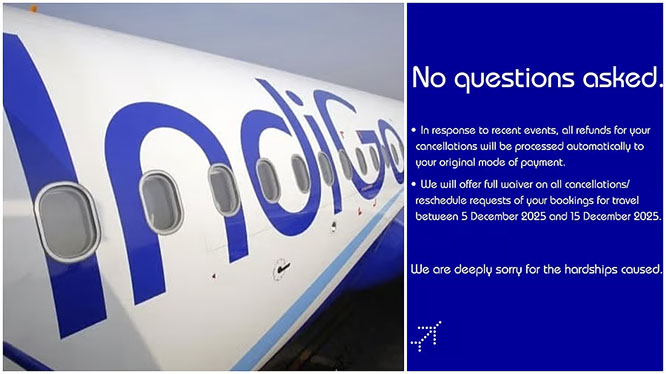
With IndiGo flight disruptions impacting thousands of passengers, the airline on Saturday said that it will offer full waiver on all cancellations/reschedule requests for travel bookings between December 5, 2025 and December 15, 2025.

Earlier in the day, the civil aviation ministry had directed the airline to complete the ticket refund process for the cancelled flights by Sunday evening, as well as ensure baggage separated from the travellers are delivered in the next two days.

In a post on X, titled 'No questions asked', IndiGo wrote, "In response to recent events, all refunds for your cancellations will be processed automatically to your original mode of payment."

"We are deeply sorry for the hardships caused," it further added.

Several passengers, however, complained of not getting full refund as promised by the airline.

Netizens have shared screenchots of getting charged for airline cancellation fee and convenience fee.

"Please tell me why u have did this airline cancellation charges when u say full amount will be refunded (sic)," a user wrote sharing a screenshot of the refund page.

"Well, but you have still debited the convenience charges," wrote another.

Passengers have also raised concerns about the "cancel" option being disabled on the IndiGo app. "First enable the 'Cancel' button on your App & offer full refund on tickets cancelled by customers between the said dates," wrote a user.

A day after the country's largest airline, IndiGo, cancelled more than 1,000 flights and caused disruptions for the fifth day on Saturday, the ministry said that any delay or non-compliance in refund processing will invite immediate regulatory action.

The refund process for all cancelled or disrupted flights must be completed by 8 pm on Sunday, the ministry said in a statement.

"Airlines have also been instructed not to levy any rescheduling charges for passengers whose travel plans were affected by cancellations," it said.

On Saturday, more than 400 flights were cancelled at various airports.

IndiGo has also been instructed to set up dedicated passenger support and refund facilitation cells.

Comments

Add new comment

  • Coastaldigest.com reserves the right to delete or block any comments.
  • Coastaldigset.com is not responsible for its readers’ comments.
  • Comments that are abusive, incendiary or irrelevant are strictly prohibited.
  • Please use a genuine email ID and provide your name to avoid reject.
News Network
December 13,2025

New Delhi: School-going children are picking up drug and smoking habits and engaging in consumption of alcohol, with the average age of introduction to such harmful substances found to be around 13 years, suggesting a need for earlier interventions as early as primary school, a multi-city survey by AIIMS-Delhi said.

The findings also showed substance use increased in higher grades, with grade XI/XII students two times more likely to report use of substances when compared with grade VIII students. This emphasised the importance of continued prevention and intervention through middle and high school.

The study led by Dr Anju Dhawan of AIIMS's National Drug Dependence Treatment Centre, published in the National Medical Journal of India this month, looks at adolescent substance use across diverse regions.

The survey included 5,920 students from classes 8, 9, 11 and 12 in urban government, private and rural schools across 10 cities -- Bengaluru, Chandigarh, Delhi, Dibrugarh, Hyderabad, Imphal, Jammu, Lucknow, Mumbai, and Ranchi. The data were collected between May 2018 and June 2019.

The average age of initiation for any substance was 12.9 (2.8) years. It was lowest for inhalants (11.3 years) followed by heroin (12.3 years) and opioid pharmaceuticals (without prescription; 12.5 years).

Overall, 15.1 per cent of participants reported lifetime use, 10.3 per cent reported past year use, and 7.2 per cent reported use in the past month of any substance, the study found.

The most common substances used in the past year, after tobacco (4 per cent) and alcohol (3.8 per cent), were opioids (2.8 per cent), followed by cannabis (2 per cent) and inhalants (1.9 per cent). Use of non-prescribed pharmaceutical opioids was most common among opioid users (90.2 per cent).

On being asked, 'Do you think this substance is easily available for a person of your age' separately for each substance category, nearly half the students (46.3 per cent) endorsed that tobacco products and more than one-third of the students (36.5 per cent) agreed that a person of their age can easily procure alcohol products.

Similarly, for Bhang (21.9 per cent), ganja/charas (16.1 per cent), inhalants (15.2 per cent), sedatives (13.7 per cent), opium and heroin (10 per cent each), the students endorsed that these can be easily procured.

About 95 per cent of the children, irrespective of their grade, agreed with the statement that 'drug use is harmful'.

The rates of substance use (any) among boys were significantly higher than those of girls for substance use (ever), use in the past year and use in the past 30 days. Compared to grade VIII students, grade IX students were more likely, and grade XI/XII students were twice as likely to have used any substance (ever).

The likelihood of past-year use of any substance was also higher for grade IX students and for grade XI/XII students as compared to grade VIII students.

About 40 per cent of students mentioned that they had a family member who used tobacco or alcohol each. The use of cannabis (any product) and opioid (any product) by a family member was reported by 8.2 per cent and 3.9 per cent of students, respectively, while the use of other substances, such as inhalants/sedatives by family was 2-3 per cent, the study found.

A relatively smaller percentage of students reported use of tobacco or alcohol among peers as compared to among family members, while a higher percentage reported inhalants, sedatives, cannabis or opioid use among peers.

Children using substances (past year) compared to non-users reported significantly higher any substance use by their family members and peers.

There were 25.7 per cent students who replied 'yes' to the question 'conflicts/fights often occur in your family'. Most students also replied affirmatively to 'family members are aware of how their time is being spent' and 'damily members are aware of with whom they spend their time'.

Comments

Add new comment

  • Coastaldigest.com reserves the right to delete or block any comments.
  • Coastaldigset.com is not responsible for its readers’ comments.
  • Comments that are abusive, incendiary or irrelevant are strictly prohibited.
  • Please use a genuine email ID and provide your name to avoid reject.