



Aksu, China, Aug 25: Outside a mosque in China's restive west, a government-appointed Muslim cleric was dodging a foreign reporter's question about why young men of the Uighur ethnic minority don't have beards when one such youth interrupted.
"Why don't you just tell them the truth?" he shouted to the cleric under the nervous gaze of several police officers who had been tailing the reporters all day in the oasis city of Aksu. "It's because the government doesn't allow beards."
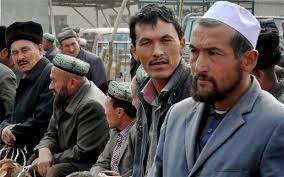
A plainclothes Uighur policeman swiftly rebuked the young man. "Be careful what you say," he warned.
The tense exchange provided a fleeting glimpse of both the extremes of China's restrictions on minority Uighurs and the resentment that simmers beneath the surface in their homeland. Such a mood pervades Xinjiang's south, a vast, mainly rural region that's become a key battleground in the ruling Communist Party's struggle to contain escalating ethnic violence that has killed at least a few hundred people over the past 18 months.
The personal matter of facial hair has taken on heavy political overtones in the Uighur heartland. Also proscribed are certain types of women's headscarves, veils and "jilbabs," loose, full-length garments worn in public. Such restrictions are not new but their enforcement has intensified this year.
In a recent sweep of Urumqi, the region's capital, authorities last week said they seized 1,265 hijab-type headscarves, 259 jilbabs and even clothes printed with Islamic star-and-crescent symbols. Officials also arrested 82 children from studying the Quran, the sources said.
The prohibitions on Islamic attire and beards have attracted widespread criticism, with many experts saying such repression angers ordinary Uighurs.
"It's a self-fulfilling prophecy, it's self-perpetuating. The more they crack down on it, the more people re-Islamize. This is a pattern we see all over the world," said Joanne Smith Finley, an expert on Uighurs at Britain's Newcastle University. "The Chinese state has stimulated an Islamic renewal where there wouldn't necessarily have been one."
Authorities are targeting beards, veils and other symbols of religious piety in a campaign that creeps ever farther into Uighurs' daily lives despite official claims that the government respects religious freedom.
"At the moment, we face a very serious, intense and complex situation with fighting terrorism and maintaining stability," a party newspaper, the Xinjiang Daily, said in an edict to "front-line" minority cadres in late July. Officials, it said, must also act to control weddings without singing and dancing and funerals where there are no feasts — referring to Uighur customs the government says Islamic conservatives have barred.
Young Uighur men are discouraged from keeping beards and those who have them are stopped at checkpoints and questioned. So are women who wear Muslim headscarves and veils that obscure their faces. Some public places such as hospitals bar such individuals from entering. Earlier this month, the northern Xinjiang city of Karamay announced that young men with beards and women in burkas or hijabs would not be allowed on public buses.
In the city of Aksu, Ma Yanfeng, the director of the city's foreign propaganda office, said the government was concerned that Uighurs were being unduly influenced by radical Islamic forces from overseas.
"It's because they have been incited by others to do so," Ma said, noting that traditional dress of Uighur women is multicolored. "Those clothes that are all black are a sign of influence from foreigners like in Turkey and have to do with extremist thinking."
Unlike in Saudi Arabia, Afghanistan or parts of South Asia, veils and abayas are relatively new to Uighurs in Xinjiang, only growing in popularity in recent decades, scholars say.
Uighur historically have used "ikat" textiles with bold patterns and brilliant colors, an aesthetic they share with Uzbeks, Tajiks and other Central Asian cultures. Contemporary Uighur women, especially those in cities, dress like other urbanites though they aren't likely to bare a lot of skin.
Uighurs have been adopting veils and beards in a shift toward more pious lives, partly as symbolic resistance to Chinese rule and partly out of a desire for the egalitarianism associated with Islam to mend social inequalities, said Smith Finley, the Newcastle expert who has studied Uighurs since 1991.
The shift is also in reaction to dashed hopes for independence after bloody riots in 1997 and the ensuing crackdown, she said.
Some Uighurs see their current plight as punishment from God for not being good enough Muslims. They think "if I'm a better Muslim, then the Uighurs as a whole will be better Muslims and our future, our situation, will be better," she said.
Chinese authorities apparently make little distinction between these expressions of piety and the kind of extremism that poses a threat to society.
In May, police in the county of Luntai raided women's dress shops and confiscated jilbabs. A photo on the local government's website showed four male police officers at a shop examining textiles while a woman in a black jilbab, likely a shop assistant or owner, stood in the background watching.
The rubber-stamp legislature in the southern prefecture of Turpan says on its website it is considering a law to impose fines of up to 500 yuan ($80) for wearing veils and cloaks in public. The legislature says the law would help safeguard social stability, cultural security and gender equality and even protect health — because, the proposal says, burkas deprive skin of sunlight and can cause heatstroke in summer.
Elsewhere, officials have been rounding up dozens of Uighur women to attend indoctrination sessions and to trade their jilbabs and veils for traditional Uighur silk dresses.
"After today's ideological education, I now understand that the jilbab is not our ethnic group's traditional attire, and I recognize that veils and wearing jilbabs is incompatible with Islamic culture and is a backward and bad practice," a woman named Ayiguli Bake was quoted by a local party-run newspaper as saying in a scripted fashion.
But on the streets of Kuqa and Aksu, many women could be seen wearing headscarves that covered their necks, though black cloaks were nowhere in sight and in most instances only elderly men had beards.
Chinese officials probably are targeting outward manifestations of piety because they cannot "fundamentally alter people's inner states," said Gardner Bovingdon, a Xinjiang expert at Indiana University.
"I can't make you stop admiring a more rigorous, scriptural Islam, but I can make you shave off that beard, I can make you take off that scarf," Bovingdon said. "So that's what I'll do."
The authorities' heavy hand has reportedly sparked protests. In the rural town of Alaqagha, 40 kilometers (25 miles) south of Kuqa, police fired into a crowd in May when villagers violently protested the detention of women and girls for wearing headscarves and Islamic robes, according to the U.S. government-funded broadcaster Radio Free Asia.
On a recent evening in Alaqagha, rows of surveillance cameras perched atop street lights watched residents breaking their fasts at a small outdoor market. Pistol-carrying police who were trailing Associated Press journalists kept an eye on the villagers, who included women with headscarves shopping at donkey-drawn fruit carts.
"It's the state's way of saying 'we don't trust you, we see your religion as being something that's inherently of concern to us,'" said Sophie Richardson, China director at Human Rights Watch. "'We are going to treat it as fundamentally problematic behavior, not as the basic right that it is.'"

Comments
Add new comment