CJI sets up 5-judge constitution bench to hear major issues

Agencies
January 16, 2018

New Delhi, Jan 16: Amid a virtual rift between the Chief Justice Dipak Misra and four senior-most judges over assignment of important cases, the Supreme Court on Monday announced the composition of a 5-judge constitution bench headed by the CJI, which does not include them.

None of the four judges — Justices J Chelameswar, Ranjan Gogoi, M B Lokur and Kurian Joseph, feature in the list of members of the 5-judge constitution bench.

As per official information, the 5-judge bench, comprising Chief Justice Dipak Misra, Justice A K Sikri, Justice A M Khanwilkar, Justice D Y Chandrachud and Justice Ashok Bhushan, will commence the hearing on a range of crucial matters from January 17.

Meanwhile, court sources said it was not confirmed whether the CJI on Monday met the four judges who had hurled accusations against him at their controversial press conference on January 12.

As per the list of business for Tuesday, the 5-judge bench will hear major cases such as those challenging the constitutional validity of the Aadhaar Act and its 2013 judgment re-criminalising gay sex between consenting adults.

The same combination of judges had last year heard various constitution bench matters from October 10, including the power tussle between the Centre and the Delhi government over administrative jurisdiction and a matter relating to passive euthanasia.

This bench would also hear the contentious issue of the ban on the entry of women between 10 and 50 years of age in Kerala's Sabarimala temple and resume hearing a legal query on whether a Parsi woman would lose her religious identity if she marries a man from a different religion.

Another contentious matter relates to the challenge to the validity of a penal law on adultery, which only punishes a married man for having an extra-marital sexual relationship with a woman married to someone else.

The other issues to be dealt with by constitution bench include the pleas, which have raised a question as to when will a lawmaker, facing criminal trial, stand disqualified.

All these matters were earlier referred to larger benches for adjudication by different benches of the apex court.

The daily list of business for tomorrow shows that the two PILs seeking probe into Loya's death are listed before a bench headed by Justice Arun Mishra, against whom aspersions were cast by a senior advocate in public.

In their unprecedented press conference on Friday, the four senior judges of the apex court had mounted a virtual revolt against the CJI, listing a litany of problems, including the assignment of cases. They had also raised questions over listing of PILs concerning Loya's death.

An office bearer of the Supreme Court Bar Association (SCBA) said a copy of their resolution was submitted by its president Vikas Singh to the CJI yesterday, but have not heard anything from the top court as yet.

Singh had expressed hope that all judges of the apex court would consider the SCBA resolution seeking a full court discussion to defuse the crisis plaguing the higher judiciary.

The SCBA, at an emergency meeting on Saturday, had passed the resolution expressing grave concern over the differences of four senior-most judges with the CJI.

It had said that all public interest litigation (PIL) matters, including the pending PILs, should be either taken up by the CJI or be assigned for adjudication to four senior judges who are part of the apex court collegium.

Comments

s
 - 
Tuesday, 16 Jan 2018

what about triple talaq that also looks like handiwork of BJP/RSS

Add new comment

  • Coastaldigest.com reserves the right to delete or block any comments.
  • Coastaldigset.com is not responsible for its readers’ comments.
  • Comments that are abusive, incendiary or irrelevant are strictly prohibited.
  • Please use a genuine email ID and provide your name to avoid reject.
News Network
November 22,2025

gaza.jpg

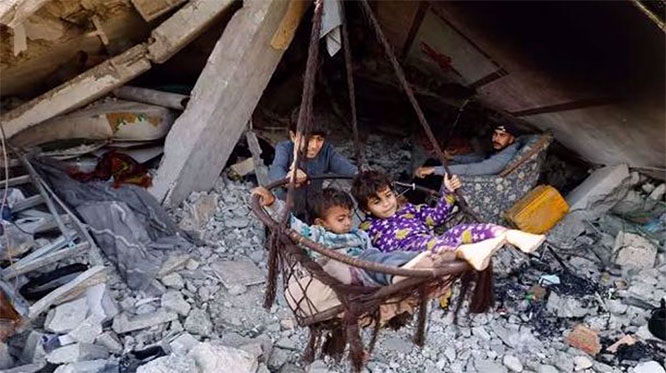
The Israeli regime’s forces have killed two Palestinian children in the Gaza Strip every day since the ceasefire began in early October, UNICEF has warned.

The UN children’s agency said on Friday that Israeli forces continue to attack Palestinians in Gaza even though the agreement was meant to stop the killing.

“Since 11 October, while the ceasefire has been in effect, at least 67 children have been killed in conflict-related incidents in the Gaza Strip. Dozens more have been injured. That is an average of almost two children killed every day since the ceasefire took effect,” UNICEF spokesperson Ricardo Pires said in Geneva, reminding that each number in the statistics represents a child whose life had ended violently.

“These are not statistics,” he said. “Each child had a story, a family, and a future that was stolen from them.”

Data from Palestinian factions, human rights groups, and government bodies recorded since the US-brokered ceasefire deal went into effect on October 10 show that Israeli forces have carried out numerous attacks, each constituting a separate ceasefire violation.

UNICEF teams say they repeatedly continue to witness heart-wrenching scenes of fearful Palestinian children sleeping outdoors with amputated limbs, while others live as orphans in flooded, makeshift shelters.

“I saw this myself in August. There is no safe place for them. The world cannot normalize their suffering,” Pires said, lamenting that the UN could “do a lot more if the aid that is really needed was entering faster.”

The UNICEF spokesperson warned that with the advent of winter, the risks for hundreds of thousands of displaced children will increase.

He warned, “The stakes are incredibly high” for children as winter acts as a threat multiplier, where children have no heating, no insulation, and few blankets. He said respiratory infections rise.

“Too many children have already paid the highest price,” Pires said. “Too many are still paying it, even under a ceasefire. The world promised them it would stop and that we would protect them.”

“Now we must act like it,” the UNICEF spokesperson added.

Since the Israeli regime launched its genocidal war against Palestinians in Gaza in October 2023, it has killed nearly 70,000 people in the territory, most of them women and children, and injured over 170,000 more, while reducing most of the structures in the enclave to rubble.

Comments

Add new comment

  • Coastaldigest.com reserves the right to delete or block any comments.
  • Coastaldigset.com is not responsible for its readers’ comments.
  • Comments that are abusive, incendiary or irrelevant are strictly prohibited.
  • Please use a genuine email ID and provide your name to avoid reject.
News Network
November 27,2025

siddDKS.jpg

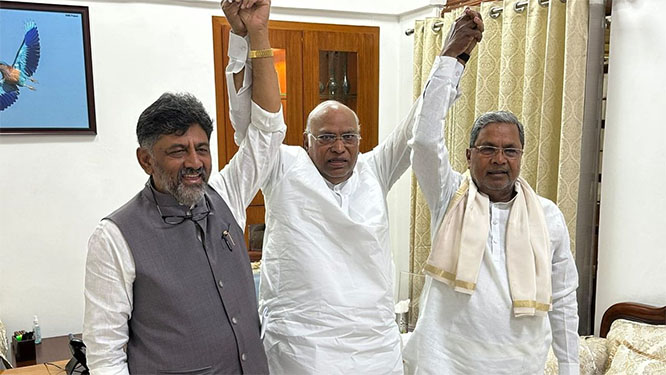
Congress president Mallikarjun Kharge on Thursday announced that he will convene a high-level meeting in New Delhi with senior leaders — including Rahul Gandhi, Karnataka Chief Minister Siddaramaiah and Deputy Chief Minister D.K. Shivakumar — to resolve the escalating leadership turmoil in Karnataka and “put an end to the confusion.”

Kharge said the discussions would focus on the way forward for the ruling party, as rumours of a possible leadership change continue to swirl. The speculation has intensified after the Congress government crossed the halfway mark of its five-year term on November 20, reviving talk of an alleged 2023 “power-sharing agreement” between Siddaramaiah and Shivakumar.

“After reaching Delhi, I will call three or four important leaders and hold discussions. Once we talk, we will decide how to move ahead and end this confusion,” Kharge told reporters in Bengaluru, according to PTI.

When asked specifically about calling Siddaramaiah and Shivakumar to Delhi, he responded: “Certainly, we should call them. We will discuss with them and settle the issue.”

He confirmed that Rahul Gandhi, the Chief Minister, the Deputy Chief Minister and other senior members would be part of the deliberations. “After discussing with everyone, a decision will be made,” he said.

Meanwhile, Siddaramaiah held a separate strategy meeting at his Bengaluru residence with ministers and leaders seen as his close confidants, including G. Parameshwara, Satish Jarkiholi, H.C. Mahadevappa, K. Venkatesh and K.N. Rajanna.
Signalling calm, the Chief Minister told reporters, “Will go to Delhi if the high command calls.”

Shivakumar echoed a similar stance, saying he too would head to the national capital if summoned by the party leadership.

Comments

Add new comment

  • Coastaldigest.com reserves the right to delete or block any comments.
  • Coastaldigset.com is not responsible for its readers’ comments.
  • Comments that are abusive, incendiary or irrelevant are strictly prohibited.
  • Please use a genuine email ID and provide your name to avoid reject.
News Network
December 6,2025

pilot.jpg

New Delhi: IndiGo, India’s largest airline, faced major operational turbulence this week after failing to prepare for new pilot-fatigue regulations issued by the Directorate General of Civil Aviation (DGCA). The stricter rules—designed to improve flight safety—took effect in phases through 2024, with the latest implementation on November 1. IndiGo has acknowledged that inadequate roster planning led to widespread cancellations and delays.

Below are the key DGCA rules that affected IndiGo’s operations:

1. Longer Mandatory Weekly Rest

Weekly rest for pilots has been increased from 36 hours to 48 hours.

The government says the extended break is essential to curb cumulative fatigue. This rule remains in force despite the current crisis.

2. Cap on Night Landings

Pilots can now perform only two night landings per week—a steep reduction from the earlier limit of six.

Night hours, defined as midnight to early morning, are considered the least alert period for pilots.

Given the disruptions, this rule has been temporarily relaxed for IndiGo until February 10.

3. Reduced Maximum Night Flight Duty

Flight duty that stretches into the night is now capped at 10 hours.

This measure has also been kept on hold for IndiGo until February 10 to stabilize operations.

4. Weekly Rest Cannot Be Replaced With Personal Leave

Airlines can no longer count a pilot’s personal leave as part of the mandatory 48-hour rest.

Pilots say this closes a loophole that previously reduced actual rest time.

Currently, all airlines are exempt from this rule to normalise travel.

5. Mandatory Fatigue Monitoring

Airlines must submit quarterly fatigue reports along with corrective actions to DGCA.

This system aims to create a transparent fatigue-tracking framework across the industry.

The DGCA has stressed that these rules were crafted to strengthen flight safety and align India with global fatigue-management standards. The temporary relaxations are expected to remain until February 2025, giving IndiGo time to stabilise its schedules and restore normal air travel.

Comments

Add new comment

  • Coastaldigest.com reserves the right to delete or block any comments.
  • Coastaldigset.com is not responsible for its readers’ comments.
  • Comments that are abusive, incendiary or irrelevant are strictly prohibited.
  • Please use a genuine email ID and provide your name to avoid reject.