Dubai luxury home market soars as world’s rich flee covid

News Network
May 6, 2021

dubai.jpg

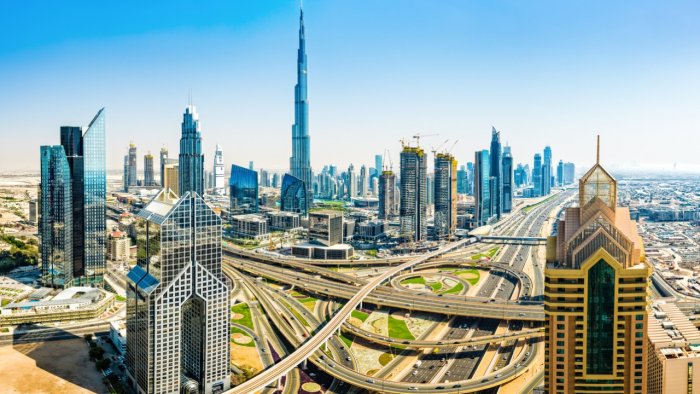
After nearly three decades in London, Christophe Reech was fed up with the city's pandemic lockdowns. This spring, he sold his luxury townhouse and jetted off to the desert sheikhdom of Dubai to start a new life with his family.

There was no turning back, he said. The French business magnate's super wealthy foreign friends were doing the same, driving an unprecedented surge in sales of Dubai's most-exclusive properties.

“Here in Dubai, there's only one strategy: Business as usual,” said Reech, the chairman of an eponymous group that owns real estate and financial technology companies. The philosophy is simple: “Let's make sure everyone's vaccinated and keep everything open."

“Of course that attracts people like me," he said.

As vaccines roll out unevenly worldwide and waves of infections force countries to extend restrictions, foreign buyers flush with cash have flooded Dubai's high-end property market, one of the few places in the world where they can dine, shop and do business in person.

They're snapping up record numbers of luxury villas and penthouses, sending prices rocketing in this boom-and-bust market.

Sales of Dubai's upscale properties, once slow, soared 230 per cent in the first quarter of 2021, compared to the same period last year.

Prices in some top-end areas rose as much as 40 per cent, according to Property Finder, the country's largest real-estate website.

A record-breaking 90 properties worth 10 million dirhams each (USD 2.7 million) changed hands last month, on top of 84 in March, surpassing heights hit eight years ago, according to real estate consultancy Property Monitor. For comparison, there were 54 such transactions in all of 2020.

"Tons of people are coming in and buying multimillion dollar properties on the spot, with no due diligence time whatsoever,” said Matthew Cooke, a partner at consultancy Knight Frank, who manages penthouse sales on Dubai's Palm Jumeirah artificial archipelago.

As with previous cycles, cash buyers started snatching up homes at bargain prices and flipping them for profits. Analysts say that will continue until prices rise too high and returns diminish.

How long the craze lasts and what awaits the skyscraper-studded city then remains unclear. Home prices are still falling in the middle tiers of the city's saturated property market, which has seen values drop sharply since peaks reached seven years ago due to overbuilding.

Average residence sale prices in the Burj Khalifa, the world's tallest building, collapsed to USD 400 per square foot this month from USD 1,300 in 2013.

“The market is going through a boom time ... but people are very aware that Dubai can run too quickly and it all falls apart," said Jackie Johns, partner at Premier Estates, an affiliate of Christie's International Real Estate, referring to the debt-driven crisis that brought the city to its knees in 2008.

The hot streak in the luxury market isn't unique to Dubai, as ultra-low interest rates and families' desire for more space has seen the wealthy in cities like New York and Paris decamp to suburban mansions. But there are other factors at play in the glitzy emirate, home to the long-haul carrier Emirates and tallest tower on Earth.

Since first reopening to tourists last summer, Dubai has pitched itself as the world's pandemic-friendly vacation spot.

With no mandatory dayslong quarantines, foreign visitors now party in Dubai's bustling bars and on its beaches, their selfies at hotel-resorts and helicopter pads stirring resentment back home.

The tourist influx helped drive the country's dramatic surge in coronavirus cases in January, prompting the UK to suspend flights.

But the United Arab Emirates, with its young population and low mortality rates, has fared relatively well during the pandemic.

The country of over 9 million, which relied heavily on the Chinese state-backed Sinopharm vaccine for its inoculation campaign, has administered 10.6 million vaccine doses.

A global financial center known as an oasis in the volatile Middle East, Dubai long has benefitted from capital flight. Homeowners on the Palm Jumeirah — which saw 43 per cent of all April transactions — include Afghan warlords and the political elite from countries like Nigeria, Syria and Lebanon, all searching for a safe place to park their savings.

Comments

Grace
 - 
Tuesday, 18 May 2021

The fewest elders, the lowest dead toll. As simple as that.

Add new comment

  • Coastaldigest.com reserves the right to delete or block any comments.
  • Coastaldigset.com is not responsible for its readers’ comments.
  • Comments that are abusive, incendiary or irrelevant are strictly prohibited.
  • Please use a genuine email ID and provide your name to avoid reject.
coastaldigest.com news network
November 29,2025

health1.jpg

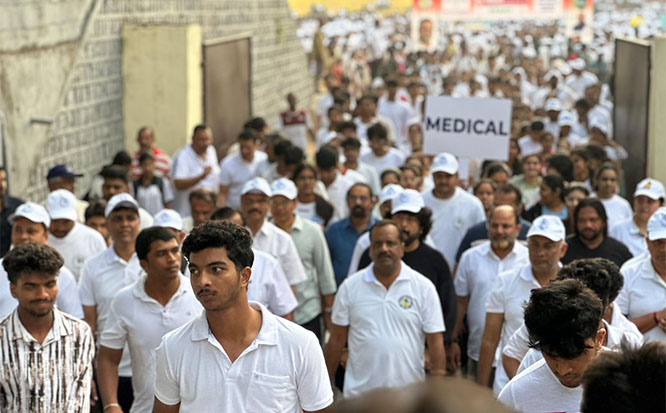
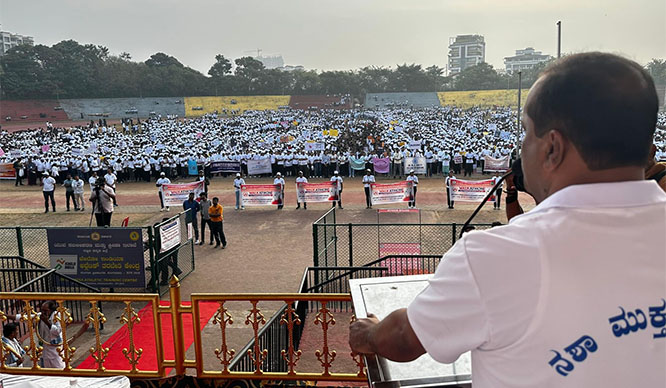
Mangaluru, Nov 29: Around 12,500 healthcare students from Medical, Dental, AYUSH, Pharmacy, Nursing, Physiotherapy and Allied Health Sciences colleges of Dakshina Kannada, affiliated to Rajiv Gandhi University of Health Sciences (RGUHS), took part in a massive walkathon to promote awareness on Organ Donation and Nasha Mukth Bharat.

The inaugural ceremony was held at Mangala Stadium. Dr Bhagavan B C, Hon’ble Vice-Chancellor of RGUHS, delivered the welcome address. The walkathon was flagged off by Shri U T Khader, Hon’ble Speaker of the Karnataka Legislative Assembly, and presided over by Shri Dinesh Gundu Rao, Hon’ble Minister for Health, Family Welfare and Dakshina Kannada District In-charge. Dakshina Kannada MP Shri Brijesh Chowta also addressed the students.

Music director Guru Kiran, MLA Dr Bharat Shetty (Mangalore North), Police Commissioner Shri Sudheer Kumar Reddy, Shri Manjunath Bhandary and Shri Harish Kumar were among those present.

Institution heads including Dr Haji U K Monu (Kanachur Colleges), Dr Shantharam Shetty (Tejaswini College), Dr Bhaskar Shetty (City Group of Colleges), Mr Abdul Rahiman (Kanachur Institute of Medical Sciences), and the District Health Officer, Mangalore, also participated.

The vote of thanks was delivered by Prof U T Ifthikar Fareed, Syndicate Member, RGUHS.

The event was organised by Dr U T Ifthikar Ali and Dr Shiva Sharan (Syndicate Members), Prof Vaishali (Senate Member), Prof Mohammad Suhail (Chairman, BOS Physiotherapy), Dr Sharan Shetty (Former Senate Member), along with principals and faculty of various colleges.

Students marched from Mangala Stadium to Karavali Grounds via MCC and Lalbagh signal. The event set a record as one of the largest gatherings of healthcare students for a social cause in the RGUHS Dakshina Kannada Zone.

health7.jpg

health6.jpg

health5.jpg

health4.jpg

health3.jpg

health2.jpg

Comments

Add new comment

  • Coastaldigest.com reserves the right to delete or block any comments.
  • Coastaldigset.com is not responsible for its readers’ comments.
  • Comments that are abusive, incendiary or irrelevant are strictly prohibited.
  • Please use a genuine email ID and provide your name to avoid reject.
News Network
November 21,2025

israel.jpg

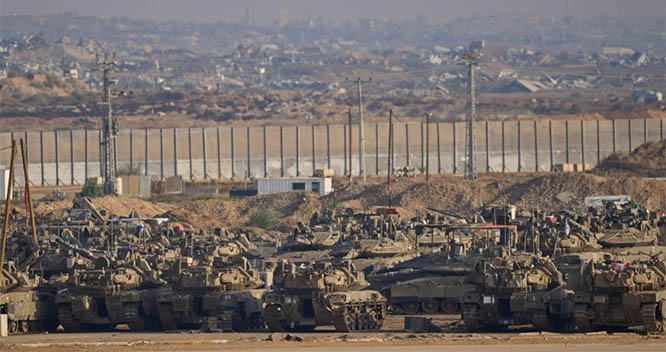
Local authorities say the Israeli military has expanded the so-called “yellow line” truce demarcation in Gaza City and repositioned its forces deeper into the territory in violation of a ceasefire agreement that came into force on October 10, besieging dozens of Palestinian families.

Gaza’s Government Media Office announced in a statement on Thursday that Israeli forces widened the boundary by shifting the markers, and advanced roughly 300 meters (984 feet) into the neighborhoods of Ash-Shaaf, An-Nazzaz and Baghdad Street.

The move pushed further into civilian areas, trapping families who were unable to flee as tanks rolled forward, it added.

“The fate of many of these families remains unknown amidst the shelling that targeted the area,” the office said, adding that the expansion of the yellow line shows a “blatant disregard” for the ceasefire deal.

On Friday, sources said the Israeli military carried out continued air and artillery strikes inside the so-called “yellow line” east of Khan Younis in the southern Gaza Strip.

According to the reports, Israeli warplanes and tanks targeted areas within the zone. One Palestinian was reported killed and several others wounded in the strikes, the sources said.

The fresh aggression came only a day after 25 Palestinians were killed in Israeli airstrikes on Gaza City and Khan Younis on Wednesday.

The media office reported that Israel has consistently violated the truce deal since its implementation last month, with near-daily attacks by air, artillery and direct shootings.

The office said over 400 violations have been documented. These breaches have resulted in the deaths of more than 300 Palestinians and left hundreds injured.

The Government Media Office in Gaza urged the guarantors of the ceasefire — the US, Egypt, Qatar and Turkey — to take swift action to halt the ongoing violations and facilitate the delivery of food, shelter materials, medical aid, and infrastructure equipment.

The so-called “yellow line,” set out in the agreement between Israel and Hamas resistance movement, refers to a non-physical partition where the Israeli military repositioned itself when the truce deal took effect.

It has allowed Israel, which routinely fires at Palestinians who approach the line, to retain control over more than half of the Gaza Strip.

International bodies, including the UN Independent International Commission of Inquiry, the International Association of Genocide Scholars, Amnesty International, Human Rights Watch, B’Tselem, and other rights groups, have concluded that the Israeli war on Gaza amounts to genocide.

In the attacks in Gaza since October 2023, Israel has killed at least 69,546 people and injured 170,833 others, leveling large swaths of the territory and displacing almost all of the population. 

Comments

Add new comment

  • Coastaldigest.com reserves the right to delete or block any comments.
  • Coastaldigset.com is not responsible for its readers’ comments.
  • Comments that are abusive, incendiary or irrelevant are strictly prohibited.
  • Please use a genuine email ID and provide your name to avoid reject.
News Network
December 2,2025

A major upgrade in safety and monitoring is planned for Haj 2026, with every Indian pilgrim set to receive a Haj Suvidha smart wristband linked to the official Haj Suvidha mobile app. The initiative aims to support pilgrims—especially senior citizens—who may struggle with smartphones during the 45-day journey.

What the Smart Wristband Will Do

Officials said the device will come with:
•    Location tracking
•    Pedometer
•    SOS emergency button
•    Qibla compass
•    Prayer timings
•    Basic health monitoring

SP Tiwari, secretary of the UP State Haj Committee, said the goal is to make the pilgrimage safer and more comfortable.

“Most Hajis are elderly and not comfortable with mobile apps,” he said. “The smartwatch will help locate pilgrims who forget their way or cannot communicate their location.”

The wristbands will be monitored by the Consulate General of India in Saudi Arabia, similar to mobile tracking via the Haj Suvidha App.

Free Distribution and Training

•    Smart wristbands will be given free of cost.
•    Training for pilgrims will be conducted between January and February 2026.
•    Sample units will reach state Haj committees soon.
•    Final devices will be distributed as pilgrims begin their journey.

New Rules for Accommodation

Two major decisions have also been finalised for Haj 2026:
1.    Separate rooms for men and women – including married couples. They may stay on the same floor but must occupy different rooms, following stricter Saudi guidelines.
2.    Cooking banned – gas cylinders will not be allowed; all meals will be provided through official catering services arranged by the Haj Committee of India.

These decisions were finalised during a meeting of the Haj Committee of India and state representatives in Mumbai.

Haj Suvidha App Launched Earlier

The government launched the Haj Suvidha App in 2024, offering:

•    Training modules
•    Accommodation and flight details
•    Baggage information
•    SOS and translation tools
•    Grievance redressal

Haj 2026 Quota and Key States

•    India’s total Haj quota for 2026: 1,75,025 pilgrims
•    70% (1,25,000) allotted to the Haj Committee of India
•    30% (around 50,000) reserved for Haj Group Organisers

Uttar Pradesh has the largest allocation (around 30,000 seats), though approximately 18,000 pilgrims are expected to go this year. States with high pilgrim numbers include Kerala, Maharashtra and Gujarat.

Dates of Haj 2026

The pilgrimage is scheduled to take place from 24 May to 29 May, 2026 (tentative).
Haj is one of the five pillars of Islam and is mandatory for Muslims who meet the required conditions.

Comments

Add new comment

  • Coastaldigest.com reserves the right to delete or block any comments.
  • Coastaldigset.com is not responsible for its readers’ comments.
  • Comments that are abusive, incendiary or irrelevant are strictly prohibited.
  • Please use a genuine email ID and provide your name to avoid reject.