All you need to know about Head and Neck Cancer

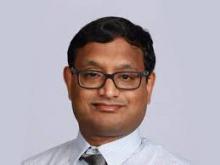
Dr Sashikanth Jonnalagadda 
April 14, 2021

header-head-neck-cancer.jpg

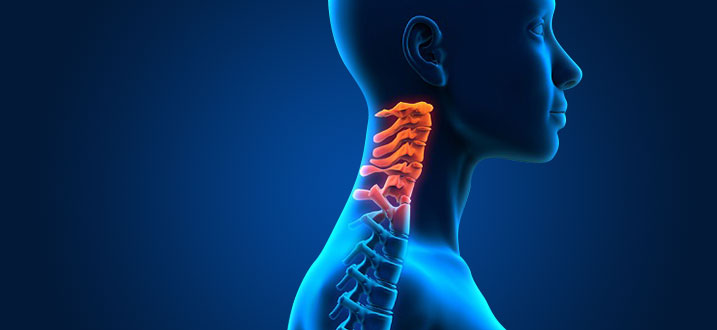
The Head and Neck is a very complex region of the body and consists of several subsites like the Oral Cavity, Oropharynx (Throat), Larynx (voice box), Thyroid, Paranasal Sinuses, and Neck Lymph Nodes. Cancer that occurs in the Oral Cavity (mouth), throat, nose, paranasal sinuses, salivary glands, and other areas of the head and neck are considered Head and Neck cancer.  
  
Squamous cell carcinomas arise in the lining of the mouth, nose, and throat, account for the majority of these cancers.  
  
Because of the widespread use of Tobacco (gutka, pan masala, and betelnut), oral cancers are the most common form of cancer in India and it accounts for roughly 30 percent of all cancers in the body. Oral Cancers and other Head and Neck Cancers are also increased by smoking and alcohol consumption. 
  
Approximately 20 people out of 1,00,000 population are diagnosed with Head and Neck Cancer.  
  
It is very important to pay attention to symptoms such as non-healing ulcers in the mouth or throat, bleeding from mouth or nose, persisting sore throat, breathing or swallowing difficulty, change in voice, and swellings in the neck and face region. 
  
Head and neck tumors affect the patient's ability to chew, swallow, speak and breathe. As a result, early detection of the tumor is critical in order to increase the patient's chances of survival as well as his or her ability to speak and swallow normally during treatment. 
  
Treatment Options 

These symptoms need to be evaluated with a concerned Head and Neck Onco Surgeons who helps patients to make an informed decision about their treatment options.  The first step is to obtain a tissue sample from the affected area, which is done by a biopsy. The type of cancer will be confirmed by Histopathology, which will decide further management. 
 
The next step is staging, which entails deciding how far cancer has spread. It will be obtained by Radiological Imaging such as CT, MRI, and, on rare occasions PET scan. 
 
Cancers can be classified into four stages based on the extent of their spread. Usually, head and neck cancers are treated with surgery followed by adjuvant treatment such as radiation and chemotherapy, if necessary. The tumor and neck nodes are removed during surgery. Plastic surgery procedures are used to reconstruct the shape and function of the removed organ, allowing the patient to appear and function as normally as possible. 
  
After the treatment, the patient is kept on close surveillance for 3 to 5 years with a follow-up with his or her Head and Neck Surgeon. 


By Dr. Sashikanth Jonnalagadda is the Consultant - ENT, Head and Neck Oncology at American Oncology Institute

Comments

Add new comment

  • Coastaldigest.com reserves the right to delete or block any comments.
  • Coastaldigset.com is not responsible for its readers’ comments.
  • Comments that are abusive, incendiary or irrelevant are strictly prohibited.
  • Please use a genuine email ID and provide your name to avoid reject.
News Network
November 26,2025

students.jpg

Bengaluru, Nov 26: Karnataka is taking its first concrete steps towards lifting a three-decade-old ban on student elections in colleges and universities. Deputy Chief Minister D.K. Shivakumar announced Wednesday that the state government will form a small committee to study the reintroduction of campus polls, a practice halted in 1989 following incidents of violence.

Speaking at a 'Constitution Day' event organised by the Karnataka Congress, Mr. Shivakumar underscored the move's aim: nurturing new political leadership from the grassroots.

"Recently, (Leader of the Opposition in Lok Sabha) Rahul Gandhi wrote a letter to me and Chief Minister (Siddaramaiah) asking us to think about restarting student elections," Shivakumar stated. "I'm announcing today that we'll form a small committee and seek a report on this."

Student elections were banned in Karnataka in 1989, largely due to concerns over violence and the infiltration of political party affiliates into campus life. The ban effectively extinguished vibrant student bodies and the pipeline of young leaders they often produced.

Mr. Shivakumar, who also serves as the Karnataka Congress president, said that former student leaders will be consulted to "study the pros and cons" of the re-introduction.

Acknowledging the history of the ban, he added, "There were many criminal activities taking place back then. We’ll see how we can conduct (student) elections by regulating such criminal activities."

The Deputy CM reminisced about his own journey, which began on campus. He recalled his political activism at Sri Jagadguru Renukacharya College leading to his first Assembly ticket in 1985 at the age of 23. "That's how student leadership was at the time. Such leadership has gone today. College elections have stopped," he lamented, adding that for many, college elections were "like a big movement" where leaders were forged.

The move, driven by the Congress high command's push to cultivate young talent, will face scrutiny from academics and university authorities who have, in the past, expressed concern that the return of polls could disrupt the peaceful academic environment and turn campuses into political battlegrounds.

Comments

Add new comment

  • Coastaldigest.com reserves the right to delete or block any comments.
  • Coastaldigset.com is not responsible for its readers’ comments.
  • Comments that are abusive, incendiary or irrelevant are strictly prohibited.
  • Please use a genuine email ID and provide your name to avoid reject.
News Network
December 1,2025

hindutvaboy.jpg

Udupi, Dec 1: A horrific case of alleged rape has unfolded in Udupi, where a worker from a Hindutva organisation, previously arrested and released on bail for harassing a young woman, is now accused of waylaying and sexually assaulting her.

The arrested individual has been identified as Pradeep Poojary (26), a member of the Hindu Jagarana Vedike's Nairkode unit in Perdur.

Poojary had allegedly been relentlessly harassing the young woman, pressuring her to marry him. When she bravely stood up to him and refused his demands, she filed a formal complaint at the Hiriyadka police station. He was subsequently arrested in that initial harassment case but was later granted bail.

According to police reports, driven by the same malicious grudge, Poojary allegedly intercepted the woman again on November 29. While she was walking through a deserted area, the accused is claimed to have threatened her by grabbing her neck. When she again refused to marry him, he allegedly proceeded to rape her.

The survivor immediately informed her family about the traumatic assault. Following this, her parents lodged a complaint at the Udupi women’s police station.

Police arrested Poojary again and produced him before the court. He has since been remanded to judicial custody.

Comments

Add new comment

  • Coastaldigest.com reserves the right to delete or block any comments.
  • Coastaldigset.com is not responsible for its readers’ comments.
  • Comments that are abusive, incendiary or irrelevant are strictly prohibited.
  • Please use a genuine email ID and provide your name to avoid reject.
News Network
November 26,2025

Mangaluru, Nov 26: Mangaluru East police have registered a case following a sophisticated online fraud where a 57-year-old local resident was allegedly cheated out of ₹13.4 lakh after being targeted on Facebook.

The scam began in February when the complainant, while browsing Facebook reels, was contacted by a woman identifying herself as "Lillian Mary George" from London. After establishing a chat relationship, the woman claimed she would visit India in November and bring a significant sum of money.

The trap was sprung on November 15, when the victim received a call from a woman named "Sonali Gupta," who claimed Lillian had arrived at Mumbai International Airport but was detained by customs. The fraudsters convinced the man that Lillian was carrying £25,000 (about ₹26 lakh) in traveller’s cheques and 1 kg of gold (valued at around ₹30 lakh).

Under the pretense of clearing these items, the victim was asked to make numerous online transfers between November 15 and 18 for various bogus charges, including:

•    "Pounds exchange registration"
•    "Customs declaration issues"
•    "Discount charges"
•    "Money-laundering charges"

Believing the fictitious story, the complainant transferred the cumulative sum of ₹13.4 lakh to various bank accounts provided by the fraudsters. He realised he was cheated when the culprits later promised a refund within two days but stopped answering his calls. The Mangaluru East police are now investigating the case, which highlights the continuing threat of transnational cyber fraud using social engineering and promises of fictitious wealth.

Comments

Add new comment

  • Coastaldigest.com reserves the right to delete or block any comments.
  • Coastaldigset.com is not responsible for its readers’ comments.
  • Comments that are abusive, incendiary or irrelevant are strictly prohibited.
  • Please use a genuine email ID and provide your name to avoid reject.