
Breast Cancer Awareness Month: What you need to know about your breast

Dr Pragnya Chigurupati Narra
October 17, 2020

cancer.JPG

The breast is a mass of glandular, fibrous and fatty tissue. It is placed over the pectoral (chest) muscle and attached by ligaments called Cooper’s ligaments. Development of these parts of the breast begin at puberty and are dependent on hormones such as estrogen and progesterone. Women may have many changes in their breast during any point of their life. Some are dependent on their menstrual cycle. Others are linked to birth control pills, hormone replacement therapy, family history or lifestyle changes. Most breast conditions are not cancer. They arise from an abnormality in the normal development and ageing of breast tissue.

October is breast cancer awareness month. In a spirit of raising-awareness, we're giving you a two-part series on breast changes in - 1)Premenopausal women 2)Post-menopausal women

Part 1 - Premenopausal women

Breast pain

The most common complaint amongst younger women is pain linked to the menstrual cycle. This is called “Cyclical mastalgia”. It is almost always due to our hormones (estrogen and progesterone). As the pain does not always affect both the breasts, there might be other causes to pain in a single breast. This type of pain might begin at ovulation and last all though the menstrual cycle. Pain that involves both the breasts and is cyclical is generally not harmful. When the breast pain does not correlate with her menstrual cycle, it is called “Non-cyclical breast pain”. It is advisable to chart the breast pain to understand the link better. The pain might be minimal to so severe that you can’t wear tight clothes or move around freely.

When you experience such pain, wear a good bra with adequate support. Maintaining a healthy lifestyle but limiting alcohol, caffeine and increasing greens in your diet are helpful. Pain killers such as Paracetamol may be taken in recommended doses if the pain is severe. Vitamin E capsules and massaging breasts with EPO (Evening primrose oil) have shown some benefit in patients.

Fibrocystic breast changes

These changes are what you feel in your breast prior to your menstrual cycle, commonly in the third and fourth decades of life.  Breasts may feel heavy, sore or lumpy. These changes occur due to an overdrive of estrogen and a deficiency of progesterone. Although these are not cancerous, having certain pathologically proven lesions of the breast which fall under the “fibrocystic” category increase the risk of cancer three-fold.

Infections

Infections are common in breast feeding mothers, smokers and women with systemic illnesses. They may present with lumps, nipple discharge, pain or fever. It is very important to identify and treat these symptoms which may range from simple medical management to surgical treatment.

Cysts

Women who develop a cyst complain of a sudden development of a lump in the breast overnight. Cysts are fluid filled structures in the breast which occur due to a blocked duct or hormonal changes. They are most commonly benign. However, certain cysts may have a small component of a cancerous or precancerous lesion. They are generally seen in the third or the fourth decades of life.

They can be soft or hard. They may be felt by the hand or seen on imaging with a mammogram. They are generally observed or aspirated with a small needle.

Tumors (Benign)

Fibroadenomas (FA) are benign lumps that occur commonly in younger women, especially teens. They however can occur at any age group. They are mobile and slip when being felt. Women generally feel them when examining their breasts. If they are small and not growing, they maybe observed. However, if they are increasing in size or are symptomatic, simple removal is suggested. They very rarely turn cancerous (Complex fibroadenomas)

Phyllodes tumors are generally seen in the third and fourth decades of life and are prone to growing rapidly, changing the shape of the breast. The treatment is relatively complicated compared to a FA. Based on the nature of the tumor, radiotherapy might be required in certain cases and recurrences are common unless they are removed completely.

Breast Cancer

Currently, in India, the rates of cancer have increased in women between the ages of 25-40. The reasons for this might be lifestyle changes, similar to the West. If women under the age of 35 develop cancers, they tend to have a strong family history of ovarian or breast cancers. It is important to get counselled with a professional genetic counsellor.

Remember that ‘Breast Self-Examination” is the most important technique of identifying early breast diseases.  It has to be done every month. Make sure you reach out to a doctor if you find any abnormality in your breasts.

(This is this first article in a two-part series on breast changes)

Dr Pragnya Chigurupati Narra is a Breast Specialist & Oncoplastic Surgeon at American Oncology Institute

Comments

Add new comment

  • Coastaldigest.com reserves the right to delete or block any comments.
  • Coastaldigset.com is not responsible for its readers’ comments.
  • Comments that are abusive, incendiary or irrelevant are strictly prohibited.
  • Please use a genuine email ID and provide your name to avoid reject.
Agencies
November 22,2025

indiapak.jpg

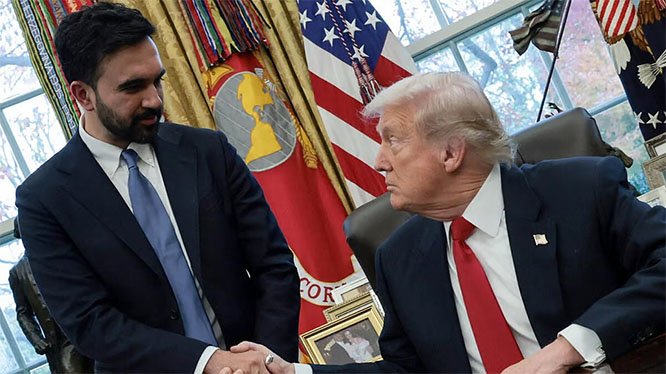
New York/Washington: US President Donald Trump has again claimed to have solved the conflict between India and Pakistan, repeating his assertion during a meeting with New York City Mayor-elect Zohran Mamdani in the Oval Office.

Mamdani flew to Washington DC for his first meeting with Trump in the White House on Friday. Trump said he “enjoyed” the meeting, which he described as “great.”

During remarks in the Oval Office, with Mamdani standing next to him, Trump repeated his claim that he solved the May conflict between India and Pakistan.

"I did eight peace deals of countries, including India and Pakistan,” he said.

On Wednesday, Trump had said he threatened to put 350 per cent tariffs on India and Pakistan if they did not end their conflict, repeating his claim that he solved the fighting between the nuclear-armed neighbours and that Prime Minister Narendra Modi had called him to say “we're not going to go to war.”

Since May 10, when Trump announced on social media that India and Pakistan had agreed to a “full and immediate” ceasefire after a “long night” of talks mediated by Washington, he has repeated his claim over 60 times that he “helped settle” the tensions between India and Pakistan.

India has consistently denied any third-party intervention. India launched Operation Sindoor on May 7, targeting terror infrastructure in Pakistan and Pakistan-occupied Kashmir in retaliation for the April 22 Pahalgam attack that killed 26 civilians. India and Pakistan reached an understanding on May 10 to end the conflict after four days of intense cross-border drone and missile strikes.

Mamdani emerged victorious in the closely-watched battle for New York City Mayor, becoming the first South Asian and Muslim to be elected to sit at the helm of the largest city in the US.

He had been the front-runner in the NYC Mayoral election for months and defeated Republican nominee Curtis Sliwa and political heavyweight former New York State Governor Andrew Cuomo, who ran as an independent candidate and was officially endorsed by Trump just hours before the elections.

Indian-descent Mamdani is the son of renowned filmmaker Mira Nair and Columbia University professor Mahmood Mamdani. He was born and raised in Kampala, Uganda and moved to New York City with his family when he was 7. Mamdani became a naturalised US citizen only recently, in 2018.

Comments

Add new comment

  • Coastaldigest.com reserves the right to delete or block any comments.
  • Coastaldigset.com is not responsible for its readers’ comments.
  • Comments that are abusive, incendiary or irrelevant are strictly prohibited.
  • Please use a genuine email ID and provide your name to avoid reject.
News Network
December 4,2025

Mangaluru: Chaos erupted at Mangaluru International Airport (MIA) after IndiGo flight 6E 5150, bound for Mumbai, was repeatedly delayed and ultimately cancelled, leaving around 100 passengers stranded overnight. The incident highlights the ongoing country-wide operational disruptions affecting the airline, largely due to the implementation of new Flight Duty Time Limitations (FDTL) norms for crew.

The flight was initially scheduled for 9:25 PM on Tuesday but was first postponed to 11:40 PM, then midnight, before being cancelled around 3:00 AM. Passengers expressed frustration over last-minute communication and the lack of clarity, with elderly and ailing travellers particularly affected. “Though the airline arranged food, there was no proper communication, leaving us confused,” said one family member.

An IndiGo executive at MIA cited the FDTL rules, designed to prevent pilot fatigue by limiting crew working hours, as the cause of the cancellation. While alternative arrangements, including hotel stays, were offered, about 100 passengers chose to remain at the airport, creating tension. A replacement flight was arranged but also faced delays due to the same constraints, finally departing for Mumbai around 1:45 PM on Wednesday. Passengers either flew, requested refunds, or postponed their travel.

The Mangaluru delay is part of a broader crisis for IndiGo. The airline has been forced to make “calibrated schedule adjustments”—a euphemism for widespread cancellations and delays—after stricter FDTL norms came into effect on November 1.

While an IndiGo spokesperson acknowledged unavoidable flight disruptions due to technology issues, operational requirements, and the updated crew rostering rules, the DGCA has intervened, summoning senior airline officials to explain the chaos and outline corrective measures.

The ripple effect has been felt across the country, with major hubs like Bengaluru and Mumbai reporting numerous cancellations. The Mangaluru incident underscores the systemic operational strain currently confronting India’s largest carrier, leaving passengers nationwide grappling with uncertainty and delays.

Comments

Add new comment

  • Coastaldigest.com reserves the right to delete or block any comments.
  • Coastaldigset.com is not responsible for its readers’ comments.
  • Comments that are abusive, incendiary or irrelevant are strictly prohibited.
  • Please use a genuine email ID and provide your name to avoid reject.
News Network
November 22,2025

gaza.jpg

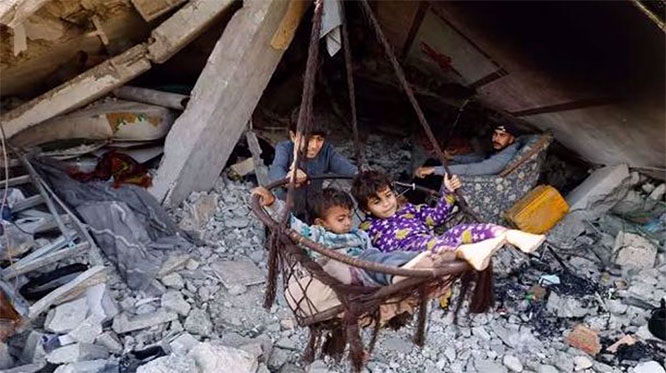
The Israeli regime’s forces have killed two Palestinian children in the Gaza Strip every day since the ceasefire began in early October, UNICEF has warned.

The UN children’s agency said on Friday that Israeli forces continue to attack Palestinians in Gaza even though the agreement was meant to stop the killing.

“Since 11 October, while the ceasefire has been in effect, at least 67 children have been killed in conflict-related incidents in the Gaza Strip. Dozens more have been injured. That is an average of almost two children killed every day since the ceasefire took effect,” UNICEF spokesperson Ricardo Pires said in Geneva, reminding that each number in the statistics represents a child whose life had ended violently.

“These are not statistics,” he said. “Each child had a story, a family, and a future that was stolen from them.”

Data from Palestinian factions, human rights groups, and government bodies recorded since the US-brokered ceasefire deal went into effect on October 10 show that Israeli forces have carried out numerous attacks, each constituting a separate ceasefire violation.

UNICEF teams say they repeatedly continue to witness heart-wrenching scenes of fearful Palestinian children sleeping outdoors with amputated limbs, while others live as orphans in flooded, makeshift shelters.

“I saw this myself in August. There is no safe place for them. The world cannot normalize their suffering,” Pires said, lamenting that the UN could “do a lot more if the aid that is really needed was entering faster.”

The UNICEF spokesperson warned that with the advent of winter, the risks for hundreds of thousands of displaced children will increase.

He warned, “The stakes are incredibly high” for children as winter acts as a threat multiplier, where children have no heating, no insulation, and few blankets. He said respiratory infections rise.

“Too many children have already paid the highest price,” Pires said. “Too many are still paying it, even under a ceasefire. The world promised them it would stop and that we would protect them.”

“Now we must act like it,” the UNICEF spokesperson added.

Since the Israeli regime launched its genocidal war against Palestinians in Gaza in October 2023, it has killed nearly 70,000 people in the territory, most of them women and children, and injured over 170,000 more, while reducing most of the structures in the enclave to rubble.

Comments

Add new comment

  • Coastaldigest.com reserves the right to delete or block any comments.
  • Coastaldigset.com is not responsible for its readers’ comments.
  • Comments that are abusive, incendiary or irrelevant are strictly prohibited.
  • Please use a genuine email ID and provide your name to avoid reject.