Mamata Banerjee: The soldier who trumped BJP war machine

News Network
May 3, 2021

mamatabanargee.jpg

She's the soldier, she the commander and she the army.

The distinction between Mamata Banerjee the leader and TMC the party evaporated into nothingness as she conquered West Bengal fighting the BJP's election war machine led by Prime Minister Narendra Modi and Home Minister Amit Shah almost single-handedly.

The victory for Banerjee, by far the biggest mass leader since the redoubtable Jyoti Basu who ruled West Bengal with an iron fist from 1977 to 2000, will not only help fortify her position in the state but also enhance her standing at the national level where voices from the opposition are getting feeble with time.

A masterful practitioner of modern-day politics, she has wielded considerable influence beyond her own state, in the corridors of power in New Delhi, for a long time, sewing up alliances with both the Congress and the BJP.

Since leading thousands of hungry, half-clad and angry farmers on the dusty streets of Singur and Nandigram over a decade ago, she ruled the state virtually unchallenged for eight years before the BJP vastly extended its influence and won 18 of the state's 42 Lok Sabha seats in 2019.

For the 66-year-old spinster, the political journey from the restive alleys of Nandigram and Singur in 2007-08, when she waged a relentless battle against the Left Front government, to 'Nabanna', the seat of power in Kolkata, was as captivating as it was punishing.

Although she cut her teeth in politics as a young Congress volunteer in her student days and rose to become a minister in UPA and NDA governments, it was in the crucible of Nandigram and Singur movements against forcible acquisition of farm land by the Communist government for industrialisation that her destiny and that of the TMC took shape.

She founded the TMC in January 1998 after parting ways with the Congress and it was through struggles, big and small, against the Communist dispensation that her party grew.

In 2001, when the state had its first assembly polls after the launch of the TMC, the party bagged an impressive 60 seats in the 294-member House, while the Left Front clinched a staggering 192.

In its second outing in the 2006 assembly elections, the TMC's strength came down by half as it could pocket only 30 seats, while the Left scored a resounding victory with 219.

The four years that followed were the most momentous in the contemporary political history of West Bengal as she put up a spirited fight against the Left Front government over alleged excesses in Singur and Nandigram.

The assembly elections of 2011 were historic, as she decimated the Left in one of its longest-standing bastions. Banerjee's party ended the Left Front's 34-year unbroken stint in power, winning a whopping 184 seats, riding a massive public outrage against the communists, who were restricted to just 60 seats. It was then the longest-serving democratically elected communist government in the world.

But power has many pitfalls and rising aspirations is one of them. A string of influential TMC leaders including Suvendu Adhikari, the MLA from Nandigram and a minister, deserted Banerjee and joined the BJP.

Born into a Bengali Brahmin family, Banerjee, as a young Congress activist, formed 'Chhatra Parishad' unions in colleges.

She rose through the Congress ranks rapidly and was called a giant slayer when she defeated CPI-M heavyweight Somnath Chatterjee in Jadavpur in the 1994 Lok Sabha elections held in the aftermath of the then prime minister Indira Gandhi's assassination.

She lost the seat to Malini Bhattacharya in 1989, when an anti-Congress wave swept the country after the Bofors scandal came to light, the only time she lost an election.

She won the Kolkata South Lok Sabha seat in 1991 which she retained in 1996, 1998, 1999, 2004 and 2009.

As Minister of State for Sports in the P V Narasimha Rao government, the quick tempered leader announced her resignation and held a rally in Kolkata's Brigade Parade Ground against what she believed was government's neglect of sports. She was divested of all her portfolios including Women and Child Welfare and Human Resource Development in 1993.

In 1996, she accused the Congress of behaving like a "stooge" of the Left and founded the Trinamool Congress in 1998.

She joined the NDA in 1999 and was appointed the railway minister in Atal Bihari Vajpayee government, and launched new trains and rail projects in West Bengal.

Banerjee quit the NDA in 2001 in the aftermath of the Tehelka expose, which brought under cloud several ministers in the Vajpayee government, and aligned with the Congress again the same year.

She was back in the NDA in 2003 and was appointed the coal and mines minister in 2004.

She contested the Lok Sabha elections in 2004 as part of the NDA and her party lost badly. She was the lone Lok Sabha MP of the TMC from West Bengal.

In 2006, the TMC fared abysmally in the state assembly elections.

Before the 2009 Lok Sabha polls, she joined the Congress-led UPA and the alliance won 26 of the state's 42 seats. She was beck as the railway minister.

As public outrage grew over the Left Front government's crackdown on protests in Nandigram that killed 14 people and injured scores more in police firing, Banerjee's popularity grew exponentially.

Singur and Nandigram became emblematic of mass resistance against the communist rulers, and in 2011 assembly elections, the TMC won a landslide. The TMC-Congress-SUCI alliance won 227 of the 294 seats.

After being sworn in as the chief minister on May 20, 2011, one of the first decisions of her government was to return 400 acres of land acquired by the governent for Tata Motors Nano project to the farmers. The Tatas had already exited Singur.

Banerjee launched a slew of welfare projects in health and education sector and for empowerment of women, and tried to strengthen the law and order machinery by setting up police commissionerates in Howrah, Bidhannagar, Barrackpore and Durgapur-Asansol.

The BJP, rapidly expanding its influence in the state at the Left's expense, accused her of minority appeasement after she instituted a stipend for thousands of imams and muezzins of mosques. The Kolkata High Court called it unconstitutional and stopped payment.

She earned the BJP's wrath when she banned the immersion of Durga idols in October 2016 till after observation of Muharram by Muslims.

Ministers in the Banerjee government and key TMC leaders got embroiled in the Saradha and Rose Valley chit fund scam cases. Quite a few were jailed.

Though these allegations indeed chip away at Banerjee's popularity reflected in the BJP's impressive showing in the 2019 Lok Sabha polls, nothing stuck in the assembly elections.

'Didi' became the real 'Dada' as she got past the post, on a wheelchair and a foot in cast, a souvenir from the Nandigram battle against former protege-turned-rival Suvendu Adhikari.  

Comments

Add new comment

  • Coastaldigest.com reserves the right to delete or block any comments.
  • Coastaldigset.com is not responsible for its readers’ comments.
  • Comments that are abusive, incendiary or irrelevant are strictly prohibited.
  • Please use a genuine email ID and provide your name to avoid reject.
News Network
December 6,2025

pilot.jpg

New Delhi: IndiGo, India’s largest airline, faced major operational turbulence this week after failing to prepare for new pilot-fatigue regulations issued by the Directorate General of Civil Aviation (DGCA). The stricter rules—designed to improve flight safety—took effect in phases through 2024, with the latest implementation on November 1. IndiGo has acknowledged that inadequate roster planning led to widespread cancellations and delays.

Below are the key DGCA rules that affected IndiGo’s operations:

1. Longer Mandatory Weekly Rest

Weekly rest for pilots has been increased from 36 hours to 48 hours.

The government says the extended break is essential to curb cumulative fatigue. This rule remains in force despite the current crisis.

2. Cap on Night Landings

Pilots can now perform only two night landings per week—a steep reduction from the earlier limit of six.

Night hours, defined as midnight to early morning, are considered the least alert period for pilots.

Given the disruptions, this rule has been temporarily relaxed for IndiGo until February 10.

3. Reduced Maximum Night Flight Duty

Flight duty that stretches into the night is now capped at 10 hours.

This measure has also been kept on hold for IndiGo until February 10 to stabilize operations.

4. Weekly Rest Cannot Be Replaced With Personal Leave

Airlines can no longer count a pilot’s personal leave as part of the mandatory 48-hour rest.

Pilots say this closes a loophole that previously reduced actual rest time.

Currently, all airlines are exempt from this rule to normalise travel.

5. Mandatory Fatigue Monitoring

Airlines must submit quarterly fatigue reports along with corrective actions to DGCA.

This system aims to create a transparent fatigue-tracking framework across the industry.

The DGCA has stressed that these rules were crafted to strengthen flight safety and align India with global fatigue-management standards. The temporary relaxations are expected to remain until February 2025, giving IndiGo time to stabilise its schedules and restore normal air travel.

Comments

Add new comment

  • Coastaldigest.com reserves the right to delete or block any comments.
  • Coastaldigset.com is not responsible for its readers’ comments.
  • Comments that are abusive, incendiary or irrelevant are strictly prohibited.
  • Please use a genuine email ID and provide your name to avoid reject.
News Network
December 17,2025

melkar1.jpg

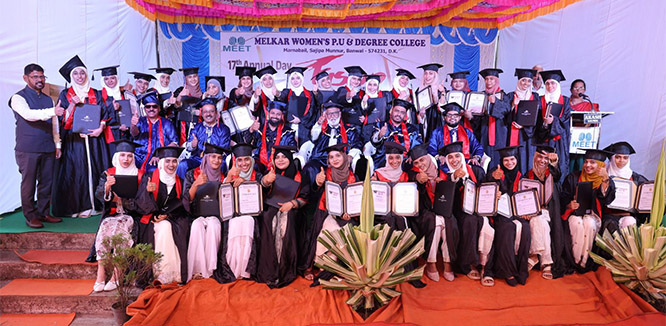
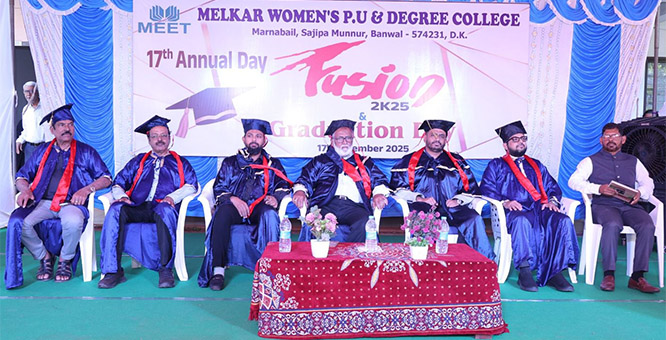
Melkar, Dec 17: The 17th Annual Day and Graduation Ceremony of Melkar Women’s PU and Degree College, themed “Fusion-2K25,” was celebrated with dignity and enthusiasm, marking a significant milestone in the institution’s academic journey. The programme reflected the college’s steadfast commitment to academic excellence, character building, and the holistic development of students.

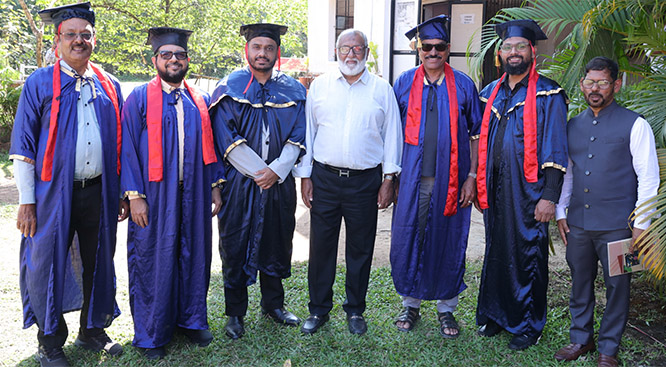
The event was inaugurated by Mr. Asif Mohammed, whose presence greatly enriched the occasion. The celebration was further graced by the chief guests Mr. P. B. Ahmed Mudassir and Mr. Nissar Fakeer Mohammed, along with the distinguished guests of honour Mr. B. A. Nazeer and Mr. Ibrahim Gadiyar. In their inspiring addresses, the guests encouraged the graduating students and appreciated the dedicated efforts of the management, faculty, and students.

The annual report was presented by the Principal, Mr. Abdul Majeed S, highlighting the institution’s academic progress, notable achievements, and extracurricular accomplishments during the academic year.

The presidential address was delivered by the esteemed Chairman of Melkar Women’s PU and Degree College, Dr. Haji S. M. Rasheed, who emphasized the vital role of education in empowering women and shaping responsible citizens. He also stressed the importance of discipline, dedication, and perseverance in achieving success.

Cultural programmes and academic recognitions formed an integral part of the celebration, showcasing the talents and achievements of the students. The graduation ceremony was a proud moment for the outgoing students as they were formally conferred degrees and wished success in their future endeavours.

Ms. Mashmooma Fathima served as the Master of Ceremonies. The welcome address was delivered by Ms. Fathima Nida, and the programme concluded with a vote of thanks proposed by Ms. Ayisha Suhana.

The event successfully achieved its objectives and was highly appreciated by the guests and attendees.

melkar3.jpg

melkar2.jpg

Comments

Add new comment

  • Coastaldigest.com reserves the right to delete or block any comments.
  • Coastaldigset.com is not responsible for its readers’ comments.
  • Comments that are abusive, incendiary or irrelevant are strictly prohibited.
  • Please use a genuine email ID and provide your name to avoid reject.
News Network
December 4,2025

Mangaluru: Chaos erupted at Mangaluru International Airport (MIA) after IndiGo flight 6E 5150, bound for Mumbai, was repeatedly delayed and ultimately cancelled, leaving around 100 passengers stranded overnight. The incident highlights the ongoing country-wide operational disruptions affecting the airline, largely due to the implementation of new Flight Duty Time Limitations (FDTL) norms for crew.

The flight was initially scheduled for 9:25 PM on Tuesday but was first postponed to 11:40 PM, then midnight, before being cancelled around 3:00 AM. Passengers expressed frustration over last-minute communication and the lack of clarity, with elderly and ailing travellers particularly affected. “Though the airline arranged food, there was no proper communication, leaving us confused,” said one family member.

An IndiGo executive at MIA cited the FDTL rules, designed to prevent pilot fatigue by limiting crew working hours, as the cause of the cancellation. While alternative arrangements, including hotel stays, were offered, about 100 passengers chose to remain at the airport, creating tension. A replacement flight was arranged but also faced delays due to the same constraints, finally departing for Mumbai around 1:45 PM on Wednesday. Passengers either flew, requested refunds, or postponed their travel.

The Mangaluru delay is part of a broader crisis for IndiGo. The airline has been forced to make “calibrated schedule adjustments”—a euphemism for widespread cancellations and delays—after stricter FDTL norms came into effect on November 1.

While an IndiGo spokesperson acknowledged unavoidable flight disruptions due to technology issues, operational requirements, and the updated crew rostering rules, the DGCA has intervened, summoning senior airline officials to explain the chaos and outline corrective measures.

The ripple effect has been felt across the country, with major hubs like Bengaluru and Mumbai reporting numerous cancellations. The Mangaluru incident underscores the systemic operational strain currently confronting India’s largest carrier, leaving passengers nationwide grappling with uncertainty and delays.

Comments

Add new comment

  • Coastaldigest.com reserves the right to delete or block any comments.
  • Coastaldigset.com is not responsible for its readers’ comments.
  • Comments that are abusive, incendiary or irrelevant are strictly prohibited.
  • Please use a genuine email ID and provide your name to avoid reject.