



Pandemic of poverty: India's financial crisis worsens

Mafazah Sharafuddin
May 31, 2021

covidcrisis.jpg

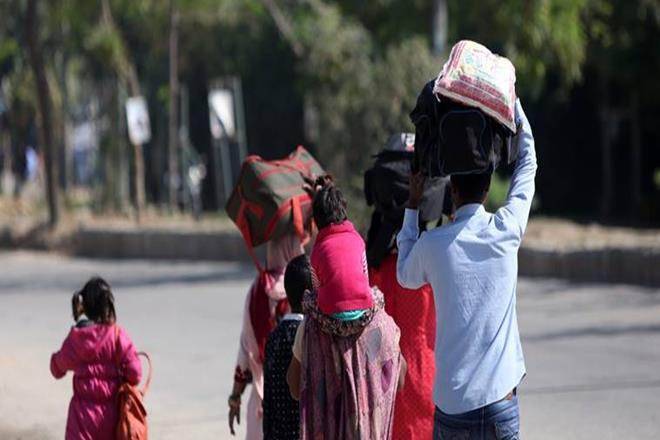
As the country suffers the threat of death and disease, financial struggle looms over it. There has been a huge loss for several of the economy. The government has issued aid, however, it is insufficient and neglects the unorganized sector entirely. 

The estimation of the government, standing at Rs 1,250 crore, and is not close to what is needed by the people. Additionally, it does not aid those who don’t come under government schemes, meaning a huge chunk of the unorganized and industrial sector. 

The financial crisis in India due to COVID is a many headed demon. So many different issues have arisen since the start of the pandemic, and the people of India are suffering under the financial burden. 

Sudden shifts

Since the beginning of the pandemic, the word ‘unprecedented’ has been used innumerable times. Problems arrive suddenly, with no warning. People are losing their jobs all at once after years of working in the same place. 

With the magnitude of the death toll, many a times the sole breadwinner of the house passes away. This leaves the family floundering, looking for jobs and trying to keep mouths fed.

People who are newly unemployed and unable to find jobs in the same industry are left confused. They have a skillset that employers are not looking for and eventually, they have to resort to unskilled labor which gives them lower wages. 

Warning signs 

The fact is that the people are suffering. The numbers back it up. There has been a 15 to 20% increase in poverty since the pandemic began. This means more than 23 crore people have slipped below the poverty line. 

Unemployment has increased, too. 1.5 people have been lost their jobs, and those who continue to be employed face lowered salaries. The per capita income of the country has lowered by 16.8% to what it was in January of 2020. 

Within 2020, there was an increase in people partially withdrawing funds from their Employee Provident Fund accounts. While it was 54 lakh people in 2019, 2020 saw 1.27 crore people doing the same. 

According to RBI, there had been an 81.5% increase in that loans against gold jewelry by Scheduled Commercial Banks in March in comparison with the same last year. 

MFIs, MSMEs suffer losses

MFIs (Micro finance Institutions) cater to the poorer sections of Indian society. The lockdowns have has adverse effects on the functioning of NBFCs and MFIs. With the poor already suffering through unemployment and steep hospital bills, this too has caused a bad hit.

Some sectors are faring worse than others. These industries thrive on travel, face to face interactions and consumerism. Retail, MSME, and hospitality are some of them.

The pandemic has resulted in the closure of 15-20% of the MSMEs in India. Large scale supply chains are taking away their customers as they are not able to operate as usual during the pandemic. If the situation continues, there could be a much larger percentage of MSMEs closed during the pandemic. 

Small businesses run into trouble

Small businesses like family run stores are facing trouble getting customers and keeping their shops open. The lockdown hours put a huge dent in the time they can sell to people. Shops that don’t count as ‘essentials’ often cannot open at all. 

Chain supermarkets and other shops are seeing more traffic as these small businesses get neglected. Without their livelihood, the threat of COVID increases as they would not be able to afford the hospital bills and medication.

Sellers over the internet find it difficult to post packages as delivery services do not function everywhere due to COVID. Small businesses are losing customers at a large scale. 

Social workers rise to the occasion

While the situation is dire, social worker and organizations have taken the initiative to help people. All over India, social workers and volunteers are assisting on everything from grocery packages to cremations. 

The workers help with transportation, reservation of beds, intricacies of the Ayushman card, ensuring the patients and the family members staying with them are fed, etc. With the ongoing crisis with the bodies piling up with no one to deal with them, social workers are also burying and cremating bodies. 

Not just this, but they are also helping people who are not infected, but have been affected by the pandemic. Distributing food, rations etc. to those in need is another task they perform. 

However, without proper government aid to the poorer sections of society, there is no saying how bad the situation could get.

Comments

Add new comment

  • Coastaldigest.com reserves the right to delete or block any comments.
  • Coastaldigset.com is not responsible for its readers’ comments.
  • Comments that are abusive, incendiary or irrelevant are strictly prohibited.
  • Please use a genuine email ID and provide your name to avoid reject.
News Network
December 15,2025

Mangaluru, Dec 15: Air India Express has announced that it will resume direct flight services between Mangaluru and Muscat from March 2026, restoring an important international air link for passengers from the coastal region.

Airport authorities said the service will operate twice a week—on Sundays and Tuesdays—from March 1. The initial flights are scheduled on March 3, 8 and 10, followed by March 15 and 17, with the same operating pattern to continue thereafter. The flight duration is approximately three hours and 25 minutes.

The Mangaluru–Muscat route was earlier operated under the 2025 summer schedule, with services beginning on July 14. At that time, Air India Express had operated four flights a week before suspending the service.

Officials said the summer schedule will come into effect from March 29, after which changes in flight timings and departure schedules from Mangaluru are expected. Passengers have been advised to check the latest schedules while planning their travel.

The resumption of direct flights to Muscat is expected to significantly benefit expatriates, business travellers and others, further strengthening Mangaluru’s air connectivity with the Gulf region.

Comments

Add new comment

  • Coastaldigest.com reserves the right to delete or block any comments.
  • Coastaldigset.com is not responsible for its readers’ comments.
  • Comments that are abusive, incendiary or irrelevant are strictly prohibited.
  • Please use a genuine email ID and provide your name to avoid reject.
News Network
December 7,2025

Mangaluru, Dec 7: A 34-year-old fruit and vegetable trader in Mangaluru has reportedly lost ₹33.1 lakh after falling victim to an online investment scam run through a fake mobile app.

Police said the scam began in September, when the victim received a link on Facebook. Clicking it connected him to a WhatsApp number, where an unidentified person introduced a high-return investment scheme and instructed him to download an app.

To build trust, the fraudster asked him to invest ₹30,000 on September 24. The trader soon received ₹34,000 as “profit,” convincing him the scheme was genuine. Over the next two months, he transferred money in multiple instalments via Google Pay and IMPS to different scanner codes and bank accounts shared by the scammers. Between September 24 and December 3, he ended up sending a total of ₹33.1 lakh.

When he later requested a refund of his investment and promised returns, the scammers demanded additional payments, claiming he needed to pay a “service tax” first. Even after he paid a small amount, no money was returned, and the scammers continued pressuring him for more.

A case has been registered at the CEN Crime Police Station.

Comments

Add new comment

  • Coastaldigest.com reserves the right to delete or block any comments.
  • Coastaldigset.com is not responsible for its readers’ comments.
  • Comments that are abusive, incendiary or irrelevant are strictly prohibited.
  • Please use a genuine email ID and provide your name to avoid reject.
News Network
December 13,2025

New Delhi: School-going children are picking up drug and smoking habits and engaging in consumption of alcohol, with the average age of introduction to such harmful substances found to be around 13 years, suggesting a need for earlier interventions as early as primary school, a multi-city survey by AIIMS-Delhi said.

The findings also showed substance use increased in higher grades, with grade XI/XII students two times more likely to report use of substances when compared with grade VIII students. This emphasised the importance of continued prevention and intervention through middle and high school.

The study led by Dr Anju Dhawan of AIIMS's National Drug Dependence Treatment Centre, published in the National Medical Journal of India this month, looks at adolescent substance use across diverse regions.

The survey included 5,920 students from classes 8, 9, 11 and 12 in urban government, private and rural schools across 10 cities -- Bengaluru, Chandigarh, Delhi, Dibrugarh, Hyderabad, Imphal, Jammu, Lucknow, Mumbai, and Ranchi. The data were collected between May 2018 and June 2019.

The average age of initiation for any substance was 12.9 (2.8) years. It was lowest for inhalants (11.3 years) followed by heroin (12.3 years) and opioid pharmaceuticals (without prescription; 12.5 years).

Overall, 15.1 per cent of participants reported lifetime use, 10.3 per cent reported past year use, and 7.2 per cent reported use in the past month of any substance, the study found.

The most common substances used in the past year, after tobacco (4 per cent) and alcohol (3.8 per cent), were opioids (2.8 per cent), followed by cannabis (2 per cent) and inhalants (1.9 per cent). Use of non-prescribed pharmaceutical opioids was most common among opioid users (90.2 per cent).

On being asked, 'Do you think this substance is easily available for a person of your age' separately for each substance category, nearly half the students (46.3 per cent) endorsed that tobacco products and more than one-third of the students (36.5 per cent) agreed that a person of their age can easily procure alcohol products.

Similarly, for Bhang (21.9 per cent), ganja/charas (16.1 per cent), inhalants (15.2 per cent), sedatives (13.7 per cent), opium and heroin (10 per cent each), the students endorsed that these can be easily procured.

About 95 per cent of the children, irrespective of their grade, agreed with the statement that 'drug use is harmful'.

The rates of substance use (any) among boys were significantly higher than those of girls for substance use (ever), use in the past year and use in the past 30 days. Compared to grade VIII students, grade IX students were more likely, and grade XI/XII students were twice as likely to have used any substance (ever).

The likelihood of past-year use of any substance was also higher for grade IX students and for grade XI/XII students as compared to grade VIII students.

About 40 per cent of students mentioned that they had a family member who used tobacco or alcohol each. The use of cannabis (any product) and opioid (any product) by a family member was reported by 8.2 per cent and 3.9 per cent of students, respectively, while the use of other substances, such as inhalants/sedatives by family was 2-3 per cent, the study found.

A relatively smaller percentage of students reported use of tobacco or alcohol among peers as compared to among family members, while a higher percentage reported inhalants, sedatives, cannabis or opioid use among peers.

Children using substances (past year) compared to non-users reported significantly higher any substance use by their family members and peers.

There were 25.7 per cent students who replied 'yes' to the question 'conflicts/fights often occur in your family'. Most students also replied affirmatively to 'family members are aware of how their time is being spent' and 'damily members are aware of with whom they spend their time'.

Comments

Add new comment

  • Coastaldigest.com reserves the right to delete or block any comments.
  • Coastaldigset.com is not responsible for its readers’ comments.
  • Comments that are abusive, incendiary or irrelevant are strictly prohibited.
  • Please use a genuine email ID and provide your name to avoid reject.