The August 15, 1947 speeches remain beacons to desired future

Alok Prasanna Kumar
August 15, 2021

nehru.jpg

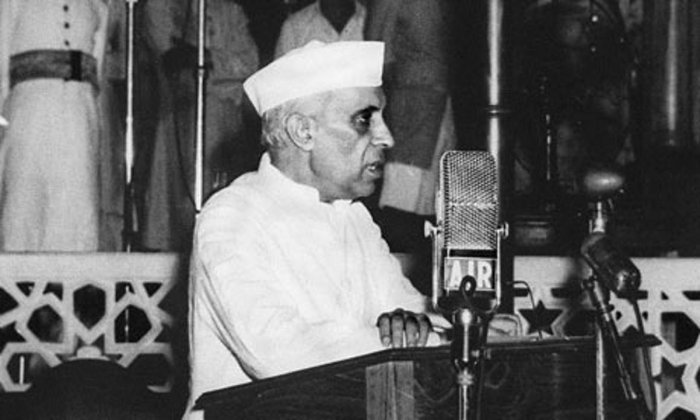
Jawaharlal Nehru made his famous “Tryst with Destiny” speech late in the night on August 14, 1947. It was delivered during one of the most momentous sessions of the Constituent Assembly, one that is well-known and well-recorded. Apart from Nehru’s speech itself, the presentation of the national flag, the singing of the national anthem, the taking of the pledge by all the members of the Assembly at the stroke of midnight are all well-known. Many evocative accounts of that moving day, by members and observers, are present and easily accessible.

But the session did not end there. The Constituent Assembly only adjourned to the morning of August 15, 1947. This day, when Nehru flew the Indian flag from the ramparts of the Red Fort, saw speeches by Governor-General Louis Mountbatten and Rajendra Prasad, in his capacity as the president of the Constituent Assembly. The speeches are revealing about the immediate circumstances in which India became independent -- what was said being as important as what was left unsaid.

The day began with the reading out of congratulatory messages received from nations far and wide. Mountbatten was then invited to speak.

The bulk of Mountbatten’s speech covered the events leading up to independence, specifically his role in the whole process. No doubt he played a key role in the exercise, but one notices not only a certain level of self-congratulation, but also self-exculpation. Self-congratulation for having advanced the date of independence from July 1948 to August 1947, when everyone thought that even June 1948 was too early. Self-exculpation for the failings that resulted from such a hasty withdrawal.

Mountbatten gave himself credit for the idea behind implementing Partition (“the leaders agreed to discuss a paper which I had laid before them on the administrative consequences of Partition”) while also subtly telling us who to blame for things that went horribly wrong (“To the ministers and officials who have laboured day and night to produce this astonishing result, the greatest credit is due”).

Prasad’s speech was almost a riposte to Mountbatten’s, focused as it was on the future, and has no mention of the speaker himself. Prasad, in this vein, outlined an almost utopian vision for what he hoped India would become.

He said: “Let us resolve to create conditions in this country when every individual will be free and provided with the wherewithal to develop and rise to his fullest stature, when poverty and squalor and ignorance and ill-health will have vanished, when the distinction between high and low, between rich and poor, will have disappeared, when religion will not only be professed and preached and practised freely but will have become a cementing force for binding man to man and not serve as a disturbing and disrupting force dividing and separating, when untouchability will have been forgotten like an unpleasant night dream, when exploitation of man by man will have ceased…”

While articulating this utopian idea, Prasad also mentioned the important task at hand -- the making of the Constitution. Even while the draft Constitution was still being framed, Prasad articulated the hope that it “will enable the people’s will to be expressed and enforced, and that will not only secure liberty to the individual but also reconcile and make that liberty subservient to the common good.”

Mountbatten’s and Prasad’s speeches were a neat contrast of old and new, of personal and societal, of individual and institutional. Where Mountbatten looked to the past, his own role and the parts played by specific individuals in getting India to independence, Prasad looked to the future -- of what independence would bring, of what the society and nation would look like, and what individuals could hope to achieve in the new country.

Both viewpoints are, however, valid. It is good to remember that India’s independence came about in hasty, confused and, eventually, bloody circumstances that continue to haunt us to this day. Yet, it was also infused with hope for a better future -- one that we have made progress towards but are a long way from achieving.


(The author is Co-founder, Vidhi Centre for Legal Policy, uses his legal training to make the case that Harry Potter is science fiction and Star Wars is fantasy)

Comments

Add new comment

  • Coastaldigest.com reserves the right to delete or block any comments.
  • Coastaldigset.com is not responsible for its readers’ comments.
  • Comments that are abusive, incendiary or irrelevant are strictly prohibited.
  • Please use a genuine email ID and provide your name to avoid reject.
coastaldigest.com news network
December 2,2025

karkala.jpg

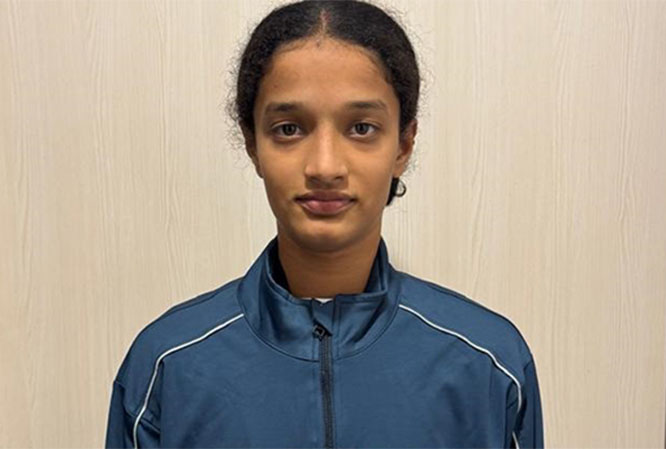
Udupi, Dec 2: A wave of regional pride is sweeping through Udupi district as Shagun S Verma Hegde, a talented Class 9 student from Christ King English Medium High School, Karkala, has been named the captain of the Indian National Team for the Under-15 Girls’ Volleyball Championship.

Shagun holds the unique distinction of being the sole player from Karnataka selected to represent the country in the prestigious international tournament. The championship, organized by the School Games Federation, is scheduled to take place in Shangluo, China, from December 3 to 13, where Shagun will lead the national squad.

A Remarkable Journey to the Top

Shagun’s selection is a testament to her dedication and exceptional skill on the court. Her journey included several rigorous rounds of selection:

•    She was the only player from Udupi district to qualify for the state-level selection camp.

•    Out of eight players from Karnataka who advanced to the national selection camp in Pune, Maharashtra, Shagun was the only one to secure a place in the final national squad.

•    The national camp saw participation from approximately 200 players, which was shortlisted to 23. Shagun not only made the final cut but was also ranked as the second-best player overall, solidifying her leadership role.

Shagun, who is the daughter of Sandesh Verma and Shruthiraj of Kallotte, Karkala, has trained under experienced coaches Santosh D’Souza, Jeevan D’Silva, Jairaj Poojary, and Ramesh. Her selection as the team captain has brought profound honour to her family, school, the Udupi district, and the entire state of Karnataka.

Comments

Add new comment

  • Coastaldigest.com reserves the right to delete or block any comments.
  • Coastaldigset.com is not responsible for its readers’ comments.
  • Comments that are abusive, incendiary or irrelevant are strictly prohibited.
  • Please use a genuine email ID and provide your name to avoid reject.
News Network
December 1,2025

hindutvaboy.jpg

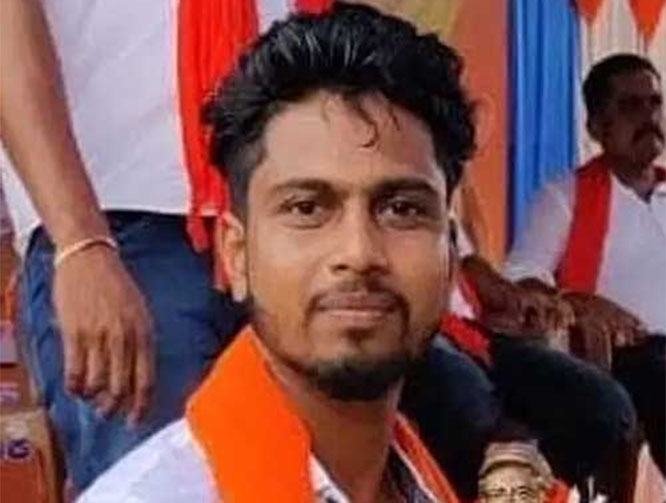
Udupi, Dec 1: A horrific case of alleged rape has unfolded in Udupi, where a worker from a Hindutva organisation, previously arrested and released on bail for harassing a young woman, is now accused of waylaying and sexually assaulting her.

The arrested individual has been identified as Pradeep Poojary (26), a member of the Hindu Jagarana Vedike's Nairkode unit in Perdur.

Poojary had allegedly been relentlessly harassing the young woman, pressuring her to marry him. When she bravely stood up to him and refused his demands, she filed a formal complaint at the Hiriyadka police station. He was subsequently arrested in that initial harassment case but was later granted bail.

According to police reports, driven by the same malicious grudge, Poojary allegedly intercepted the woman again on November 29. While she was walking through a deserted area, the accused is claimed to have threatened her by grabbing her neck. When she again refused to marry him, he allegedly proceeded to rape her.

The survivor immediately informed her family about the traumatic assault. Following this, her parents lodged a complaint at the Udupi women’s police station.

Police arrested Poojary again and produced him before the court. He has since been remanded to judicial custody.

Comments

Add new comment

  • Coastaldigest.com reserves the right to delete or block any comments.
  • Coastaldigset.com is not responsible for its readers’ comments.
  • Comments that are abusive, incendiary or irrelevant are strictly prohibited.
  • Please use a genuine email ID and provide your name to avoid reject.
News Network
November 26,2025

students.jpg

Bengaluru, Nov 26: Karnataka is taking its first concrete steps towards lifting a three-decade-old ban on student elections in colleges and universities. Deputy Chief Minister D.K. Shivakumar announced Wednesday that the state government will form a small committee to study the reintroduction of campus polls, a practice halted in 1989 following incidents of violence.

Speaking at a 'Constitution Day' event organised by the Karnataka Congress, Mr. Shivakumar underscored the move's aim: nurturing new political leadership from the grassroots.

"Recently, (Leader of the Opposition in Lok Sabha) Rahul Gandhi wrote a letter to me and Chief Minister (Siddaramaiah) asking us to think about restarting student elections," Shivakumar stated. "I'm announcing today that we'll form a small committee and seek a report on this."

Student elections were banned in Karnataka in 1989, largely due to concerns over violence and the infiltration of political party affiliates into campus life. The ban effectively extinguished vibrant student bodies and the pipeline of young leaders they often produced.

Mr. Shivakumar, who also serves as the Karnataka Congress president, said that former student leaders will be consulted to "study the pros and cons" of the re-introduction.

Acknowledging the history of the ban, he added, "There were many criminal activities taking place back then. We’ll see how we can conduct (student) elections by regulating such criminal activities."

The Deputy CM reminisced about his own journey, which began on campus. He recalled his political activism at Sri Jagadguru Renukacharya College leading to his first Assembly ticket in 1985 at the age of 23. "That's how student leadership was at the time. Such leadership has gone today. College elections have stopped," he lamented, adding that for many, college elections were "like a big movement" where leaders were forged.

The move, driven by the Congress high command's push to cultivate young talent, will face scrutiny from academics and university authorities who have, in the past, expressed concern that the return of polls could disrupt the peaceful academic environment and turn campuses into political battlegrounds.

Comments

Add new comment

  • Coastaldigest.com reserves the right to delete or block any comments.
  • Coastaldigset.com is not responsible for its readers’ comments.
  • Comments that are abusive, incendiary or irrelevant are strictly prohibited.
  • Please use a genuine email ID and provide your name to avoid reject.