Netflix’s ‘A Suitable Boy’ & Modi era

Safiyat Naseem
November 9, 2020

suitable.jpg

Recently binge-watched a six part mini series directed by Mira Nair on Netflix, titled “A Suitable Boy”, an adaptation of Vikram Seth’s novel of the same title. And while I am neither a movie critic or reviewer, nor a fan of watching series with a backdrop of the post Independence era, I was still moved to write about it. To lay down my emotions on paper with nothing but words. It isn’t extra-ordinary, or brilliantly amazing, neither the characters are made to grow on you nor the plot is meticulously twisted, then what was it, you may ask.

It was Relatable, I would remark.

I usually don’t prefer series or movies that lay down the post Independence India theme with 1950s timeline because I don’t relate to it’s story or characters, and I don’t know if I watched it for Tanya Manikalata who played the character of Lata in the series or the fact that this series was on number 1 on Netflix, but I know for sure that I don’t regret watching it.

Being an Indian Muslim Women, it was shocking or rather depressing to relate to the newly Independent India even after 73 years. The political clashes, the Hindu-Muslim riots, the hatered based on religion, the stigma layed down on love between hindu and muslim, lack of women empowerment and discrimination, what was there is still here, now and growing more than ever.

It’s been 73 years and we as a Nation are still dealing with the same issues, we haven’t grown together, the lack of secularism is till there, the hatred and fear still reside or worse, it’s reoccurring.

When in the first episode the issue of Mosque was depicted, where the muslims demanded a peaceful place to pray, for those who still stayed in India, and the Raja started establishing a mandir in its direction to make them deprived of this right, I remembered the recent demolition of Babri Masjid and the Supreme Court’s judgement and acquittal of the accused.

As Maan went to the village with Rasheed, and acknowledged the miseries of farmers and labourers, the atrocious behaviour towards womens and workers, it wasn’t surprising or new. I thought about the Farm Bill 2020, the egregious condition of the working class amidsts pandemic, the walks they took barefoot and with empty bellies to go back to their hometowns as they were dealing with unemployment, lack of resources and ignorance of the Government and society. I remembered the Hathras case and other numerous sexual harassment as well as domestic violence cases. How I wish to get shocked by the problems of 1950s shown in the series, but unfortunately I was’t, I am rather acclimated to it. I have been there, heard it, been a part of it…even after 73 years, I have still seen it.

And as Rasheed told Maan “Aur bhi dukh hain Zamane mai mohabbat ke siva” (There are many other sorrows in this world besides love)… Indeed Rasheed, Indeed.

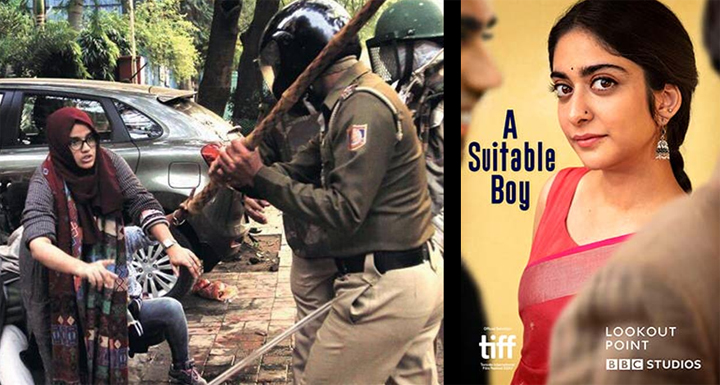
In the later episodes, as a communal riot emerged as Muslim and Hindu mobs were crossing roads, and one of them pushed the other, my mind instantly went towards the Delhi Riots. As Maan and Firoz were running together to save their lives, I connected with them and my eyes filled with tears as I remembered the misfortunate event that took place in Jamia Millia Islamia on 15th December 2019. Being a Jamia Student I remembered hiding under the table in the old library of my campus where Delhi Police showered us with tear gas shells.

When Maan and Firoz gets caught by the angry mob, and one of them asked Maan to say Gayatri Mantar to prove he’s not a muslim, and Maan obliged and did the same to save his and Firoz’s life, but Firoz couldn’t say it being a Muslim. I remembered the viral video on the internet that showed two people in the car, forcing a Muslim man to say Jai Mata Di, and were constantly abusing him.

As the main plot evolves, we see Lata falling in love with his schoolmate whose name’s not known up until the time when Lata’s friend warns her to not meet the guy, as he a Muslim, named Kabir Durrani. But Lata follows her heart and as predicted her mother took her away from the city to find her a suitable boy, and definitely not a Muslim. Tanishq’s advertisement flashed across my mind, the controversy revolving around how it depicts so called ‘love jihad’, whereas all it does is showcase communal harmony, and how they had to shut down the ad because apparently it hurts the “sentiment” of people. It’s been 73 years, and communal harmony still hurts the sentiment?

In the first episode, as the establishment of the mandir was taking place, it was already mentioned that there were bound to be protests regarding the same, still the government didn’t uphold the security levels and gave direct orders to shoot if the protesters didn’t stop. Not shockingly, it was a peaceful protest until the police started shooting, 20 people died. And as we see later in the Parliament meeting, the government was nonchalant to this action of police. Remember again, the attack on Jamia Millia Islamia, peaceful protest, tear gas shells and bullets… similar isn’t it? Potato-Patato, same thing…no?

Well, I believe nothing much has changed, the situation in 1947 and Modi era are almost the same, one way or the other. Except that in 1947, India was a newly democratic and independent country where freedom of speech was introduced, Jamia was a symbol of resistance and nationalism and people were the priority of the government. Whereas in Modi era, India is a newly non-democratic country, where freedom of speech is a myth, Jamia is an anti-national University, Islam is terrorism, people are least of the priority and Modi is God.


Comments

Add new comment

  • Coastaldigest.com reserves the right to delete or block any comments.
  • Coastaldigset.com is not responsible for its readers’ comments.
  • Comments that are abusive, incendiary or irrelevant are strictly prohibited.
  • Please use a genuine email ID and provide your name to avoid reject.
News Network
December 4,2025

indigocrisis.jpg

Angry outbursts, long queues, and desperate appeals filled airports across India today as IndiGo grappled with a severe operational breakdown. Hundreds of flights have been cancelled or delayed, leaving thousands of passengers stranded through the night and forcing many to spend long hours at helpdesks.

Social media was flooded with videos of fliers pleading for assistance, accusing the airline of misleading updates, and demanding accommodation after being stuck for 10 to 12 hours at airports such as Hyderabad and Bengaluru.

What Triggered the Meltdown?

IndiGo has attributed the widespread disruption to “a multitude of unforeseen operational challenges.” These include:

•    Minor technology glitches
•    Winter-season schedule adjustments
•    Bad weather
•    Congestion in the aviation network
•    New crew rostering rules (Flight Duty Time Limitations or FDTL)

Among these, the most disruptive has been the implementation of the updated FDTL norms introduced by the Directorate General of Civil Aviation (DGCA) in January 2024.

These rules were designed to reduce pilot fatigue and improve passenger safety. Key changes include:

•    Longer weekly rest periods for flight crew
•    A revised definition of “night,” extending it by an extra hour
•    Tighter caps on flight duty timing and night landings
•    Cutting night shifts for pilots and crew from six per roster cycle to just two

Once these norms became fully enforceable, airlines were required to overhaul rosters well in advance. For IndiGo, this triggered a sudden shortage of crew available for duty, leading to cascading delays and cancellations.

Why IndiGo Was Hit the Hardest

IndiGo is India’s largest airline by a wide margin, operating over 2,200 flights daily. That’s roughly double the number operated by Air India.

When an airline of this size experiences even a 10–20% disruption, it translates to 200–400 flights being delayed or grounded — producing massive spillover effects across the country.

IndiGo also relies heavily on high-frequency overnight operations, a model typical of low-cost carriers that aim to maximise aircraft utilisation and reduce downtime. The stricter FDTL norms clash with these overnight-heavy schedules, forcing the airline to pull back services.

Aviation bodies have also criticised IndiGo’s preparedness. The Airline Pilots' Association of India (ALPA) said airlines were given a two-year window to plan for the new rules but “started preparing rather late.” IndiGo, it said, failed to rebuild crew rosters 15 days in advance as required.

The Federation of Indian Pilots (FIP) went further, calling the crisis the result of IndiGo’s “prolonged and unorthodox lean manpower strategy,” and alleging that the airline adopted a hiring freeze even as it knew the new rules would require more careful staffing.

How Many Flights Are Affected?

In the past 48 hours, over 300 flights have been cancelled. At least 100 more are expected to be cancelled today.

City-wise impact:

•    Hyderabad: 33 expected cancellations; several fliers stranded overnight
•    Bengaluru: over 70 expected cancellations
•    Delhi, Mumbai, Chennai, Kolkata: widespread delays and missed connections

Passengers shared distressing accounts online.

One customer at Hyderabad airport said they waited from 6 PM to 9 AM with “no action taken” regarding their delayed Pune flight. Another said IndiGo repeatedly told them the crew was “arriving soon,” only for the delay to stretch over 12 hours.

IndiGo has apologised for the disruption and promised that operations will stabilise within 48 hours, adding that “calibrated adjustments” are being made to contain the chaos.

What Should Passengers Do Now?

For those flying in the next few days, especially with IndiGo, here are key precautions:

1. Keep Checking Flight Status
Monitor your flight closely before leaving for the airport, as delays may be announced last-minute.

2. Arrive Early
Expect long queues at counters and security due to crowding and rescheduling.

3. Carry Essentials
Pack snacks, water, basic medicines, chargers, and items for children or senior citizens. Extended waiting times should be anticipated.

4. Use Flexible Booking Options
If you booked tickets with a free-date-change or cancellation option, consider using them.
If you haven’t booked yet, prefer refundable or flexible fares, or even consider alternate airlines.

5. Follow IndiGo’s Updates
Keep an eye on IndiGo’s official social media channels and contact customer support for rebooking and refund queries.

What Needs to Change?

Pilot groups have raised concerns not just about staffing but also the planning practices behind it.
The Federation of Indian Pilots accused IndiGo of:

•    Imposing an unexplained hiring freeze despite knowing the FDTL changes were coming
•    Entering non-poaching agreements that limited talent movement
•    Keeping pilot pay frozen
•    Underestimating the need to restructure operations in advance

They have urged DGCA to approve seasonal schedules only after airlines prove they have adequate pilot strength under the new norms.

ALPA also warned that some airlines might be using the delays as an “immature pressure tactic” to push DGCA for relaxations in the new rules — which, if granted, could compromise the very safety standards the norms were meant to protect.

Both pilot bodies stressed that no exemption should dilute safety, and any deviations should be based solely on scientific risk assessment.

Is a Solution in Sight?

While IndiGo says normalcy will return within two days, aviation experts believe that fully stabilising operations could take longer, depending on how quickly the airline can:
•    Re-align rosters
•    Mobilise rested crew
•    Boost staffing
•    Adjust its winter schedule to match regulatory requirements
Passengers are advised to remain prepared for continued delays over the next few days as the airline works through its backlog. 

Comments

Add new comment

  • Coastaldigest.com reserves the right to delete or block any comments.
  • Coastaldigset.com is not responsible for its readers’ comments.
  • Comments that are abusive, incendiary or irrelevant are strictly prohibited.
  • Please use a genuine email ID and provide your name to avoid reject.
News Network
November 27,2025

siddDKS.jpg

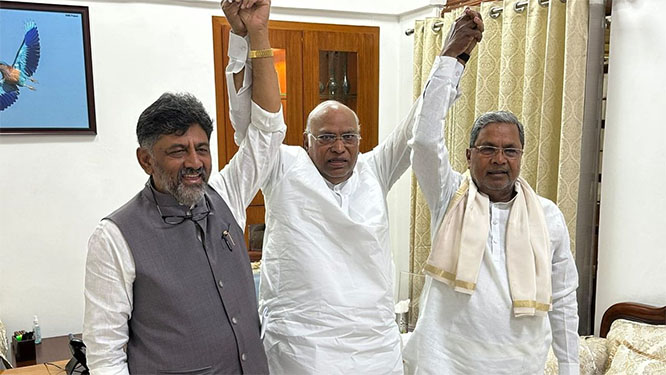
Congress president Mallikarjun Kharge on Thursday announced that he will convene a high-level meeting in New Delhi with senior leaders — including Rahul Gandhi, Karnataka Chief Minister Siddaramaiah and Deputy Chief Minister D.K. Shivakumar — to resolve the escalating leadership turmoil in Karnataka and “put an end to the confusion.”

Kharge said the discussions would focus on the way forward for the ruling party, as rumours of a possible leadership change continue to swirl. The speculation has intensified after the Congress government crossed the halfway mark of its five-year term on November 20, reviving talk of an alleged 2023 “power-sharing agreement” between Siddaramaiah and Shivakumar.

“After reaching Delhi, I will call three or four important leaders and hold discussions. Once we talk, we will decide how to move ahead and end this confusion,” Kharge told reporters in Bengaluru, according to PTI.

When asked specifically about calling Siddaramaiah and Shivakumar to Delhi, he responded: “Certainly, we should call them. We will discuss with them and settle the issue.”

He confirmed that Rahul Gandhi, the Chief Minister, the Deputy Chief Minister and other senior members would be part of the deliberations. “After discussing with everyone, a decision will be made,” he said.

Meanwhile, Siddaramaiah held a separate strategy meeting at his Bengaluru residence with ministers and leaders seen as his close confidants, including G. Parameshwara, Satish Jarkiholi, H.C. Mahadevappa, K. Venkatesh and K.N. Rajanna.
Signalling calm, the Chief Minister told reporters, “Will go to Delhi if the high command calls.”

Shivakumar echoed a similar stance, saying he too would head to the national capital if summoned by the party leadership.

Comments

Add new comment

  • Coastaldigest.com reserves the right to delete or block any comments.
  • Coastaldigset.com is not responsible for its readers’ comments.
  • Comments that are abusive, incendiary or irrelevant are strictly prohibited.
  • Please use a genuine email ID and provide your name to avoid reject.
News Network
December 3,2025

arrival.jpg

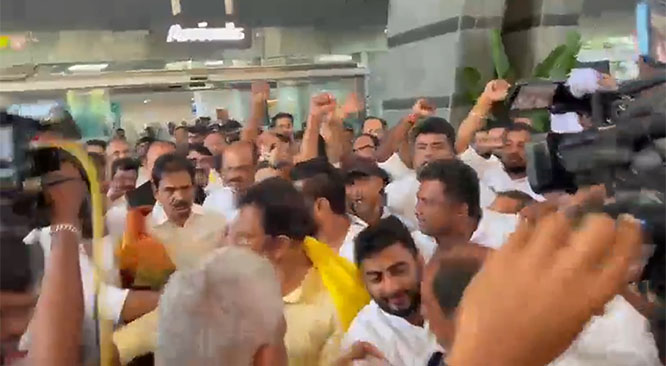
Mangaluru, Dec 3: A group of Congress workers gathered at the Mangaluru International Airport on Wednesday to welcome AICC general secretary K C Venugopal, but the reception quickly turned into a display of support for Deputy Chief Minister D K Shivakumar.

Venugopal arrived in the city to participate in the centenary commemoration of the historic dialogue between Mahatma Gandhi and Narayana Guru. The event, organised by the Sivagiri Mutt, Varkala, in association with the Mangalore University Sri Narayana Guru Study Chair, is being held on the university’s Konaje campus.

KPCC general secretary Mithun Rai and several party workers had assembled at the airport to receive Venugopal. However, the moment he stepped out, workers began raising slogans backing Shivakumar.

The university programme will be inaugurated by Chief Minister Siddaramaiah.

This show of support comes just a day after Siddaramaiah remarked that Shivakumar would lead the government “when the high command decides.” The chief minister made the comment after a breakfast meeting at Shivakumar’s residence—another public display of camaraderie between the two leaders amid ongoing attempts by the party high command to downplay their leadership rivalry.

Comments

Add new comment

  • Coastaldigest.com reserves the right to delete or block any comments.
  • Coastaldigset.com is not responsible for its readers’ comments.
  • Comments that are abusive, incendiary or irrelevant are strictly prohibited.
  • Please use a genuine email ID and provide your name to avoid reject.