
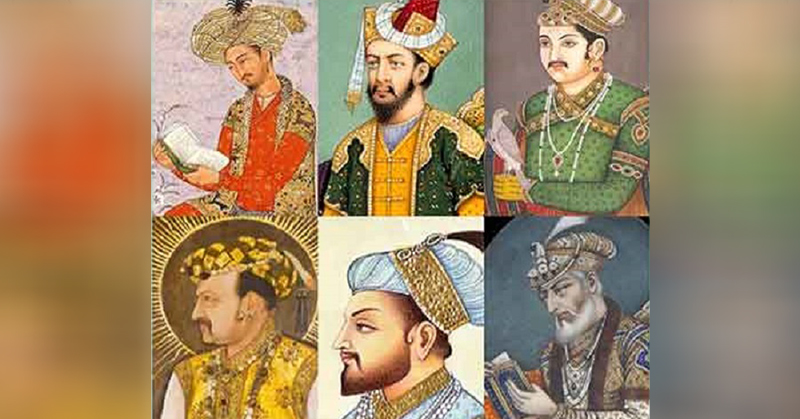
Was Mughal Rule really the period of India’s Slavery?

Ram Puniyani
September 30, 2020

mughal-rule.jpg

When James Mill periodized the Indian History into Hindu Period, Muslim Period and British period, he not only gave the tool to British to pursue their policy of ‘divide and rule’, he also gave the potent weapon to the future pursuers of communal politics to intensify the divisive policies in the future. The Muslim communalists later claimed that India was ruled by Muslims and Hindu communalists claimed that Muslims are foreigners and this has been the land of Hindus from times immemorial.

One was reminded of the deep penetration of this communal view of History when, Yogi Aditaynath, the CM of Uttar Pradesh announced that the upcoming Mughal Museum in Agra to be recast as Chatrapati Shivaji Maharaj Museum. As per him such a historical museum is a reflection of subservient mentality and the symbol of ‘mentality of slavery’. The Mughal Museum’s foundation was laid by Akhilesh Yadav, the earlier Chief Minister of UP. The Museum was to come up near TajMahal in Agra and was to show the cultural aspects and armaments of Mughal kings. The aim was to give a boost to tourism industry in UP.

Same Taj is downgraded now by the Hindu communalists. One P.N.Oak has been trying to propagate that it was Tajomahlaya, Shiv Tample, which was converted into Mausoleum by Shahjahan. The fact as recorded by Tavernier, a French Jeweller his travelogues tell us that Shahjahan built it in memory of his wife Mumtaj Mahal. The same is also inferred from the account books of Shahjahan’s Court, which give a details break of regular expenses for the construction of this tomb. The land was acquired from Raja Jaisingh with due compensation.

As Yogi came to power he omitted Taj from the places of importance in UP. His recent utterances that remembering Mughals is symbol of slave mentality are in tune with the communal ideology which regards Islam as alien religion and Muslims as foreigners. As such we see that Indian History has been looked up in three particular ways. One was the Gandhi-Nehru, Indian nationalist interpretation where India is a place of rich diversity. The Muslim kings who ruled parts of India ruled here and lived here as the part of the land. Most of the Muslim kings respected the diverse religious tradition prevailing here.

Mahatma Gandhi points out, “the Hindus flourished under Moslem sovereigns and Moslems under the Hindu. Each party recognized that mutual fighting was suicidal and that neither party would abandon its religion by force of arms. Both parties, therefore, decided to live in peace. With the English advent quarrels recommenced.”

Similarly Jawaharlal Nehru in his book Discovery of India shows the thick interaction between Hindus and Muslims leading to what he famously termed as ‘Ganga Jamani Tehjeeb’, the beautiful portrayal of this is seen in the serial Shyam Benegals’ ‘Bharat Ek Khoj’.

Does this period, in which some parts of the country were ruled by Muslim Kings, (not only Mughals, there were the ones’ from others dynasties also Ghulam, Khaljis, Gazanavid’s. and in South Bahamanis, Haider and Tipu) are a period of slavery? While some kings like Mahmud Gazanavi, Mohammad Ghori, Ghengis Khan did plunder for wealth, the kings who ruled here became the part of this land. They presided over a system of exploitation, like any other king, in which the producer was the farmer. This was true of any king, anywhere for that matter.

This period in no way can be called a period of slavery of the country. Country’s slavery begins with the British, who ruled here and plundered our wealth and implemented the policy of super exploitation of peasantry. Shashi Tharoor has done a good job (An Era of Darkness) in showing as to how India contributed nearly 23% of global GDP and British brought it down to mere 3% by the time they left. On the plus side of British rule was that while social structure did not change in pre British period, during British rule social changes towards democratic society did start taking place with the introduction of railways, communication, modern education, modern Judiciary etc.   

The communalists, Muslim and Hindus take off from the British in interpreting the History as a fight between Hindus and Muslims, and twisting it in a way where their own selves are shown to be the real owners of the land and also victims of the other community. The British plunder and impositions are hidden under the carpet in their scheme of understanding.

At yet another level Ambedkar sees the Indian History primarily as the clash between the values of equality of Buddhism against the caste and gender hierarchy inherent in Brahmanism.

All Hindus kings were not great and all Muslims kings were not villains. Akbar and Dara Shukoh stand out as upholders of diversity, picking up from other religions, while Shivaji ensured that the taxation on poor peasants is curtailed.

As such the real heroes of Independent India are those who contributed to building of Modern India. The three major streams of this are Gandhi, who united the country in the bond of anti colonial struggle, Ambedkar who endeavoured for social equality and democratic rights, and Bhagat Singh who stood for for the cause of poor while giving fighting against British rule in India. It is these values which should inspire the modern India and not the values of Kings, which are essentially based on social inequality and taxation of peasants. All the positive developments strengthening pluralism and diversity with equality are the principles and values we need to look up to in times to come.

Mughal museum was just a small attempt to uphold the cultural background of our lived past and in no way symbol of subservience or of slave mentality. Unfortunately we are living in times where full attempts are going on to erase the symbols; like this upcoming Museum along with changing the names of cities (Allahabad, Faiazabad, Mughal Sarai), the Muslim contribution to Indian culture.

Comments

Add new comment

  • Coastaldigest.com reserves the right to delete or block any comments.
  • Coastaldigset.com is not responsible for its readers’ comments.
  • Comments that are abusive, incendiary or irrelevant are strictly prohibited.
  • Please use a genuine email ID and provide your name to avoid reject.
News Network
November 21,2025

Bengaluru, Nov 21: The Karnataka government is facing pressure to overhaul its employment system after a high-level Cabinet sub-committee recommended the complete phase-out of job outsourcing in government offices, boards, and corporations by March 2028. The move is aimed at tackling a systemic issue that has led to the potential violation of constitutional reservation policies and the exploitation of workers.

The Call for Systemic Change

With over three lakh vacant posts currently being filled through private agencies on an outsource, insource, or daily wage basis, the sub-committee highlighted a significant lapse. "As a result, reservations are not being followed as per the Constitution and state laws. It’s an urgent need to take serious steps to change the system. It has been recommended to completely stop the system of outsourcing by March 2028," the panel stated in a document.

The practice of outsourcing involves private companies hiring workers to perform duties for a government agency. Critics argue this model results in lesser salaries, a lack of social security benefits (otherwise available to permanent government employees), and a failure to adhere to the provisions of Articles 14 and 15 of the Constitution, which guarantee equality before the law and prohibit discrimination.

The 'Bidar Model' as a Stop-Gap Solution

To regulate the current mode of employment and reduce worker exploitation until the 2028 deadline, the government plans to establish workers’ services multi-purpose cooperative societies across all districts, following the successful "Bidar Model."

The Bidar District Services of Labour Multi-purpose Cooperative Society Ltd., which operates under the District Commissioner, is cited as a successful example of providing a measure of social security to outsourced staff. Labour Department officials argue this society ensures workers receive their due wages and statutory facilities like ESI (Employees' State Insurance) and PF (Provident Fund), in exchange for a 1% service fee collected from the employees.

legislative push and Priority Insourcing

The recommendations, led by the sub-committee headed by Law and Parliamentary Affairs Minister H K Patil, are set to be discussed at the next Cabinet meeting. The committee has proposed the introduction of the Karnataka Outsourced Employees (Regulation, Placement and Welfare) Bill 2025.

In a move addressing immediate concerns, Labour Minister Santosh Lad, a member of the sub-committee, has reportedly assured that steps will be taken over the next 2-3 years to insource workers in "life-threatening services" on a priority basis. This includes essential personnel like pourakarmikas (sanitation workers), drivers, electrical staff in the Energy Department, and Health Department staff handling contagious diseases. The transition aims to grant these workers the long-term security and benefits they currently lack under the outsourcing system. 

Comments

Add new comment

  • Coastaldigest.com reserves the right to delete or block any comments.
  • Coastaldigset.com is not responsible for its readers’ comments.
  • Comments that are abusive, incendiary or irrelevant are strictly prohibited.
  • Please use a genuine email ID and provide your name to avoid reject.
News Network
December 3,2025

arrival.jpg

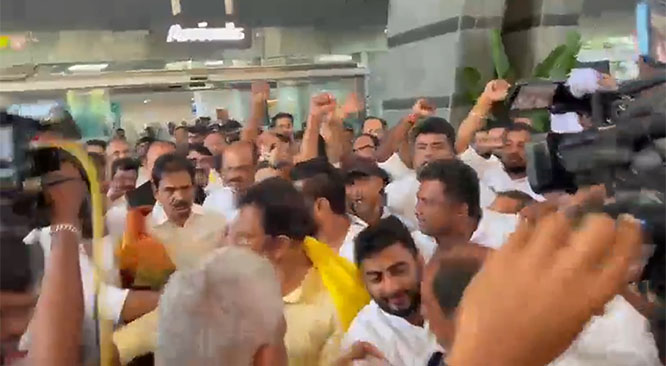
Mangaluru, Dec 3: A group of Congress workers gathered at the Mangaluru International Airport on Wednesday to welcome AICC general secretary K C Venugopal, but the reception quickly turned into a display of support for Deputy Chief Minister D K Shivakumar.

Venugopal arrived in the city to participate in the centenary commemoration of the historic dialogue between Mahatma Gandhi and Narayana Guru. The event, organised by the Sivagiri Mutt, Varkala, in association with the Mangalore University Sri Narayana Guru Study Chair, is being held on the university’s Konaje campus.

KPCC general secretary Mithun Rai and several party workers had assembled at the airport to receive Venugopal. However, the moment he stepped out, workers began raising slogans backing Shivakumar.

The university programme will be inaugurated by Chief Minister Siddaramaiah.

This show of support comes just a day after Siddaramaiah remarked that Shivakumar would lead the government “when the high command decides.” The chief minister made the comment after a breakfast meeting at Shivakumar’s residence—another public display of camaraderie between the two leaders amid ongoing attempts by the party high command to downplay their leadership rivalry.

Comments

Add new comment

  • Coastaldigest.com reserves the right to delete or block any comments.
  • Coastaldigset.com is not responsible for its readers’ comments.
  • Comments that are abusive, incendiary or irrelevant are strictly prohibited.
  • Please use a genuine email ID and provide your name to avoid reject.
News Network
November 21,2025

malpe.jpg

Udupi: The Malpe Police have arrested two men from Uttar Pradesh for allegedly sharing classified information related to Indian Navy vessels with individuals in Pakistan, posing a serious threat to national security.

According to a complaint filed by the CEO of Udupi Cochin Shipyard, Malpe—an institution under the Union Ministry of Ports, Shipping and Waterways—the prime accused, Rohit (29), was working as an insulator through subcontractor M/S Shushma Marine Pvt Ltd. He had earlier served at Cochin Shipyard Limited in Kochi, Kerala, where naval ships are under construction.

Udupi SP Hariram Shankar said the accused had unlawfully shared, via WhatsApp, confidential identification numbers of Navy-related ships and other classified details while working in Kerala, allegedly for illegal gains.

After joining the Malpe shipyard unit, Rohit reportedly continued collecting sensitive information through a friend in Kochi and circulated it to unauthorised individuals, violating national security protocols and potentially endangering India’s sovereignty, unity, and integrity.

Based on the complaint, Malpe Police registered a case under Section 152 of the Bharatiya Nyaya Sanhita (BNS) and Sections 3 and 5 of the Official Secrets Act, 1923.

A police team led by Karkala Subdivision Assistant Superintendent of Police Harsha Priyamvada—along with PSI Anil Kumar D, ASI Harish, and PC Ravi Jadhav—conducted the investigation and arrested the two accused, identified as Rohit (29) and Santri (37), both residents of Sultanpur district, Uttar Pradesh.

The duo was produced before the court, which remanded them in judicial custody till December 3. Further investigation is in progress.

Comments

Add new comment

  • Coastaldigest.com reserves the right to delete or block any comments.
  • Coastaldigset.com is not responsible for its readers’ comments.
  • Comments that are abusive, incendiary or irrelevant are strictly prohibited.
  • Please use a genuine email ID and provide your name to avoid reject.