



Why is the govt underreporting COVID deaths all over India?

Mafazah Sharafuddin
May 5, 2021

cd1.jpg

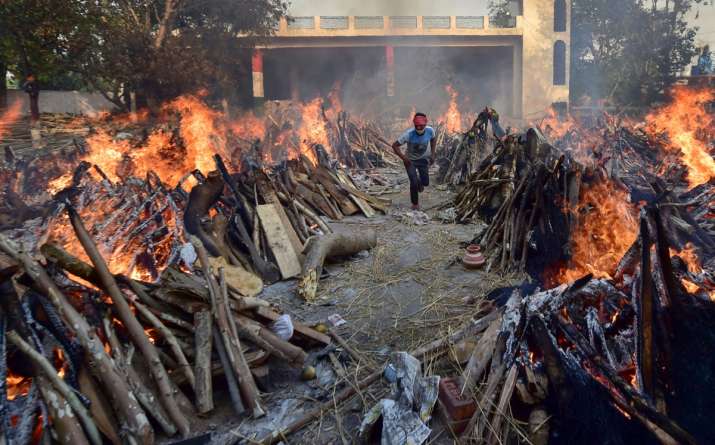
There have been several claims of undercounting the number of COVID deaths on the part of the government. This is a result of several factors, but most significantly, the number of corpses piling up in crematoriums and burial grounds. According to those who run crematoriums, the number of deaths due to COVID sent for cremation is much higher than what is disclosed by the government.
 
This issue isn’t limited to any one state, as there have been reports of the same in several states, including Karnataka, UP and the capital, Delhi. The crisis of having too many bodies and insufficient means to dispose of them is making people notice. NGOs are helping with cremations outside crematoriums, in parks etc. The crematoriums themselves are working towards building more cremation platforms. 

People running burial grounds and crematoriums are not turning people away. This has led to long queues for the same. In an interview with NDTV, a man who had lost his father to COVID said, “Earlier we were struggling to get oxygen, now we are struggling for cremation. The Government is useless.”

The owners of certain crematoriums state that those who die at home are not reported as COVID deaths in an official capacity, despite having succumbed to COVID. Several people are at home due to a lack of hospital beds and oxygen. They are being turned away from the hospitals. 

There have been mixed reactions to these claims. Most state governments are paying it no heed, and continuing to report deaths as they did prior to it. Adithyanath, however, has reacted with having the open sides of Rajghat covered up with cloth and plastic banners. This blocks the view to the cremation grounds and any bodies that might be piling up there. The banners claim that photography and videography of the cremations within the grounds would be considered criminal activity. It cites religious sanctity as its reason. 

The situation is dire. Overwhelming evidence states that the number of deaths of people diagnosed with COVID may be much higher than that being reported. This does not even begin to count the fact that there are plenty of people unable to get tested. This paints a truly grim picture of the COVID situation in India. 

The Madras HC on Monday severely reprimanded the Election Commission for allowing campaign rallies to take place during the pandemic. They went as far to say “Your institution is singularly responsible for the second wave of Covid-19. Election Commission officers should be booked on murder charges probably.”

The Co-Win portal and the announcement of vaccines for those aged 18-44 followed by the lack of production is another factor causing people to raise their voice. There are far too many accusations of improper administration for it to be brushed off without address. 

A report in the Financial Times stated that the, “numbers of Covid victims who have been cremated are 10x larger than official Covid death counts in same areas.” The state India is in is capturing global attention. 

The situation right now calls for many questions. What are the true numbers? How many decisions, like the EC’s decision to give parties the go ahead, were promoted by political reasons? How many were financially motivated? Where does public welfare stand among the list of reasons?

The glaring question, of course, is why?

Why is the government underreporting the COVID deaths all over the country?

The number of deaths, the state of the hospitals, the lack of vaccines, and the political rallies etc. all point towards one thing. Inefficient administration. The possibility that the underreporting is a ploy by the government to seem like they have a better handle on the situation is becoming more and more likely. 

It isn’t a new concept for governments to cover up things leading up to the election. There are thousands of cartoons that just speak about deceit before the election. 

It is an insidious idea, but that does not make it less likely. This is a matter of national and global importance. Underreporting the deaths due to COVID could skew research studying the fatality of this wave of the virus. It is also vital that the citizen see the gravity of the situation. The government must address the disparity in the numbers and provide clarity to the citizens.

Comments

MOHAMED S SULTAN
 - 
Friday, 7 May 2021

This is man made problem.
We(You) paid very dearly as the consequences of choosing our governments.
At least learn from this UNFORGETTABLE LESSON, what type of party and leaders you have to select for ruling.

costly lesson, never ever forget and pass it to all generations until end of the planet.

Add new comment

  • Coastaldigest.com reserves the right to delete or block any comments.
  • Coastaldigset.com is not responsible for its readers’ comments.
  • Comments that are abusive, incendiary or irrelevant are strictly prohibited.
  • Please use a genuine email ID and provide your name to avoid reject.
News Network
December 4,2025

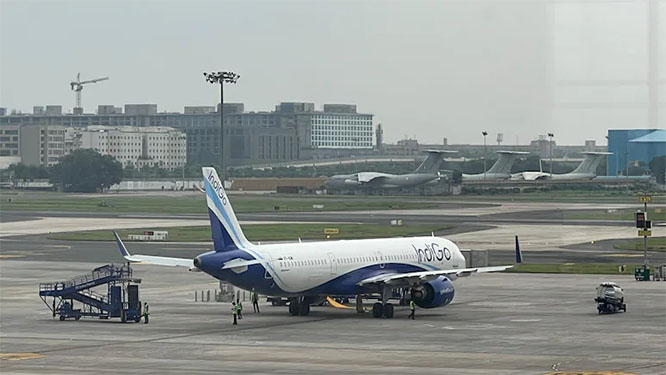
Mangaluru: Chaos erupted at Mangaluru International Airport (MIA) after IndiGo flight 6E 5150, bound for Mumbai, was repeatedly delayed and ultimately cancelled, leaving around 100 passengers stranded overnight. The incident highlights the ongoing country-wide operational disruptions affecting the airline, largely due to the implementation of new Flight Duty Time Limitations (FDTL) norms for crew.

The flight was initially scheduled for 9:25 PM on Tuesday but was first postponed to 11:40 PM, then midnight, before being cancelled around 3:00 AM. Passengers expressed frustration over last-minute communication and the lack of clarity, with elderly and ailing travellers particularly affected. “Though the airline arranged food, there was no proper communication, leaving us confused,” said one family member.

An IndiGo executive at MIA cited the FDTL rules, designed to prevent pilot fatigue by limiting crew working hours, as the cause of the cancellation. While alternative arrangements, including hotel stays, were offered, about 100 passengers chose to remain at the airport, creating tension. A replacement flight was arranged but also faced delays due to the same constraints, finally departing for Mumbai around 1:45 PM on Wednesday. Passengers either flew, requested refunds, or postponed their travel.

The Mangaluru delay is part of a broader crisis for IndiGo. The airline has been forced to make “calibrated schedule adjustments”—a euphemism for widespread cancellations and delays—after stricter FDTL norms came into effect on November 1.

While an IndiGo spokesperson acknowledged unavoidable flight disruptions due to technology issues, operational requirements, and the updated crew rostering rules, the DGCA has intervened, summoning senior airline officials to explain the chaos and outline corrective measures.

The ripple effect has been felt across the country, with major hubs like Bengaluru and Mumbai reporting numerous cancellations. The Mangaluru incident underscores the systemic operational strain currently confronting India’s largest carrier, leaving passengers nationwide grappling with uncertainty and delays.

Comments

Add new comment

  • Coastaldigest.com reserves the right to delete or block any comments.
  • Coastaldigset.com is not responsible for its readers’ comments.
  • Comments that are abusive, incendiary or irrelevant are strictly prohibited.
  • Please use a genuine email ID and provide your name to avoid reject.
News Network
December 13,2025

New Delhi: School-going children are picking up drug and smoking habits and engaging in consumption of alcohol, with the average age of introduction to such harmful substances found to be around 13 years, suggesting a need for earlier interventions as early as primary school, a multi-city survey by AIIMS-Delhi said.

The findings also showed substance use increased in higher grades, with grade XI/XII students two times more likely to report use of substances when compared with grade VIII students. This emphasised the importance of continued prevention and intervention through middle and high school.

The study led by Dr Anju Dhawan of AIIMS's National Drug Dependence Treatment Centre, published in the National Medical Journal of India this month, looks at adolescent substance use across diverse regions.

The survey included 5,920 students from classes 8, 9, 11 and 12 in urban government, private and rural schools across 10 cities -- Bengaluru, Chandigarh, Delhi, Dibrugarh, Hyderabad, Imphal, Jammu, Lucknow, Mumbai, and Ranchi. The data were collected between May 2018 and June 2019.

The average age of initiation for any substance was 12.9 (2.8) years. It was lowest for inhalants (11.3 years) followed by heroin (12.3 years) and opioid pharmaceuticals (without prescription; 12.5 years).

Overall, 15.1 per cent of participants reported lifetime use, 10.3 per cent reported past year use, and 7.2 per cent reported use in the past month of any substance, the study found.

The most common substances used in the past year, after tobacco (4 per cent) and alcohol (3.8 per cent), were opioids (2.8 per cent), followed by cannabis (2 per cent) and inhalants (1.9 per cent). Use of non-prescribed pharmaceutical opioids was most common among opioid users (90.2 per cent).

On being asked, 'Do you think this substance is easily available for a person of your age' separately for each substance category, nearly half the students (46.3 per cent) endorsed that tobacco products and more than one-third of the students (36.5 per cent) agreed that a person of their age can easily procure alcohol products.

Similarly, for Bhang (21.9 per cent), ganja/charas (16.1 per cent), inhalants (15.2 per cent), sedatives (13.7 per cent), opium and heroin (10 per cent each), the students endorsed that these can be easily procured.

About 95 per cent of the children, irrespective of their grade, agreed with the statement that 'drug use is harmful'.

The rates of substance use (any) among boys were significantly higher than those of girls for substance use (ever), use in the past year and use in the past 30 days. Compared to grade VIII students, grade IX students were more likely, and grade XI/XII students were twice as likely to have used any substance (ever).

The likelihood of past-year use of any substance was also higher for grade IX students and for grade XI/XII students as compared to grade VIII students.

About 40 per cent of students mentioned that they had a family member who used tobacco or alcohol each. The use of cannabis (any product) and opioid (any product) by a family member was reported by 8.2 per cent and 3.9 per cent of students, respectively, while the use of other substances, such as inhalants/sedatives by family was 2-3 per cent, the study found.

A relatively smaller percentage of students reported use of tobacco or alcohol among peers as compared to among family members, while a higher percentage reported inhalants, sedatives, cannabis or opioid use among peers.

Children using substances (past year) compared to non-users reported significantly higher any substance use by their family members and peers.

There were 25.7 per cent students who replied 'yes' to the question 'conflicts/fights often occur in your family'. Most students also replied affirmatively to 'family members are aware of how their time is being spent' and 'damily members are aware of with whom they spend their time'.

Comments

Add new comment

  • Coastaldigest.com reserves the right to delete or block any comments.
  • Coastaldigset.com is not responsible for its readers’ comments.
  • Comments that are abusive, incendiary or irrelevant are strictly prohibited.
  • Please use a genuine email ID and provide your name to avoid reject.
News Network
December 15,2025

Mangaluru police have arrested a 27-year-old NRI on his return from Saudi Arabia in connection with an Instagram post allegedly containing derogatory and provocative remarks about the Hindu religion, officials said on Monday.

The accused, Abdul Khader Nehad, a resident of Ulaibettu in Mangaluru, was working in Saudi Arabia when the post was uploaded, police said.

A suo motu case was registered at the Bajpe police station on October 11 after an allegedly offensive post circulated from the Instagram account ‘team_sdpi_2025’. Police said the content was flagged for being provocative and derogatory in nature.

During the investigation, technical analysis traced the Instagram post to Nehad, who was residing abroad at the time, a senior police officer said. Based on these findings, a Look Out Circular (LOC) was issued against him.

On December 14, Nehad arrived from Saudi Arabia at Calicut International Airport in Kerala, where he was taken into custody on arrival. Police said further investigation is underway.

Comments

Add new comment

  • Coastaldigest.com reserves the right to delete or block any comments.
  • Coastaldigset.com is not responsible for its readers’ comments.
  • Comments that are abusive, incendiary or irrelevant are strictly prohibited.
  • Please use a genuine email ID and provide your name to avoid reject.