Richest 1% own 58% of total wealth in India, reveals Oxfam study

January 16, 2017

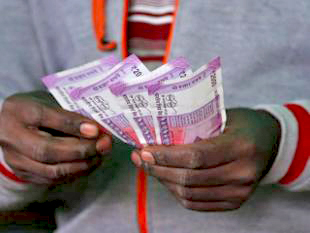
Davos, Jan 16: In signs of rising income inequality, India's richest 1 per cent now hold a huge 58 per cent of the country's total wealth -- higher than the global figure of about 50 per cent, a new study showed today.
poor
The study, released by rights group Oxfam ahead of the World Economic Forum (WEF) annual meeting here attended by rich and powerful from across the world, showed that just 57 billionaires in India now have same wealth (USD 216 billion) as that of the bottom 70 per cent population of the country.

Globally, just 8 billionaires have the same amount of wealth as the poorest 50 per cent of the world population.

The study said there are 84 billionaires in India, with a collective wealth of USD 248 billion, led by Mukesh Ambani (USD 19.3 billion), Dilip Shanghvi (USD 16.7 billion) and Azim Premji (USD 15 billion). The total Indian wealth in the country stood at USD 3.1 trillion.

The total global wealth in the year was USD 255.7 trillion, of which about USD 6.5 trillion was held by billionaires, led by Bill Gates (USD 75 billion), Amancio Ortega (USD 67 billion) and Warren Buffett (USD 60.8 billion).

In the report titled 'An economy for the 99 per cent', Oxfam said it is time to build a human economy that benefits everyone, not just the privileged few.

It said that since 2015, the richest 1 per cent has owned more wealth than the rest of the planet.

"Over the next 20 years, 500 people will hand over USD 2.1 trillion to their heirs –- a sum larger than the GDP of India, a country of 1.3 billion people," Oxfam said.

The study findings showed that the poorest half of the world has less wealth than had been previously thought while over the last two decades, the richest 10 per cent of the population in China, Indonesia, Laos, India, Bangladesh and Sri Lanka have seen their share of income increase by more than 15 per cent.

On the other hand, the poorest 10 per cent have seen their share of income fall by more than 15 per cent.

"Due to a combination of discrimination and working in low-pay sectors, women's wages across Asia are between 70-90 per cent of men's," it said.

Referring to the Global Wage Report 2016-17 of Indian Labour Organisation, the study said India suffers from huge gender pay gap and has among the worst levels of gender wage disparity -- men earning more than women in similar jobs -- with the gap exceeding 30 per cent.

In India, women form 60 per cent of the lowest paid wage labour, but only 15 per cent of the highest wage-earners. It means that in India women are not only poorly represented in the top bracket of wage-earners, but also experience wide gender pay gap at the bottom.

It also said that more than 40 per cent of the 400 million women who live in rural India are involved in agriculture and related activities. However, as women are not recognised as farmers and do not own land, they have limited access to government schemes and credit, restricting their agricultural productivity.

The study also said that the CEO of India's top information firm earns 416 times the salary of a typical employee in his company.

In the US, by contrast, billionaires have frequently chosen to cash out of their businesses, and their wealth has not lasted so long.

In Asia, Singapore and India have a high number of multi-generational billionaires and a lot many people across the globe, including India, will transfer wealth to their heirs in the next 20 years, the study said, while pushing for a need to establish a system of inheritance tax.

It also referred to the world's largest garment companies that have all been linked to cotton-spinning mills in India, which routinely use the forced labour of girls.

"There are evidences against cotton-spinning mills of India, which feed into the world's largest garment companies, using forced labour. As per ILO, there are 5.8 million child labourers in India," it added.

In many parts of the world, corporations are increasingly driven by a single goal -- that is to maximise returns to their shareholders.

In the UK, 10 per cent of profits were returned to shareholders in 1970 and this figure is now 70 per cent.

"In India, the figure is lower, but is growing rapidly, and for many corporations, it is now higher than 50 per cent. In India, as profits have been rising for the 100 largest listed corporations, the share of net profits going to dividends has also increased steadily over the last decade, reaching 34 per cent in 2014/15, with around 12 private corporations paying more than 50 per cent of their profits as dividends," it said.

The report also said the local air pollution caused by burning coal causes around 100,000 premature deaths per year in India.

"South-East Asia and India have both substantial coal power development plants and large populations without access to electricity. While coal provides 75 per cent of the nation's electricity, many areas with the densest concentration of coal plants also have the lowest rates of electricity access," it said.

It asked the Indian government to end the extreme concentration of wealth to end poverty, introduce inheritance tax and increase the wealth tax as the proportion of this tax in total tax revenue is one of the lowest in India.

"Indian government must eliminate tax exemptions and not further reduce corporate tax rates. Governments must support companies that benefit their workers and society rather than just their shareholders," Oxfam said.

"Indian government must crack down on tax dodging by corporates and rich individuals to end the era of tax havens. Government must generate funds needed to invest in healthcare and education. The government must increase its public expenditure on health from 1 per cent GDP to 3 per cent of GDP and on education from 3 per cent of GDP to 6 per cent," it added.

Comments

Shaad
 - 
Monday, 16 Jan 2017

Thats the reason Modi enforce 99% Poor and middle class people to stand in long Que in front of bank and reason to more than 150 lives lost.

Add new comment

  • Coastaldigest.com reserves the right to delete or block any comments.
  • Coastaldigset.com is not responsible for its readers’ comments.
  • Comments that are abusive, incendiary or irrelevant are strictly prohibited.
  • Please use a genuine email ID and provide your name to avoid reject.
coastaldigest.com news network
December 2,2025

karkala.jpg

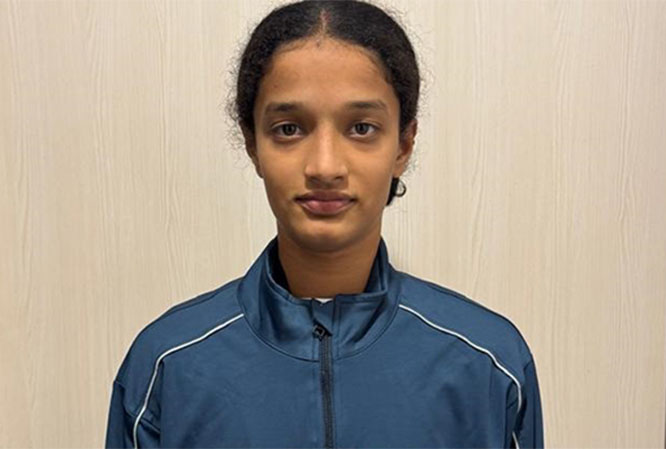
Udupi, Dec 2: A wave of regional pride is sweeping through Udupi district as Shagun S Verma Hegde, a talented Class 9 student from Christ King English Medium High School, Karkala, has been named the captain of the Indian National Team for the Under-15 Girls’ Volleyball Championship.

Shagun holds the unique distinction of being the sole player from Karnataka selected to represent the country in the prestigious international tournament. The championship, organized by the School Games Federation, is scheduled to take place in Shangluo, China, from December 3 to 13, where Shagun will lead the national squad.

A Remarkable Journey to the Top

Shagun’s selection is a testament to her dedication and exceptional skill on the court. Her journey included several rigorous rounds of selection:

•    She was the only player from Udupi district to qualify for the state-level selection camp.

•    Out of eight players from Karnataka who advanced to the national selection camp in Pune, Maharashtra, Shagun was the only one to secure a place in the final national squad.

•    The national camp saw participation from approximately 200 players, which was shortlisted to 23. Shagun not only made the final cut but was also ranked as the second-best player overall, solidifying her leadership role.

Shagun, who is the daughter of Sandesh Verma and Shruthiraj of Kallotte, Karkala, has trained under experienced coaches Santosh D’Souza, Jeevan D’Silva, Jairaj Poojary, and Ramesh. Her selection as the team captain has brought profound honour to her family, school, the Udupi district, and the entire state of Karnataka.

Comments

Add new comment

  • Coastaldigest.com reserves the right to delete or block any comments.
  • Coastaldigset.com is not responsible for its readers’ comments.
  • Comments that are abusive, incendiary or irrelevant are strictly prohibited.
  • Please use a genuine email ID and provide your name to avoid reject.
News Network
December 16,2025

SMR1.jpg

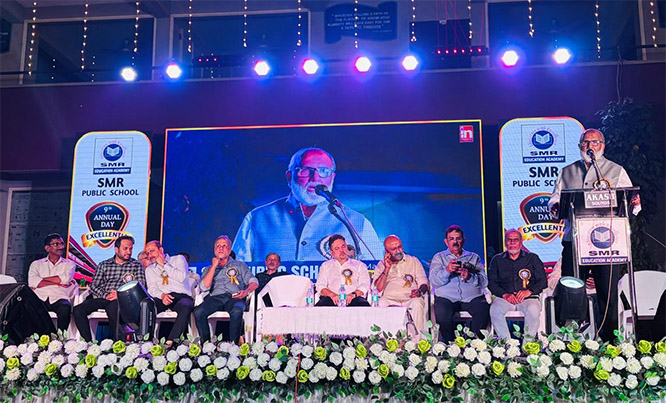
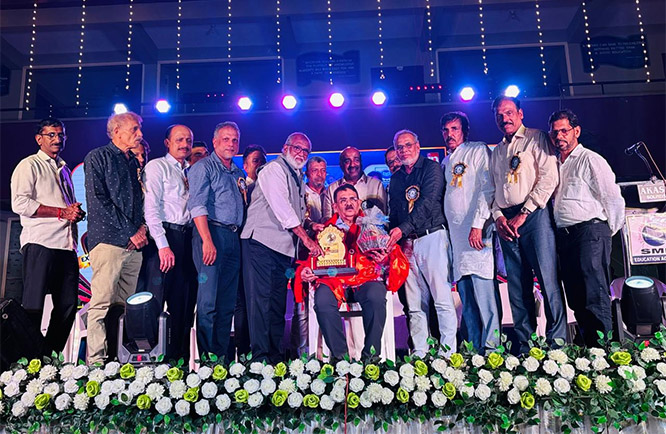
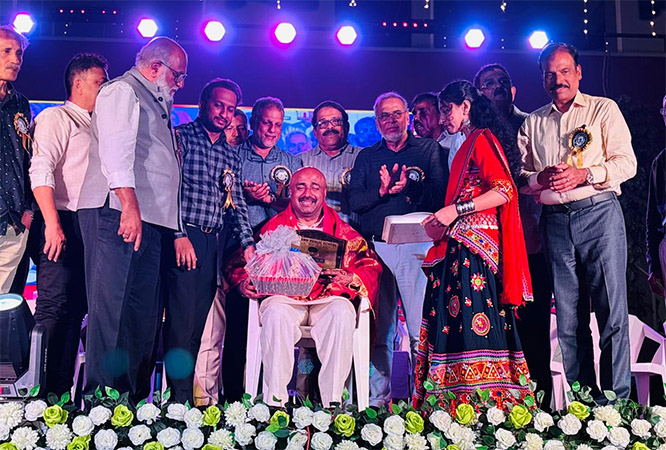
Melkar (Bantwal): The 9th Annual Day celebration of SMR Public School, titled “EXCELLENTIA”, was held on December 15 with great enthusiasm and dignity, marking a significant milestone in the institution’s journey towards academic excellence and holistic development.

The programme was inaugurated by Dr. U. T. Iftikar Ali. The chief guests were Dr. Akhtar Hussain, Mr. P. Moosabba Beary, Mr. Zakaria Jokattre, and Dr. T. M. Abdul Rahuf—whose inspiring addresses motivated the students and appreciated the school’s contributions to education.

Mr. Abdul Nasir, Mr. Ibrahim Gadiyar, Mr. Razak Golthamajal, Mr. Sali Koya, Mr. Arshad Hussain, Mr. Ismail Balanoor, Mr. Feroz Bawa, Mr. Sahul Hameed, Mr. Abubakkar, Mr. Hameed K. Mani, Mr. Abdul Majeed (Principal, Melkar Women’s College), and Mr. Abdul Lathief (Former Principal, Melkar Women’s College) were the guests of honour.

The Annual Report was presented by the Headmistress, Ms. Fathimathul Zaheera, highlighting the school’s achievements and progress during the academic year. The Presidential Address was delivered by the Chairman of SMR Public School, Dr. Haji S. M. Rasheed, who emphasised the vital role of education in shaping students’ futures and stressed the importance of discipline, dedication, and consistent effort in achieving 100 per cent academic results.

Secretary of SMR Public School, Mr. Rifath Ahmed, and PTA President, Mr. Sandeep Kumar, were also present on the occasion.

The Annual Day celebration showcased the collective efforts of students and teachers and reaffirmed the school’s commitment to quality education and all-round development. The programme concluded with a vote of thanks, expressing gratitude to all dignitaries, parents, and well-wishers for their support. The 9th Annual Day—EXCELLENTIA—was a memorable and successful event, leaving a lasting impression on everyone present. 

SMR3.jpg

SMR2.jpg

Comments

Add new comment

  • Coastaldigest.com reserves the right to delete or block any comments.
  • Coastaldigset.com is not responsible for its readers’ comments.
  • Comments that are abusive, incendiary or irrelevant are strictly prohibited.
  • Please use a genuine email ID and provide your name to avoid reject.
News Network
December 15,2025

Udupi, Dec 15: What was meant to be a post-pilgrimage gathering turned tragic in Padukere village of Brahmavar taluk, Udupi district, late Sunday night, when a clash among youths escalated into a fatal assault, leaving one man dead.

The victim has been identified as 30-year-old Santosh Mogaveera, a resident of Padukere.

According to preliminary information, the incident took place during a late-night drinking party involving a group of local youths who had recently returned after completing their pilgrimage to the Sabarimala shrine. An argument reportedly broke out among the group and soon escalated into a violent confrontation.

During the ensuing brawl, Santosh Mogaveera was allegedly assaulted and collapsed at the spot after sustaining serious injuries. He was rushed by local residents to a private hospital in Brahmavar, where doctors declared him dead.

On receiving information, senior police officials, including Brahmavar Circle Inspector Gopikrishna, Kota Police Sub-Inspector Praveen Kumar T, Station ASI Manthesh Jabagoudar, and head constables Pradeep and Ashok, visited the spot and conducted an inspection.

Police have taken four youths into custody in connection with the incident. A case has been registered at the Kota police station, and further investigation is underway to ascertain the exact sequence of events leading to the death.

Comments

Add new comment

  • Coastaldigest.com reserves the right to delete or block any comments.
  • Coastaldigset.com is not responsible for its readers’ comments.
  • Comments that are abusive, incendiary or irrelevant are strictly prohibited.
  • Please use a genuine email ID and provide your name to avoid reject.