



India continues to rank below Pakistan, other neighbours on Inclusive Development Index

Agencies
January 22, 2018

Davos, Jan 22: India was on Monday ranked at the 62nd place among emerging economies on an Inclusive Development Index, much below China's 26th position and Pakistan's 47th. Norway remains the world's most inclusive advanced economy, while Lithuania again tops the list of emerging economies, the World Economic Forum (WEF) said while releasing the yearly index in Davos before the start of its annual meeting, to be attended by several world leaders including Prime Minister Narendra Modi and US President Donald Trump.

The index takes into account the "living standards, environmental sustainability and protection of future generations from further indebtedness", the WEF said. It urged the leaders to urgently move to a new model of inclusive growth and development, saying reliance on GDP as a measure of economic achievement is fuelling short-termism and inequality.

India was ranked 60th among 79 developing economies last year, as against China's 15th and Pakistan's 52nd position.

The 2018 index, which measures progress of 103 economies on three individual pillars -- growth and development; inclusion; and inter-generational equity -- has been divided into two parts. The first part covers 29 advanced economies and the second 74 emerging economies.

The index has also classified the countries into five sub-categories in terms of the five-year trend of their overall Inclusive Development Growth score -- receding, slowly receding, stable, slowly advancing and advancing.

Despite its low overall score, India is among the ten emerging economies with 'advancing' trend. Only two advanced economies have shown 'advancing' trend.

Among advanced economies, Norway is followed by Ireland, Luxembourg, Switzerland and Denmark in the top five. Small European economies dominate the top of the index, with Australia (9) the only non-European economy in the top 10. Of the G7 economies, Germany (12) ranks the highest. It is followed by Canada (17), France (18), the UK (21), the US (23), Japan (24) and Italy (27).

The top-five most inclusive emerging economies are Lithuania, Hungary, Azerbaijan, Latvia and Poland.

Performance is mixed among BRICS economies, with the Russian Federation ranking 19th, followed by China (26), Brazil (37), India (62) and South Africa (69).

Of the three pillars that make up the index, India ranks 72nd for inclusion, 66th for growth and development and 44th for inter-generational equity.

The neighbouring countries ranked above India include Sri Lanka (40), Bangladesh (34) and Nepal (22). The countries ranked better than India also include Mali, Uganda, Rwanda, Burundi, Ghana, Ukraine, Serbia, Philippines, Indonesia, Iran, Macedonia, Mexico, Thailand and Malaysia.

Although China ranks first among emerging economies in GDP per capita growth (6.8 per cent) and labour productivity growth (6.7 per cent) since 2012, its overall score is brought down by lacklustre performance on inclusion, the WEF said.

It found that decades of prioritising economic growth over social equity has led to historically high levels of wealth and income inequality and caused governments to miss out on a virtuous circle in which growth is strengthened by being shared more widely and generated without unduly straining the environment or burdening future generations.

Excessive reliance by economists and policy-makers on Gross Domestic Product as the primary metric of national economic performance is part of the problem, the WEF said.

The GDP measures current production of goods and services rather than the extent to which it contributes to broad socio-economic progress as manifested in median household income, employment opportunity, economic security and quality of life, it added.

The WEF also said that rich and poor countries alike are struggling to protect future generations, as it cautioned political and business leaders against expecting higher growth to be a panacea for the social frustrations, including those of younger generations who have shaken the politics of many countries in recent years.

Comments

Well Wisher
 - 
Monday, 22 Jan 2018

Effect of Acche Din saar.

en maadodhu namma karma. mangan kaiyalli manikya sikkideyalla

Add new comment

  • Coastaldigest.com reserves the right to delete or block any comments.
  • Coastaldigset.com is not responsible for its readers’ comments.
  • Comments that are abusive, incendiary or irrelevant are strictly prohibited.
  • Please use a genuine email ID and provide your name to avoid reject.
News Network
November 24,2025

israelsyra.jpg

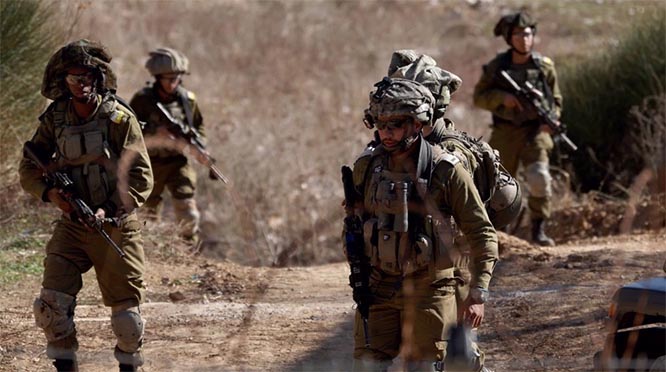
Israeli forces have pushed over the Syrian frontier, erecting a checkpoint and stopping vehicles in the southwestern city of Quneitra, in yet another breach of the Arab country’s sovereignty.

The violation took place on Sunday, when the troops made their way across the border, setting up the outpost near the Ain al-Bayda junction in northern Quneitra, Syrian outlets reported.

According to the al-Ikhbariya paper, an Israeli detachment positioned itself at the junction, halting cars and conducting searches.

The Syrian Arab News Agency (SANA) reported that three Israeli military vehicles then moved further into the northern countryside, deploying between the town of Jubata al-Khashab and the villages of Ofaniya and Ain al-Bayda. The agency added that a separate Israeli unit mounted a new incursion in the central region, approaching the villages of Umm Batina and al-Ajraf.

Residents said such activities have surged in recent months, pointing to Israeli advances onto farmland, leveling of extensive forested areas, arrests, and spread of mobile checkpoints.

The Israeli regime began markedly increasing its military aggression against Syria last year.

The escalation coincided with increasingly ferocious onslaughts throughout the country by the so-called Hay'at Tahrir al-Sham (HTS) Takfiri terrorist group, which the government of President Bashar al-Assad had confined to northwestern Syria. The HTS, however, managed to overthrow the government as the Israeli attacks would pummel the country’s civilian and defensive infrastructure.

Various reports have shown that, during the escalation, the regime conducted more than 1,000 airstrikes on the Syrian territory and over 400 ground raids into the south.

Following the collapse of the Assad government, Tel Aviv also widened its grip over the occupied Golan Heights by taking control of a demilitarized buffer zone, in defiance of a 1974 Disengagement Agreement. Earlier this month, senior Israeli officials, including Prime Minister Benjamin Netanyahu, visited the buffer zone, prompting expressions of alarm on the part of the United Nations.

The United States, the regime’s biggest ally, has, meanwhile, been fraternizing the HTS head Abu Mohammed al-Jolani amid the widely reported prospect of rapprochement with Tel Aviv.

Comments

Add new comment

  • Coastaldigest.com reserves the right to delete or block any comments.
  • Coastaldigset.com is not responsible for its readers’ comments.
  • Comments that are abusive, incendiary or irrelevant are strictly prohibited.
  • Please use a genuine email ID and provide your name to avoid reject.
News Network
December 6,2025

pilot.jpg

New Delhi: IndiGo, India’s largest airline, faced major operational turbulence this week after failing to prepare for new pilot-fatigue regulations issued by the Directorate General of Civil Aviation (DGCA). The stricter rules—designed to improve flight safety—took effect in phases through 2024, with the latest implementation on November 1. IndiGo has acknowledged that inadequate roster planning led to widespread cancellations and delays.

Below are the key DGCA rules that affected IndiGo’s operations:

1. Longer Mandatory Weekly Rest

Weekly rest for pilots has been increased from 36 hours to 48 hours.

The government says the extended break is essential to curb cumulative fatigue. This rule remains in force despite the current crisis.

2. Cap on Night Landings

Pilots can now perform only two night landings per week—a steep reduction from the earlier limit of six.

Night hours, defined as midnight to early morning, are considered the least alert period for pilots.

Given the disruptions, this rule has been temporarily relaxed for IndiGo until February 10.

3. Reduced Maximum Night Flight Duty

Flight duty that stretches into the night is now capped at 10 hours.

This measure has also been kept on hold for IndiGo until February 10 to stabilize operations.

4. Weekly Rest Cannot Be Replaced With Personal Leave

Airlines can no longer count a pilot’s personal leave as part of the mandatory 48-hour rest.

Pilots say this closes a loophole that previously reduced actual rest time.

Currently, all airlines are exempt from this rule to normalise travel.

5. Mandatory Fatigue Monitoring

Airlines must submit quarterly fatigue reports along with corrective actions to DGCA.

This system aims to create a transparent fatigue-tracking framework across the industry.

The DGCA has stressed that these rules were crafted to strengthen flight safety and align India with global fatigue-management standards. The temporary relaxations are expected to remain until February 2025, giving IndiGo time to stabilise its schedules and restore normal air travel.

Comments

Add new comment

  • Coastaldigest.com reserves the right to delete or block any comments.
  • Coastaldigset.com is not responsible for its readers’ comments.
  • Comments that are abusive, incendiary or irrelevant are strictly prohibited.
  • Please use a genuine email ID and provide your name to avoid reject.
News Network
November 27,2025

Bengaluru, Nov 27: Karnataka Chief Minister Siddaramaiah’s camp is reportedly on alert as the Congress leadership tussle in the state intensifies, particularly amid speculation over the potential promotion of Deputy Chief Minister D.K. Shivakumar. Siddaramaiah is said to be in a “wait-and-watch” mode after admitting to “confusion” earlier this week and urging the party to “put a full stop” to it.

Sources say his supporters are ready to act if senior leaders — including party chief Mallikarjun Kharge, Sonia Gandhi, and Rahul Gandhi — give any indication of backing Shivakumar. If the party insists on a leadership change, Siddaramaiah’s camp has a list of alternatives, underscoring the deep rift between the two leaders. One possible candidate is Home Minister G. Parameshwara, a Siddaramaiah loyalist and influential Dalit leader.

The strategy was reportedly finalized at a meeting led by PWD Minister Satish Jarkiholi, another Siddaramaiah supporter, who stressed that Delhi leaders need to resolve the issue. Kharge and the Gandhis are expected to meet soon, after which Siddaramaiah and Shivakumar may be summoned to Delhi.

Shivakumar has largely stayed non-confrontational, publicly endorsing Siddaramaiah and downplaying speculation about his own ambitions. However, he has made pointed comments emphasizing the importance of honoring promises, directed at Siddaramaiah.

The feud traces back to the 2023 state election, when Siddaramaiah was chosen as Chief Minister while Shivakumar, who led the party’s campaign, was made Deputy CM and state party chief — a departure from the Congress’ usual “one post per person” rule.

There were also hints of a prior understanding that Siddaramaiah would step down midway through the term. As the halfway mark passed last week, Shivakumar-aligned lawmakers have ramped up pressure on the party for a leadership change, with Shivakumar himself hinting at stepping down as state party chief to pursue the top job.

Comments

Add new comment

  • Coastaldigest.com reserves the right to delete or block any comments.
  • Coastaldigset.com is not responsible for its readers’ comments.
  • Comments that are abusive, incendiary or irrelevant are strictly prohibited.
  • Please use a genuine email ID and provide your name to avoid reject.
