The deep strategy behind the stupid ‘mytho-scientific’ statements of BJP leaders

Samvartha ‘Sahil’ | coastaldigest.com
April 19, 2018

Biplab Kumar Deb, the Chief Minister of Tripura, recently made a controversial comment which has since then gone viral and within a day has garnered support from many including the Governor of the state. Speaking at a Regional Workshop on Computerisation and Reforms at Pragna Bhawan in Agartala on April 17, 2018, the Bharatiya Janata Party leader said that the internet was invented by India and substantiated his claim by explaining thus: "Internet and satellite communication had existed in the days of Mahabharata. How could Sanjaya (the charioteer of King Dhritarashtra in the epic) give a detailed account and description to the blind king about the battle of Kurukshetra? It means internet was there, the satellites and that technology were there in this country at that time.”

As expected the statement met great criticism where the social media went mad mocking the statement and extending it to severe jokes around the text of Mahabharata and the possible connections one could make to the details of the text with internet and satellite.

While on the surface it appears like an act of stupidity on the part of the BJP to be repeatedly making similar statements, if one has to think why the party members make such statements, even if they believe it to be true, again and again when every time their statements of this kind is laughed at mocked at and ridiculed.

What looks like an act of stupidity might be a strategy too, it appears.

The reason for me to arrive at this suspicion is simple: When someone from the Sangh Parivar makes such claims, within no time the critics of the BJP and the RSS along with some liberals come up with several memes and jokes which more than often appear like ridiculing the text of Mahabharata and Ramayana than actually ridiculing the BJP or the RSS. This to the majoritarian community members, including a lot of apolitical kinds, get a feeling that their religion is facing threat and is being disrespected. This sense of threat makes them extend their support to the BJP which claims to be for the safeguard of the majoritarian community. So when the saffronists make stupid statements and invite the opponents and liberals to respond to it, the chief beneficiary is the BJP and its mother institution the RSS.

This works for the BJP and the RSS as they wish because of the decades of work they have done by which they have politicized religion and more importantly historicized mythology and mystified history. Years of effort has not just made Ayodhaya, a historically not so significant pilgrimage centre for the Hindus, into a significant centre in the minds of the Hindus, but also linked the mythological texts of Mahabharata and Ramayana to the identity of Hindus. Though it was Anandavardhana who centuries ago first called the ‘kaavya’ of Mahabharata, a ‘shaastra’, bringing about a major shift in the way epics are perceived, it was the 20th century politics of the RSS which linked both Mahabharata and especially Ramayana, to the identity of the Hindus and also politicized religion and thus the texts. With that achieved now whenever who critiques the texts of Mahabharata and Ramayana or mocks at it, end up not just “hurting the religious sentiments” of Hindus, though neither of them are religious texts, but also cements the support of Hindus for the BJP.

The greatest tragedy of all this is the texts of Mahabharata and Ramayana becoming either a text to worship or ridicule. While the BJP and its supporters do a religious reading of the epics, the liberals and radicals do a very ideological reading of the epics. Both the extremes fail to see the texts as poetry, as an inquiry into the human existence. Both the extremes distort the inherent philosophy of the text. In this boxing ring we all have lost a poetry which has the ability to illuminate our lives.

If it’s the poetry which is lost in this tug of war, the clear cut winner is of course the BJP, which reaps the benefits also of the criticism that comes their way.

The radicals need to find ways in which the strategies of the BJP can be punctured; especially when it comes to texts such as Mahabharata and Ramayana. Else the valid and creative criticism of the ways in which the BJP looks at these texts will go a waste and only become a cause for strengthening the base of the BJP. While it is difficult now for the radicals to call out the BJP for distorting the epics by politicizing them, the least they can do and should do is not to fall into the trap and help the rightist ideology.


[Samvartha ‘Sahil’ is a freelance writer based out of Manipal, Karnataka. An alumnus of Jawaharlal Nehru University, Delhi and the Film and Television Institute of India, Pune he has earlier worked as an academician at Manipal University and as a journalist with The Hindu. His book on the travel experiences in Jammu and Kashmir during the 2016 uprising is about to be published by the Karnataka Sahitya Akademi.]

Comments

Arron Menezes
 - 
Saturday, 12 May 2018

This is a  valid explanation. either i too dnt see any possible benefit in connecting religion to todays science.

there is one more point, negative publicity also makes more impact than positive one. ridiculing our epics will create impact as rightly said attacking religious views, and feeling of endangerment.


Indians are by and far religious in nature and anything spoken against, religion or god makes them offended. that negativity will subliminally helps to negate anything else to flurish. Reasoning becomes less when one is overwhelmed by negativity.


nice article. looking forward for more.

J. M.
 - 
Friday, 20 Apr 2018

seems like a typical left conspiracy theorist.


Never attribute to malice that which is adequately explained by stupidity.

- Hanlons Razer

Hari
 - 
Thursday, 19 Apr 2018

The reason behind the "fool decision" strategy is simple..


By those decision we may mock them, but wont protest against him. and he can easily divert people's attention from the actual issue/sim/trick

Xavier
 - 
Thursday, 19 Apr 2018

Even Modi's intention is different.. actually they making us fool by pretending as fools. That Digital money issue proves their hidden agenda. He made Paytm owner a richer guy by  one night.

Danish
 - 
Thursday, 19 Apr 2018

Great observation.. good job sahil

Kumar
 - 
Thursday, 19 Apr 2018

True.. Some fools might be there in BJP but party wont consist fully with only fools

Ganesh
 - 
Thursday, 19 Apr 2018

I felt the same. They are making us fool

Add new comment

  • Coastaldigest.com reserves the right to delete or block any comments.
  • Coastaldigset.com is not responsible for its readers’ comments.
  • Comments that are abusive, incendiary or irrelevant are strictly prohibited.
  • Please use a genuine email ID and provide your name to avoid reject.
coastaldigest.com news network
January 19,2026

rizwanzameer.jpg

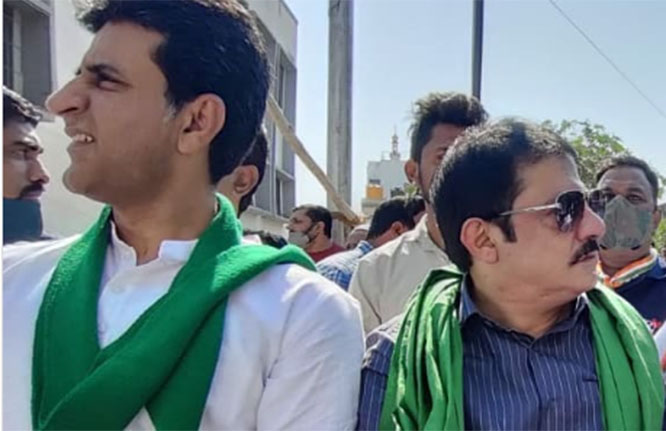
Bengaluru: As the dust settles on the recent legislative session, the corridors of Vidhana Soudha are buzzing with more than just policy talk. A high-stakes game of political musical chairs has begun, exposing a deepening rift within the Congress party’s Muslim leadership as a major Cabinet reshuffle looms.

With the party hierarchy signaling a "50% refresh" to gear up for the 2028 Assembly elections, the race to fill three projected Muslim ministerial berths has transformed from a strategic discussion into an all-out turf war.

The "Star Son" Spark

The internal friction turned public this week following provocative remarks by Zaid Khan, actor and son of Wakf Minister Zameer Ahmed Khan. Zaid’s claim—that his father "helped" secure a ticket for Shivajinagar MLA Rizwan Arshad in 2023—has acted as a lightning rod for resentment.

Rizwan’s camp was quick to fire back, dismissing the comment as a desperate attempt by Zameer to manufacture seniority. "Rizwan’s political pedigree was forged in the NSUI and Youth Congress long before Zameer even stepped into the party," a supporter noted, highlighting Rizwan’s tenure as an AICC secretary and his two-term presidency of the State Youth Congress.

A Tale of Two Loyalists

While both Zameer Ahmed Khan and Rizwan Arshad are staunch allies of Chief Minister Siddaramaiah and represent Bengaluru strongholds, their political DNA could not be more different:

•    Zameer Ahmed Khan: A four-time MLA who crossed over from JD(S) in 2018. Known for his "overzealous" and often polarizing outreach during communal flashpoints—from the DJ Halli riots to the recent Wakf land notice controversy—his style has frequently left the Congress high command in a state of "discomfort."

•    Rizwan Arshad: A homegrown organizational man. Seen as a "quiet performer," Arshad represents the sophisticated, moderate face of the party, preferred by those who find Zameer’s brand of politics too volatile.

The Outsiders Looking In

The bickering isn't limited to a duo. The "Beary" community, represented by leaders like N A Haris and Saleem Ahmed, is demanding its pound of flesh. Saleem Ahmed, the Chief Whip in the Legislative Council, has dropped the veil of diplomacy, openly declaring his ministerial aspirations.

"I was the only working president not included in the Cabinet last time," Saleem noted pointedly, signaling that the "loyalty quota" is no longer enough to keep the peace.

As Chief Minister Siddaramaiah prepares to finalize the list, he faces a delicate balancing act: rewarding the aggressive grassroots mobilization of Zameer’s camp without alienating the organizational stalwarts and minority sub-sects who feel increasingly sidelined by the "Chamarajpet-Shivajinagar" binary.

Comments

Add new comment

  • Coastaldigest.com reserves the right to delete or block any comments.
  • Coastaldigset.com is not responsible for its readers’ comments.
  • Comments that are abusive, incendiary or irrelevant are strictly prohibited.
  • Please use a genuine email ID and provide your name to avoid reject.
News Network
January 20,2026

KCFabudhabi.jpg

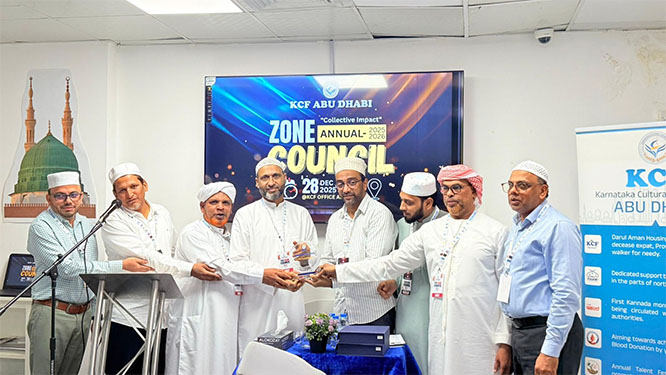
KCF, a global socio-cultural organisation of Karnataka expatriates, is actively involved in education, humanitarian initiatives and community well-being across several countries. The awardees were selected following a structured evaluation of nominations by the Annual Council Program Committee, based on the depth, consistency and long-term impact of their social service.

One of the award recipients, Abdul Razak Haji, a prominent UAE-based entrepreneur from the Qamcon Group of Companies, was honoured for his significant contributions to society. Through both his professional journey and personal initiatives, he has supported numerous employees and families, while also extending assistance in education, housing for the underprivileged and various charitable causes, largely carried out quietly over the years. His award was presented earlier during the Annual Council Program held at the KCF Abu Dhabi office.

The second award was conferred on Latheef Kakkinje, a young social worker based in Abu Dhabi, in recognition of his active involvement in community engagement programmes, sports initiatives, talent festivals and family-oriented social activities. His consistent volunteering efforts and commitment to humanitarian causes were highly appreciated by the selection committee.

The award presentation ceremony for Latheef Kakkinje was held at the Zayed Cricket Stadium (Astro Turf Ground) in the presence of Kedumbady Ibrahim Saqafi, President of KCF UAE; Ibrahim, General Secretary; Kabeer Bayambady, President of KCF Abu Dhabi; Ummer Ishwaramangila, General Secretary; along with other members of the KCF Abu Dhabi cabinet.

Congratulating both awardees, KCF leaders reiterated the organisation’s commitment to recognising individuals who selflessly work for social upliftment and community service.

KCFabudhabi1.jpg

Comments

Add new comment

  • Coastaldigest.com reserves the right to delete or block any comments.
  • Coastaldigset.com is not responsible for its readers’ comments.
  • Comments that are abusive, incendiary or irrelevant are strictly prohibited.
  • Please use a genuine email ID and provide your name to avoid reject.
News Network
January 23,2026

Karnataka Governor Thaawarchand Gehlot read only three lines from the 122-paragraph address prepared by the Congress-led state government while addressing the joint session of the Legislature on Thursday, effectively bypassing large sections critical of the BJP-led Union government.

The omitted portions of the customary Governor’s address outlined what the state government described as a “suppressive situation in economic and policy matters” under India’s federal framework. The speech also sharply criticised the Centre’s move to replace the Mahatma Gandhi National Rural Employment Guarantee Act (MGNREGA) with the Viksit Bharat–Guarantee for Rozgar and Ajeevika Mission (Gramin) Act, commonly referred to as the VB-GRAM (G) Act.

Governor Gehlot had earlier conveyed his objection to several paragraphs that were explicitly critical of the Union government. On Thursday, he confined himself to the opening lines — “I extend a warm welcome to all of you to the joint session of the State legislature. I am extremely pleased to address this august House” — before jumping directly to the concluding sentence of the final paragraph.

He ended the address by reading the last line of paragraph 122: “Overall, my government is firmly committed to doubling the pace of the State’s economic, social and physical development. Jai Hind — Jai Karnataka.”

According to the prepared speech, the Karnataka government demanded the scrapping of the VB-GRAM (G) Act, describing it as “contractor-centric” and detrimental to rural livelihoods, and called for the full restoration of MGNREGA. The state government argued that the new law undermines decentralisation, weakens labour protections, and centralises decision-making in violation of constitutional norms.

Key points from the unread sections of the speech:

•    Karnataka facing a “suppressive” economic and policy environment within the federal system

•    Repeal of MGNREGA described as a blow to rural livelihoods

•    VB-GRAM (G) Act accused of protecting corporate and contractor interests

•    New law alleged to weaken decentralised governance

•    Decision-making said to be imposed by the Centre without consulting states

•    Rights of Adivasis, women, backward classes and agrarian communities curtailed

•    Labourers allegedly placed under contractor control

•    States facing mounting fiscal stress due to central policies

•    VB-GRAM (G) Act accused of enabling large-scale corruption

Comments

Add new comment

  • Coastaldigest.com reserves the right to delete or block any comments.
  • Coastaldigset.com is not responsible for its readers’ comments.
  • Comments that are abusive, incendiary or irrelevant are strictly prohibited.
  • Please use a genuine email ID and provide your name to avoid reject.