'Change is Clearly Visible': PM Modi Sees India as $10 Trillion Economy with Countless Start-ups

Agencies
February 23, 2019

New Delhi, Feb 23: Prime Minister Narendra Modi Saturday made a strong re-election pitch to corporate India as he drew contrasts between the governance styles of Congress and his party, saying competition for corruption in the previous regime had been replaced by highest growth rate and lowest inflation of post-liberalisation era.

Addressing the Economic Times' Global Business Summit here, Modi elaborated on his vision for making India a USD 10-trillion economy and the world's third largest is one where the country has countless startups and is a global leader in renewable energy sources and electric vehicles.

Back-breaking inflation, increasing current account deficit and higher fiscal deficit threatened macro-economic stability of the country just before the BJP-led NDA came to power in May 2014, he said.

Launching a blistering attack on governance under UPA, he said there was a "competition between ministries, a competition between individuals, a competition on corruption (and) a competition on delays."

"There was competition on who could do maximum corruption, there was competition on could do the fastest corruption, there was competition on who could do most innovation in corruption," he said, adding that there was competition on where more money could be made - in coal allocation or spectrum allocation, in commonwealth games or in defence deals.

"We all saw that and we also know who were the main players involved in this competition," he said.

This under the present regime, all this has been replaced by a competition to attract more investment and to build houses for the poor, he said.

There is a competition to see if all habitations are connected with road first or all homes with gas connection first, as well as a competition to get 100 per cent sanitation first, or 100 per cent electrification first, he asserted, adding that there is a competition between ministries and states on development for achieving targets.

"During 2014-19, the country would register an average growth of 7.4 per cent and the average inflation would be less than 4.5 per cent. Post liberalisation of the Indian economy, this will be the highest rate of average growth and lowest rate of average inflation witnessed during the period of any government," he said.

"It was said that governments cannot be pro-growth and pro-poor at the same time, but people of India are making it possible," Modi added.

"The country was facing total policy paralysis (before 2014). This was preventing the economy from reaching the level which it was worthy of. The global fraternity was worried about the health of this member of the fragile-five club. There was a perception of surrender to existing circumstances," he said.

But after 2014, hesitations have been replaced by hope, obstacles by optimism and issues by initiatives, he said. "Today change is clearly visible."

The Prime Minister said he wants India to become a USD 10-trillion economy and the third largest in the world.

India currently is a USD 2.5 trillion economy and the sixth-largest in the world.

"We want to make an India of countless startups. We want to lead the global drive towards renewable sources of energy. We want to give our people energy security. We want to cut down on import dependence. We want to make India a world leader in electric vehicles and energy storage devices.

"With these goals in mind, let us re-dedicate ourselves to create a New India of our dreams, he said.

Having missed the past three industrial revolutions, India, he said, is an active contributor to the fourth industrial revolution.

"What happened in the past is not in our hands, but what will happen in the future is firmly in our hands," he said recounting the steps taken by his government to improve the economy.

He credited the progress made to the support and partnership of the people of the country, saying the progress made since 2014 has given him confidence that nothing is impossible.

"Namumkin ab mumkin hai (impossible is now possible)," he said.

'Namumkin ab mumkin hai' is BJP's re-election slogan for the 2109 general elections.

"For decades, a narrative was made that certain things are just impossible in India. It was said that making a clean India was impossible, but the people of India are making it possible. It was said that a corruption-free government in India was impossible, but the people of India have made it possible.

"It was said that it is impossible to remove corruption from the process of giving people their dues, but people of India are making it possible. It was said that it is impossible for the poor to leverage the power of technology, but the people of India are making it possible.

"It was said that removing discretion and arbitrariness in policy making was impossible, but people of India are making it possible. It was said that economic reforms in India were impossible, but the people of India are making it possible. It was said that governments cannot be pro-growth and pro-poor at the same time, but people of India are making it possible," he said.

Highlighting his government's industry-friendly policies, he said a business with a turnover of up to Rs 40 lakh does not have to register for gods and services tax (GST), one with a turnover of up to Rs 60 lakh does not have to pay any income tax and a business with a turnover of up to Rs 1.5 crore is eligible for the composition scheme.

Comments

Ismail khalil ahmef
 - 
Saturday, 23 Feb 2019

Definitely all changes visible GST,Demontsn,15 lakh,unemployment,make in pakoda,hatred, lynching,mob attack,writers and journalist death,pulwama.........ooooooh .....no end,only EVM vote BJP.10 trillion biggest Jumla.

Add new comment

  • Coastaldigest.com reserves the right to delete or block any comments.
  • Coastaldigset.com is not responsible for its readers’ comments.
  • Comments that are abusive, incendiary or irrelevant are strictly prohibited.
  • Please use a genuine email ID and provide your name to avoid reject.
News Network
December 5,2025

indigoCEO.jpg

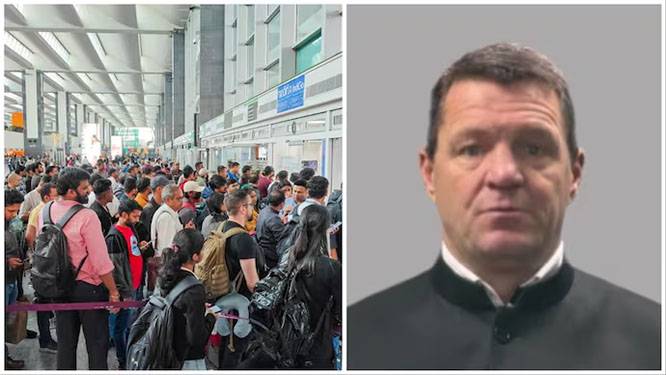
New Delhi, Dec 5: IndiGo CEO Pieter Elbers issued a public apology this evening after more than a thousand flights were cancelled today, making it the "most severely impacted day" in terms of cancellations. The biggest airline of the country cancelled "more than half" of its daily number of flights on Friday, said Elbers. He also said that even though the crisis will persist on Saturday, the airline anticipates fewer than 1,000 flight cancellations.

"Full normalisation is expected between December 10 and 15, though IndiGo cautions that recovery will take time due to the scale of operations," the IndiGo CEO said. 

IndiGo operates around 2,300 domestic and international flights daily.

Pieter Elbers, while apologising for the major inconvenience due to delays and cancellations, said the situation is a result of various causes.

The crisis at IndiGo stems from new regulations that boost pilots' weekly rest requirements by 12 hours to 48 and allow only two night-time landings per week, down from six. IndiGo has attributed the mass cancellations to "misjudgment and planning gaps".

Elbers also listed three lines of action that the airline will adopt to address the issue.

"Firstly, customer communication and addressing your needs, for this, messages have been sent on social media. And just now, a more detailed communication with information, refunds, cancellations and other customer support measures was sent," he said.

The airline has also stepped up its call centre capacity.

"Secondly, due to yesterday's situation, we had customers stranded mostly at the nation's largest airports. Our focus was for all of them to be able to travel today itself, which will be achieved. For this, we also ask customers whose flights are cancelled not to come to the airports as notifications are sent," the CEO said.

"Thirdly, cancellations were made for today to align our crew and planes to be where they need to start tomorrow morning afresh. Earlier measures of the last few days, regrettable, have proven not to be enough, but we have decided today to reboot all our systems and schedules, resulting in the highest numbers of cancellations so far, but imperative for progressive improvements starting from tomorrow," he added.

As airports witnessed chaotic scenes, the Directorate General of Civil Aviation (DGCA) stepped in to grant IndiGo a temporary exemption from stricter night duty rules for pilots. It also allowed substitution of leaves with a weekly rest period. 

Civil Aviation Minister Ram Mohan Naidu has said a high-level inquiry will be ordered and accountability will be fixed.

Comments

Add new comment

  • Coastaldigest.com reserves the right to delete or block any comments.
  • Coastaldigset.com is not responsible for its readers’ comments.
  • Comments that are abusive, incendiary or irrelevant are strictly prohibited.
  • Please use a genuine email ID and provide your name to avoid reject.
News Network
December 17,2025

melkar1.jpg

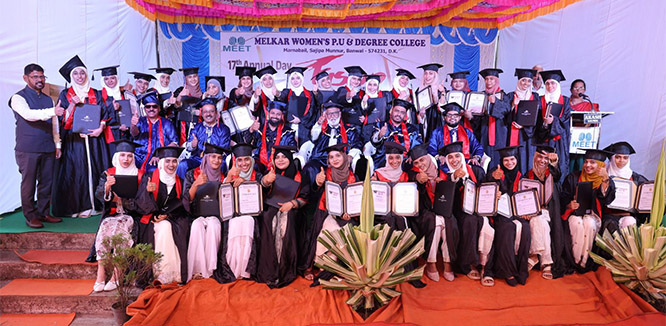
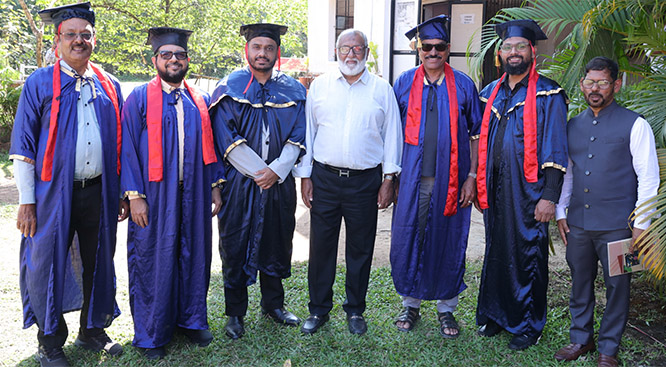
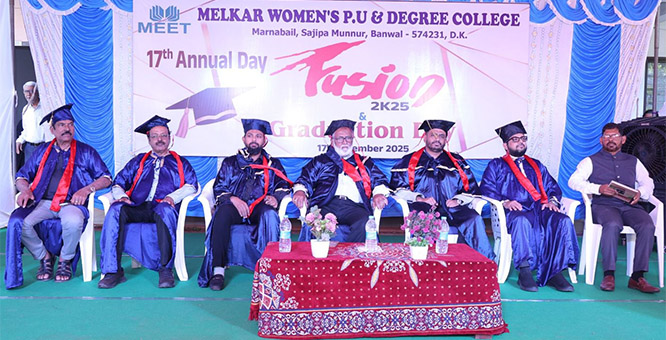
Melkar, Dec 17: The 17th Annual Day and Graduation Ceremony of Melkar Women’s PU and Degree College, themed “Fusion-2K25,” was celebrated with dignity and enthusiasm, marking a significant milestone in the institution’s academic journey. The programme reflected the college’s steadfast commitment to academic excellence, character building, and the holistic development of students.

The event was inaugurated by Mr. Asif Mohammed, whose presence greatly enriched the occasion. The celebration was further graced by the chief guests Mr. P. B. Ahmed Mudassir and Mr. Nissar Fakeer Mohammed, along with the distinguished guests of honour Mr. B. A. Nazeer and Mr. Ibrahim Gadiyar. In their inspiring addresses, the guests encouraged the graduating students and appreciated the dedicated efforts of the management, faculty, and students.

The annual report was presented by the Principal, Mr. Abdul Majeed S, highlighting the institution’s academic progress, notable achievements, and extracurricular accomplishments during the academic year.

The presidential address was delivered by the esteemed Chairman of Melkar Women’s PU and Degree College, Dr. Haji S. M. Rasheed, who emphasized the vital role of education in empowering women and shaping responsible citizens. He also stressed the importance of discipline, dedication, and perseverance in achieving success.

Cultural programmes and academic recognitions formed an integral part of the celebration, showcasing the talents and achievements of the students. The graduation ceremony was a proud moment for the outgoing students as they were formally conferred degrees and wished success in their future endeavours.

Ms. Mashmooma Fathima served as the Master of Ceremonies. The welcome address was delivered by Ms. Fathima Nida, and the programme concluded with a vote of thanks proposed by Ms. Ayisha Suhana.

The event successfully achieved its objectives and was highly appreciated by the guests and attendees.

melkar3.jpg

melkar2.jpg

Comments

Add new comment

  • Coastaldigest.com reserves the right to delete or block any comments.
  • Coastaldigset.com is not responsible for its readers’ comments.
  • Comments that are abusive, incendiary or irrelevant are strictly prohibited.
  • Please use a genuine email ID and provide your name to avoid reject.
News Network
December 6,2025

pilot.jpg

New Delhi: IndiGo, India’s largest airline, faced major operational turbulence this week after failing to prepare for new pilot-fatigue regulations issued by the Directorate General of Civil Aviation (DGCA). The stricter rules—designed to improve flight safety—took effect in phases through 2024, with the latest implementation on November 1. IndiGo has acknowledged that inadequate roster planning led to widespread cancellations and delays.

Below are the key DGCA rules that affected IndiGo’s operations:

1. Longer Mandatory Weekly Rest

Weekly rest for pilots has been increased from 36 hours to 48 hours.

The government says the extended break is essential to curb cumulative fatigue. This rule remains in force despite the current crisis.

2. Cap on Night Landings

Pilots can now perform only two night landings per week—a steep reduction from the earlier limit of six.

Night hours, defined as midnight to early morning, are considered the least alert period for pilots.

Given the disruptions, this rule has been temporarily relaxed for IndiGo until February 10.

3. Reduced Maximum Night Flight Duty

Flight duty that stretches into the night is now capped at 10 hours.

This measure has also been kept on hold for IndiGo until February 10 to stabilize operations.

4. Weekly Rest Cannot Be Replaced With Personal Leave

Airlines can no longer count a pilot’s personal leave as part of the mandatory 48-hour rest.

Pilots say this closes a loophole that previously reduced actual rest time.

Currently, all airlines are exempt from this rule to normalise travel.

5. Mandatory Fatigue Monitoring

Airlines must submit quarterly fatigue reports along with corrective actions to DGCA.

This system aims to create a transparent fatigue-tracking framework across the industry.

The DGCA has stressed that these rules were crafted to strengthen flight safety and align India with global fatigue-management standards. The temporary relaxations are expected to remain until February 2025, giving IndiGo time to stabilise its schedules and restore normal air travel.

Comments

Add new comment

  • Coastaldigest.com reserves the right to delete or block any comments.
  • Coastaldigset.com is not responsible for its readers’ comments.
  • Comments that are abusive, incendiary or irrelevant are strictly prohibited.
  • Please use a genuine email ID and provide your name to avoid reject.