'Go to Pakistan': Pakistan and Muslims of India

Ram Puniyani
January 9, 2020

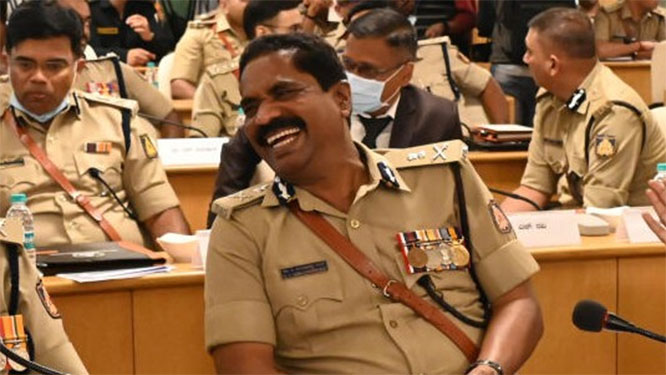
‘Go to Pakistan’ has probably been most often used phrase used against Muslims in India. Recently in yet another such incident the SP of Meerut, UP has been in the news and a video is circulating where he, Akhilesh Narayan Singh, is allegedly using the jibe ‘Go to Pakistan’. In the video he is seen shouting at protestors at Lisari Gate area in Meerut, “The ones (protestors) wearing those black or yellow armbands, tell them to go to Pakistan”. His seniors stood by him calling it ‘natural reaction to shouting of pro Pakistan slogans. Many BJP leaders like Uma Bhararti also defended the officer. Breaking ranks with fellow politicians, Mukhtar Abbas Naqvi of BJP, criticised the said officer and asked for suitable action against him. Interestingly this is same Naqvi, who earlier when the beef related arguments were going on; had stated that those who want to eat beef can go to Pakistan.

Interestingly this is probably the first time that any BJP leader has opposed the use of this jibe against the Indian Muslims. True to the dominance of trolls who support divisive politics, Naqvi has been trolled on the issue. As such vibe ‘Go to Pakistan’ has been a strong tool in the hands of aggressive elements to demonise Muslims in general and to humiliate those with Muslim names. One recalls that when due to the rising intolerance in the society many eminent writers, film makers were returning their awards, Aamir Khan said that his wife Kiran Rao is worried about their son. Immediately BJP worthies like Giriraj Singh pounced on him that he can go to Pakistan.

The strategy of BJP combine has been on one hand to use this ‘go to Pakistan’ to humiliate Muslims on the other from last few years another Pakistan dimension has been added. Those who are critical of the policies of BJP-RSS have on one hand been called as anti National and on the other it is being said that ‘they are speaking the language of Pakistan’.

Use of Pakistan to label the Muslims and dissidents here in India has been a very shrewd tool in the hands of communal forces. One remembers that the ‘cricket nationalism’ was also the one to use it. In case of India-Pakistan cricket match, the national hysteria, which it created, was also aiming at Indian Muslims. What was propagated was that Indian Muslims cheer for Pakistan victory and they root for Pakistan. There was an unfortunate grain of truth in this as a section of disgruntled, alienated Muslim did that. That was not the total picture, as most Indian Muslims were cheering for Indian victory. Many a Muslim cricketers contributed massively to Indian cricket victories. The cricket legends like Nawab Mansoor Ali Khan Pataudi, Irfan Pathan, and Mohammad Azaruddin are just the few among the long list of those who brought glories for India in the field of cricket.

Even in matters of defence there are legions of Muslims who contributed to Indian efforts in the war against Pakistan all through. Abdul Hamid’s role in 1965 India Pak war and the role of Muslim soldiers in Kargil war will be part of Indian military history. There have been generals in army who contributed in many ways for the role which military has been playing in service of the nation. General Zamiruddin Shah, when asked to handle Gujarat carnage, does recount how despite the lack of support from local administration for some time, eventually the military was able to quell the violence in some ways.

During freedom movement Muslims were as much part of the struggle against British rule as any other community. While the perception has been created that Muslims were demanding Pakistan, the truth is somewhere else. It was only the elite section of Muslims who supported the politics of Muslim League and later the same Muslim League could mobilize some other section and unleash the violence like ‘Direct Action’ in Kolkata, which in a way precipitated the actual process of partition, which was the goal of British and aim of Muslim League apart from this being the outcome of ‘Two Nation theory’.

Not much is popularized about the role of great number of Muslims who were part of National movement, who steadfastly opposed the idea and politics which led to the sad partition of the subcontinent. Few excellent accounts of the role of Muslims in freedom movement like Syed Nasir Ahmad, Ubaidur Rahman, Satish Ganjoo and Shamsul Islam are few of these not too well know books which give the outline of the great Muslim freedom fighters like Khan Abdul Gaffar Khan, Maulana Abul Kalam Azad, Ansari Brothers, Ashfaqulla Khan.

Immediately after partition tragedy the communal propaganda did the overdrive to blame the whole partition process on Muslim separatism, this totally undermined the fact that how poor Muslims had taken out massive marches to oppose the Lahore Resolution of separate Pakistan moved by Mohammad Ali Jinnah. The whole Muslim community started being seen as the homogenous, ‘The other’ and other misconceptions started against the community, the one’s relating them to atrocities of Muslim kings started being made as the part of popular folklore, leading the Hate against them. This Hate in turn laid the foundation of violence and eventual ghettoisation of this community.

The interactive-syncretism prevalent in India well presented by Gandhi-Nehru was pushed to the margins as those believing in pluralism did not actively engage with the issue. The economic marginalization of this community, coupled with the increasing insecurity in turn led to some of them to identify with Pakistan, and this small section was again presented as the representative of the whole Muslim community.

Today the battle of perception is heavily tilted against the Muslim community. It is a bit of a surprise as Naqvi is differing from his other fellow colleagues to say that the action should be taken against the erring police officer. The hope is that all round efforts are stepped up to combat the perception constructed against this religious minority in India. 

Comments

Prakash SS
 - 
Thursday, 9 Jan 2020

it is very much understandable if Pakistan is bad country our PM Namo would never visited without any invitation, that time Pakistan was good he prised their Mutton biriyani and Karak chai in pakistan. we feel something is wrong with our PM and his chelas. 

Add new comment

  • Coastaldigest.com reserves the right to delete or block any comments.
  • Coastaldigset.com is not responsible for its readers’ comments.
  • Comments that are abusive, incendiary or irrelevant are strictly prohibited.
  • Please use a genuine email ID and provide your name to avoid reject.
News Network
January 20,2026

Mangaluru: In a major step towards strengthening rural innovation, the Office of the Principal Scientific Adviser (PSA) to the Government of India is supporting the establishment of RuTAGe Smart Village Centres (RSVCs) across the country through collaborations with academic institutions, civil society organisations and philanthropic partners.

As part of this national initiative, Nitte (Deemed to be University) will set up the first RSVCs in the region at Nitte GP in Udupi district and at the Nitte Health Centre, Sevanjali Trust, Farangipete, in Dakshina Kannada district. The centres will be inaugurated on January 21. In South India, the programme is being implemented by the Section Infin-8 Foundation (SI-8).

Speaking to reporters on Monday, SI-8 founder-director Vishwas US said experts from Nitte University and SI-8 would work closely with farmers, students, youth and local entrepreneurs to adapt and deploy technologies tailored to local needs.

Project head Prof Iddya Karunasagar, representing Nitte DU, said the RSVCs at Nitte and Farangipete would serve as demonstration hubs for a wide range of agriculture, energy, skill-development and assistive technologies. These include solar dryers for fruits, vegetables and crops; soil-testing solutions; power weeders and women-friendly farm tools; wind-powered devices for rural artisans; grain storage systems; grass-cutting and tree-climbing equipment; and liquid fertiliser production using cowshed waste.

SI-8 CEO Aravind C Kumar said the centres would also provide access to digital and knowledge-based platforms such as ISRO applications, government scheme portals, market linkage tools and gamified learning resources, along with assistive technologies for persons with visual impairments.

Highlighting the broader impact of the initiative, Principal Scientific Adviser Prof Ajay Kumar Sood said it demonstrated how applied research could bridge the rural–urban divide and help create self-reliant, technology-enabled villages.

The initiative has been made possible through philanthropic support from Dr NC Murthy of ACM Business Solutions, LLC, USA. Dr Sapna Poti, Director (Strategic Alliances) at the Office of the Principal Scientific Adviser, said the long-term objective is to build self-sufficient, technology-driven communities capable of generating sustainable livelihoods on their own.

Comments

Add new comment

  • Coastaldigest.com reserves the right to delete or block any comments.
  • Coastaldigset.com is not responsible for its readers’ comments.
  • Comments that are abusive, incendiary or irrelevant are strictly prohibited.
  • Please use a genuine email ID and provide your name to avoid reject.
News Network
January 20,2026

DGP.jpg

Karnataka DGP (Civil Rights Enforcement) K Ramachandra Rao was suspended with immediate effect, as per a state government order issued on Monday, 19 January. The order cited conduct unbecoming of a government servant and causing embarrassment to the state administration.

The Karnataka government suspended Rao after a purported video showed him in a compromising position with a woman inside his official chamber. The video went viral on social media. Rao rejected the videos outright, terming them "fabricated and false".

Who is K Ramachandra Rao?

Rao is a DGP-rank officer who was heading the Directorate of Civil Rights Enforcement until his suspension. He was promoted to DGP in September 2023 and assumed office in October 2023, the Sunday Guardian reported.

He also served as the Chairman and Managing Director of the Karnataka State Police Housing and Infrastructure Development Corporation Limited.

His stint as the Inspector General of Police (IGP) for the Southern Range was also marred by controversy. In 2014, during a cash seizure near Mysuru’s Yelwal, officials claimed the seized amount was ₹20 lakh, while the accused (Kerala-based merchants) claimed it was around ₹2.27 crore.

Rao, who was present during the seizure, denied all allegations. However, he was transferred soon after.

Allegations of collusion with a businessman surfaced, and a senior police officer was quoted by The Sunday Guardian as saying, “In Rao’s case, the CID has clearly mentioned that there was a great degree of lapse on the part of Rao and a deputy superintendent of police after it was brought to their notice that a few policemen, including a gunman attached to the IGP, were involved in the robbery.”

Rao had denied all wrongdoing in that incident. Despite past controversies, he rose to the state’s top police position, the Sunday Guardian reported.

Ranya Rao’s stepfather

Rao is the stepfather of Kannada actress Harshavardhini Ranya alias Ranya Rao, accused of orchestrating the illegal import of gold worth over ₹12.56 crore from Dubai to India along with two others — businessman Tarun Raju, and jewellery dealer Sahil Jain.

‘Obscene video’ controversy

A viral video showed Rao behaving inappropriately with a woman inside his office while in uniform.

The Karnataka government said in its Monday order that “vide videos and news reports widely broadcast on public news channels and media platforms, it is observed that Dr K Ramachandra Rao has acted in an obscene manner which is unbecoming of a Government Servant and also causing embarrassment to the Government.”

The order said the matter was examined by the state government, which found that the officer's conduct amounted to a violation of Rule 3 of the All India Services (Conduct) Rules, 1968.

The government said it is prima facie satisfied that "it is necessary to place Rao under suspension with immediate effect, pending inquiry".

During the suspension period, Rao will be entitled to subsistence allowance as per Rule 4 of the All India Services (Discipline and Appeal) Rules, 1969.

The order also places restrictions on his movement, stating that during the period of suspension, the officer must not leave headquarters under any circumstances without the written permission of the state government.

Comments

Add new comment

  • Coastaldigest.com reserves the right to delete or block any comments.
  • Coastaldigset.com is not responsible for its readers’ comments.
  • Comments that are abusive, incendiary or irrelevant are strictly prohibited.
  • Please use a genuine email ID and provide your name to avoid reject.
News Network
January 23,2026

Mangaluru: The Karnataka Government Polytechnic (KPT), Mangaluru, has achieved autonomous status from the All India Council for Technical Education (AICTE), becoming the first government polytechnic in the country to receive such recognition in its 78-year history. The status was granted by AICTE, New Delhi, and subsequently approved by the Karnataka Board of Technical Education in October last year.

Officials said the autonomy was conferred a few months ago. Until recently, AICTE extended autonomous status only to engineering colleges, excluding diploma institutions. However, with a renewed national focus on skill development, several government polytechnics across India have now been granted autonomy.

KPT, the second-largest polytechnic in Karnataka, was established in 1946 with four branches and has since expanded to offer eight diploma programmes, including computer science and polymer technology. The institution is spread across a 19-acre campus.

Ravindra M Keni, the first dean of the institution, told The Times of India that AICTE had proposed autonomous status for polytechnic institutions that are over 25 years old. “Many colleges applied. In the first round, 100 institutions were shortlisted, which was further narrowed down to 15 in the second round. We have already completed one semester after becoming an autonomous institution,” he said. He added that nearly 500 students are admitted annually across eight three-year diploma courses.

Explaining the factors that helped KPT secure autonomy, Keni said the institution has consistently recorded 100 per cent admissions and placements for its graduates. He also noted its strong performance in sports, with the college emerging champions for 12 consecutive years, along with active student participation in NCC and NSS activities.

Autonomous status allows KPT to design industry-oriented curricula, conduct examinations, prepare question papers, and manage academic documentation independently. The institution can also directly collaborate with industries and receive priority funding from AICTE or the Ministry of Education. While academic autonomy has been granted, financial control will continue to rest with the state government.

“There will be separate committees for examinations, question paper setting, boards of studies, and boards of examiners. The institution will now have the freedom to conduct admissions without government notifications and issue its own marks cards,” Keni said, adding that new academic initiatives would be planned after a year of functioning under the autonomous framework.

Comments

Add new comment

  • Coastaldigest.com reserves the right to delete or block any comments.
  • Coastaldigset.com is not responsible for its readers’ comments.
  • Comments that are abusive, incendiary or irrelevant are strictly prohibited.
  • Please use a genuine email ID and provide your name to avoid reject.