Understanding Alzheimer’s Disease

Dr Aparna Vijay Kumar
September 20, 2020

Alzheimer’s disease is a common cause of dementia. Dementia is a general term for loss of memory. Along with loss of short term memory, individuals develop loss of reasoning and thinking; as well as behaviour disturbances.

It is not just a disease of old age, though, it is often seen above 65 years of age. In less than 10% of cases, it is seen in patients between 40 to 60 years of age. It starts with difficulty in learning new things which shows impact on working memory, getting lost in familiar places followed by forgetting people, emotional and behavioural disturbances subsequently leading to a mute, bed bound state.

It is due to death of brain cells or neurons in memory area of the brain causing loss of connectivity with other neurons by the deposition of abnormal protein beta amyloid and tau. What causes this formation of protein is still under research. A combination of genetic, environmental and lifestyle factors is implicated.

The presence of apolipoprotein gene (APOE ) increases the risk but neither all individuals with the gene develop the disease nor all individuals with Alzheimer’s disease have this gene. Presence of metabolic conditions like diabetes, hypertension, heart disease, obesity, obstructive sleep apnea; diet and level of physical and mental activity also are implicated.

Diagnosis is only by clinical history and neurological examination. Imaging like SPECT, PET and MRI brain help in confirmation and ruling out treatable causes of dementia.

It is a slowly progressive disease with no cure as brain cells do not regenerate. Treatment with drugs aims at controlling the symptoms and slowing the progression by regulating the level of neurotransmitters or chemicals.

Care givers have a very challenging and important role in management of patients as caring of a person with Alzheimer’s disease causes physical and financial burden. Care givers also need support to cope up with the stress of handling their loved ones.

The take home message is that a healthy diet and regular exercise early on in life reduces the risk of Alzheimer’s disease. Healthy diet and regular exercise also prevent life style diseases like diabetes, hypertension, obesity and heart problems. Regular walking increases the level of a chemical brain derived neurotrophic factor( BNF) which potentiates memory.

A Mediterranean style of diet rich in fresh fruits and vegetables, nuts, legumes, olive oil has been shown to prevent the progression of disease in patients with minimal cognitive decline, a precursor of Alzheimer’s disease. Diet rich in curcumin, omega-3 fatty acids and cocoa have proven benefits with vitamin B12,D, E  and folate supplements.


Dr Aparna Vijay Kumar Senior Neurologist, Citizens Specialty Hospital

Comments

S C Sharma
 - 
Tuesday, 22 Sep 2020

Very informative article explaining in simplest language.

rmangala raman
 - 
Monday, 21 Sep 2020

Highly informative beneficial and clearly simplified to reach common man. Thank you.

S.Bhagyam Sharma
 - 
Monday, 21 Sep 2020

Very good information thank you very much Dr Aparna

Add new comment

  • Coastaldigest.com reserves the right to delete or block any comments.
  • Coastaldigset.com is not responsible for its readers’ comments.
  • Comments that are abusive, incendiary or irrelevant are strictly prohibited.
  • Please use a genuine email ID and provide your name to avoid reject.
News Network
January 20,2026

DGP.jpg

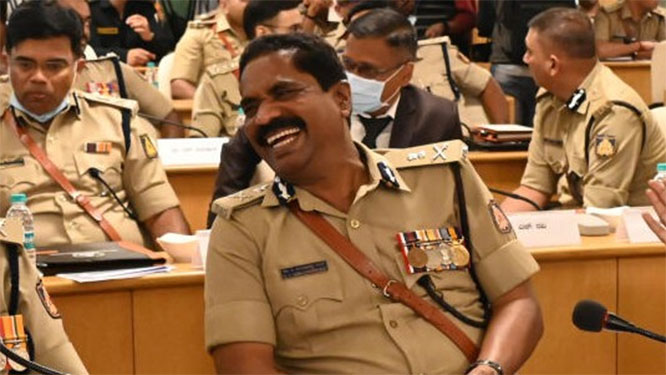
Karnataka DGP (Civil Rights Enforcement) K Ramachandra Rao was suspended with immediate effect, as per a state government order issued on Monday, 19 January. The order cited conduct unbecoming of a government servant and causing embarrassment to the state administration.

The Karnataka government suspended Rao after a purported video showed him in a compromising position with a woman inside his official chamber. The video went viral on social media. Rao rejected the videos outright, terming them "fabricated and false".

Who is K Ramachandra Rao?

Rao is a DGP-rank officer who was heading the Directorate of Civil Rights Enforcement until his suspension. He was promoted to DGP in September 2023 and assumed office in October 2023, the Sunday Guardian reported.

He also served as the Chairman and Managing Director of the Karnataka State Police Housing and Infrastructure Development Corporation Limited.

His stint as the Inspector General of Police (IGP) for the Southern Range was also marred by controversy. In 2014, during a cash seizure near Mysuru’s Yelwal, officials claimed the seized amount was ₹20 lakh, while the accused (Kerala-based merchants) claimed it was around ₹2.27 crore.

Rao, who was present during the seizure, denied all allegations. However, he was transferred soon after.

Allegations of collusion with a businessman surfaced, and a senior police officer was quoted by The Sunday Guardian as saying, “In Rao’s case, the CID has clearly mentioned that there was a great degree of lapse on the part of Rao and a deputy superintendent of police after it was brought to their notice that a few policemen, including a gunman attached to the IGP, were involved in the robbery.”

Rao had denied all wrongdoing in that incident. Despite past controversies, he rose to the state’s top police position, the Sunday Guardian reported.

Ranya Rao’s stepfather

Rao is the stepfather of Kannada actress Harshavardhini Ranya alias Ranya Rao, accused of orchestrating the illegal import of gold worth over ₹12.56 crore from Dubai to India along with two others — businessman Tarun Raju, and jewellery dealer Sahil Jain.

‘Obscene video’ controversy

A viral video showed Rao behaving inappropriately with a woman inside his office while in uniform.

The Karnataka government said in its Monday order that “vide videos and news reports widely broadcast on public news channels and media platforms, it is observed that Dr K Ramachandra Rao has acted in an obscene manner which is unbecoming of a Government Servant and also causing embarrassment to the Government.”

The order said the matter was examined by the state government, which found that the officer's conduct amounted to a violation of Rule 3 of the All India Services (Conduct) Rules, 1968.

The government said it is prima facie satisfied that "it is necessary to place Rao under suspension with immediate effect, pending inquiry".

During the suspension period, Rao will be entitled to subsistence allowance as per Rule 4 of the All India Services (Discipline and Appeal) Rules, 1969.

The order also places restrictions on his movement, stating that during the period of suspension, the officer must not leave headquarters under any circumstances without the written permission of the state government.

Comments

Add new comment

  • Coastaldigest.com reserves the right to delete or block any comments.
  • Coastaldigset.com is not responsible for its readers’ comments.
  • Comments that are abusive, incendiary or irrelevant are strictly prohibited.
  • Please use a genuine email ID and provide your name to avoid reject.