Netflix’s ‘A Suitable Boy’ & Modi era

Safiyat Naseem
November 9, 2020

Recently binge-watched a six part mini series directed by Mira Nair on Netflix, titled “A Suitable Boy”, an adaptation of Vikram Seth’s novel of the same title. And while I am neither a movie critic or reviewer, nor a fan of watching series with a backdrop of the post Independence era, I was still moved to write about it. To lay down my emotions on paper with nothing but words. It isn’t extra-ordinary, or brilliantly amazing, neither the characters are made to grow on you nor the plot is meticulously twisted, then what was it, you may ask.

It was Relatable, I would remark.

I usually don’t prefer series or movies that lay down the post Independence India theme with 1950s timeline because I don’t relate to it’s story or characters, and I don’t know if I watched it for Tanya Manikalata who played the character of Lata in the series or the fact that this series was on number 1 on Netflix, but I know for sure that I don’t regret watching it.

Being an Indian Muslim Women, it was shocking or rather depressing to relate to the newly Independent India even after 73 years. The political clashes, the Hindu-Muslim riots, the hatered based on religion, the stigma layed down on love between hindu and muslim, lack of women empowerment and discrimination, what was there is still here, now and growing more than ever.

It’s been 73 years and we as a Nation are still dealing with the same issues, we haven’t grown together, the lack of secularism is till there, the hatred and fear still reside or worse, it’s reoccurring.

When in the first episode the issue of Mosque was depicted, where the muslims demanded a peaceful place to pray, for those who still stayed in India, and the Raja started establishing a mandir in its direction to make them deprived of this right, I remembered the recent demolition of Babri Masjid and the Supreme Court’s judgement and acquittal of the accused.

As Maan went to the village with Rasheed, and acknowledged the miseries of farmers and labourers, the atrocious behaviour towards womens and workers, it wasn’t surprising or new. I thought about the Farm Bill 2020, the egregious condition of the working class amidsts pandemic, the walks they took barefoot and with empty bellies to go back to their hometowns as they were dealing with unemployment, lack of resources and ignorance of the Government and society. I remembered the Hathras case and other numerous sexual harassment as well as domestic violence cases. How I wish to get shocked by the problems of 1950s shown in the series, but unfortunately I was’t, I am rather acclimated to it. I have been there, heard it, been a part of it…even after 73 years, I have still seen it.

And as Rasheed told Maan “Aur bhi dukh hain Zamane mai mohabbat ke siva” (There are many other sorrows in this world besides love)… Indeed Rasheed, Indeed.

In the later episodes, as a communal riot emerged as Muslim and Hindu mobs were crossing roads, and one of them pushed the other, my mind instantly went towards the Delhi Riots. As Maan and Firoz were running together to save their lives, I connected with them and my eyes filled with tears as I remembered the misfortunate event that took place in Jamia Millia Islamia on 15th December 2019. Being a Jamia Student I remembered hiding under the table in the old library of my campus where Delhi Police showered us with tear gas shells.

When Maan and Firoz gets caught by the angry mob, and one of them asked Maan to say Gayatri Mantar to prove he’s not a muslim, and Maan obliged and did the same to save his and Firoz’s life, but Firoz couldn’t say it being a Muslim. I remembered the viral video on the internet that showed two people in the car, forcing a Muslim man to say Jai Mata Di, and were constantly abusing him.

As the main plot evolves, we see Lata falling in love with his schoolmate whose name’s not known up until the time when Lata’s friend warns her to not meet the guy, as he a Muslim, named Kabir Durrani. But Lata follows her heart and as predicted her mother took her away from the city to find her a suitable boy, and definitely not a Muslim. Tanishq’s advertisement flashed across my mind, the controversy revolving around how it depicts so called ‘love jihad’, whereas all it does is showcase communal harmony, and how they had to shut down the ad because apparently it hurts the “sentiment” of people. It’s been 73 years, and communal harmony still hurts the sentiment?

In the first episode, as the establishment of the mandir was taking place, it was already mentioned that there were bound to be protests regarding the same, still the government didn’t uphold the security levels and gave direct orders to shoot if the protesters didn’t stop. Not shockingly, it was a peaceful protest until the police started shooting, 20 people died. And as we see later in the Parliament meeting, the government was nonchalant to this action of police. Remember again, the attack on Jamia Millia Islamia, peaceful protest, tear gas shells and bullets… similar isn’t it? Potato-Patato, same thing…no?

Well, I believe nothing much has changed, the situation in 1947 and Modi era are almost the same, one way or the other. Except that in 1947, India was a newly democratic and independent country where freedom of speech was introduced, Jamia was a symbol of resistance and nationalism and people were the priority of the government. Whereas in Modi era, India is a newly non-democratic country, where freedom of speech is a myth, Jamia is an anti-national University, Islam is terrorism, people are least of the priority and Modi is God.

Comments

Add new comment

  • Coastaldigest.com reserves the right to delete or block any comments.
  • Coastaldigset.com is not responsible for its readers’ comments.
  • Comments that are abusive, incendiary or irrelevant are strictly prohibited.
  • Please use a genuine email ID and provide your name to avoid reject.
News Network
January 23,2026

Mangaluru: The Karnataka Government Polytechnic (KPT), Mangaluru, has achieved autonomous status from the All India Council for Technical Education (AICTE), becoming the first government polytechnic in the country to receive such recognition in its 78-year history. The status was granted by AICTE, New Delhi, and subsequently approved by the Karnataka Board of Technical Education in October last year.

Officials said the autonomy was conferred a few months ago. Until recently, AICTE extended autonomous status only to engineering colleges, excluding diploma institutions. However, with a renewed national focus on skill development, several government polytechnics across India have now been granted autonomy.

KPT, the second-largest polytechnic in Karnataka, was established in 1946 with four branches and has since expanded to offer eight diploma programmes, including computer science and polymer technology. The institution is spread across a 19-acre campus.

Ravindra M Keni, the first dean of the institution, told The Times of India that AICTE had proposed autonomous status for polytechnic institutions that are over 25 years old. “Many colleges applied. In the first round, 100 institutions were shortlisted, which was further narrowed down to 15 in the second round. We have already completed one semester after becoming an autonomous institution,” he said. He added that nearly 500 students are admitted annually across eight three-year diploma courses.

Explaining the factors that helped KPT secure autonomy, Keni said the institution has consistently recorded 100 per cent admissions and placements for its graduates. He also noted its strong performance in sports, with the college emerging champions for 12 consecutive years, along with active student participation in NCC and NSS activities.

Autonomous status allows KPT to design industry-oriented curricula, conduct examinations, prepare question papers, and manage academic documentation independently. The institution can also directly collaborate with industries and receive priority funding from AICTE or the Ministry of Education. While academic autonomy has been granted, financial control will continue to rest with the state government.

“There will be separate committees for examinations, question paper setting, boards of studies, and boards of examiners. The institution will now have the freedom to conduct admissions without government notifications and issue its own marks cards,” Keni said, adding that new academic initiatives would be planned after a year of functioning under the autonomous framework.

Comments

Add new comment

  • Coastaldigest.com reserves the right to delete or block any comments.
  • Coastaldigset.com is not responsible for its readers’ comments.
  • Comments that are abusive, incendiary or irrelevant are strictly prohibited.
  • Please use a genuine email ID and provide your name to avoid reject.
News Network
January 20,2026

DGP.jpg

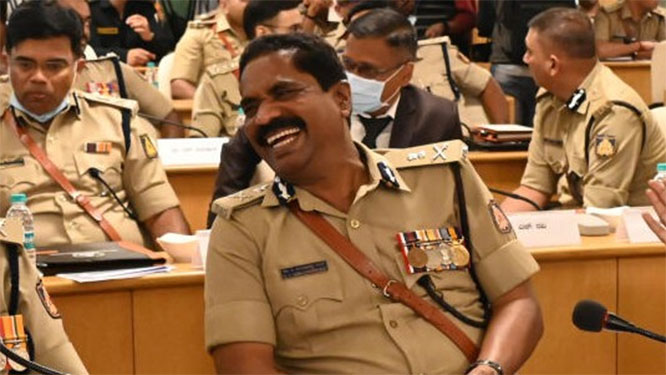
Karnataka DGP (Civil Rights Enforcement) K Ramachandra Rao was suspended with immediate effect, as per a state government order issued on Monday, 19 January. The order cited conduct unbecoming of a government servant and causing embarrassment to the state administration.

The Karnataka government suspended Rao after a purported video showed him in a compromising position with a woman inside his official chamber. The video went viral on social media. Rao rejected the videos outright, terming them "fabricated and false".

Who is K Ramachandra Rao?

Rao is a DGP-rank officer who was heading the Directorate of Civil Rights Enforcement until his suspension. He was promoted to DGP in September 2023 and assumed office in October 2023, the Sunday Guardian reported.

He also served as the Chairman and Managing Director of the Karnataka State Police Housing and Infrastructure Development Corporation Limited.

His stint as the Inspector General of Police (IGP) for the Southern Range was also marred by controversy. In 2014, during a cash seizure near Mysuru’s Yelwal, officials claimed the seized amount was ₹20 lakh, while the accused (Kerala-based merchants) claimed it was around ₹2.27 crore.

Rao, who was present during the seizure, denied all allegations. However, he was transferred soon after.

Allegations of collusion with a businessman surfaced, and a senior police officer was quoted by The Sunday Guardian as saying, “In Rao’s case, the CID has clearly mentioned that there was a great degree of lapse on the part of Rao and a deputy superintendent of police after it was brought to their notice that a few policemen, including a gunman attached to the IGP, were involved in the robbery.”

Rao had denied all wrongdoing in that incident. Despite past controversies, he rose to the state’s top police position, the Sunday Guardian reported.

Ranya Rao’s stepfather

Rao is the stepfather of Kannada actress Harshavardhini Ranya alias Ranya Rao, accused of orchestrating the illegal import of gold worth over ₹12.56 crore from Dubai to India along with two others — businessman Tarun Raju, and jewellery dealer Sahil Jain.

‘Obscene video’ controversy

A viral video showed Rao behaving inappropriately with a woman inside his office while in uniform.

The Karnataka government said in its Monday order that “vide videos and news reports widely broadcast on public news channels and media platforms, it is observed that Dr K Ramachandra Rao has acted in an obscene manner which is unbecoming of a Government Servant and also causing embarrassment to the Government.”

The order said the matter was examined by the state government, which found that the officer's conduct amounted to a violation of Rule 3 of the All India Services (Conduct) Rules, 1968.

The government said it is prima facie satisfied that "it is necessary to place Rao under suspension with immediate effect, pending inquiry".

During the suspension period, Rao will be entitled to subsistence allowance as per Rule 4 of the All India Services (Discipline and Appeal) Rules, 1969.

The order also places restrictions on his movement, stating that during the period of suspension, the officer must not leave headquarters under any circumstances without the written permission of the state government.

Comments

Add new comment

  • Coastaldigest.com reserves the right to delete or block any comments.
  • Coastaldigset.com is not responsible for its readers’ comments.
  • Comments that are abusive, incendiary or irrelevant are strictly prohibited.
  • Please use a genuine email ID and provide your name to avoid reject.
News Network
January 28,2026

ajit.jpg

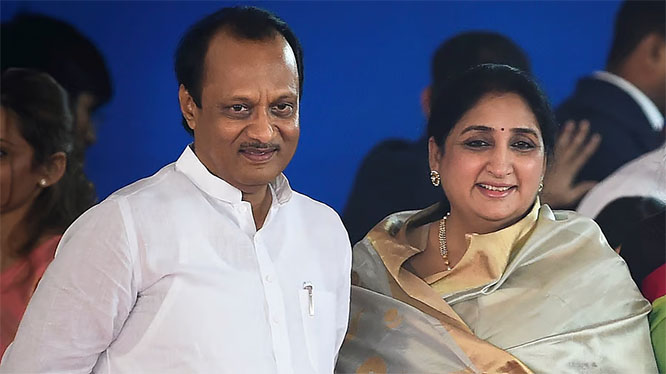
Mumbai: The sudden death of Maharashtra Deputy Chief Minister Ajit Pawar in a plane crash in his hometown of Baramati has plunged the state into political uncertainty, raising a pressing question for both the Nationalist Congress Party (NCP) and its rival faction, the Nationalist Congress Party (Sharadchandra Pawar): what next?

For the two factions that emerged after the dramatic split of June–July 2023, the moment marks their gravest challenge yet. Many believe the answer now rests with party founder Sharad Pawar.

Sharad Pawar, who founded the NCP in 1999 after parting ways with the Congress over Sonia Gandhi’s foreign origin, has already indicated his intention to step away from electoral politics once his Rajya Sabha term ends in April 2026.

Speaking at a public event in Baramati ahead of his 85th birthday on December 12, 2025, Pawar said he would not contest any further elections. “I have contested 14 elections. The younger generation needs to be given an opportunity,” he said, adding that he would decide later whether to seek another Rajya Sabha term.

Often described as the Bhishma Pitamah of Indian politics, Pawar also spoke of his gradual withdrawal from active leadership. “For the first 30 years, I handled everything. For the next 25–30 years, Ajit Dada handled responsibilities. Now, arrangements must be made for new leadership,” he said.

Ajit Pawar’s death has dramatically altered that transition, especially as he was working towards reunifying the two NCP factions.

“After the developments of June–July 2023 and the 2024 Lok Sabha and Vidhan Sabha elections, there were deep changes within the family and the party. In the last six months, serious efforts were made to reunite. Even workers from both sides wanted unity. This is a massive blow,” a Pawar family insider told DH over phone from Baramati.

Electoral outcomes over the past year reflected the split. In the 2024 Lok Sabha elections, NCP (SP) recorded the best strike rate in Maharashtra, winning eight of the 10 seats it contested. The NCP, by contrast, won just one seat out of four.

However, the trend reversed in the subsequent Vidhan Sabha elections, where the NCP emerged stronger, securing 41 of the 288 seats, while NCP (SP) managed only 10.

Within NCP (SP), Sharad Pawar’s daughter Supriya Sule serves as Working President, followed by leaders such as Rohit Pawar, state president Shashikant Shinde and former state chief Jayant Patil.

In the NCP, Praful Patel is the Working President and Raigad MP Sunil Tatkare heads the state unit. Ajit Pawar’s wife, Sunetra Pawar, is a Rajya Sabha MP, while their sons Parth and Jay are not actively involved in day-to-day politics. Parth Pawar briefly entered electoral politics in 2019 but lost the Lok Sabha election from Maval. Jay Pawar’s political debut was under consideration.

With Ajit Pawar gone, speculation has intensified that a member of the family may be asked to assume a larger role. For now, Sunetra Pawar is expected to play a key coordinating role in party affairs, alongside Patel and Tatkare.

The NCP continues to have several heavyweight leaders, including Chhagan Bhujbal, Hasan Mushrif, Dattatreya Bharne, Manikrao Kokate and Dhananjay Munde.

Ajit Pawar had already begun steps towards reconciliation between the two factions. While they contested the Pune and Pimpri-Chinchwad municipal elections separately, they later decided to fight the zilla parishad elections together under the ‘clock’ symbol—seen as the first formal step towards reunification.

Nagpur meet and party roadmap

Both NCP factions claim adherence to the ideology of ‘Shiv–Shahu–Phule–Ambedkar’. At the Rashtravadi Chintan Shivir held in Nagpur on September 19, 2025, the NCP reaffirmed its commitment to sarva dharma sambhav and discussed strengthening ties with the BJP “for the welfare and development of Maharashtra”.

In recent days, reports had suggested Ajit Pawar might return to the Maha Vikas Aghadi following the party’s poor performance in Pune municipal elections, but these claims were denied.

Big question for Maha Yuti

Ajit Pawar’s death also presents an immediate challenge for the Devendra Fadnavis-led Maha Yuti government. Pawar held crucial portfolios, including Finance, Planning and Excise. With the Budget Session approaching, appointing a new Finance Minister has become urgent.

Beyond numbers and portfolios, Maha Yuti has lost a swift decision-maker known for his administrative grip and political finesse—leaving a vacuum that will not be easy to fill.

Comments

Add new comment

  • Coastaldigest.com reserves the right to delete or block any comments.
  • Coastaldigset.com is not responsible for its readers’ comments.
  • Comments that are abusive, incendiary or irrelevant are strictly prohibited.
  • Please use a genuine email ID and provide your name to avoid reject.