Bahrain’s long-serving PM Khalifa bin Salman Al Khalifa, 84, passes away

News Network
November 11, 2020

Manama, Nov 11: Bahrain’s long-serving Prime Minister Sheikh Khalifa bin Salman Al Khalifa has died, the state media reported. He was 84.

“The Royal Court mourns His Royal Highness … who passed away this morning at Mayo Clinic Hospital in the United States of America,” the Bahrain News Agency said on Wednesday, without elaborating.

The Gulf state’s King Sheikh Hamad bin Isa Al Khalifa announced official mourning for a week during which flags will be flown at half-mast, the agency said.

The burial ceremony will take place upon the repatriation of his body and the funeral will be limited to a specific number of relatives, it said.

Sheikh Khalifa was one of the world’s longest-serving prime ministers who led his island nation’s government for decades and survived the 2011 Arab Spring protests that demanded his removal over corruption allegations.

His stern response to the pro-democracy protests and criticism of similar unrest across the Arab world underlined what for many was the defining characteristic of his career, namely a stalwart defence of dynastic rule. The Al Khalifa family has ruled Bahrain since 1783.

In August, Sheikh Khalifa left the kingdom for what official media called at the time “a private visit abroad”. Earlier this year, he spent time in Germany for unspecified medical treatment, returning to Bahrain in March.

Bahrain, a staunch ally of neighbouring Saudi Arabia and the United States, is also the home base of the US Navy’s Fifth Fleet.

Controversial figure

Sheikh Khalifa’s power and wealth could be seen everywhere in Bahrain. His official portrait hung for decades on walls alongside the country’s ruler.

He had his own private island where he met foreign dignitaries, complete with a marina and a park that had peacocks and gazelle roam its grounds.

“Khalifa bin Salman represented the old guard in more ways than just age and seniority,” said Kristin Smith Diwan, a senior resident scholar at the Washington-based Arab Gulf States Institute.

“He represented an old social understanding rooted in royal privilege and expressed through personal patronage.”

The son of Bahrain’s former ruler, Sheikh Salman bin Hamad Al Khalifa, who ruled from 1942 to 1961, Sheikh Khalifa learned governance at his father’s side as the island remained a British protectorate.

His brother, Sheikh Isa bin Salman Al Khalifa, took power in 1961 and served as monarch when Bahrain gained its independence from Britain in 1971. Under an informal arrangement, Sheikh Isa handled the island’s diplomacy and ceremonial duties while Sheikh Khalifa ran the government and economy.

The years that followed saw Bahrain develop rapidly as it sought to move beyond its dependence on dwindling oil reserves. Manama at that time served as what Dubai in the United Arab Emirates ultimately became, a regional financial, service and tourism hub.

The opening of the King Fahd Causeway in 1986 gave the island nation its first land link with its rich and powerful neighbour, Saudi Arabia, and offered an escape for Westerners in the kingdom who wanted to enjoy Bahrain’s alcohol-soaked nightclubs and beaches.

But Sheikh Khalifa increasingly saw his name entangled in corruption allegations, such as a major foreign corruption practices case against aluminium producer Alcoa over using a London-based middleman to facilitate bribes for Bahraini officials. Alcoa agreed to pay $384m in fines to the US government to settle the case in 2014.

The US embassy in Manama similarly had its own suspicions about Sheikh Khalifa, writing in cables that the prince had “off-the-books access to income from the state-owned enterprises” such as the Bahrain Petroleum Co and Aluminium Bahrain, the country’s aluminium producer.

“I believe that Shaikh Khalifa is not wholly a negative influence,” wrote former US Ambassador Ronald E Neumann in 2004 in a cable released by WikiLeaks. “While certainly corrupt, he has built much of modern Bahrain.”

Those corruption allegations fuelled discontent, particularly among Bahrain’s Shia majority. In February 2011, protesters inspired by the Arab Spring demonstrations across the Middle East filled the streets and occupied the capital Manama’s Pearl Roundabout to demand political reforms and a greater say in the country’s future.

While some called for a constitutional monarchy, many others pressed for the removal of the long-ruling prime minister and other members of the Sunni royal family altogether, including King Hamad bin Isa Al Khalifa.

At one point during the height of the unrest in March 2011, thousands of protesters besieged the prime minister’s office while officials met inside, demanding Sheikh Khalifa step down.

Protesters also took to waving one Bahraini dinar notes over allegations the prime minister bought the land on which Bahrain’s Financial Harbour development sits for just a single dinar.

Bahraini officials soon crushed the protests with the backing of troops from neighbouring Saudi Arabia and the UAE. Low-level unrest continued in the years that followed, with Shia protesters frequently clashing with riot police.

In recent years, Sheikh Khalifa’s influence waned as he faced unexplained health problems.

Comments

Nasir ahmmed
 - 
Thursday, 26 Nov 2020

Please sir i need green signal because i need go back abudhabi please sir

Add new comment

  • Coastaldigest.com reserves the right to delete or block any comments.
  • Coastaldigset.com is not responsible for its readers’ comments.
  • Comments that are abusive, incendiary or irrelevant are strictly prohibited.
  • Please use a genuine email ID and provide your name to avoid reject.
News Network
February 1,2026

US President Donald Trump on Saturday claimed that the government of India led by Prime Minister Narendra Modi has made a deal to buy Venezuelan oil, as opposed to purchasing it from Iran.

"We've already made that deal, the concept of the deal," he told reporters on Air Force One.

Trump had imposed 25% tariffs on countries buying Venezuelan oil, including India, in March 2025. He had also hit India with tariffs for buying Russian oil, saying it was "funding" President Vladimir Putin's war against Ukraine.

Trump has said that the US has taken control of the oil-rich Venezuela after capturing former President Nicolas Maduro in January.

A fleet of 18 ships loaded with crude oil bound for refineries in Texas, Louisiana, and Mississippi in January, the most since December 2024, according to a report by the news agency Bloomberg.

Combined crude deliveries to the US will reach about 2,75,000 barrels a day, more than doubling volumes seen in December last year. Shipments to China, which averaged 4,00,000 barrels a day last year, fell to zero in January.

PM Modi, Venezuelan President Agree To Expand Ties

Prime Minister Narendra Modi and Venezuela's acting President Delcy Rodriguez spoke on Friday and agreed to take the bilateral relations to "new heights" in the years ahead.

It was the first phone call between the two leaders since the capture of Maduro and his wife by the US on January 3.

"Spoke with Acting President of Venezuela, Ms. Delcy Rodriguez. We agreed to further deepen and expand our bilateral partnership in all areas, with a shared vision of taking India-Venezuela relations to new heights in the years ahead," PM Modi said in a post on X.

A statement from Prime Minister Modi's office said the two leaders agreed to further expand and deepen the India-Venezuela partnership in all areas, including trade and investment, energy, digital technology, health, agriculture, and people-to-people ties.

They exchanged views on various regional and global issues of mutual interest and underscored the importance of their close cooperation for the Global South, the statement said.

Rodriguez also said that they discussed partnerships in the fields of agriculture, science and technology, mining, and tourism, as well as the pharmaceutical and automotive industries.

Comments

Add new comment

  • Coastaldigest.com reserves the right to delete or block any comments.
  • Coastaldigset.com is not responsible for its readers’ comments.
  • Comments that are abusive, incendiary or irrelevant are strictly prohibited.
  • Please use a genuine email ID and provide your name to avoid reject.
News Network
January 20,2026

Mangaluru: In a major step towards strengthening rural innovation, the Office of the Principal Scientific Adviser (PSA) to the Government of India is supporting the establishment of RuTAGe Smart Village Centres (RSVCs) across the country through collaborations with academic institutions, civil society organisations and philanthropic partners.

As part of this national initiative, Nitte (Deemed to be University) will set up the first RSVCs in the region at Nitte GP in Udupi district and at the Nitte Health Centre, Sevanjali Trust, Farangipete, in Dakshina Kannada district. The centres will be inaugurated on January 21. In South India, the programme is being implemented by the Section Infin-8 Foundation (SI-8).

Speaking to reporters on Monday, SI-8 founder-director Vishwas US said experts from Nitte University and SI-8 would work closely with farmers, students, youth and local entrepreneurs to adapt and deploy technologies tailored to local needs.

Project head Prof Iddya Karunasagar, representing Nitte DU, said the RSVCs at Nitte and Farangipete would serve as demonstration hubs for a wide range of agriculture, energy, skill-development and assistive technologies. These include solar dryers for fruits, vegetables and crops; soil-testing solutions; power weeders and women-friendly farm tools; wind-powered devices for rural artisans; grain storage systems; grass-cutting and tree-climbing equipment; and liquid fertiliser production using cowshed waste.

SI-8 CEO Aravind C Kumar said the centres would also provide access to digital and knowledge-based platforms such as ISRO applications, government scheme portals, market linkage tools and gamified learning resources, along with assistive technologies for persons with visual impairments.

Highlighting the broader impact of the initiative, Principal Scientific Adviser Prof Ajay Kumar Sood said it demonstrated how applied research could bridge the rural–urban divide and help create self-reliant, technology-enabled villages.

The initiative has been made possible through philanthropic support from Dr NC Murthy of ACM Business Solutions, LLC, USA. Dr Sapna Poti, Director (Strategic Alliances) at the Office of the Principal Scientific Adviser, said the long-term objective is to build self-sufficient, technology-driven communities capable of generating sustainable livelihoods on their own.

Comments

Add new comment

  • Coastaldigest.com reserves the right to delete or block any comments.
  • Coastaldigset.com is not responsible for its readers’ comments.
  • Comments that are abusive, incendiary or irrelevant are strictly prohibited.
  • Please use a genuine email ID and provide your name to avoid reject.
News Network
January 20,2026

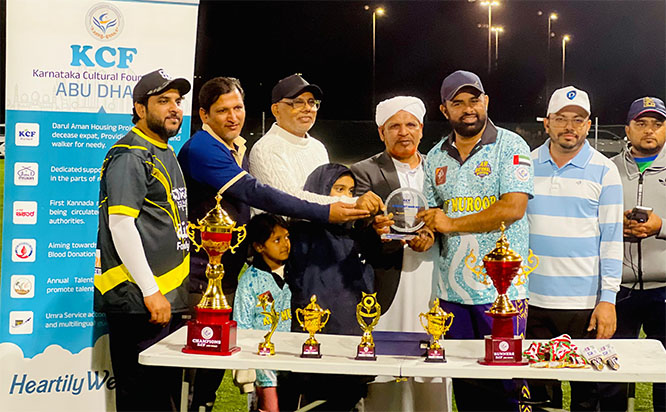
KCFabudhabi.jpg

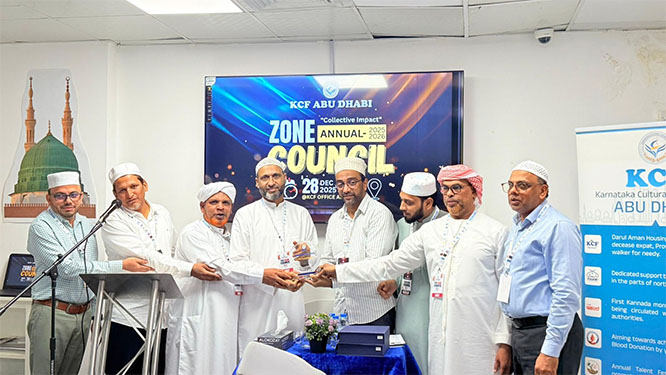
KCF, a global socio-cultural organisation of Karnataka expatriates, is actively involved in education, humanitarian initiatives and community well-being across several countries. The awardees were selected following a structured evaluation of nominations by the Annual Council Program Committee, based on the depth, consistency and long-term impact of their social service.

One of the award recipients, Abdul Razak Haji, a prominent UAE-based entrepreneur from the Qamcon Group of Companies, was honoured for his significant contributions to society. Through both his professional journey and personal initiatives, he has supported numerous employees and families, while also extending assistance in education, housing for the underprivileged and various charitable causes, largely carried out quietly over the years. His award was presented earlier during the Annual Council Program held at the KCF Abu Dhabi office.

The second award was conferred on Latheef Kakkinje, a young social worker based in Abu Dhabi, in recognition of his active involvement in community engagement programmes, sports initiatives, talent festivals and family-oriented social activities. His consistent volunteering efforts and commitment to humanitarian causes were highly appreciated by the selection committee.

The award presentation ceremony for Latheef Kakkinje was held at the Zayed Cricket Stadium (Astro Turf Ground) in the presence of Kedumbady Ibrahim Saqafi, President of KCF UAE; Ibrahim, General Secretary; Kabeer Bayambady, President of KCF Abu Dhabi; Ummer Ishwaramangila, General Secretary; along with other members of the KCF Abu Dhabi cabinet.

Congratulating both awardees, KCF leaders reiterated the organisation’s commitment to recognising individuals who selflessly work for social upliftment and community service.

KCFabudhabi1.jpg

Comments

Add new comment

  • Coastaldigest.com reserves the right to delete or block any comments.
  • Coastaldigset.com is not responsible for its readers’ comments.
  • Comments that are abusive, incendiary or irrelevant are strictly prohibited.
  • Please use a genuine email ID and provide your name to avoid reject.