After tech giants banish Donald Trump, things get complicated

Agencies
January 13, 2021

654.jpg

San Francisco Jan 13: As the world adjusts to a Twitter without @realdonaldtrump, the next big question is: “Now what?"

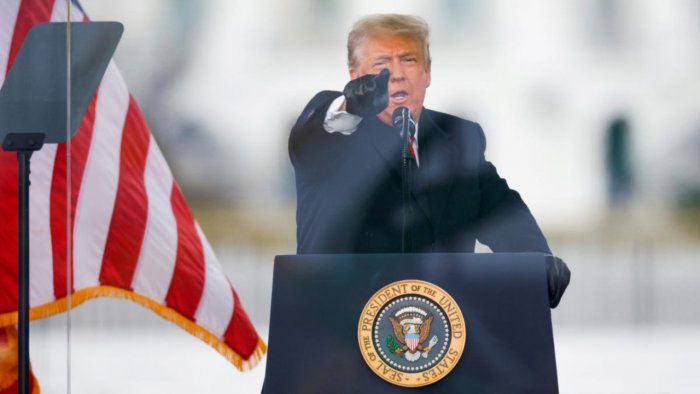
Major tech platforms, long accused of giving President Donald Trump special treatment not allotted to regular users, have shown him the door in the wake of his incitement of violence by supporters at the US Capitol on January 6. He's gone from Twitter, Facebook, Snapchat — even Shopify.

But in many ways, booting the president was the easy part.

Will companies now hold other world leaders to the same standard? Will they wade further into deciding what is and isn't allowed on their platforms, potentially alienating large swaths of their user base? Will all this lead to further online splintering, pushing those flirting with extreme views to fringe sites and secret chat groups?

Although they've long sought to remain neutral, Facebook, Twitter and other social platforms are slowly waking up to the active role they and their algorithms have played in shaping a modern world filled with polarised, angry groups and huge factions falling for bogus conspiracies and misinformation about science, politics and medicine.

“What we're seeing is a shift from the platforms from a stance of free-speech absolutism, towards an understanding of speech moderation as a matter of public health," said civic media professor Ethan Zuckerman of the University of Massachusetts-Amherst.

None of this can be fixed soon, if ever. Certainly not by blocking a president with just a few days left in his term.

But there are blueprints for future action. Remember “Plandemic?" That was the slickly-produced, 26-minute, misinformation-ridden video promoting COVID-19 conspiracies that emerged seemingly out of nowhere and racked up millions of views in a matter of days.

Facebook, Twitter and YouTube scrambled to take it down — too late. But they were ready for the sequel, which failed to attract even a fraction of the attention of the first.

“Sharing disinformation about COVID is a danger because it makes it harder for us to fight the disease," Zuckerman said.

“Similarly, sharing disinformation about voting is an attack on our democracy.”

Unsurprisingly, it's been easier for tech giants to act decisively on matters of public health than on politics. Corporate bans of the US president and his supporters have led to loud, if generally unfounded, cries of censorship as well as charges of left-wing bias.

It's even attracted criticism from European leaders such as German Chancellor Angela Merkel — not exactly a friend of Trump's.

Merkel's spokesman, Steffen Seibert, said freedom of opinion is a fundamental right of “elementary significance.”

“This fundamental right can be intervened in, but according to the law and within the framework defined by legislators — not according to a decision by the management of social media platforms,” he told reporters in Berlin.

“Seen from this angle, the chancellor considers it problematic that the accounts of the US president have now been permanently blocked.”

From that German perspective, it should be the government, and not private companies like Facebook and Twitter, who decides what counts as dangerous speech on social platforms.

That approach might be feasible in Europe, but it's much more complicated in the US, where the First Amendment of the US Constitution protects freedom of expression from government interference, although not from corporate policy on privately owned communication platforms.

Governments, of course, remain free to regulate tech companies, another area of ferment. Over the past year, Trump, other Republicans and some Democrats have called for revoking a fundamental 1996 legal provision known as Section 230.

That protects social platforms, which can host trillions of messages, from being sued into oblivion by anyone who feels wronged by something someone else has posted. But so far there's been more heat than light on the issue.

Still, few are happy with the often sluggish, after-the-fact, three-strikes takedowns and suspensions that have characterized Twitter and Facebook for years.

Particularly in the light of the Capitol insurrection, the deadly Charlottesville rally in 2017 and live-streamed mass shootings.

Sarita Schoenebeck, University of Michigan professor who focuses on online harassment, said it might be time for platforms to reevaluate how they approach problematic material on their sites.

“For years, platforms have evaluated what kinds of content are appropriate or not by evaluating the content in isolation, without considering the broader social and cultural context that it takes place in,” she said.

“We need to revisit this approach. We should rely on a combination of democratic principles, community governance and platform rules to shape behavior.”

Jared Schroeder, an expert in social media and the First Amendment at Southern Methodist University, thinks the Trump bans will encourage his base of followers to move towards other social platforms where they can organise and communicate with fewer — if any — restrictions.

“It's likely the bans will fuel the us-against-them narrative – and it's also likely other forums will get a boost in traffic, as we saw after the 2020 election," he said.

“The bans have taken away the best tools for organizing people and for Trump to speak to the largest audiences, but these are by no means the only tools."

Comments

robert Riepe
 - 
Wednesday, 13 Jan 2021

You look at the pictures of the doos to congress you will see the pictures of Antifa thugs wearing trump supporter gear and the guards letting them in.

Add new comment

  • Coastaldigest.com reserves the right to delete or block any comments.
  • Coastaldigset.com is not responsible for its readers’ comments.
  • Comments that are abusive, incendiary or irrelevant are strictly prohibited.
  • Please use a genuine email ID and provide your name to avoid reject.
P A Hameed Padubidri
November 26,2025

CD.jpg

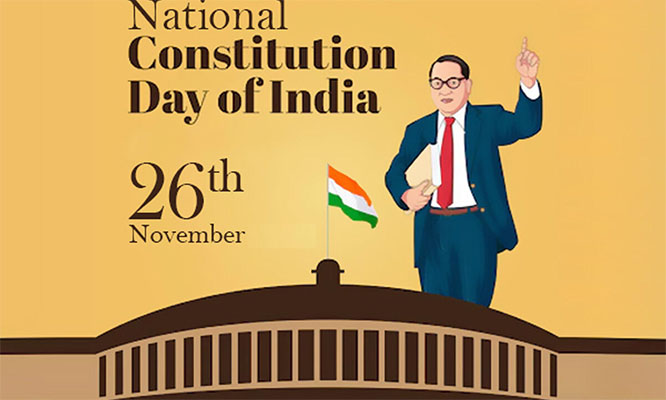
Constitution Day, also known as Samvidhan Divas, is observed every year on November 26 to honor the adoption of the Constitution of India and to recognize the visionary effort that shaped the world’s largest democracy.

Historical Background

It’s on November 26, 1949, the Constituent Assembly of India formally adopted the Constitution.This date is commemorated to acknowledge the completion of nearly three years of drafting, debate, and refinement.

On January 26, 1950, the Constitution came into force, marking India’s transition from a dominion to a sovereign republic.

The date 26 January was chosen to honor the “Purna Swaraj” declaration made in 1930 that marked the relentless efforts & sacrifices of the many. 

Why Constitution Day is Celebrated

* To honor & remember the framers of the Constitution, especially Dr. B. R. Ambedkar, the Chairman of the Drafting Committee, & many others. 

* To remind the citizens of the values, responsibilities, and rights enshrined in the Constitution.

* To promote constitutional values & literacy among students, institutions, and the general public.

* To reaffirm the nation’s commitment to justice, equality, liberty, fraternity and secular values. 

Vision and Significance of the Constitution

It establishes the fundamental political and legal framework for the nation.

Defines the structure, powers and functions of:
    •    The Executive
    •    The Legislature
    •    The Judiciary
    •    Guarantees a comprehensive set of Fundamental Rights, including:

-Equality before law
-Freedom of speech & expression
-Protection of life and personal liberty
-Freedom of religion
-Embeds Directive Principles of State Policy, guiding governance toward social justice and welfare.
-Introduces Fundamental Duties to ensure civic responsibility among citizens.

Key Features Celebrated on Constitution Day

-The Indian constitution is considered one of the longest written constitutions of the world. It’s systematically drafted considering almost all aspects that properly fits to the country. 

-Blend of multiple global constitutional principles while staying rooted in Indian values and realities.

-Framework that balances Federalism, Secularism, Democracy and Rule of Law. This makes everyone-from President to common man-below the law & are equal in the sight of law. 

-Another feature is that it’s based on built-in mechanisms for amendments, ensuring the Constitution grows with changing needs.

Message of the Day

The core ethos of this  Constitution Day is not merely about looking back at history-it’s a reminder of the continuous duty to protect democratic values, respect diversity and uphold the principles that define India as a sovereign, socialist, secular and democratic republic.

Happy Constitution Day to all my compatriots

Comments

Add new comment

  • Coastaldigest.com reserves the right to delete or block any comments.
  • Coastaldigset.com is not responsible for its readers’ comments.
  • Comments that are abusive, incendiary or irrelevant are strictly prohibited.
  • Please use a genuine email ID and provide your name to avoid reject.
News Network
December 5,2025

indigoCEO.jpg

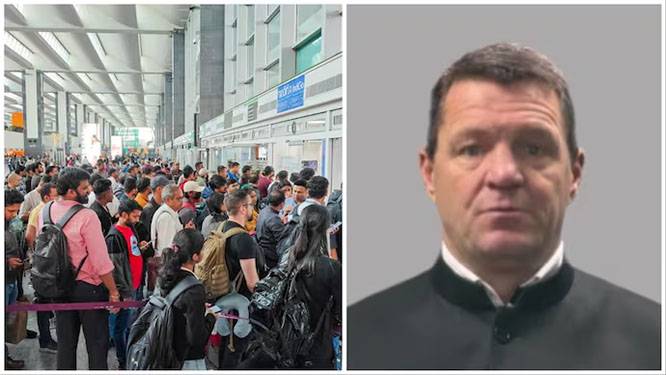
New Delhi, Dec 5: IndiGo CEO Pieter Elbers issued a public apology this evening after more than a thousand flights were cancelled today, making it the "most severely impacted day" in terms of cancellations. The biggest airline of the country cancelled "more than half" of its daily number of flights on Friday, said Elbers. He also said that even though the crisis will persist on Saturday, the airline anticipates fewer than 1,000 flight cancellations.

"Full normalisation is expected between December 10 and 15, though IndiGo cautions that recovery will take time due to the scale of operations," the IndiGo CEO said. 

IndiGo operates around 2,300 domestic and international flights daily.

Pieter Elbers, while apologising for the major inconvenience due to delays and cancellations, said the situation is a result of various causes.

The crisis at IndiGo stems from new regulations that boost pilots' weekly rest requirements by 12 hours to 48 and allow only two night-time landings per week, down from six. IndiGo has attributed the mass cancellations to "misjudgment and planning gaps".

Elbers also listed three lines of action that the airline will adopt to address the issue.

"Firstly, customer communication and addressing your needs, for this, messages have been sent on social media. And just now, a more detailed communication with information, refunds, cancellations and other customer support measures was sent," he said.

The airline has also stepped up its call centre capacity.

"Secondly, due to yesterday's situation, we had customers stranded mostly at the nation's largest airports. Our focus was for all of them to be able to travel today itself, which will be achieved. For this, we also ask customers whose flights are cancelled not to come to the airports as notifications are sent," the CEO said.

"Thirdly, cancellations were made for today to align our crew and planes to be where they need to start tomorrow morning afresh. Earlier measures of the last few days, regrettable, have proven not to be enough, but we have decided today to reboot all our systems and schedules, resulting in the highest numbers of cancellations so far, but imperative for progressive improvements starting from tomorrow," he added.

As airports witnessed chaotic scenes, the Directorate General of Civil Aviation (DGCA) stepped in to grant IndiGo a temporary exemption from stricter night duty rules for pilots. It also allowed substitution of leaves with a weekly rest period. 

Civil Aviation Minister Ram Mohan Naidu has said a high-level inquiry will be ordered and accountability will be fixed.

Comments

Add new comment

  • Coastaldigest.com reserves the right to delete or block any comments.
  • Coastaldigset.com is not responsible for its readers’ comments.
  • Comments that are abusive, incendiary or irrelevant are strictly prohibited.
  • Please use a genuine email ID and provide your name to avoid reject.
News Network
November 21,2025

israel.jpg

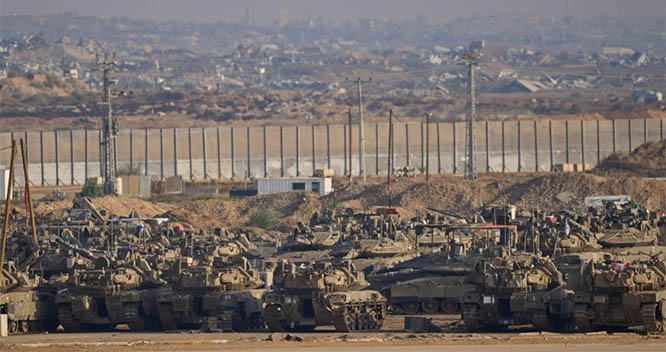
Local authorities say the Israeli military has expanded the so-called “yellow line” truce demarcation in Gaza City and repositioned its forces deeper into the territory in violation of a ceasefire agreement that came into force on October 10, besieging dozens of Palestinian families.

Gaza’s Government Media Office announced in a statement on Thursday that Israeli forces widened the boundary by shifting the markers, and advanced roughly 300 meters (984 feet) into the neighborhoods of Ash-Shaaf, An-Nazzaz and Baghdad Street.

The move pushed further into civilian areas, trapping families who were unable to flee as tanks rolled forward, it added.

“The fate of many of these families remains unknown amidst the shelling that targeted the area,” the office said, adding that the expansion of the yellow line shows a “blatant disregard” for the ceasefire deal.

On Friday, sources said the Israeli military carried out continued air and artillery strikes inside the so-called “yellow line” east of Khan Younis in the southern Gaza Strip.

According to the reports, Israeli warplanes and tanks targeted areas within the zone. One Palestinian was reported killed and several others wounded in the strikes, the sources said.

The fresh aggression came only a day after 25 Palestinians were killed in Israeli airstrikes on Gaza City and Khan Younis on Wednesday.

The media office reported that Israel has consistently violated the truce deal since its implementation last month, with near-daily attacks by air, artillery and direct shootings.

The office said over 400 violations have been documented. These breaches have resulted in the deaths of more than 300 Palestinians and left hundreds injured.

The Government Media Office in Gaza urged the guarantors of the ceasefire — the US, Egypt, Qatar and Turkey — to take swift action to halt the ongoing violations and facilitate the delivery of food, shelter materials, medical aid, and infrastructure equipment.

The so-called “yellow line,” set out in the agreement between Israel and Hamas resistance movement, refers to a non-physical partition where the Israeli military repositioned itself when the truce deal took effect.

It has allowed Israel, which routinely fires at Palestinians who approach the line, to retain control over more than half of the Gaza Strip.

International bodies, including the UN Independent International Commission of Inquiry, the International Association of Genocide Scholars, Amnesty International, Human Rights Watch, B’Tselem, and other rights groups, have concluded that the Israeli war on Gaza amounts to genocide.

In the attacks in Gaza since October 2023, Israel has killed at least 69,546 people and injured 170,833 others, leveling large swaths of the territory and displacing almost all of the population. 

Comments

Add new comment

  • Coastaldigest.com reserves the right to delete or block any comments.
  • Coastaldigset.com is not responsible for its readers’ comments.
  • Comments that are abusive, incendiary or irrelevant are strictly prohibited.
  • Please use a genuine email ID and provide your name to avoid reject.